










A technical issue affecting the AMD Adrenalin software suite has recently come to light, causing a specific background process to perform persistent disk write operations on Windows systems equipped with Radeon graphics cards. The bug, which involves the "AMD External Events Client Module" (atieclxx.exe), has prompted concerns among users regarding potential long-term degradation of their Solid State Drives (SSDs). While the issue is confirmed and acknowledged by AMD representatives, technical analysis suggests that the impact on hardware longevity, while measurable, does not constitute an immediate crisis for the vast majority of users.
The Technical Root of the Problem
At the center of this investigation is the atieclxx.exe executable. This process is a fundamental component of the AMD External Events Utility, a service responsible for managing hardware-level communications, including monitor detection, display hotkey management, and the coordination of FreeSync variable refresh rate technology.
According to technical findings shared on community forums and corroborated by industry analysts, the bug arises from a compatibility conflict between the AMD driver module and Microsoft’s PCIe filter driver. This interaction triggers a loop that forces the atieclxx.exe process to write data to the disk continuously. Users monitoring their system resources via Windows Task Manager or Resource Monitor have reported a constant stream of write activity ranging typically from 0.3 MB/s to 1.5 MB/s, with extreme outlier cases reaching upwards of 5 MB/s.
Chronology of the Discovery
The visibility of this issue has evolved significantly over the past several months, transitioning from isolated user reports to a widely recognized driver defect.
- July 2026: Initial reports began appearing on the official AMD community forums, with users noting high disk activity linked to the AMD driver suite.
- October 21, 2026: An official representative from AMD acknowledged the reports on the company’s community forum, confirming that the engineering team was actively investigating the behavior with the intent to provide a resolution in an upcoming driver release.
- November 8, 2026: The issue gained widespread traction following a public service announcement (PSA) on Reddit, which prompted tech outlets, including Tom’s Hardware and VideoCardz, to perform independent verification of the claims.
- November 2026: AMD staff confirmed that the fix was finalized and scheduled for inclusion in the Adrenalin 26.11.1 driver update.
Understanding the Hardware Implications
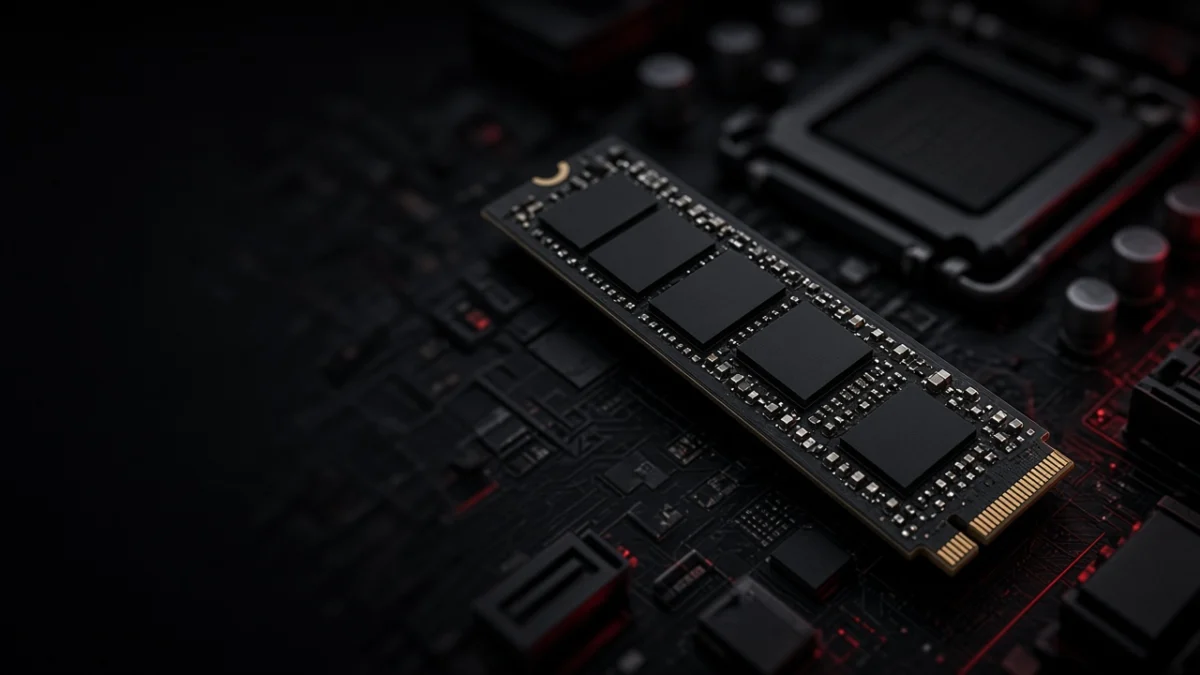
The primary anxiety surrounding this bug stems from the nature of NAND flash memory in modern SSDs. SSDs have a finite number of Program/Erase (P/E) cycles, commonly expressed as Terabytes Written (TBW). When a drive reaches its rated TBW, it does not necessarily fail immediately; rather, it reaches the end of its guaranteed endurance lifespan as defined by the manufacturer.
To determine if the concern is warranted, one must analyze the math behind the reported write speeds. At a sustained rate of 1.5 MB/s, an SSD is subjected to approximately 130 GB of data writes per 24-hour period. Over a full year of continuous, 24/7 operation, this totals roughly 47 TB of data written to the drive.
Modern high-performance drives, such as the Samsung 990 PRO (1TB variant), carry a TBW rating of 600 TB. Under the "worst-case" scenario of this bug—assuming a computer left on 24/7 with the maximum reported write speed—it would take approximately 12.7 years for the drive to reach its rated endurance limit. For an average user whose computer is powered on for eight hours a day, the impact is reduced to roughly 15.6 TB per year, pushing the endurance threshold even further into the future.
While budget-oriented drives with lower endurance ratings, such as the Crucial P3 (rated for 220 TBW), would reach their warranty limit faster, the timeframe still remains measured in years rather than days or weeks. Furthermore, the anecdotal claim of a "1% loss in SSD health per month" remains unverified and likely represents an outlier or a misinterpretation of diagnostic software reporting, rather than a systemic trend across the user base.
Official Guidance and User Workarounds
AMD has officially identified the issue as an interaction between their software and the Windows PCIe filter driver. The primary, manufacturer-supported solution is to update to the Adrenalin 26.11.1 driver package as soon as it becomes available. Users are advised to check the official AMD driver support page or use the integrated update function within the Adrenalin software. For users with laptop systems, it is recommended to consult the specific manufacturer’s support portal, as OEM-customized drivers often contain proprietary configurations that may be overwritten by generic driver updates.
In the interim, some users have experimented with manual workarounds to mitigate the issue:
- Disabling the Service: Navigating to the Windows Services management console (services.msc) and disabling the "AMD External Events Utility" has been shown to stop the atieclxx.exe process. However, this is not an official recommendation and can lead to a loss of functionality, including the disabling of display hotkeys and, in some configurations, potential interference with FreeSync functionality.
- BIOS Adjustments: Some reports suggest that disabling Resizable BAR (Base Address Register) in the system BIOS can effectively stop the bug by altering how the GPU communicates with the motherboard and the OS. However, this is generally discouraged due to the potential performance penalty in modern gaming titles.
Given the non-critical nature of the disk wear relative to the lifespan of modern hardware, the most prudent course of action is for users to perform a one-time diagnostic check. By opening Resource Monitor in Windows, users can verify if the atieclxx.exe process is indeed writing to the disk. If the write activity is minimal or non-existent, no further action is required. If the activity is high, users should remain aware of the upcoming patch rather than risking system stability by disabling core driver services.
Contextualizing Storage Reliability
This event serves as a reminder of the complexities inherent in modern PC architecture, where driver-level software must constantly interface with low-level hardware protocols. Storage-related scares have surfaced in the past, most notably in 2025, when a Windows 11 update was briefly suspected of causing mass SSD failures. Subsequent investigations by both Microsoft and major controller manufacturers like Phison clarified that the issues were linked to pre-release engineering firmware rather than the operating system itself.
The AMD bug, while a legitimate technical defect, falls into a category of "nuisance" issues rather than systemic hardware-destroying catastrophes. It underscores the importance of a measured approach to system maintenance. As the industry moves toward higher-density NAND and more complex driver stacks, the margin for minor software-hardware synchronization errors increases. However, the endurance of modern SSDs remains sufficiently robust to withstand these types of bugs for the duration of a standard hardware lifecycle, provided the user remains informed and ensures their software stack is kept up to date.
Ultimately, the focus for the user base should be on verifying their current driver version and monitoring the release of the 26.11.1 update. By relying on official channels and avoiding unverified third-party "quick fixes," users can maintain the integrity of their systems until a permanent, manufacturer-certified resolution is implemented.