





The consumer television market in 2026 continues to experience rapid evolution, particularly within the budget-conscious OLED sector. As manufacturers refine their manufacturing processes and imaging engines, the barrier to entry for self-emissive display technology has steadily lowered. Central to this competitive landscape are the latest entry-level offerings from two of the industry’s most dominant players: the Samsung S85H and the LG B6E. Following the recent arrival of the Samsung S85H in testing laboratories, reviewers have conducted exhaustive side-by-side evaluations to determine whether Samsung can unseat LG’s reigning dominance in the affordable OLED space, especially with the critical Black Friday shopping season approaching.
Understanding the positioning of these models requires a brief look at their lineage. Earlier in the year, display analysts evaluated the LG B6 series—specifically referencing the B6E variant, which shares the core processing architecture and panel assembly of the standard B6 while omitting a select few advanced artificial intelligence features and sporting a modified rear panel design. While the B6 series introduced incremental refinements over its predecessor, the generational leap was perceived by some critics as more modest than the substantial upgrades seen in higher-tier models like the LG C6. Nevertheless, the B6 solidified its reputation as a benchmark for value-oriented organic light-emitting diode displays.
Entering this arena, the Samsung S85H represents the latest iteration of Samsung’s accessible S85 OLED range. As both models undergo rigorous bench testing, prospective buyers are weighing performance metrics against aggressive holiday pricing strategies.
Color Fidelity and Visual Detail Performance
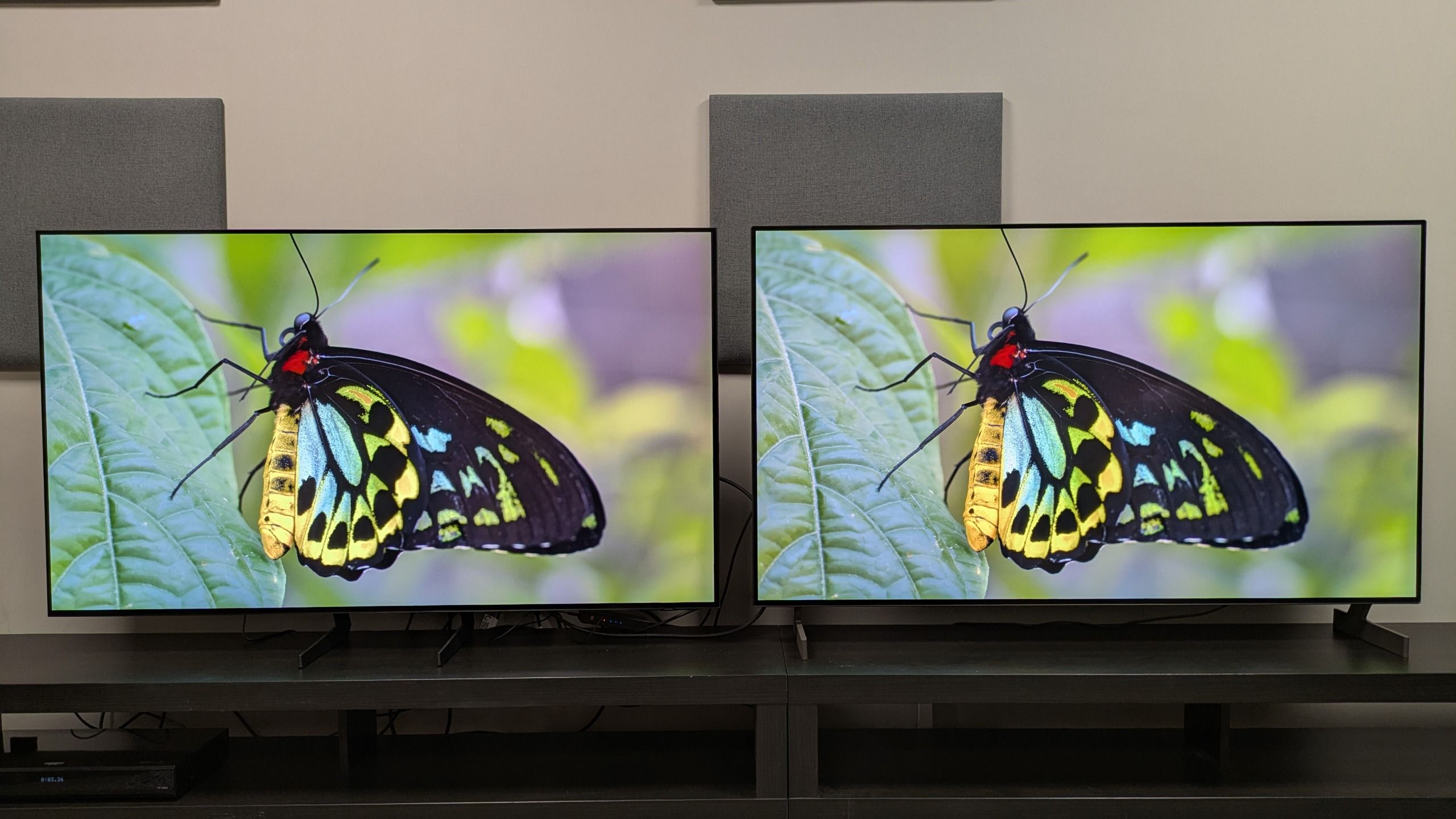
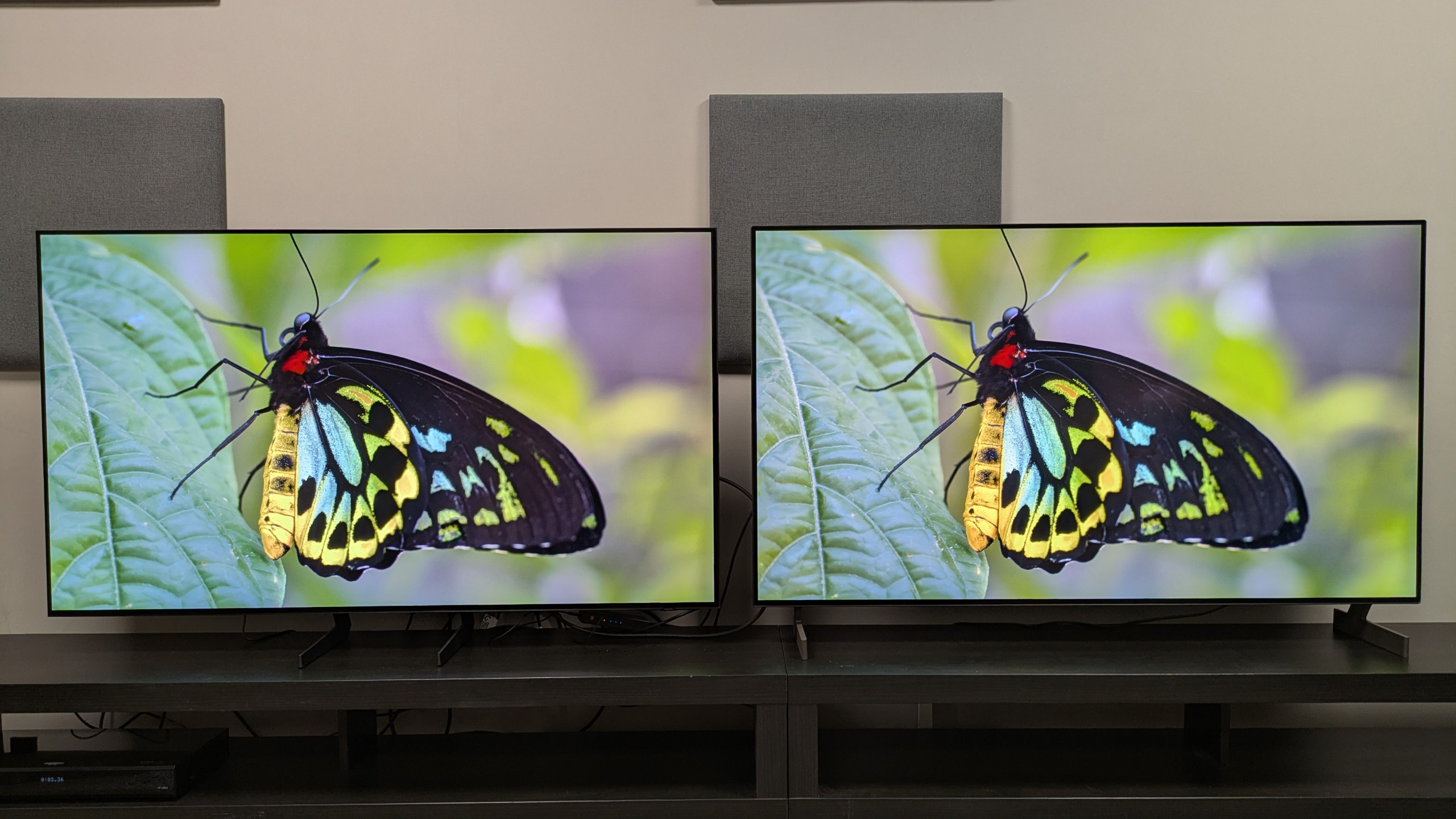
When evaluating color reproduction in Filmmaker Mode, both the Samsung S85H and the LG B6E deliver remarkable accuracy, often tracking much closer to one another than historical generational gaps might suggest. Conventionally, consumer displays engineered by Samsung have favored bolder, high-impact saturation profiles. However, empirical testing reveals a nuanced reality across various cinematic and animated content.
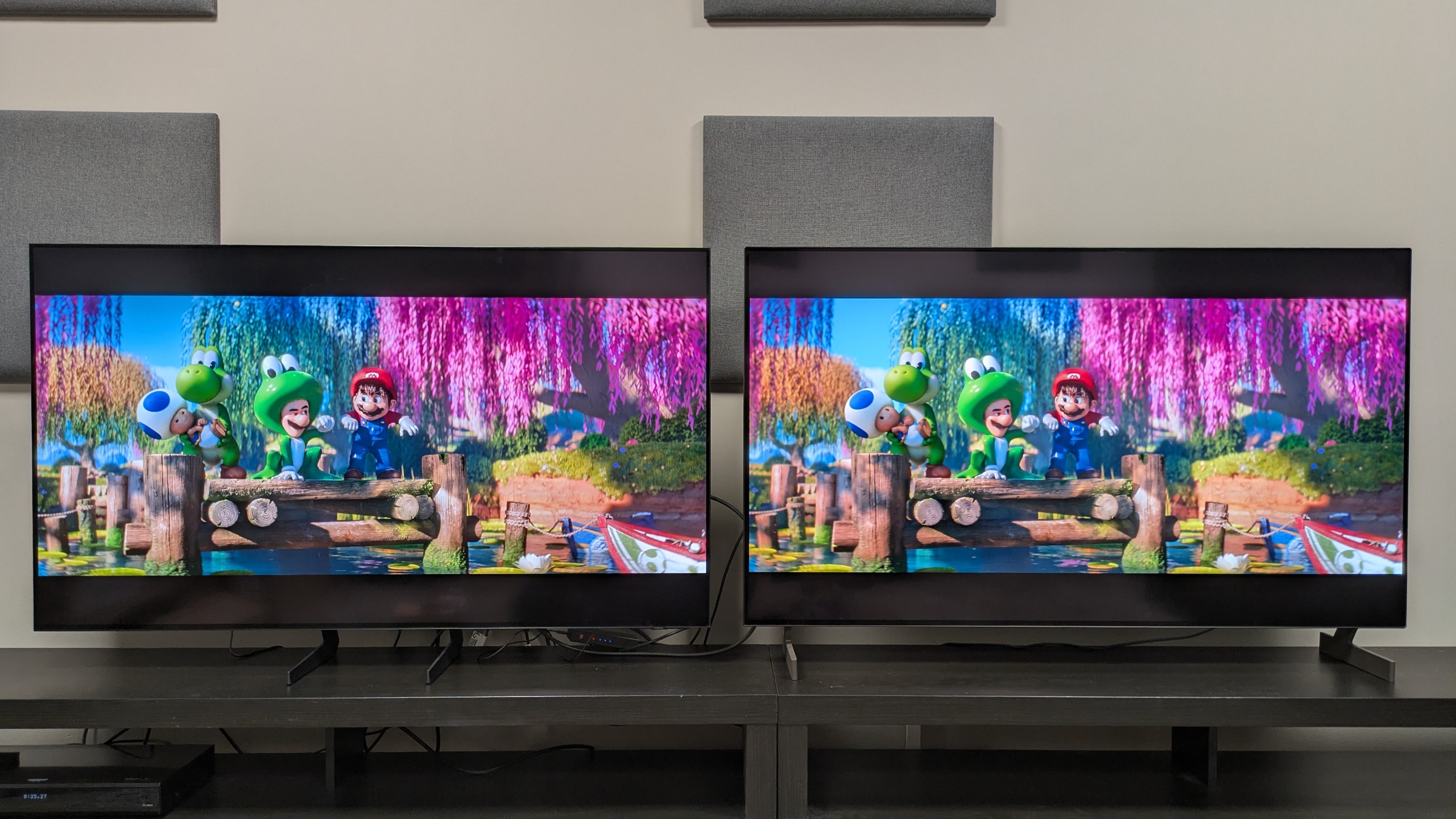
During evaluations utilizing animated features such as The Super Mario Galaxy Movie, the LG B6E demonstrated superior punch in primary red tones—notably on Mario’s iconic overalls and the characteristic spots of Toad characters. Conversely, luminous elements such as Lumas appeared significantly brighter on the Samsung S85H; however, this luminance occasionally resulted in a slightly desaturated, paler appearance, whereas the B6E maintained a richer, deeper color saturation. Overall, both panels excelled at rendering vibrant, high-contrast animated color gamuts without introducing unnatural artifacting.
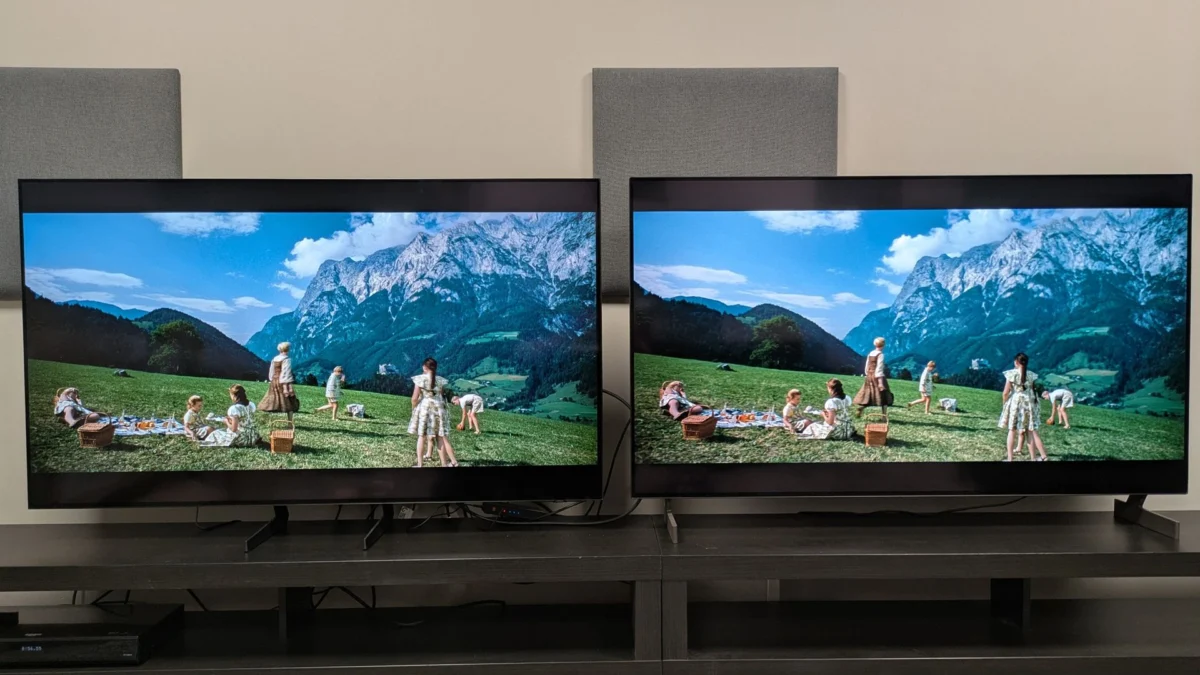
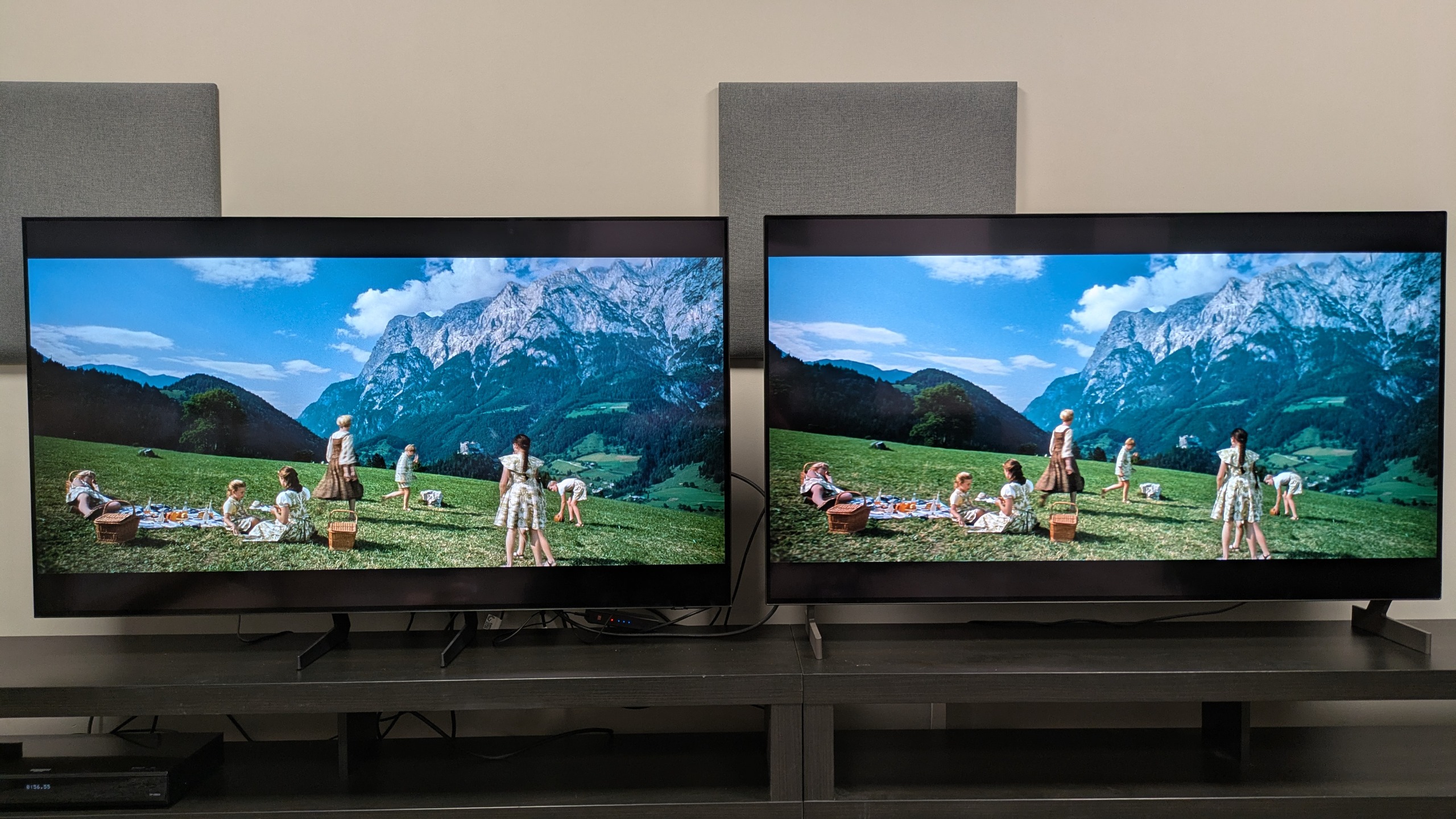
Transitioning to live-action cinema, such as classic sequences from The Sound of Music, yielded consistent observations. The LG B6E sustained slightly bolder color vibrancy, particularly in natural environments like green meadows and dynamic marketplace scenes featuring varied tropical fruits. Furthermore, facial tones on the B6E exhibited superior lifelike warmth and textural depth, enhancing perceived realism.
Despite LG’s advantages in color vivacity, the Samsung S85H countered with distinct strengths in texture rendering. The S85H frequently produced crisper tactile details, granting objects and human subjects a pronounced three-dimensional quality. Fine elements—such as fabric weaves, clothing creases, and the intricate geological textures of distant background mountain ranges—appeared marginally more refined on the Samsung display.
Peak Brightness and Luminance Measurements
Luminance capabilities remain a primary metric for modern high-dynamic-range (HDR) displays, influencing how effectively a television handles specular highlights and ambient room illumination. Laboratory measurements for both units paint a picture of near-parity in controlled environments.
In standard Filmmaker Mode evaluations, the Samsung S85H achieved a peak HDR brightness measurement of approximately 833 nits within a standard 10% window. The LG B6E followed closely behind, registering roughly 808 nits under identical parameters. Full-screen (100% window) HDR brightness measurements showed similar alignment, with the S85H reaching 158 nits compared to the B6E’s 143 nits.
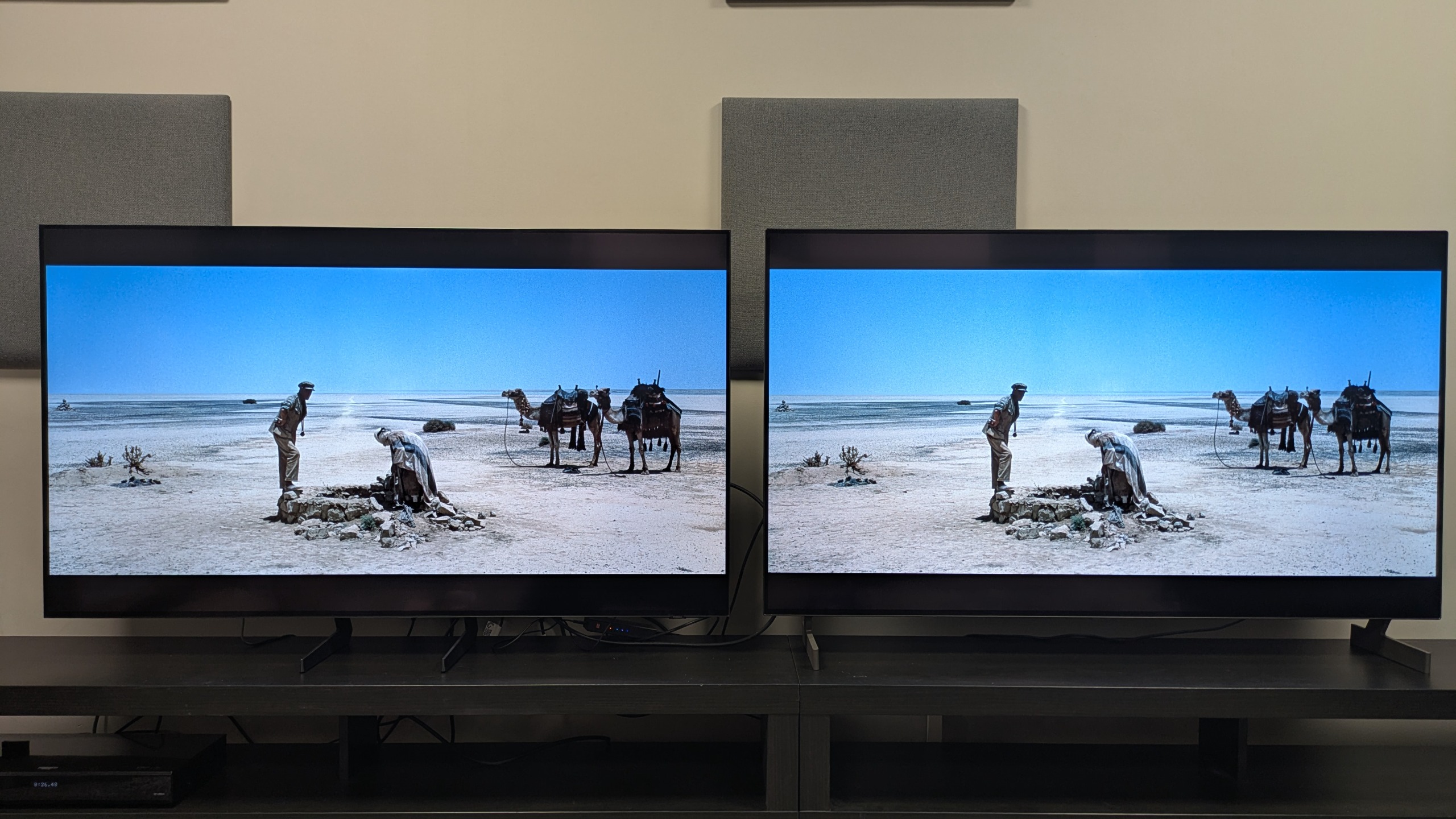
Despite the S85H’s slight numerical advantage in raw laboratory metrics, real-world viewing tests occasionally inverted these impressions. When screening high-contrast cinematic reference scenes—such as the sun-drenched desert expanses in Lawrence of Arabia—the LG B6E rendered brilliant white sands and clear blue skies with superior perceived luminosity. Display engineers attribute this discrepancy to proprietary image processing algorithms rather than raw panel output, suggesting that LG’s tone-mapping strategy maximizes visual punch in specific lighting conditions.
Both models, however, share a notable limitation regarding screen reflectivity. Neither the S85H nor the B6E features the advanced specialized anti-glare filters found on higher-end mid-tier alternatives, such as the Samsung S90H OLED. Consequently, prospective buyers placing either unit in brightly lit living spaces will need to manage ambient light carefully to preserve shadow integrity in dark cinematic sequences.
Contrast Ratios and Dark Scene Handling
Self-emissive display technology inherently guarantees exceptional contrast due to the ability of individual pixels to switch off completely, producing absolute black levels. Both the Samsung S85H and the LG B6E capitalize on this foundational attribute during high-contrast sequences, such as those found in The Batman and sci-fi epics like Project Hail Mary.
The LG B6E frequently projects a higher perceived contrast ratio during mixed-content scenes, largely driven by the aggressive punch of its HDR highlights. In complex environments, such as the shadowy interiors of Mayor Mitchell’s residence, light sources like flashbulbs, torches, and interior lamps project with striking intensity against deep shadows.
Shadow detail preservation is exemplary on both televisions. Textural nuances—such as the complex weave of body armor in dark subway sequences or the polished finishes of fine interior woodwork—are retained without suffering from black crushing. However, when observing deep-space sequences in completely dimmed viewing environments, the Samsung S85H demonstrates marginally inkier black tones. Combined with its superior texture rendering, the S85H provides an exceptionally lifelike presentation of dark cosmic vistas.
Gaming Performance and Feature Parity
Beyond traditional cinema viewing, modern televisions must accommodate next-generation gaming hardware. In this regard, both manufacturers have equipped their entry-level OLED lineups with comprehensive feature sets that rival dedicated gaming monitors.
Both the Samsung S85H and the LG B6E incorporate four fully certified HDMI 2.1 ports. These inputs support native 4K resolution at a 120Hz refresh rate, comprehensive variable refresh rate (VRR) compatibility (including AMD FreeSync and NVIDIA G-SYNC compliance), and ultra-low input lag. These hardware specifications ensure that console gamers utilizing hardware such as the PlayStation 5 or Xbox Series X, as well as PC gamers, will experience fluid motion handling, minimal latency, and optimal synchronization across fast-paced titles.
Market Positioning and Black Friday Purchasing Analysis
Evaluating the commercial implications of these displays involves examining regional pricing structures and retail availability as the holiday shopping season accelerates.
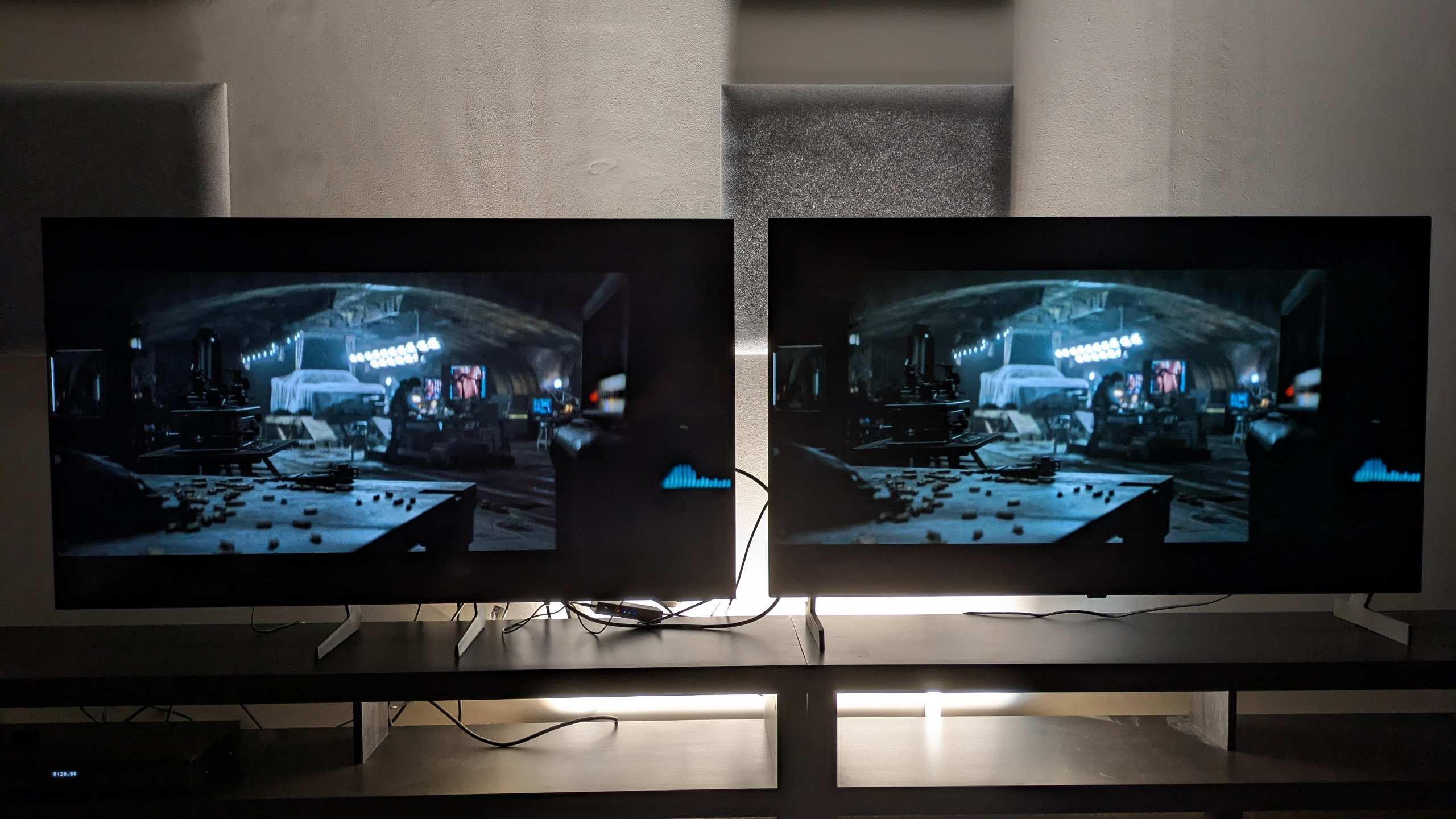
At the standard 55-inch tier, pricing reflects close market competition, though regional variations exist. The 55-inch Samsung S85H typically retails at $999 / £999 / AU$1,899, whereas the 55-inch LG B6E is positioned at $799 / £799 (approx. £999 in certain European markets) / AU$1,699, giving the LG model a distinct price advantage in North American and Australian territories. Furthermore, early retail promotions have introduced aggressive discounting, highlighted by introductory offers such as a 48-inch B6 variant priced at $599 through major electronics retailers like Best Buy.
Industry analysts note that while Samsung is expected to adjust the pricing of the S85H downward to match LG’s competitive posture as Black Friday approaches, the current market landscape favors LG for consumers seeking immediate value. Because the observable performance gap between the two displays is negligible for the average viewer—with trade-offs split between the S85H’s texture handling and inkier black levels versus the B6E’s punchier HDR highlights and aggressive retail pricing—the decisive factor for most buyers will rest squarely on prevailing promotional discounts.
Ultimately, both the Samsung S85H and the LG B6E reaffirm the maturation of budget-friendly OLED technology, offering consumers high-end contrast and gaming capabilities without requiring an investment in flagship-tier hardware. For immediate purchasers, the LG B6E holds the crown as the premier holiday buy, though market watchers advise monitoring pricing adjustments from Samsung as the peak retail season unfolds.