











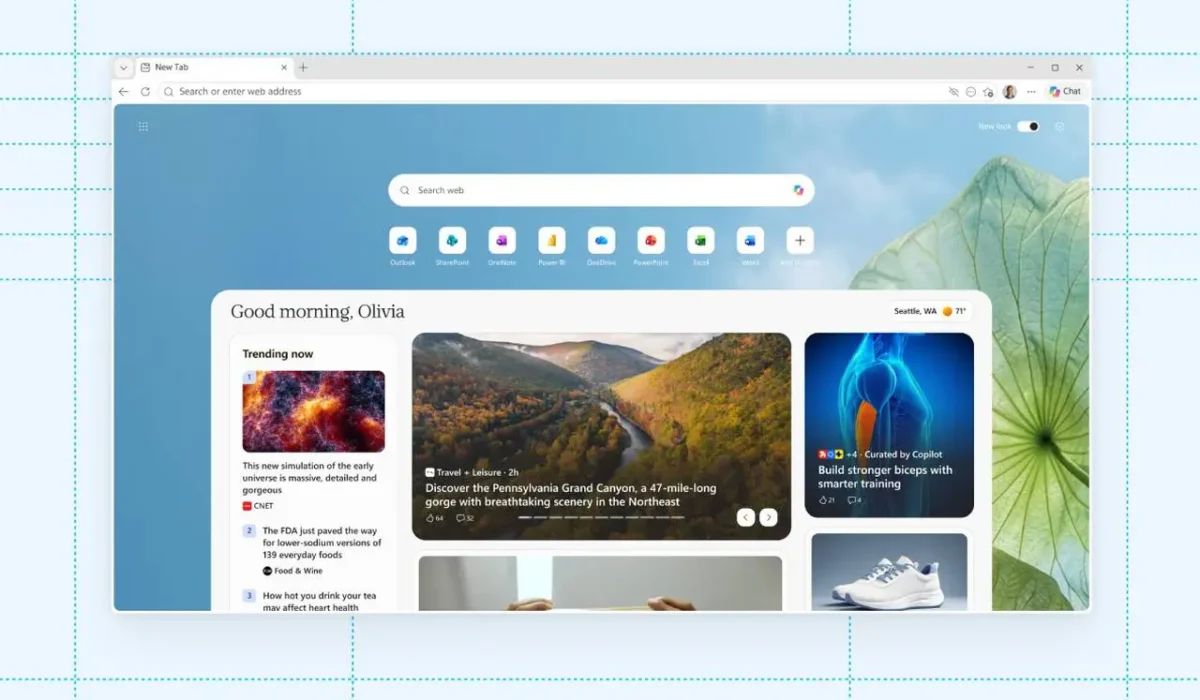
Microsoft has officially announced a sweeping update to its Edge web browser, introducing "Copilot Discover," an advanced artificial intelligence-driven feature designed to fundamentally reshape how users consume, navigate, and interact with online content. This significant overhaul leverages state-of-the-art generative artificial intelligence to streamline digital research, elevate content discovery, and provide personalized summarization capabilities across the web. As major technology corporations increasingly race to integrate conversational AI directly into foundational software, Microsoft’s latest deployment marks a critical milestone in making artificial intelligence an everyday, invisible utility for billions of internet users globally.
The rollout of Copilot Discover arrives at a time of profound transformation in digital media consumption. For decades, traditional web browsing has relied heavily on manual search queries, algorithmic recommendation feeds, and manual bookmarking. However, the exponential growth of digital information has created widespread information overload, leaving users struggling to sift through redundant articles, paywalls, and low-quality search engine optimization (SEO) results. Microsoft’s integration of its proprietary Copilot technology directly into the Edge browser sidebar and Discover feed seeks to alleviate this friction. By acting as an intelligent intermediary between the user and the vast expanse of the internet, Copilot Discover promises to deliver synthesized, accurate, and context-aware insights in real time.
Evolution of AI Integration in Microsoft Edge
The journey toward Copilot Discover has been years in the making, rooted in Microsoft’s multi-billion-dollar partnership with OpenAI. Following the initial integration of sidebar chat features in early 2023, Microsoft steadily expanded AI capabilities across its entire product ecosystem, spanning Windows, Office, and the Edge browser. Edge, which holds a significant yet challenging share of the global desktop browser market behind Google Chrome and Apple Safari, has consistently positioned itself as an innovator in productivity features, vertical tabs, and integrated reading tools.
The introduction of Copilot Discover represents the next logical phase of this strategy. Rather than forcing users to navigate to a separate chatbot interface, the new feature is deeply embedded into the fabric of the browsing experience. When users open the Discover panel or interact with supported web pages, the AI analyzes the underlying text structure, cross-references it with a vast database of verified sources, and presents concise executive summaries, bullet points, and analytical breakdowns. This capability is expected to drastically reduce the time spent reading lengthy articles, financial reports, academic papers, and news updates.
Key Features and Technical Capabilities
At the core of Copilot Discover is a sophisticated curation engine that processes information from over 1,500 premium media publishers worldwide. By partnering with established news and publishing brands—including prominent outlets such as USA TODAY, Business Insider, and PEOPLE—Microsoft ensures that the underlying data fueling the AI summaries adheres to high journalistic standards. This extensive publisher network supplies over 3,500 distinct content feeds daily, allowing the AI to maintain a continuous stream of up-to-the-minute updates across politics, technology, finance, entertainment, and lifestyle sectors.
Furthermore, the system employs advanced natural language processing (NLP) algorithms to filter out low-quality content, clickbait, and duplicate reporting. When a user queries a specific topic or requests a summary of a breaking news event, Copilot Discover aggregates multiple perspectives from trusted outlets, neutralizing individual editorial biases and presenting a balanced, multi-faceted overview. Internal testing conducted by Microsoft indicates that users engaging with AI-summarized content experience an efficiency increase of up to 40 percent in information retention and research turnaround times compared to traditional search methods.
Transforming the Digital Publishing Ecosystem
While the integration of Copilot Discover offers undeniable convenience for end-users, it also introduces profound implications for the broader digital publishing and media ecosystem. Publishers have long relied on referral traffic from search engines and browsers to monetize their content through display advertising and subscription models. The rise of generative AI features that summarize articles directly within the browser interface raises legitimate concerns regarding web traffic cannibalization. If users can obtain comprehensive answers and article summaries without visiting the original publisher’s website, ad revenues and subscriber acquisition rates could face severe downward pressure.
To address these concerns, Microsoft has structured Copilot Discover to prioritize attribution and source transparency. Every summary generated by the AI includes prominent citations, direct hyperlinks, and visual markers pointing back to the original publishers. Microsoft executives argue that this approach will ultimately drive higher-intent traffic to participating media outlets, directing curious readers who want a deeper dive straight to the primary source material. Nevertheless, media analysts remain cautious, noting that the long-term economic sustainability of digital journalism in an AI-first web ecosystem will require ongoing dialogue and potentially new revenue-sharing frameworks between tech giants and content creators.
Chronology of Development and Strategic Rollout
The deployment of Copilot Discover is part of a phased global rollout plan that began earlier this year with developer previews and enterprise beta testing.
- Q1 2023: Microsoft launches initial AI sidebar integrations in Edge, powered by early iterations of OpenAI’s GPT models.
- Q4 2023: Expansion of content partnerships with major global publishers to secure high-quality training and summarization data.
- Q2 2024: Introduction of specialized curation algorithms designed to filter out low-tier SEO content and prioritize verified journalistic sources.
- Current Phase: Official rollout of Copilot Discover to general consumers across Edge desktop, MSN.com portals, and integrated Bing search experiences.
This methodical timeline highlights Microsoft’s careful approach to scaling generative AI features safely, ensuring that infrastructure scalability, content safety filters, and copyright considerations are thoroughly addressed prior to full public availability.
Future Outlook and Industry Implications
The launch of Copilot Discover solidifies Microsoft’s competitive positioning in the ongoing browser wars. As competitors such as Google integrate similar generative AI capabilities into Chrome and Search Generative Experience (SGE), the battleground for user attention has officially shifted from simple link retrieval to synthesized knowledge delivery. For consumers, the modern web is transitioning into a conversational, highly personalized medium where information is curated instantly to suit individual cognitive preferences.
As Copilot Discover continues to learn and adapt based on global user interactions, Microsoft plans to introduce further enhancements, including multimodal search capabilities, deeper enterprise document analysis, and customized browsing profiles tailored to specific professional and academic workflows. While challenges regarding publisher economics and data privacy remain at the forefront of industry discussions, the deployment of Copilot Discover undeniably heralds a new era in digital navigation—one where artificial intelligence acts as an indispensable co-pilot for navigating the infinite expanse of human knowledge.