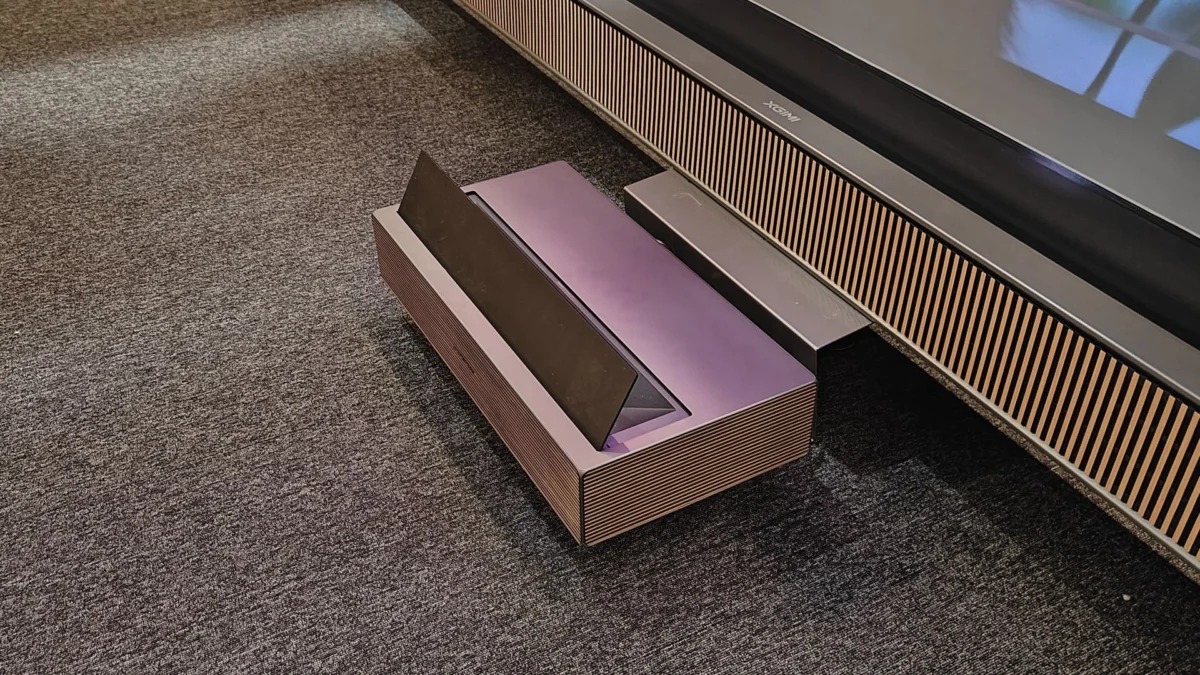
For years, the promise of the ultra-short throw (UST) projector has been simple: the ability to replicate the immersive scale of a commercial cinema within the footprint of a standard living room. By positioning a single, all-in-one unit mere inches from a wall or dedicated projection screen, users can generate images exceeding 200 inches. This eliminates the traditional requirements of long-throw projectors, which necessitate ceiling mounts, extensive cabling, and clear sightlines across the center of a room. However, the reality of the technology has frequently lagged behind its marketing.
The persistent challenges of UST integration
While the mechanical simplicity of a UST setup is undeniable, the operational reality is often fraught with technical hurdles. Unlike a standard television, which provides a "plug-and-play" experience, UST projectors require precise calibration. Historically, achieving a perfectly rectangular, sharp, and centered image has been a time-consuming ordeal. Users often find themselves trapped in a cycle of manual image shifting, digital keystone correction, and app-based alignment that can turn a simple movie night into a complex engineering project.
Beyond installation friction, there is the perennial challenge of black depth. Because UST projectors rely on reflecting light off a surface—rather than the emissive pixel technology found in OLED or Mini-LED panels—they have struggled to produce the deep, inky blacks that define modern high-dynamic-range (HDR) content. To compensate, many manufacturers have historically pushed contrast levels to artificial extremes, often resulting in "crushed" shadows where fine details are lost in an attempt to simulate true blackness.
Emerging innovations at IFA 2024
The recent IFA consumer electronics exhibition in Berlin provided a window into how the industry is attempting to solve these long-standing issues. Among the most notable unveilings were the Xgimi Aura 3 Max and the AWOL LuxVision. Both represent a departure from the mid-market saturation of previous years, targeting a premium segment that demands both ease of use and high-fidelity performance.
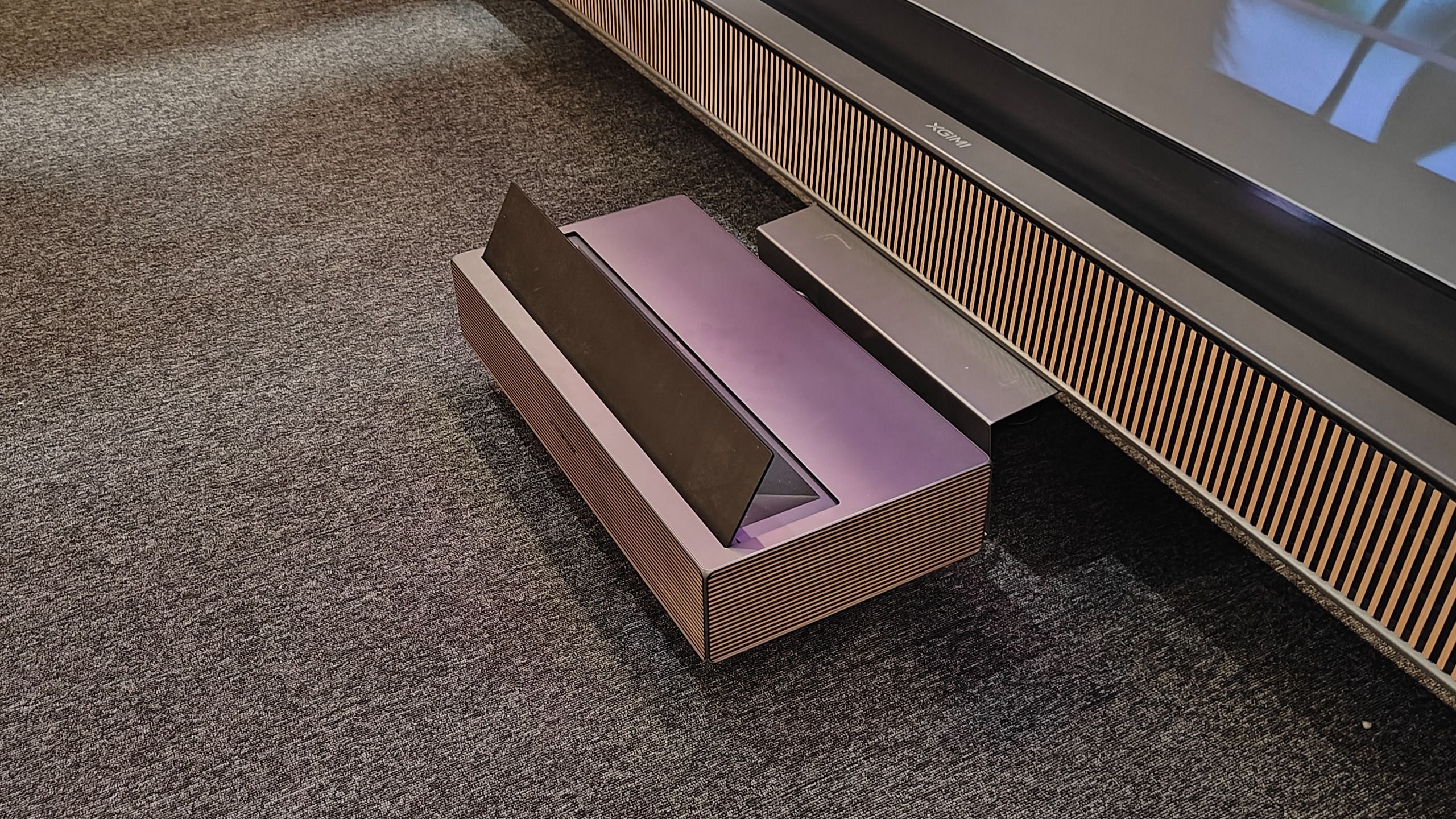
The Xgimi Aura 3 Max distinguishes itself through its technical specifications, boasting a 4K/120Hz output—a world first for the category. With a peak brightness of 5,700 ISO lumens and a contrast ratio of 8,000:1, the device aims to bridge the gap between daytime viewing and dark-room immersion.
Concurrent with this, AWOL Vision introduced its own flagship, the LuxVision. AWOL has focused heavily on the user experience, introducing an "optical shift" mechanism. This feature is particularly significant because it allows for physical adjustments to the image position without the resolution degradation typically associated with digital keystone correction. For enthusiasts, this is a critical development; it suggests that the industry is finally prioritizing optical engineering over digital manipulation to achieve the perfect image.
Technical specifications and performance metrics
To understand the trajectory of these devices, one must look at the convergence of hardware capabilities. Both the Xgimi Aura 3 Max and the AWOL LuxVision are built upon the Google TV platform, ensuring compatibility with modern streaming ecosystems. Furthermore, both incorporate integrated sound systems capable of decoding Dolby Atmos, acknowledging that modern home cinema users demand an all-in-one package that does not necessarily require an external discrete audio system.
The performance during live demonstrations at IFA offered a glimpse of how these internal advancements manifest on screen. The Aura 3 Max, tested with high-fidelity footage of wildlife, showcased a remarkable ability to resolve fine textures—such as animal fur—without introducing the noise or "unnatural" sharpening artifacts that have plagued older generations of projectors. Crucially, the dark-room performance showed a sophisticated handling of shadow detail, suggesting that the industry may be moving toward a more nuanced approach to contrast rather than simply relying on brightness pumps.
The AWOL LuxVision, meanwhile, leaned into its high-brightness capabilities during a display of the Blackpink Pink Venom music video. Despite the high-ambient-light environment of the trade show floor, the image remained vibrant and punchy. The ability to maintain color saturation and sharpness while fighting against exhibition-hall lighting is a testament to the increased lumen output of the new generation of laser-phosphor and triple-laser light engines.
Chronology of the UST evolution
The trajectory of UST projectors has been rapid. In the early 2020s, the market was flooded with budget-friendly models that prioritized price over performance, leading to a reputation for poor color accuracy and frustrating software interfaces. By 2023, the focus shifted toward "laser TV" branding, emphasizing the inclusion of specialized ALR (Ambient Light Rejecting) screens that were bundled with the projectors to improve contrast.
The 2024 cycle marks the third distinct phase: the integration of high-refresh-rate gaming capabilities and precision optical control. This transition is not merely cosmetic. By shifting to 120Hz, these manufacturers are explicitly courting the gaming demographic, a segment that has historically ignored projectors due to input lag and motion blur. If the performance seen at IFA holds true in standardized laboratory environments, these devices may finally reach a parity point where they can be recommended as a primary display for both gaming and cinema.
Broader industry implications
The introduction of optical shift and 120Hz 4K panels by companies like Xgimi and AWOL indicates a maturation of the category. When manufacturers move away from "spec-sheet wars"—where the focus is solely on arbitrary lumen counts—and toward usability features, the consumer experience improves significantly.
The implications for the wider home cinema market are clear: the barrier to entry for a 200-inch display is lowering, not just in terms of price, but in terms of technical competency required from the user. If the AWOL LuxVision’s optical shift feature functions as advertised, it could set a new industry standard. The reliance on digital keystone correction has long been a "dirty secret" of the projector market, as it inherently discards pixel information and introduces artifacts. A move back to optical, mechanical adjustments is a victory for purists and casual viewers alike.
However, challenges remain. The fundamental physics of light reflection versus light emission means that UST projectors will likely continue to be outperformed by top-tier OLED panels in pitch-black rooms. The success of the next generation of projectors will depend on whether they can consistently manage the balance between brightness and black-level accuracy.
Future outlook
As these units move from trade show floors to independent testing labs, the industry will be watching to see if the "first-look" performance holds up. The integration of high-performance components, such as advanced laser diodes and sophisticated optical lenses, suggests that the premium UST market is no longer a niche hobbyist domain.
For the average consumer, the shift toward a more robust, "fuss-free" experience is the most important takeaway from the current development cycle. As the software becomes more intuitive and the hardware more flexible, the dream of a true "cinema-in-a-box" is closer to reality than ever before. While OLED TVs will continue to dominate the small-to-medium screen market, the latest generation of UST projectors offers a compelling, large-scale alternative that is finally shedding the technical baggage of the past. The industry is currently in a state of rapid refinement, and for those waiting for the right moment to abandon the television for the projection screen, the 2024-2025 product window appears to be a significant turning point.