












A Legacy of Peer-to-Peer Collaboration
Launched in 1998 as the Apple Tech Exchange, the forum was conceived during a period of intense transition for Apple. At the time, the company was diversifying its hardware portfolio and beginning to establish the foundation for what would eventually become the world’s most valuable technology brand. The forum provided a decentralized space for enthusiasts, power users, and casual consumers to solve complex technical hurdles that official documentation could not always address.
For nearly 30 years, the community evolved alongside the technology it supported. It survived the transition from the PowerPC architecture to Intel chips, the introduction of the iPod, the disruptive arrival of the iPhone in 2007, and the later expansion into wearables and services. At its peak, the forum functioned as a vital triage center where community moderators and dedicated "Level" contributors provided faster, often more nuanced, answers than traditional customer support channels.
Chronology of the Platform
- 1998: Apple launches the "Apple Tech Exchange," the precursor to the modern support forum, to assist a growing community of Mac users.
- 2000s: The platform undergoes several iterations, eventually becoming the "Apple Support Communities," reflecting a broader push toward digital customer engagement.
- 2010–2015: The forum hits its stride, becoming the primary hub for troubleshooting iOS issues, iTunes connectivity problems, and early iCloud synchronization struggles.
- 2020: The platform transitions to a more modern, responsive design to match the aesthetic of Apple’s broader digital ecosystem.
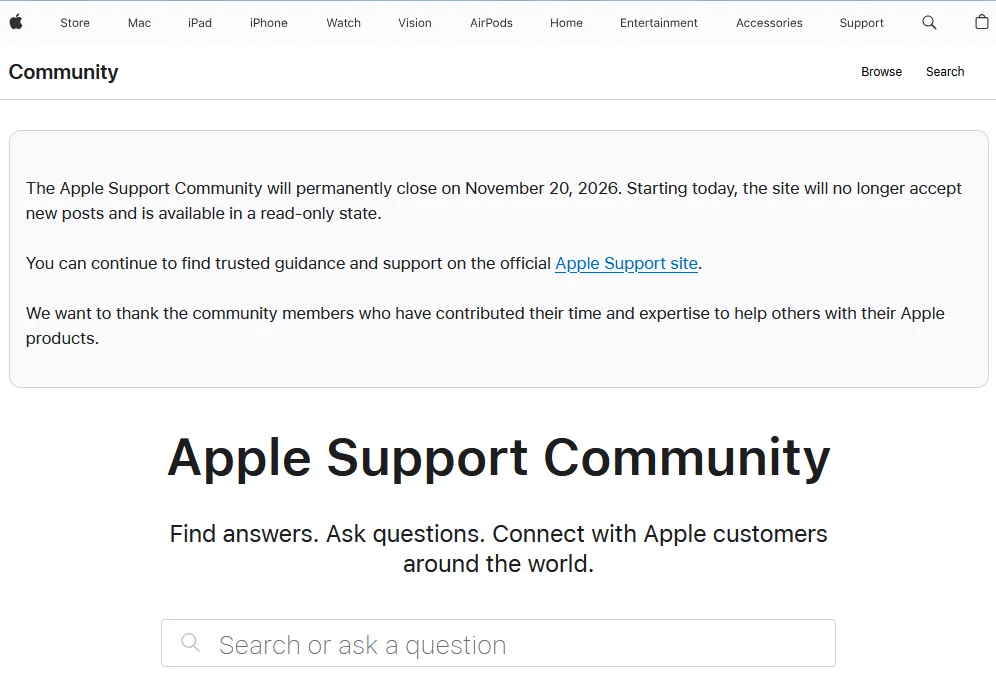
- November 2026: Apple announces the official sunsetting of the platform, transitioning the site to read-only mode ahead of a final shutdown on November 20.
The Shift in Consumer Support Paradigms
The closure of the forum represents a broader shift in how major technology corporations handle customer service. In the late 90s and early 2000s, community-driven forums were the gold standard for scaling support without exponentially increasing headcounts. However, as AI-driven chatbots, highly structured knowledge bases, and integrated "Apple Support" applications have become more sophisticated, the necessity for open-ended, human-moderated forums has diminished in the eyes of corporate strategy teams.
Strategic evaluations conducted by Apple suggest that the company is favoring a more controlled, direct-to-consumer support model. By centralizing assistance through official documentation and verified technician chats, Apple minimizes the risk of misinformation—a common pitfall in public forums—and ensures that troubleshooting steps align perfectly with current software versions and hardware specifications.
The Status of the Historical Archive
A primary concern among the long-term user base is the fate of the forum’s historical data. The Apple Support Community contains millions of threads, many of which provide the only known solutions for legacy hardware that is no longer covered by official Apple support guides.
As of the current announcement, Apple has not issued a definitive statement regarding the archival or preservation of this data. While the site remains accessible for viewing in its current read-only state, the lack of a promised migration path or an offline archive has led to concerns regarding the potential loss of "digital history." Technology historians and independent archivists often argue that such forums constitute a vital primary source for understanding the evolution of consumer computing, and their deletion would represent a significant "digital dark age" event for the Apple ecosystem.
Broader Implications and Industry Trends
The shutdown is not an isolated event but rather part of a wider industry trend. Companies such as Microsoft, Adobe, and others have gradually moved away from public, unmoderated community boards in favor of proprietary support ticketing systems and AI-supported search engines. The objective is to provide "frictionless" support, where the user reaches a solution through an algorithmically optimized path rather than navigating through lengthy, sometimes outdated community discussions.

However, the loss of these forums carries a hidden cost: the loss of human community. Many long-time contributors spent years earning "points" and status within the Apple community, building a social network based on mutual assistance. For these power users, the forum was more than just a place to fix a broken laptop; it was a digital gathering place. The dismantling of these structures often leads to a fragmentation of communities, with experts dispersing to third-party sites like Reddit, Discord, or niche enthusiast blogs, which lack the official backing and organized structure of the original platform.
Moving Forward: The Apple Support Ecosystem
For current and future users, Apple is redirecting all support traffic to its official Apple Support portal. This platform currently includes:
- Guided Troubleshooting: Step-by-step interactive flows that identify device issues based on symptom selection.
- Apple Support App: An integrated mobile solution that allows users to schedule appointments at Genius Bars or engage in real-time text-based support with Apple representatives.
- Knowledge Base Articles: A massive, professionally maintained library of documentation covering everything from hardware repairs to software privacy settings.
While these tools are undeniably more efficient for the average user experiencing a standard problem, they lack the "hacker" spirit that allowed for creative workarounds and deep-dive technical diagnostics common in the old forum format. The transition forces a shift from a "community-reliant" support model to a "provider-centric" one.
Analysis of the Transition
The decision to close the forum reflects a calculation that the cost of maintaining, moderating, and securing a massive public database outweighs the community value it provides. In an era of heightened cybersecurity, open forums can become vectors for phishing, scams, and the spread of malicious advice. By closing the platform, Apple effectively eliminates a potential liability.
However, the move also highlights the increasing "black box" nature of modern consumer technology. As devices become more integrated and software more complex, the ability for the average user to peer under the hood—or discuss the mechanics of doing so with others—is being curtailed. The closure of the Apple Support Community is a symbolic milestone in the maturation of the digital age, where the "wild west" of early internet collaboration is being replaced by the polished, locked-down efficiency of modern tech conglomerates.
Final Reflections
The community members who spent years volunteering their time to answer the queries of strangers provided a unique service. Their contributions often saved users thousands of dollars in unnecessary repair fees and prevented the premature disposal of functional hardware. As November 20, 2026, approaches, the community is reflecting on the end of a chapter. While the technology will continue to advance, the collaborative spirit that defined the Apple Support Community for nearly three decades will leave a void that centralized, algorithmic support systems may never fully replicate.
For now, the advice to all users is to export any vital information or unique troubleshooting solutions they have saved within the forum before the final switch is flipped. As the curtain falls on this digital landmark, it serves as a reminder of how quickly the internet’s early collaborative structures are being traded for the streamlined efficiency of the modern era. Whether this change ultimately benefits the user or merely the corporation remains a subject of ongoing debate within the technology community. What is certain, however, is that the landscape of peer-based technical support will never be the same again.