








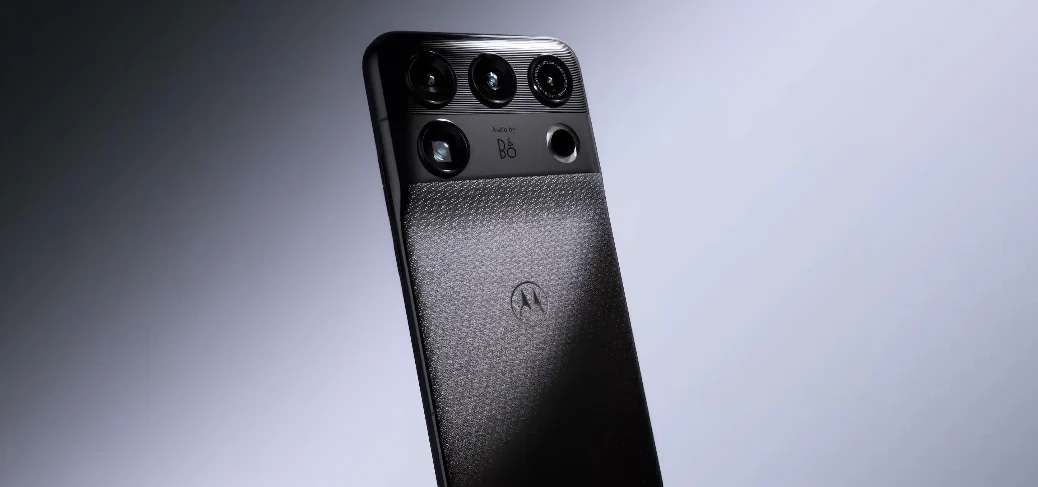
The landscape of mobile photography has shifted significantly this month as Motorola officially secures a commanding position in the global flagship market. According to the latest comprehensive benchmarking report released by DXOMARK, the newly unveiled Motorola Signature 27 has achieved an overall camera score of 173 points. This milestone performance allows the device to eclipse the Apple iPhone 18 Pro, positioning the handset as the second-best camera smartphone currently available on the global market. The only device maintaining a lead over the Motorola entry is the Huawei Pura 80 Ultra, which has held the top spot since its release earlier this year.
This evaluation marks a pivotal moment for Motorola, a brand that has historically occupied the mid-range and premium-adjacent segments but is now making a concerted, hardware-intensive push into the "ultra-premium" tier. The 173-point score is not merely a number; it represents a synthesis of sophisticated sensor technology, custom optical tuning, and advancements in computational photography.
Technical Architecture and Hardware Specifications
At the core of the Motorola Signature 27’s photographic success is a triple-lens array designed to handle a diverse range of lighting conditions and focal lengths. The primary camera utilizes the Sony LYTIA 910 sensor, a 50-megapixel powerhouse measuring 1/1.28 inches. With an f/1.6 aperture and advanced optical image stabilization (OIS), this sensor is engineered to maximize light intake while minimizing noise, particularly in challenging high-contrast environments.
Complementing the main sensor is a 50-megapixel ultrawide lens that offers an expansive 122-degree field of view, ideal for architectural and landscape photography. However, the most significant hardware inclusion is the 200-megapixel periscope telephoto lens. This unit, which supports 3x optical zoom and AI-enhanced Super Zoom Pro capabilities up to 100x, provides the resolution necessary for deep-crop photography without the degradation typically associated with digital magnification. The integration of 8K video recording with Dolby Vision further positions the device as a professional-grade tool for mobile content creators.
Under the chassis, the device is powered by the Qualcomm Snapdragon 8 Elite Extreme Gen 6 processor. This silicon is essential for the real-time processing required by the 200MP sensor and the "Moto AI" suite, which assists in image sharpening, skin tone reproduction, and low-light exposure management. With 12 GB of RAM and 512 GB of internal storage, the hardware architecture is built to sustain the heavy computational load of high-resolution video and photo rendering.
Chronology of the 2026 Flagship Race
The progression of mobile photography in 2026 has been defined by rapid iterative cycles. In June 2025, the release of the Huawei Pura 80 Ultra set a new standard for optical physics in mobile devices, establishing a benchmark that competitors have struggled to reach throughout the following year. By September 2026, the launch of the Apple iPhone 18 Pro introduced refinements to the Dynamic Island and battery efficiency, yet faced immediate scrutiny regarding the extent of its camera sensor advancements compared to the previous generation.

Motorola’s entry into this high-stakes environment in November 2026 was strategically timed to challenge the incumbent leaders. By collaborating directly with DXOMARK’s engineering teams for optical tuning, Motorola ensured that the Signature 27’s hardware was perfectly calibrated for the specific metrics tested by industry standards. This partnership underscores a shift in how manufacturers approach benchmarking: rather than simply launching a product and waiting for independent reviews, companies are now integrating third-party evaluation criteria into the development lifecycle.
Analytical Breakdown of Performance Metrics
The DXOMARK report highlights specific areas where the Motorola Signature 27 excels, most notably in portraiture and zoom. The device’s ability to render natural skin tones—a common point of failure for computational cameras—was cited as a primary reason for its high score. Furthermore, the Signature 27 has been officially designated as the best Android-based device for video capture currently on the market.
However, the report is balanced, noting areas for future refinement. Analysts identified occasional noise in low-light environments and minor frame shifts during motion-heavy video capture. While these flaws do not detract from the overall package, they serve as a reminder that even the highest-scoring devices are still contending with the physical limitations of mobile camera modules.
Beyond the camera, the device demonstrates extreme engineering. The display is a 6.8-inch curved Tandem OLED panel that hits a staggering 12,000 nits of peak brightness, a figure that significantly exceeds current industry norms. This brightness, combined with a 120 Hz refresh rate and 1.5K resolution, suggests that Motorola is targeting users who consume high-dynamic-range (HDR) media as much as they produce it.
Durability and Power Management
Motorola has also addressed the common criticism that high-performance flagships lack physical resilience. The Signature 27 carries both MIL-STD-810H and IP69K certifications. The IP69K rating, in particular, is noteworthy as it signifies the device can withstand high-pressure, high-temperature water jets, exceeding the standard IP68 water-resistance found in most flagship phones.
To support the power demands of the Snapdragon 8 Elite Extreme Gen 6 and the high-brightness display, the device houses a 7,000 mAh battery. This is substantially larger than the 5,000 mAh to 5,500 mAh cells found in competing flagships. The inclusion of 90W wired charging and 50W wireless charging suggests a focus on reducing downtime, an essential feature for users who rely on the phone’s professional-grade camera for long-duration field work.
Market Implications and Industry Outlook
The success of the Motorola Signature 27 has broad implications for the smartphone industry. First, it demonstrates that the "duopoly" of high-end mobile photography—traditionally shared between Apple and a few select premium Android manufacturers—is becoming more competitive. By achieving the second-highest global rank, Motorola has effectively repositioned its brand from a value-focused manufacturer to a serious contender for the "Prosumer" market.

Second, the reliance on the Snapdragon 8 Elite Extreme Gen 6 indicates that Qualcomm remains the dominant engine behind mobile innovation. As AI becomes more deeply integrated into the photography pipeline—moving beyond simple filters to complex, real-time image reconstruction—the synergy between processor efficiency and sensor output will determine the winners of the 2027 product cycle.
From an economic perspective, the lack of an official US price tag at launch has led to significant speculation. Industry observers note that while the specifications are top-tier, the brand’s ability to capture market share from Apple and Huawei will depend heavily on its pricing strategy. If positioned competitively against the iPhone 18 Pro, the Signature 27 could force an acceleration in the R&D cycles of its rivals, potentially leading to more aggressive hardware updates in the coming year.
Consumer Response and Next Steps
As of late November 2026, Motorola has opened the registration portal for interested buyers, signaling that the device is approaching a wide commercial release. The consumer reaction, particularly among photography enthusiasts, has been largely positive, with early social media sentiment focusing on the 200MP periscope lens.
For the broader market, the Motorola Signature 27 serves as a benchmark for what is possible when a manufacturer aligns its R&D priorities with the rigorous demands of objective, laboratory-based testing. While the Huawei Pura 80 Ultra remains the current leader, the narrowing gap between the top positions suggests that the next six months of mobile technology development will be defined by further improvements in low-light sensor efficiency and the integration of large-scale AI models into the camera application itself.
The industry now turns its attention to the upcoming seasonal refresh cycle. With the Motorola Signature 27 having effectively challenged the hierarchy of mobile photography, competitors are under renewed pressure to justify the high costs of their flagship models. Whether this leads to a "race to the top" in terms of hardware specs or a renewed focus on software-based post-processing remains to be seen, but the clear winner in this scenario is the consumer, who now has access to a broader array of high-performance tools than at any other point in the history of mobile technology.