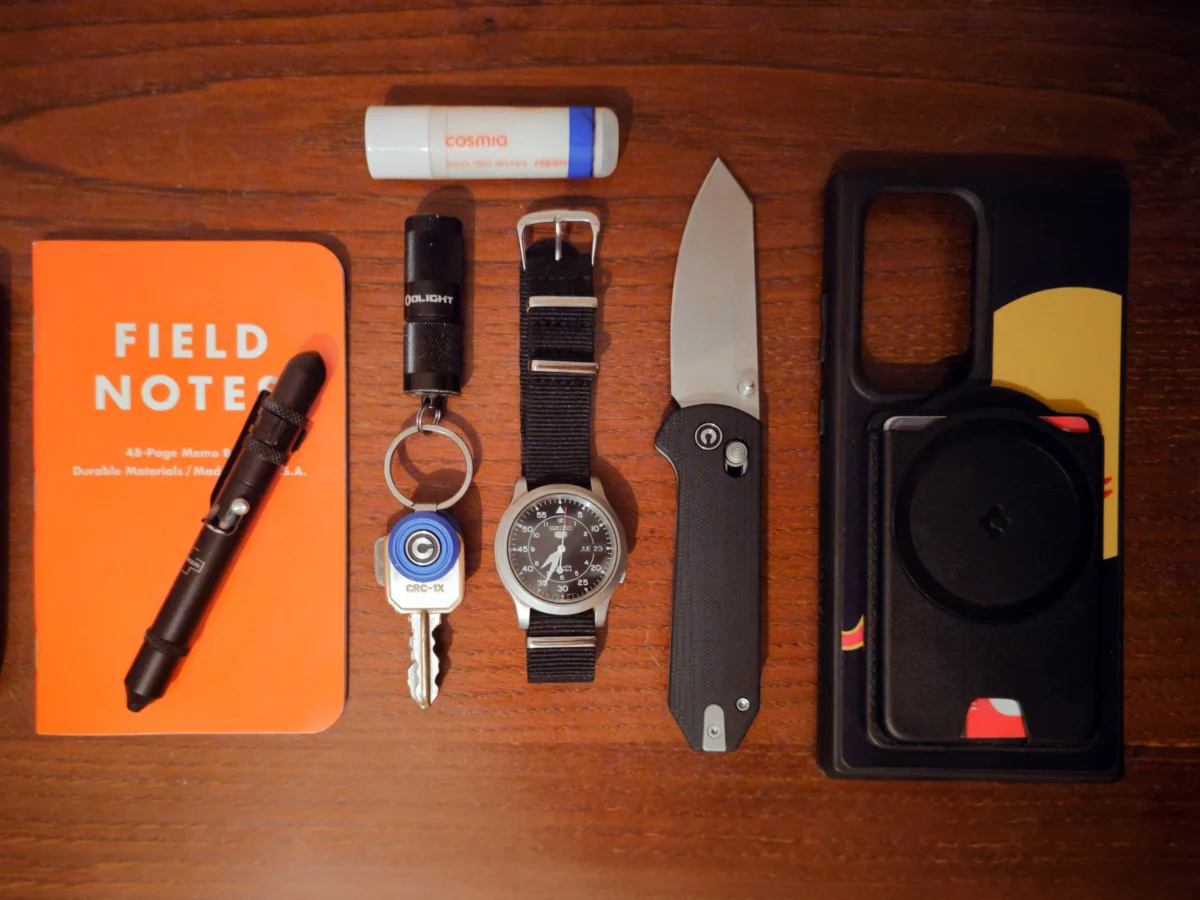
The practice of Everyday Carry (EDC)—the selection and optimization of essential tools carried on one’s person daily—has evolved from a niche hobby into a standardized discipline of personal preparedness. For professionals operating in high-precision environments, such as aeronautical automation, the philosophy of gear selection often mirrors the professional requirement for reliability, efficiency, and ergonomic optimization. Ruben, an aeronautical automation operator based in Portugal, offers a contemporary case study in how these principles translate to modern lifestyle management. By maintaining a curated selection of tools, he demonstrates a clear methodology in balancing duty-specific requirements with off-duty versatility.
The Intersection of Automation and Personal Utility
In the field of aeronautical automation, operators are tasked with the oversight of complex, safety-critical systems. This role necessitates an inherent appreciation for mechanical reliability and minimalist design. Ruben’s current kit reflects this professional ethos, characterized by a deliberate selection of tools that serve multiple functions without adding unnecessary bulk.
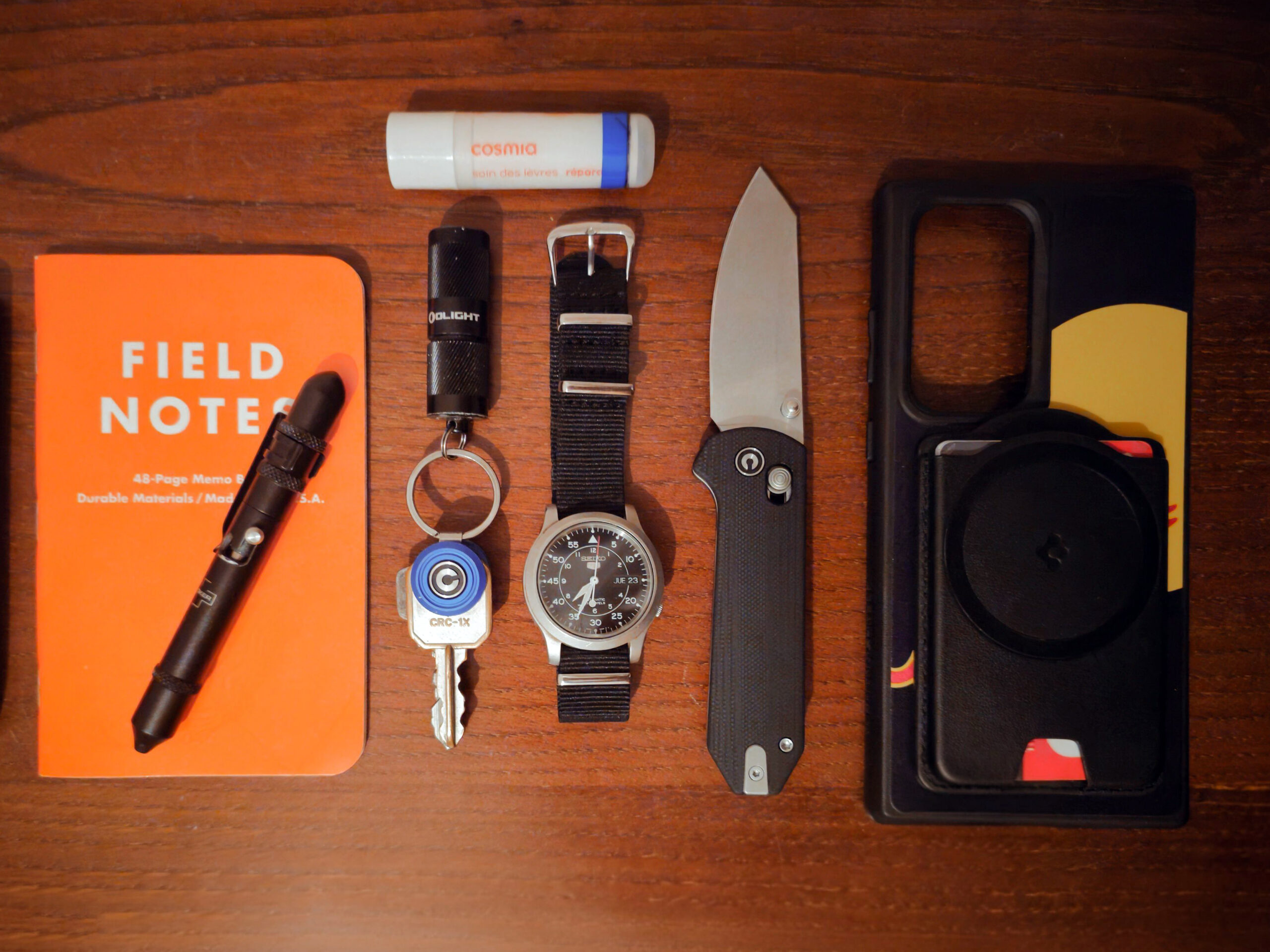
His recent adoption of the CIVIVI Yonder, a knife designed by Zac Whitmore, serves as a primary example of this shift toward functional refinement. The Yonder, which earned the distinction of "Best Buy of the Year" at the 2024 Blade Show, utilizes a crossbar lock mechanism—a feature historically associated with high-end tactical folders. By integrating this into a lightweight, ambidextrous platform, the tool meets the dual requirements of performance and ease of use in a professional setting.
A Chronology of Gear Evolution
The evolution of an EDC kit is rarely static; it is a fluid process dictated by changing environmental demands and personal discovery. Ruben’s journey began with a foundation of core essentials—a magnetic wallet, an ultra-compact key organizer, a mini bolt-action pen, and a high-lumen keychain flashlight. This "foundational layer" is designed to minimize the pocket footprint, ensuring that essential utilities are always accessible.
The recent addition of a Field Notes notebook signifies a transition from purely reactive tool use to a more proactive, documentation-heavy workflow. This addition suggests an increased need for rapid data capture, likely influenced by the technical nature of his work in aviation. Looking forward, the planned rotation of his secondary items—specifically the Kizer Feist and a Casio Edifice watch—highlights a strategic approach to context-dependent gear. The Kizer Feist, known for its refined front-flipper deployment and sleek aesthetic, offers a "dressier" alternative to the more utility-focused CIVIVI Yonder. Similarly, the Casio Edifice with a "Tiffany" dial provides a distinct stylistic shift, demonstrating that personal expression remains a significant factor in EDC culture even when functionality is prioritized.
Supporting Data: The Rise of Minimalist Utility
The rise of the EDC community is supported by a surge in demand for "high-value, low-bulk" gear. Market trends in the pocket knife and personal utility industry show a consistent growth rate of approximately 4-6% annually, driven largely by millennial and Gen Z professionals who prioritize multi-functional design.
Key characteristics of this demographic’s preferred gear include:
- Material Science: A shift toward lightweight, high-strength materials such as titanium, G10, and carbon fiber.
- Ergonomic Efficiency: A reduction in tool weight by an average of 15% over the last decade, without sacrificing structural integrity.
- Cross-Sector Utility: Tools that serve both professional engineering tasks and general everyday requirements.
Ruben’s choice of the CIVIVI Yonder is emblematic of this trend. By choosing a product that provides high-end locking mechanics at a mid-tier price point, he aligns with the broader consumer movement toward democratic access to professional-grade tools.
Professional Perspectives on EDC
The integration of specific tools into a professional workflow often draws scrutiny regarding safety and operational efficiency. In sectors like aeronautics, where strict regulations govern what can be brought onto a work floor, the selection of gear must be non-intrusive.
"The goal of a well-curated EDC is not merely to have tools, but to have the right tools available at the point of need," says a spokesperson for an international logistics and operations consulting firm. "When an operator selects gear that is lightweight and easily deployable, they reduce the cognitive load associated with searching for items, thereby allowing them to maintain focus on the critical task at hand. This is the hallmark of a high-functioning, disciplined professional."
The inclusion of a mini bolt-action pen and a keychain flashlight reinforces this perspective. These items are designed for "stealth" carry—they do not bulge in pockets or draw unnecessary attention—yet they provide the functionality of full-sized counterparts when required for maintenance or documentation.
Broader Impact and Implications
The implications of this EDC philosophy extend beyond individual organization. On a broader scale, the trend reflects a society that is increasingly conscious of its daily infrastructure. Whether through the lens of disaster preparedness or simple professional efficiency, the "Everyday Carry" movement encourages individuals to take ownership of their immediate environment.
Furthermore, the "minimalist-value" approach adopted by professionals like Ruben has forced manufacturers to reconsider their product pipelines. The success of the CIVIVI Yonder, for example, signals to the industry that consumers are no longer willing to sacrifice quality for price, nor are they willing to sacrifice weight for performance. This competitive pressure continues to drive innovation in the manufacturing sector, resulting in higher-quality tools reaching the market at more accessible price points.
Conclusion: The Future of Personal Preparedness
As Ruben’s gear continues to evolve, his trajectory provides a roadmap for those looking to refine their own daily carry. The transition from a static kit to a rotating, context-aware system is the logical next step for any EDC enthusiast. By maintaining a balance between the rugged requirements of his job in aeronautical automation and the aesthetic preferences of his off-duty life, he exemplifies the modern approach to personal preparedness.
The success of such a setup relies on three pillars: intentionality, adaptability, and an unwavering commitment to quality. Whether it is the decision to carry a notebook for manual data entry or the choice of a specific timepiece to suit a more formal environment, the tools one chooses to carry daily are an extension of one’s professional and personal identity. As the EDC community grows, the emphasis will undoubtedly remain on these core principles, ensuring that the next generation of gear is even more capable, compact, and efficient than the last. Through the documentation of these small, iterative changes, we gain a deeper understanding of the intersection between human performance and the tools that enable it.