








ves Big Heatsinks Aren’t Always Necessary for Modern Gaming Rigs
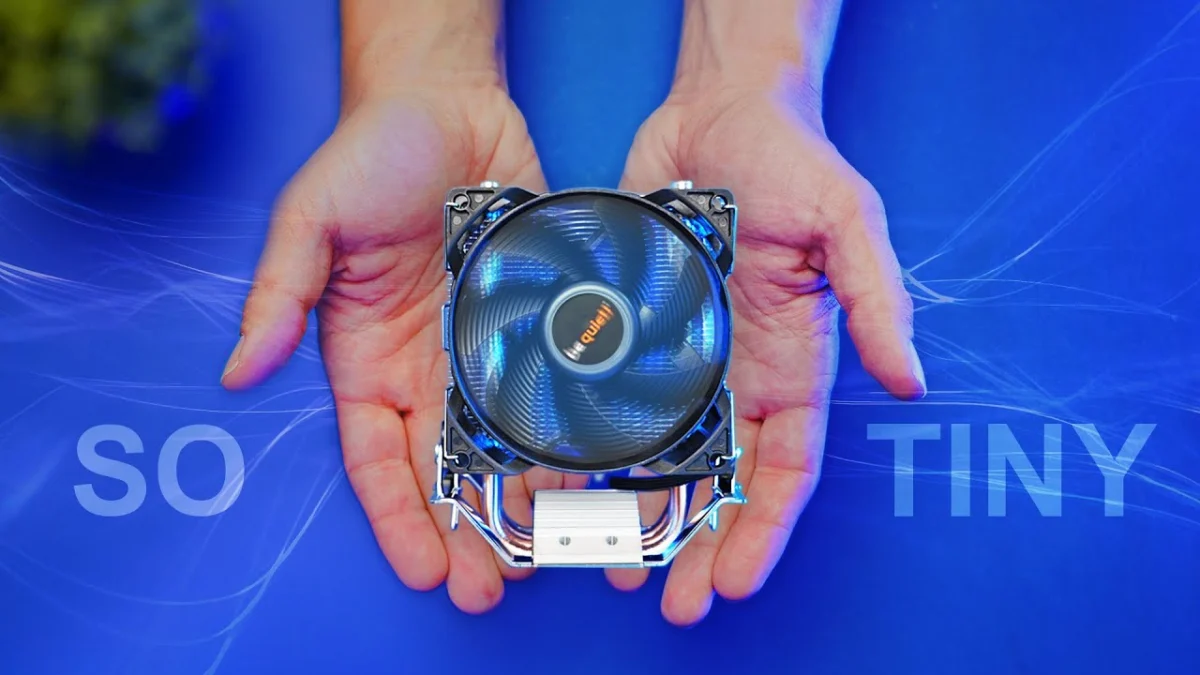
The contemporary personal computer hardware market often dictates that bigger is inherently better, particularly when managing thermal outputs of increasingly power-hungry silicon. High-performance computing demands have historically driven consumers toward massive dual-tower air heatsinks or complex liquid-cooling solutions, leaving budget-conscious builders with few compelling entry-level alternatives. However, recent product lifecycle updates from prominent German cooling manufacturer be quiet! challenge this prevailing industry assumption. The newly introduced Pure Rock Slim 2 represents a concerted effort to scale down advanced thermal dissipation technologies into a compact, highly accessible footprint without sacrificing acoustic or thermal efficiency. Priced aggressively at an official MSRP of $25, this 92mm tower cooler aims to redefine expectations for entry-level processor management, offering performance metrics that frequently rival traditional 120mm industry staples such as the Cooler Master Hyper 212 series and the premium Noctua NH-U12S.
Background Context of the Entry-Level Cooling Sector
To understand the positioning of the Pure Rock Slim 2, one must examine the evolution of the budget CPU cooling market over the past decade. For years, standard 120mm tower coolers have served as the undisputed default recommendation for builders seeking an upgrade over stock thermal solutions. Models like the Cooler Master Hyper 212 Evo became ubiquitous in the DIY community by offering a reliable balance of cost and cooling capacity. Yet, as processor architectures from both Intel and Advanced Micro Devices (AMD) began pushing higher core counts and aggressive boost algorithms, thermal dissipation requirements steadily increased. Simultaneously, the burgeoning popularity of small form factor (SFF) cases—such as the Cooler Master NR200—created an acute demand for shorter, highly compatible heatsinks capable of fitting into restricted vertical clearances without compromising case airflow dynamics.
Manufacturers responded by developing compact 92mm cooling towers designed specifically to navigate spatial limitations. While these smaller units have existed in various iterations across the market for years, they frequently suffered from excessive fan noise or inadequate thermal thresholds, often capping out well before the demands of modern mid-range CPUs. The introduction of the original Pure Rock Slim attempted to bridge this gap, but the release of the Pure Rock Slim 2 marks a more mature execution of this engineering philosophy. By integrating refined fin arrays and optimized fan technology, be quiet! has targeted the intersection of ultra-compact sizing, low acoustic profiles, and aggressive market pricing.
Chronology and Product Evolution
The development cycle leading to the Pure Rock Slim 2 reflects iterative refinement rather than radical redesign. The original Pure Rock Slim established a baseline for compact cooling by utilizing a three-heatpipe direct-touch base and a standard 92mm fan. Industry analysts note that while the first-generation model achieved moderate success, consumer feedback highlighted specific areas for improvement, notably installation complexity and thermal headroom under sustained loads.
In response to these market demands, be quiet! engineered several key updates for the second-generation iteration. The most immediate structural modification involves an extension of the rear aluminum fin array, designed to marginally increase surface area for enhanced heat dissipation. Furthermore, the base plate underwent subtle geometric revisions to optimize contact pressure against modern integrated spreader surfaces. Perhaps the most critical timeline milestone in the product’s rollout was the strategic decision to pre-install the AMD mounting bracket directly at the factory. This adjustment acknowledged shifting market shares, recognizing that AMD’s Ryzen architecture had achieved widespread adoption among DIY builders and system integrators alike.
Supply Chain Realities and Pricing Dynamics
Despite an official manufacturer’s suggested retail price of $25, the acquisition of the Pure Rock Slim 2 has occasionally encountered friction within the broader e-commerce ecosystem. Industry observers have documented recurring pricing anomalies on major online retail platforms, including Amazon and Newegg. Independent third-party vendors frequently capitalize on high-demand hardware launches by acquiring initial inventory stocks and relisting them at inflated secondary market prices. Consequently, prospective buyers must exercise diligence when navigating retail listings to secure the cooler at its intended baseline valuation.
Despite these transient market fluctuations, the Pure Rock Slim 2 maintains its status as one of the most cost-effective cooling solutions manufactured by an established tier-one brand. The availability of a reputable, silence-optimized cooler at a sub-$30 price point provides a significant value proposition for entry-level system builders operating on strict financial constraints.
Technical Specifications and Design Architecture
From a physical standpoint, the Pure Rock Slim 2 boasts a remarkably diminutive footprint. Standing at 135 millimeters in height, 82 millimeters in depth, and 97 millimeters in width, the unit is substantially more compact than standard 120mm tower coolers. This constrained vertical profile allows it to integrate seamlessly into spatial environments where traditional heatsinks would exceed maximum chassis limitations.
The thermal architecture relies on three 6mm copper heatpipes that utilize a heatpipe direct-touch (HDT) methodology, establishing direct contact with the processor’s integrated heat spreader. These pipes channel thermal energy upward into a dense array of aluminum fins. The assembly is actively cooled by a 92mm Pure Wings 2 fan, a proprietary design renowned within the industry for its operational longevity and low noise output. Operating at a maximum rotational speed of 2,300 RPM, the fan achieves high static pressure without generating the disruptive high-frequency whines commonly associated with smaller-diameter high-speed rotors.
Installation Process and Compatibility Analysis
System integration and mounting methodology represent critical factors for any CPU cooler, particularly within the budget segment where novice builders are primary consumers. The Pure Rock Slim 2 features a revised installation mechanism that significantly simplifies the mounting process, though user experience varies depending on the platform architecture.
For AMD platforms utilizing AM4 sockets, the installation procedure leverages the standard motherboard retention modules. The process requires builders to orient the cooler, engage the retaining clips onto the stock plastic brackets, and apply downward pressure to secure the assembly. This tool-free approach minimizes potential installation errors.
Conversely, Intel platform installation relies on a pushpin mounting system. While this method requires minimal time and avoids the need for backplates, industry engineers often note that pushpin designs can occasionally struggle to deliver the precise, uniform mounting pressure achievable with screw-down retention systems. Despite this minor trade-off, the physical dimensions of the Pure Rock Slim 2 yield a distinct advantage regarding component clearance. Due to its narrow profile, the heatsink completely avoids interference with adjacent random-access memory (RAM) slots, permitting the use of fully populated memory configurations featuring tall decorative heat spreaders without physical obstruction.
Performance Metrics and Thermal Testing Data
Rigorous performance evaluations reveal surprising capabilities for a cooling apparatus of this scale. Acoustic testing demonstrates that the Pure Wings 2 fan operates with exceptional quietness. At a 70% duty cycle, the fan noise profile frequently reaches the baseline noise floor of standard testing environments, a metric rarely achieved by budget-tier coolers. Even when operating at maximum revolutions per minute (2,300 RPM), the acoustic output caps at approximately 40 decibels, positioning the Pure Rock Slim 2 favorably against noisier competitive offerings.
Thermal dissipation benchmarks further underscore the efficiency of the design. When subjected to a standard 95-watt thermal load, the cooler performs competitively, matching the thermal metrics of larger, more expensive options while maintaining lower decibel readings. Pushing the thermal envelope to a 125-watt load—which approaches the manufacturer’s specified maximum Thermal Design Power (TDP) threshold of 130 watts—reveals that the heatsink continues to handle sustained processing tasks effectively, frequently tying the performance of the Noctua NH-U12S up to a 37-decibel threshold and outperforming the Cooler Master Hyper 212 Evo across equivalent testing intervals.
However, hardware analysts emphasize the physical limitations inherent to a 92mm single-tower design. When subjected to an aggressive 150-watt thermal load, the Pure Rock Slim 2 rapidly reaches its maximum thermal saturation capacity, resulting in thermal throttling. Under such high-wattage scenarios, system builders are explicitly advised to transition toward larger dual-tower air coolers or liquid-cooling loops.
Broader Industry Implications and Market Impact
The commercial and technical reception of the be quiet! Pure Rock Slim 2 highlights a broader shift in hardware engineering priorities. As processor manufacturers continue to optimize power efficiency—yielding mainstream CPUs that operate comfortably within moderate thermal envelopes—the absolute necessity for oversized cooling apparatuses diminishes for the average consumer.
By demonstrating that high acoustic comfort, straightforward installation, and competent thermal management can be successfully packaged into a $25 footprint, be quiet! has established a formidable benchmark in the entry-level component sector. For standard office systems, budget gaming rigs, and compact form factor builds operating below the 130-watt threshold, the Pure Rock Slim 2 offers a compelling argument that expensive, oversized cooling solutions are frequently an unnecessary expenditure. As market trends favor space-efficient and cost-effective computing solutions, compact engineering innovations of this caliber are poised to play an increasingly vital role in consumer hardware configurations.