









The release of the latest TOP500 list at the SC26 conference has once again highlighted the shifting dynamics of global high-performance computing (HPC), with Advanced Micro Devices (AMD) marking a substantial expansion across the world’s most powerful supercomputing architectures. According to the newly published rankings, AMD-powered systems now account for 40% of the entire elite list, representing a remarkable 14% year-over-year increase compared to 2025. This growth elevates the total count of AMD-driven systems on the index to 202, up significantly from the 177 machines recorded during the previous iteration.
The bi-annual TOP500 list, which evaluates supercomputers based on their performance on the High-Performance Linpack (HPL) benchmark, continues to serve as the definitive yardstick for measuring national and corporate capabilities in scientific simulation, artificial intelligence, and advanced computational research. The latest rankings underscore a period of intense competition among hardware vendors and sovereign states, as the race for exascale computing—and the emerging frontier of integrated AI-HPC workloads—accelerates worldwide.
Main Facts and New Entrants
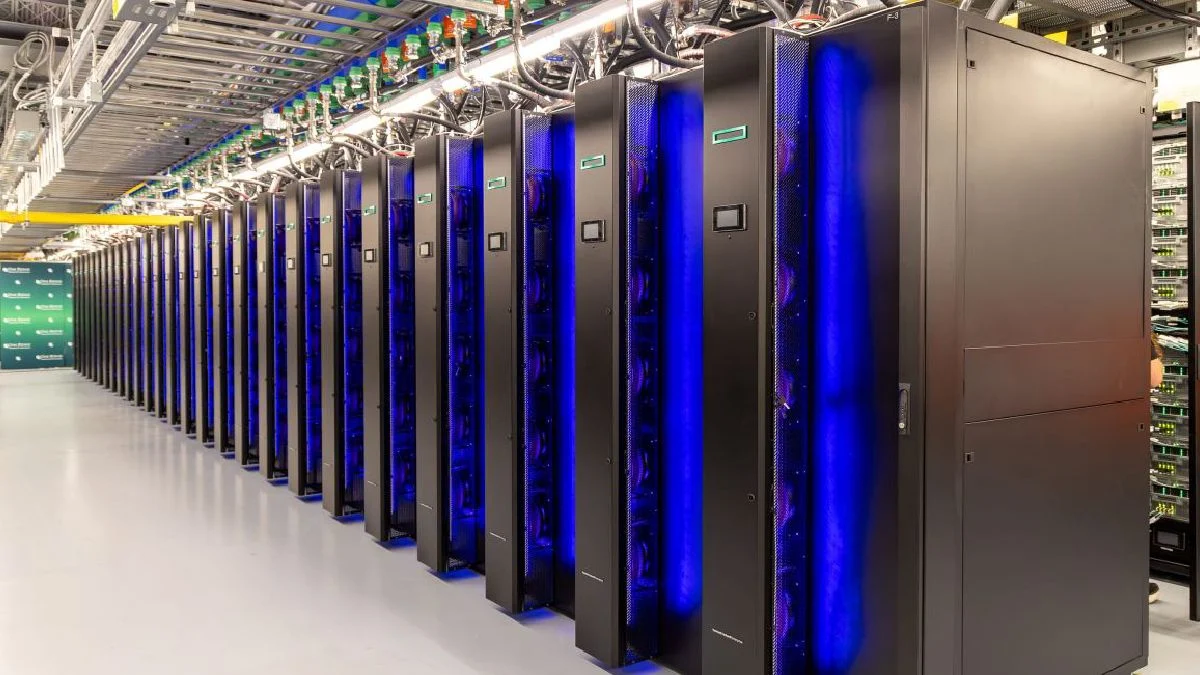
The most recent deployment capturing attention in the fresh rankings is "Lux," a newly introduced "SI + HPC supercomputer" collaboratively developed by AMD and the United States Department of Energy (DOE). Debuting impressively at position 14 on the global index, Lux represents a growing trend toward converged infrastructures that seamlessly merge traditional scientific simulation with artificial intelligence workloads. The machine showcases the ongoing partnership between federal research entities and private semiconductor manufacturers aimed at addressing complex national security, energy, and materials science challenges.
Within the upper echelons of the TOP500, AMD maintains a commanding and familiar presence. China’s formidable LineShine supercomputer retains the number one overall slot, a position it secured after dethroning the United States’ El Capitan system earlier in the year. LineShine historic placement made waves across the industry as the first machine in the rankings to sustain more than 2 exaflops of double-precision performance utilizing exclusively CPU architecture.
Despite conceding the top spot, AMD-powered architectures dominate the immediate podium and upper tier. El Capitan, the flagship DOE system housed at Lawrence Livermore National Laboratory, stands firmly in the second position, powered by specialized AMD hardware. Directly behind it in third place is Frontier, the world’s first officially declared exascale system hosted at Oak Ridge National Laboratory. Rounding out AMD’s top-tier representation are HPC7 at the sixth position and HPC6 at the eighth position, mirroring the exact placement distribution seen in the previous benchmarking cycle.
Chronology and Event Background
The backdrop to the SC26 conference and the latest TOP500 drop is a multi-year narrative defined by the crossing of the exascale threshold—the ability to perform a quintillion (a billion billion) calculations per second.
The journey toward modern heterogeneous computing began in earnest in the late 2010s, as traditional CPU scaling under Moore’s Law began to plateau. Institutions and vendors shifted decisively toward accelerated computing models, pairing powerful central processing units with graphics processing units or specialized accelerators.
In late 2022, the supercomputing landscape was redefined when Frontier broke the exascale barrier, giving AMD a historic first-mover advantage in the exascale era. Throughout 2023 and 2024, deployments of systems like El Capitan at Lawrence Livermore and Aurora at Argonne National Laboratory pushed the boundaries of scale further. By 2025, the global ecosystem entered a phase of consolidation and diversification, where energy efficiency and AI integration became paramount.
The introduction of systems like Lux in late 2026 marks the next evolutionary phase: the convergence of simulation and intelligence (SI + HPC). Rather than treating artificial intelligence and traditional modeling as separate computational domains, modern supercomputers are increasingly engineered from the silicon up to handle both concurrently, accelerating discovery timelines in fields such as drug discovery, climate modeling, and nuclear physics.
Supporting Data and Market Analysis
A deeper analysis of the TOP500 metrics reveals broader market trends within the high-performance computing sector. AMD’s expansion to a 40% market share—representing 202 systems—illustrates a structural shift in enterprise and government procurement preferences. Over the past three years, data center operators have increasingly turned to advanced chiplet designs and high-bandwidth memory integrations to meet stringent thermal and power budgets.
While historical rankings were frequently dominated by a single hardware ecosystem, the modern TOP500 reflects a highly competitive duopoly in accelerated computing, alongside specialized domestic architectures developed in regions such as China and Europe. The rise in AMD’s footprint is largely attributed to the widespread adoption of its EPYC processors and Instinct accelerators across major national laboratory upgrades and hyperscale scientific installations.
Furthermore, energy efficiency has emerged as a critical metric on the parallel GREEN500 list, which ranks systems based on performance per watt. As power grids face unprecedented strains from expanding data center footprints, the ability of modern AMD architectures to deliver high performance while optimizing power utilization has become a decisive factor for procurement officers worldwide.
Official Responses and Industry Perspectives
While direct public commentary regarding specific ranking shifts remains measured, statements from government agencies and corporate leadership offer insight into the motivations driving these massive technological investments. Representatives from the U.S. Department of Energy have repeatedly emphasized that modern supercomputing assets like El Capitan, Frontier, and the newly debuted Lux are foundational to maintaining national competitiveness in economic security and scientific leadership.
Industry analysts note that the fierce competition between systems like LineShine and El Capitan acts as a powerful catalyst for ongoing semiconductor research and development. In disclosures accompanying product roadmaps, AMD executives have consistently reiterated their commitment to scaling HPC infrastructure, pointing to modular architecture designs and advanced packaging technologies as key enablers for future computational milestones.
The collaboration behind systems like Lux underscores a broader industry consensus: building the next generation of scientific instruments requires deep, public-private synergy. By combining the computational demands of federal research facilities with the silicon engineering expertise of private enterprise, stakeholders are able to pioneer architectures that would be commercially unviable for either party to develop in isolation.
Broader Impact and Implications
The implications of the SC26 TOP500 results extend far beyond academic bragging rights or corporate market share statistics. Supercomputers serve as the digital testbeds for the technologies of tomorrow. The dominance of specific hardware ecosystems in these rankings often foreshadows enterprise data center trends, influencing everything from cloud computing infrastructure to enterprise artificial intelligence deployments.
As computational workloads increasingly blend heavy physics simulations with deep learning algorithms, the architectural choices validated on the TOP500 list will dictate how industries approach complex problem-solving. Sectors ranging from aerospace engineering and pharmaceutical research to financial modeling and meteorology rely on the trickle-down effect of these bleeding-edge technologies.
Moreover, the shifting geopolitical landscape of supercomputing—highlighted by China’s sustained presence at the summit of the rankings alongside robust U.S. deployments—signals a prolonged, multi-polar race for technological supremacy. As nations recognize computational power as a core pillar of sovereignty, investments in exascale and post-exascale systems show no signs of abating.
In summary, the SC26 TOP500 list captures an industry at the height of its transformation. With AMD capturing a commanding 40% share of the world’s premier systems, the integration of new architectures like Lux, and the continued high-performance output of veterans like El Capitan and Frontier, the global high-performance computing landscape remains as dynamic, competitive, and vital to scientific progress as ever before.