







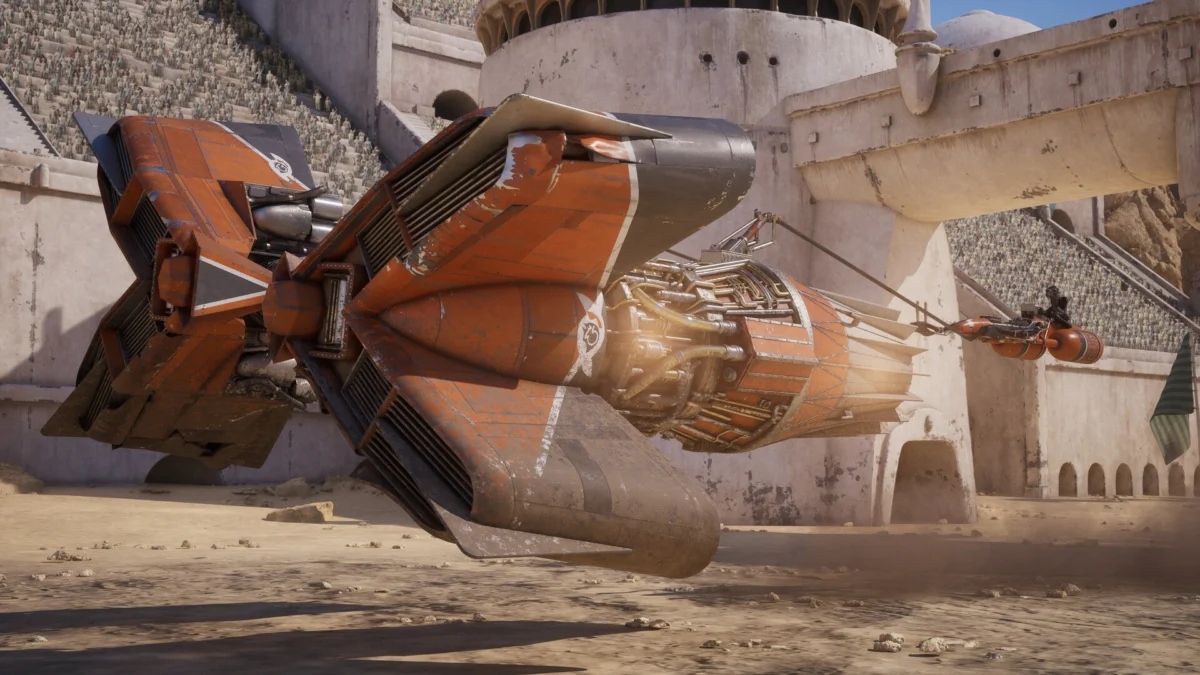
The arcade racing landscape within the Star Wars universe is set for a significant expansion as developer Fuse Games officially confirmed that local split-screen functionality will arrive in the title Star Wars: Galactic Racer in early 2027. This update, which addresses one of the most requested features since the game’s initial release, will be bundled into a newly developed "Free Play" mode, marking a departure from the game’s current reliance on online-only competitive structures.
The Evolution of Galactic Racer: A Response to Community Demand
Since its launch, Star Wars: Galactic Racer has garnered critical acclaim for its high-octane gameplay, often drawing comparisons to the legendary Criterion Games era of the Burnout series. While the title successfully captured the visceral speed of podracing and the chaotic joy of vehicular combat, it was notably restricted to online lobbies. Players were limited to 12-player speeder races and 8-player podracing tours, leaving a void for those seeking the traditional "couch co-op" experience that has historically defined the arcade racing genre.
Fuse Games addressed this gap through a formal announcement on social media platforms in mid-November 2026. The studio acknowledged the persistent requests from the player base, confirming that a dedicated internal team has been tasked with building the infrastructure required to support local, multi-user sessions. By integrating a four-player split-screen capacity, the studio is effectively repositioning the game as a social staple for living room gaming, a segment of the market that has seen a resurgence in popularity among arcade enthusiasts.
Defining the Free Play Mode
The upcoming 2027 update is centered around the implementation of the "Free Play" mode. Unlike the standard campaign or competitive multiplayer tiers, which are governed by specific matchmaking rules and progression milestones, Free Play is designed as a sandbox-style environment.
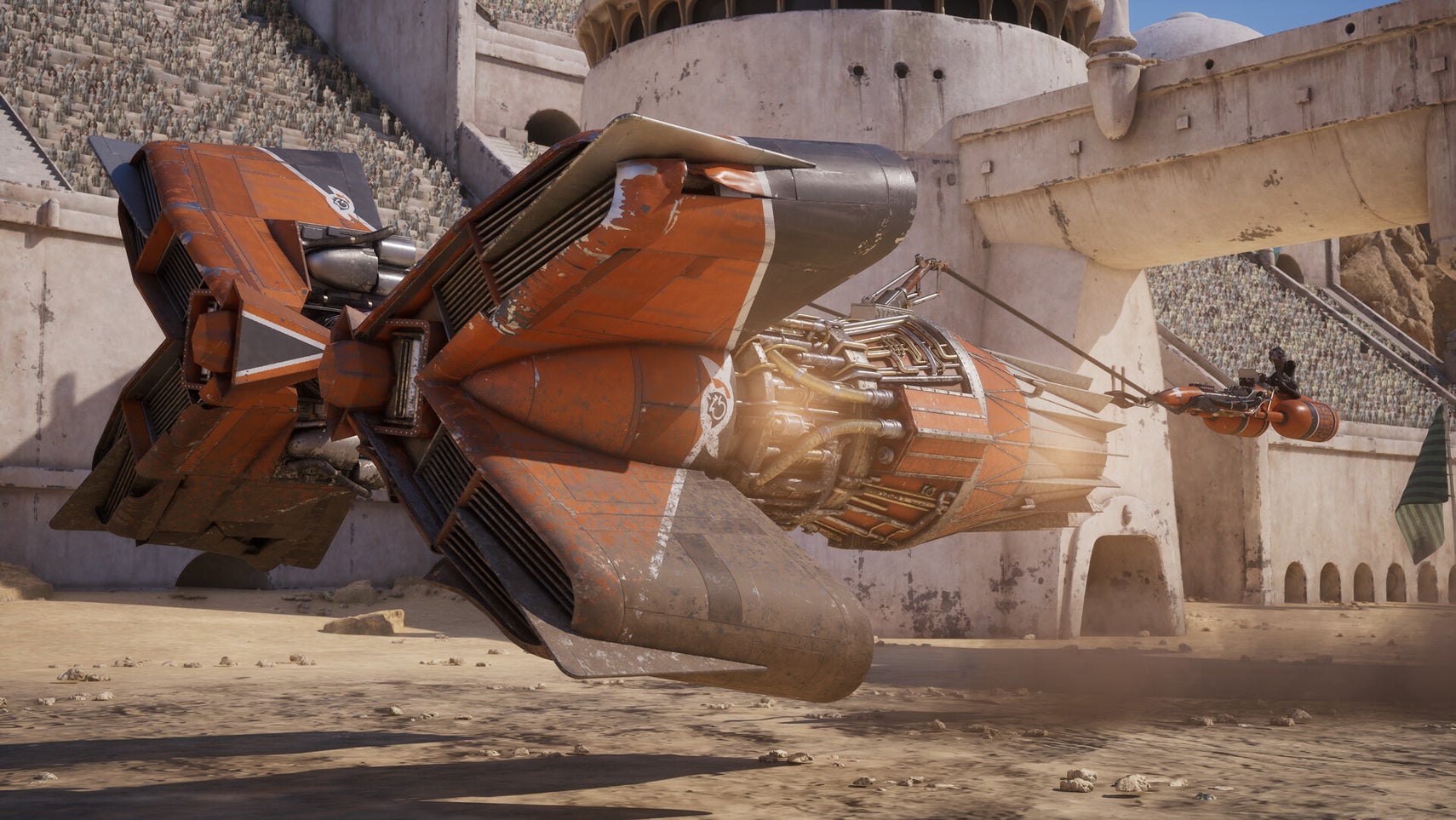
Under this new framework, players will be granted the freedom to curate their own racing scenarios. This includes the ability to select from the complete roster of vehicles, characters, planets, and specific track configurations. The mode supports up to four players simultaneously on a single console. This flexibility is expected to significantly increase the game’s longevity, as it removes the barrier of having to progress through the main story or satisfy specific matchmaking criteria to access desired assets.
Chronology and Development Context
The road to this update reflects the evolving relationship between independent developers and the Lucasfilm Games licensing arm.
- Launch Phase: Star Wars: Galactic Racer debuted to strong reviews, with critics praising the synthesis of Roguelite elements and arcade-style racing physics.
- The Feedback Loop: Throughout 2026, community forums and social media channels were flooded with requests for offline multiplayer, a standard feature in many classic Star Wars racing titles of the past.
- Internal Development: According to reports, Fuse Games began the transition of its development resources toward the Free Play mode in the second half of 2026, prioritizing the complex task of rendering four distinct views in real-time while maintaining the game’s demanding frame rates.
- The 2027 Roadmap: With a release window set for early 2027, the team is currently in the optimization phase, ensuring that the visual fidelity of the game does not suffer significantly when the engine is tasked with processing multiple player inputs on a single screen.
Industry Implications and the Lucasfilm Strategy
The move by Fuse Games is emblematic of a broader shift in how Lucasfilm Games manages its intellectual property. In recent years, the company has adopted a more flexible approach toward developer pitches, allowing smaller, boutique studios to take risks on niche genres. By empowering teams with specific expertise—such as Fuse Games’ background in high-speed, collision-heavy racing—Lucasfilm has managed to diversify the Star Wars gaming portfolio beyond the traditional action-adventure and RPG formats.
This strategy has proven successful. Star Wars: Galactic Racer, alongside titles like Zero Company, has demonstrated that fans are eager for genre-specific experiences that utilize the Star Wars aesthetic as a backdrop rather than a requirement for a narrative-heavy experience. Analysts suggest that if the split-screen update for Galactic Racer proves successful, it may encourage other developers under the Lucasfilm umbrella to revisit local multiplayer features in future titles, potentially reversing the industry-wide trend of focusing exclusively on cloud-based online multiplayer.
Technical Challenges of Split-Screen Implementation
Transitioning a game designed for singular perspective rendering to a split-screen format is not merely a UI change; it is a significant technical undertaking. Each player’s perspective requires its own set of draw calls, lighting calculations, and physics checks. For a title that prides itself on intense motion blur, particle effects, and high-speed debris, the performance overhead is substantial.

Fuse Games’ decision to build this as a standalone mode rather than retrofitting it into the existing campaign suggests a pragmatic approach to performance management. By isolating the Free Play mode, the developers can potentially tune the game’s engine to prioritize performance over the complex background assets seen in the single-player campaign, ensuring that the frame rate remains stable enough to satisfy the demands of competitive racing.
Market Reception and Future Outlook
The reception to the announcement has been overwhelmingly positive, with the gaming community viewing this as a rare instance of a developer actively pivoting its roadmap to meet user expectations. The inclusion of split-screen is expected to boost the game’s visibility in the "party game" category, a sector that remains highly competitive.
Furthermore, the "Free Play" mode creates a bridge for new players. By allowing users to pick their favorite character and track without the grind, the game becomes more accessible for casual social gatherings. This shift could lead to a secondary wave of interest in the title, potentially driving sales throughout 2027 as the game becomes a recommended staple for local multiplayer sessions.
As the industry moves toward 2027, all eyes will be on how Fuse Games manages the transition. If successful, the update will serve as a case study for how developers can revitalize existing titles through community-driven feature updates, proving that even in the age of massive online ecosystems, the local "couch" experience remains a cornerstone of the gaming industry. The integration of this feature reinforces the sentiment that the Star Wars universe is not just a stage for epic narratives, but a versatile setting for the pure, unadulterated mechanics of arcade competition.
With the continued support of Lucasfilm Games and a clear commitment to their player base, Fuse Games appears to be positioning Star Wars: Galactic Racer for a long and sustained lifecycle. As fans look forward to the early 2027 update, the focus now shifts to whether the studio will provide further post-launch content, such as additional tracks or vehicles, to accompany the highly anticipated Free Play mode. For now, the prospect of four-player, local split-screen racing in the Star Wars universe stands as one of the most anticipated milestones for the coming year.