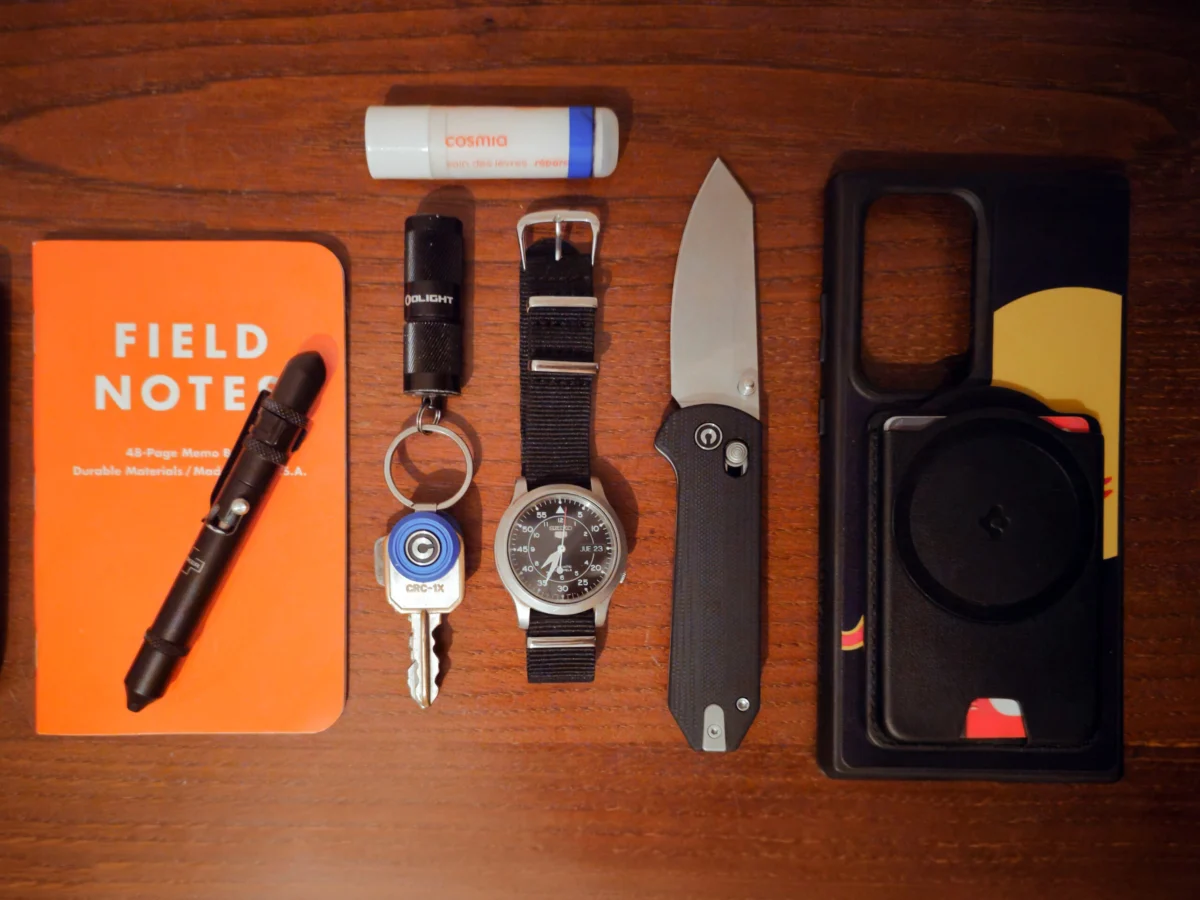
In the demanding field of aeronautical automation, where precision is not merely a preference but a safety requirement, the tools one carries must reflect a commitment to reliability and efficiency. Ruben, a professional Aeronautical Automation Operator based in Portugal, has recently shared a detailed look into his curated "Everyday Carry" (EDC) setup. His selection of gear represents a sophisticated balance between modern industrial design and practical utility, tailored for both the high-stakes environment of aviation technology and the fluid needs of a life on the go. By examining the components of this kit—ranging from specialized cutting tools to minimalist organizational assets—one gains insight into a broader cultural shift toward high-value, high-performance gear that eschews unnecessary bulk in favor of streamlined functionality.
The Role of the Aeronautical Automation Operator
To understand the logic behind Ruben’s gear selection, it is first necessary to define the professional context of an Aeronautical Automation Operator. These professionals are responsible for the oversight, maintenance, and operation of complex automated systems within the aviation sector. This may include managing robotic assembly lines for aircraft components, overseeing automated air traffic control support systems, or maintaining the programmable logic controllers (PLCs) that govern airport infrastructure.
In such a role, the environment is often characterized by a mixture of clean-room precision and heavy industrial demands. An operator must be prepared to troubleshoot digital interfaces while also performing physical inspections. This necessitates a kit that is lightweight enough to avoid hindering movement during technical inspections but robust enough to handle the rigors of a mechanical environment. Ruben’s kit, which emphasizes minimalism and "value-driven" performance, is a direct response to these professional exigencies.
The Primary Cutting Tool: The CIVIVI Yonder
The centerpiece of Ruben’s current rotation is the CIVIVI Yonder, a folding pocket knife that has garnered significant acclaim within the cutlery industry. Designed by Zac Whitmore, a former Blade HQ staff member turned independent designer, the Yonder was specifically recognized at Blade Show 2024, winning the prestigious "Best Buy of the Year" award. This accolade is significant; it indicates that the tool provides a level of engineering and ergonomic efficiency that far exceeds its market price.
The Yonder features a crossbar lock mechanism, which is increasingly favored in professional EDC circles for its ambidextrous nature and its ability to keep the user’s fingers out of the path of the closing blade. For an automation operator who may need to deploy a tool with either hand while navigating cramped equipment housings, this functional symmetry is vital. The blade’s geometry is designed for "no-nonsense" utility, capable of slicing through heavy-duty zip ties, opening industrial packaging, or stripping wire in a pinch. Its lightweight construction ensures that it does not become a burdensome weight on a utility belt or in a pocket during long shifts.
Documentation in the Digital Age: Field Notes and Bolt-Action Pens
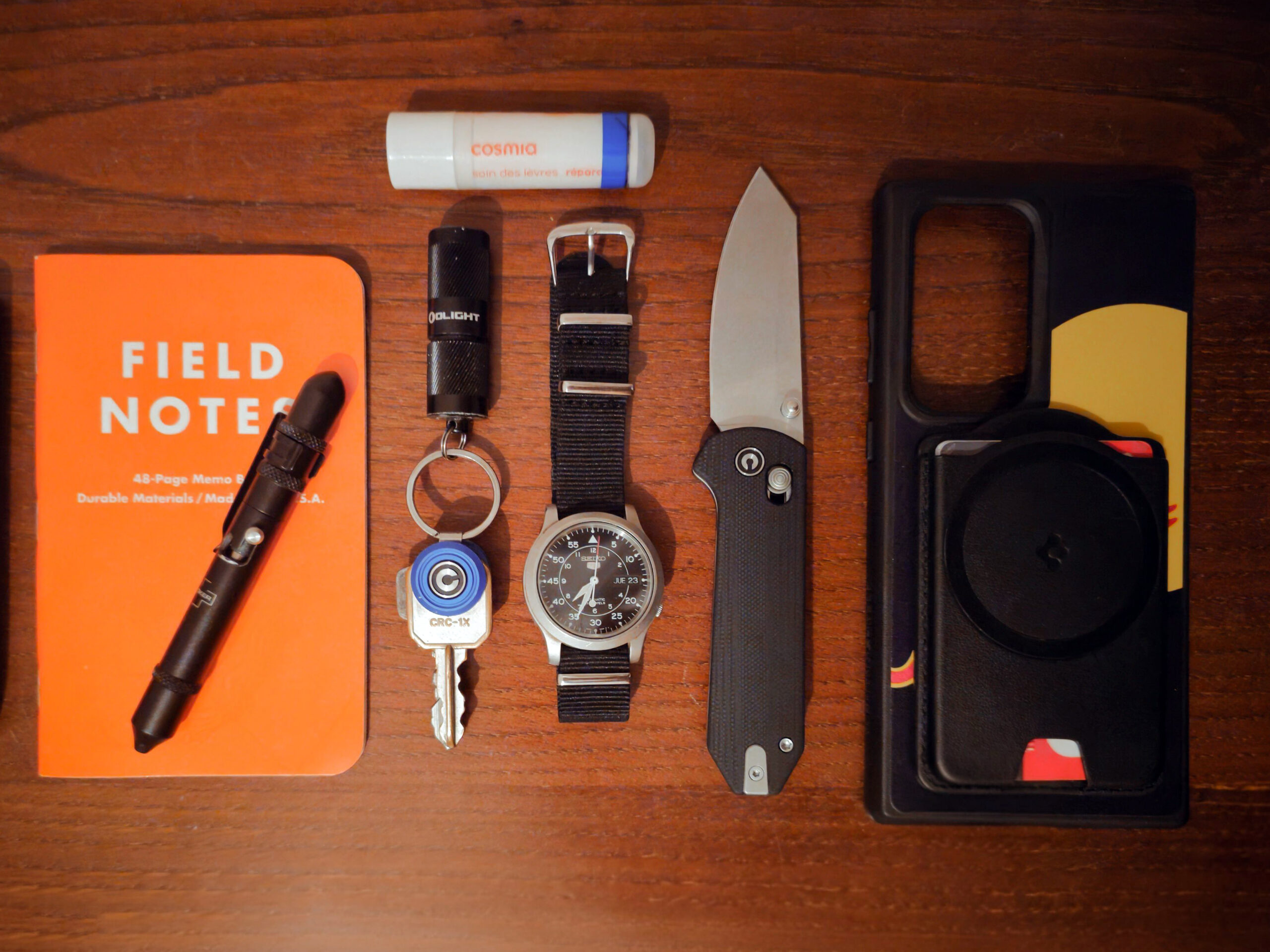
Despite the heavy reliance on digital automation in his career, Ruben has recently integrated a Field Notes notebook into his daily routine. This choice reflects a documented trend among engineers and technical operators who find that physical note-taking aids in cognitive retention and provides a failsafe method of recording data in environments where electronic devices may be restricted due to interference or security protocols.
The Field Notes brand, co-founded by designer Aaron Draplin, is rooted in the tradition of agricultural memo books, emphasizing durability and portability. Paired with a mini bolt-action pen, this combination provides a reliable means of recording system codes, maintenance logs, or quick sketches of mechanical layouts. The bolt-action mechanism in the pen is particularly suited for industrial environments; unlike click-top pens, it is less likely to deploy accidentally in a pocket, and the mechanical engagement provides a tactile feedback that is satisfying to users who appreciate fine machinery.
Technical Specifications and Alternative Gear Rotations
Ruben’s approach to EDC is not static; it is a modular system that adapts to his environment. He notes that while the CIVIVI Yonder is his current primary tool, he frequently swaps it for the Kizer Feist when he is not on the job. The Kizer Feist, designed by Justin Lundquist, is a front-flipper knife known for its sleek, "gentleman’s carry" aesthetic. It utilizes high-end materials such as S35VN steel, offering superior edge retention and corrosion resistance, which is essential in the coastal climate of Portugal.
His choice of timekeeping also reflects this adaptability. On duty, Ruben relies on a setup that prioritizes durability, but for off-duty wear, he transitions to a Casio Edifice featuring a "Tiffany" blue dial. The Casio Edifice EFB-108D-7AV has become a cult favorite among horology enthusiasts. It offers a sapphire crystal—uncommon at its price point—and a 100-meter water resistance rating. The "Tiffany" dial (a vibrant turquoise) is a nod to a major trend in the luxury watch world, popularized by Patek Philippe and Rolex, yet Ruben’s choice of the Casio version reinforces his philosophy of seeking "high-value" alternatives that provide luxury-level aesthetics without the prohibitive cost.
The Minimalist Infrastructure: Wallets and Key Management
A critical aspect of Ruben’s carry is the consolidation of pocket clutter. He utilizes a magnetic wallet that attaches directly to his smartphone. This integration is a hallmark of modern minimalist EDC, reducing the number of individual items one must track. In a high-security aeronautical facility, where "FOD" (Foreign Object Debris) is a constant concern, reducing the number of loose items in one’s pockets is a safety-conscious decision.
Furthermore, his use of an ultra-compact key organizer and a keychain flashlight addresses the basic needs of navigation and access. In automation, technicians often find themselves in poorly lit areas—behind server racks or inside equipment bays. A keychain flashlight, despite its small size, provides the necessary lumens for quick inspections without the need for a full-sized industrial lantern.
Market Analysis: The Rise of Value-Driven EDC
Ruben’s kit is emblematic of a broader shift in the global EDC market, which is projected to grow significantly over the next decade. Analysts point to a move away from the "tactical" aesthetic of the early 2000s toward a more "urban-technical" or "minimalist" style. Consumers are increasingly looking for tools that offer professional-grade performance but look at home in an office or a modern laboratory.
The success of brands like CIVIVI and Kizer—both of which feature in Ruben’s rotation—highlights the dominance of Chinese manufacturing in the high-quality, mid-price knife market. By utilizing advanced CNC machining and high-quality steels, these brands have disrupted the traditional hierarchy of the knife industry, allowing professionals like Ruben to carry tools that are both "Best Buy" award winners and reliable enough for aeronautical work.
Implications for Professional Preparedness
The carry of an Aeronautical Automation Operator serves as a case study in functional preparedness. Every item in Ruben’s kit serves a specific purpose, and the "editor’s note" on his submission highlights the "great balance of minimalism and value." This balance is crucial for modern workers who must navigate a world that is increasingly automated yet still requires manual intervention and physical documentation.
The evolution of Ruben’s kit—evidenced by his recent acquisition of the Field Notes and the CIVIVI Yonder—shows that EDC is an iterative process. It is a constant refinement of one’s personal interface with the world. As technology in the aeronautical sector continues to advance, the tools carried by those who operate these systems will likely continue to become more integrated, more efficient, and more specialized.
Chronology of a Curated Carry
- Phase I: Identification of Need – As an operator in Portugal, Ruben required a kit that complied with local regulations while meeting the technical demands of aviation automation.
- Phase II: Minimalist Consolidation – The adoption of the magnetic phone wallet and compact key organizer to reduce pocket footprint and mitigate FOD risks.
- Phase III: Strategic Acquisition – The integration of the CIVIVI Yonder following its 2024 award-winning status, ensuring the carry included the most efficient current technology.
- Phase IV: Analog Integration – The addition of Field Notes to complement digital systems, providing a tactile backup for data recording.
- Phase V: Aesthetic Differentiation – The establishment of an "off-duty" rotation (Casio Edifice/Kizer Feist) to separate professional utility from personal style.
In conclusion, Ruben’s EDC profile is more than just a collection of gadgets; it is a professional manifesto. It reflects the reality of modern technical labor: the need for precision, the value of reliable analog backups, and the importance of choosing tools that provide maximum utility without unnecessary expense. For those in the aeronautical industry and beyond, this kit serves as a blueprint for a modern, efficient, and highly capable daily carry.