







Following a turbulent period of industry-wide downsizing, a cohort of former id Software employees has officially launched Hidden Horses, a new independent, worker-owned game development studio. The formation of this venture follows the July 2024 layoffs at id Software, which saw approximately 100 staff members depart the company as part of a broader corporate restructuring effort initiated by Microsoft. This new studio aims to refocus on the fundamentals of "old school" first-person shooters, marking a distinct departure from the corporate-driven development cycles that have characterized their recent professional past.
The Genesis of Hidden Horses
The studio is composed of 20 alumni from id Software, a legacy studio renowned for pioneering the first-person shooter genre through titles like Doom and Quake. The founding team includes industry veterans such as lead VFX artist Todd Boyce, principal engine programmer Dustin Land, and senior AI and gameplay engineer Daniel Young. They are joined by producer Andrew Willis, technical designers Jordan Turner and Tim Locke, and senior skybox artist Allison Dombek.
Hidden Horses has positioned itself as an explicitly worker-owned entity. Unlike traditional AAA development environments where equity is concentrated in the hands of private investors or parent corporations, Hidden Horses operates under a flat organizational structure. According to the studio’s founding principles, leadership roles are democratically assigned as project needs arise, rather than being dictated by a fixed, top-down hierarchy. This shift in management style is intended to prioritize the long-term stability of the studio and the livelihood of its employees over the pursuit of aggressive, exponential financial growth or the requirements of external venture capital.
Danger Pay: A Return to Arcade Roots
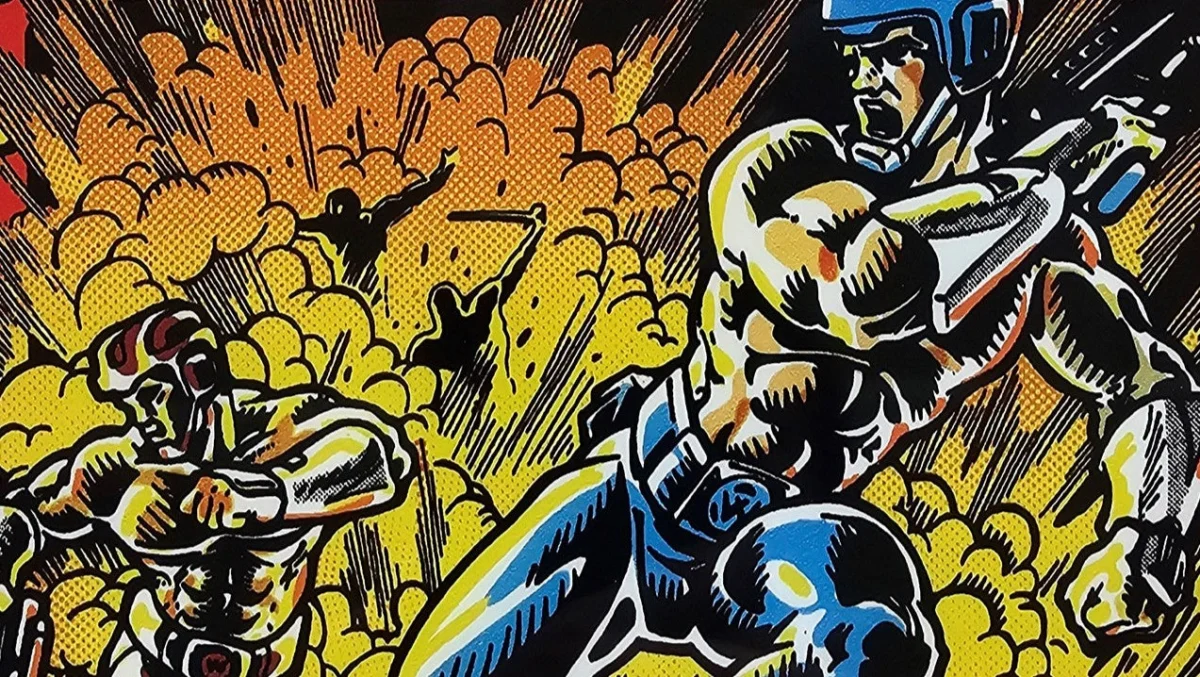
The studio’s inaugural project, currently in development, is titled Danger Pay. The game is described as a single-player first-person shooter that draws inspiration from the high-octane, arcade-style blasters of the late 1980s and early 1990s. Specifically, the developers cite the cult classic Smash TV—a game famously influenced by the dystopian themes found in the 1987 film The Running Man—as a primary touchstone for Danger Pay.
The project aims to satisfy a perceived market demand for "classic" gameplay-focused shooters that avoid the modern trends of live-service integration, focus-group-driven design, and microtransaction-heavy monetization. By leveraging the technical expertise gained during their tenure at id Software, the team intends to marry retro-inspired mechanics with modern engine capabilities, ensuring that the project remains faithful to the genre’s heritage while offering contemporary performance and visual fidelity.
Industry Context: The Microsoft Layoffs
The formation of Hidden Horses is a direct consequence of the significant contraction in the gaming industry throughout 2024. In the first half of the year, Microsoft—the parent company of ZeniMax Media and, by extension, id Software—undertook a series of aggressive cost-cutting measures. These layoffs were part of a wider strategic initiative to align the company’s gaming division with the fiscal expectations of its shareholders, particularly as Microsoft sought to maximize its market valuation, which at points reached $4 trillion.
The departures at id Software were particularly notable, given the studio’s status as a crown jewel of the industry. The loss of 100 staff members represents a significant institutional knowledge drain. Industry analysts suggest that this pattern of "corporate blood-letting" has become a recurring theme in the post-pandemic era, where companies that saw massive growth during 2020–2021 are now aggressively correcting their headcounts to satisfy market pressures. For the founders of Hidden Horses, the transition to an independent, employee-owned model is a strategic reaction to these trends, intended to decouple their professional output from the volatility of corporate shareholder demands.
Organizational Philosophy and Economic Sustainability
The economic model adopted by Hidden Horses is rooted in the philosophy of "sustainable development." Producer Andrew Willis has noted that the studio’s internal structure is designed to foster a sense of shared ownership that naturally incentivizes high-quality output without the burnout typically associated with crunch culture. By eliminating middle-management layers and investor-mandated deadlines, the studio hopes to operate with a level of agility that larger corporate entities cannot match.
However, this model presents unique challenges. The studio has launched a Kickstarter campaign to fund the initial stages of Danger Pay’s development. While crowdfunding has become a common pathway for independent developers, it remains a point of contention within the gaming community, often viewed with skepticism due to past high-profile failures and unfulfilled promises by other independent studios. To build trust and generate interest, Hidden Horses is currently developing a studio documentary and exploring unique promotional initiatives to engage potential backers and fans of the genre.
Analysis of the Independent Shift
The shift toward worker-owned studios represents a growing counter-movement within the software development industry. As large-scale layoffs continue to displace thousands of developers across major publishers, the "worker-owned" model offers an alternative to the traditional employment contract. Economically, this structure mitigates the risk of sudden layoffs caused by investor pivots, as the employees themselves hold the decision-making power regarding the company’s trajectory.
From a development perspective, the success of Hidden Horses will depend on their ability to translate their AAA pedigree into a smaller, independent production pipeline. While the team possesses significant technical experience, the transition to managing business operations—including marketing, community management, and financial logistics—is a substantial hurdle. The "flat" structure, while democratically ideal, will also face the challenge of decision-making efficiency, particularly as the project approaches critical development milestones.
Looking Ahead: The Future of Danger Pay
As of late 2024, the studio has remained relatively tight-lipped regarding the specific mechanics of Danger Pay, promising that official gameplay trailers, high-resolution screenshots, and a concrete release schedule will follow in the coming months. The industry will be watching to see if the pedigree of the former id Software team is enough to capture the interest of a crowded FPS market.
For the employees behind Hidden Horses, the objective is clear: they are not attempting to build a multi-billion dollar enterprise, but rather a "vehicle" that allows them to continue their professional craft in an environment free from the influence of corporate boardrooms. Whether this model can survive the realities of a competitive market remains to be seen, but the studio’s formation serves as a clear signal of the changing priorities of veteran developers in a post-layoff landscape. The success of Danger Pay will likely serve as a litmus test for the viability of such worker-led ventures in the current gaming climate.