









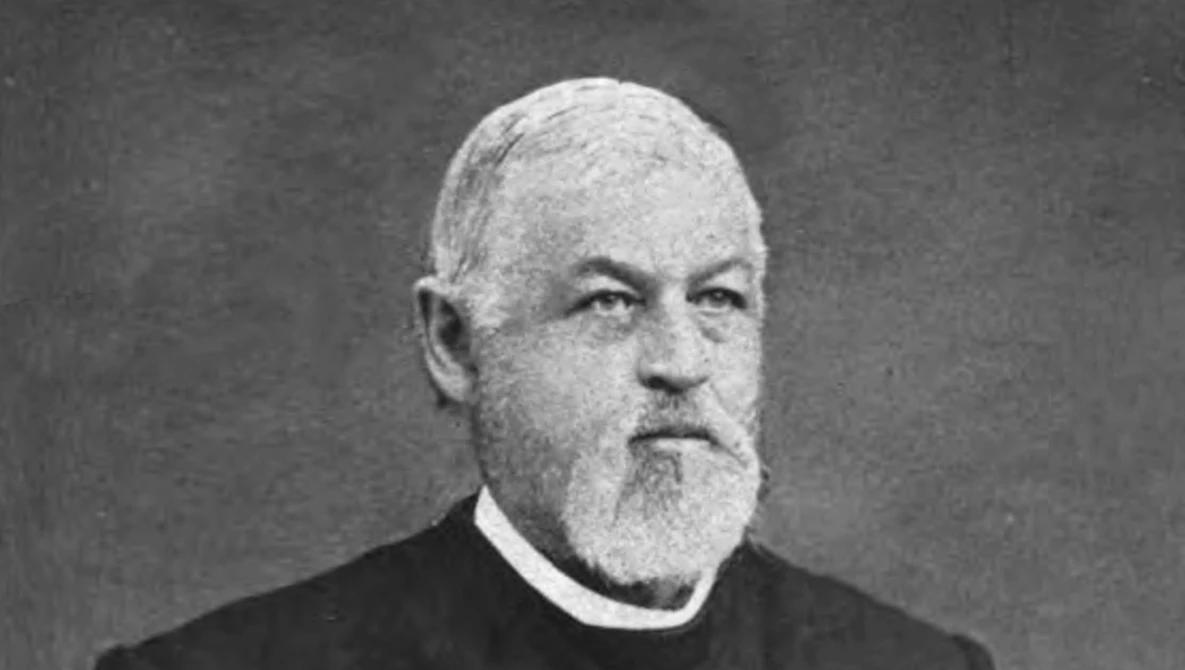
The history of modern photography is etched in celluloid, yet the man who laid its foundational chemical blueprint spent more than a decade watching from the sidelines while corporate enterprise reaped the rewards of his ingenuity. Hannibal Goodwin, an Episcopal rector who spent twenty years leading the House of Prayer in Newark, New Jersey, filed an application for a photographic pellicle with the United States Patent Office on May 2, 1887. What followed was an eleven-year and four-month bureaucratic purgatory characterized by administrative inertia, during which a succession of five distinct examiners rejected his claims. By the time US Patent 610,861 was finally issued on September 13, 1898, the Eastman Kodak Company had already been manufacturing and selling transparent roll film to the public for nearly a decade.
The ensuing legal war would outlive Goodwin himself, ultimately culminating in a multi-million-dollar settlement that underscored a fundamental truth of industrial innovation: in the race to define a market, bureaucratic delay can be just as valuable as a patent itself.
The Problem of Glass and the Chemical Breakthrough
To understand the magnitude of Goodwin’s invention, one must examine the state of photography in the 1880s. Serious imagery relied almost exclusively on heavy, breakable glass plates coated with light-sensitive emulsions. Photographers operating in the field were forced to lug cumbersome wooden boxes of fragile rectangles and return them to the studio intact. While George Eastman had introduced a paper roll-holder system in 1885, it possessed a critical flaw: the photographic emulsion had to be chemically stripped from its paper backing before printing, causing most professional photographers to stubbornly cling to glass.
Goodwin’s solution bypassed mechanical apparatuses entirely, focusing instead on pure chemistry. He sought to create a transparent, flexible sensitive pellicle robust enough to withstand chemical developing, fixing, and intensifying baths without dissolving or fogging, while remaining supple enough to be wound tightly onto a camera spool.
His method was elegantly precise. Goodwin dissolved nitrocellulose in a slow-evaporating solvent that resisted water absorption, such as nitrobenzole. He then thinned this viscous solution using alcohol, which evaporated rapidly. By flowing the resulting mixture over a clean sheet of glass, allowing it to set, and subsequently stripping away the dried skin, he produced a resilient, transparent film base. The core innovation—enshrined in claim one of his eventual patent—relied on a dual-solvent mechanism featuring a hygroscopic element paired with a slower-evaporating, non-hygroscopic solvent. This chemical marriage solved the structural integrity issues that had plagued earlier attempts to replace glass.
Chronology of a Bureaucratic Quagmire
The timeline of Goodwin’s patent prosecution reveals a stark contrast between governmental sluggishness and corporate agility.
- May 2, 1887: Hannibal Goodwin files his initial patent application for a photographic pellicle.
- Late 1888 – Early 1889: Eastman Kodak accelerates its own research into nitrocellulose film alternatives, spearheaded by chemist Henry Reichenbach.
- April 9, 1889: Reichenbach files a patent application for flexible film on behalf of Eastman, utilizing a formula incorporating camphor, fusel oil, and wood alcohol.
- July–August 1889: Kodak demonstrates the new roll film to the New York Society of Amateur Photographers and launches commercial production, turning out hundreds of feet of 41-inch-wide transparent film daily.
- December 10, 1889: Patent 417,202 is formally granted to Henry Reichenbach—nearly nine years before Goodwin’s patent would see the light of day.
- September 13, 1898: After five successive examiners reject Goodwin’s claims over eleven years, US Patent 610,861 is finally issued.
- December 31, 1900: Goodwin dies at age 78 following complications from a street accident in Newark, never having manufactured film through his newly formed Goodwin Film & Camera Company.
- December 1902: A formal bill of infringement is filed against Kodak, initiating a legal battle that would stretch for more than a decade.
- August 1913: District Judge John R. Hazel rules the Goodwin patent valid and infringed upon, declaring Goodwin a pioneer inventor.
- March 10, 1914: The U.S. Circuit Court of Appeals affirms Judge Hazel’s ruling, setting the stage for strict financial injunctions.
- March 27, 1914: Kodak and Ansco (successor to the Goodwin company) announce an out-of-court monetary settlement, bypassing a damaging judicial accounting.
The Corporate Ascent of Eastman Kodak
While Goodwin’s application languished in Washington, the commercial landscape in Rochester, New York, moved with blistering speed. Kodak recognized early on that the future of photography lay not in the professional studio, but in the hands of the amateur consumer.
Following Reichenbach’s filing in April 1889, Kodak wasted no time scaling manufacturing operations. By the end of August that same year—months before Reichenbach’s patent was even officially granted—the company was commercially distributing transparent roll film. This material fed directly into popular cameras like the Kodak No. 1, shipping pre-loaded for 100 exposures and requiring the user to send the entire camera back to Rochester for processing and reloading.
By the time Goodwin’s patent was finally issued in 1898, Kodak had spent nearly a decade establishing an unassailable market dominance. It had cultivated a vast consumer habit, built an international distribution network, and laid the groundwork for the modern snapshot culture.
Litigation and the Pursuit of Justice
Following Goodwin’s death in late 1900, his widow sold the dormant Goodwin Film & Camera Company to photographic manufacturers E. & H.T. Anthony and Scovill & Adams, a firm that would soon be renamed Ansco. Armed with the patent rights, Ansco launched a sprawling infringement suit against Kodak in December 1902.
The case ground through the federal courts for over a decade. When it finally reached District Judge John R. Hazel in 1913, the judge delivered a candid assessment of the record’s contradictions, ultimately ruling in favor of the patent and labeling Goodwin a true pioneer. The U.S. Circuit Court of Appeals affirmed the decision in March 1914, turning its ire toward the Patent Office’s historic mishandling of the file. Circuit Judge Alfred Coxe lambasted the eleven-year delay as an "extraordinary and deplorable condition of affairs," questioning why an inventor should be penalized for the incompetence of bureaucratic examiners.
Faced with an imminent injunction that threatened to halt its operations or force a debilitating public accounting of every roll of film sold over a fifteen-year span, Kodak capitulated. On March 27, 1914, representatives from both entities confirmed that a confidential financial settlement had been reached.
Financial Realities and Broader Economic Implications
While the exact figures of the 1914 settlement were famously guarded by both corporations, subsequent legal and tax filings eventually brought the scale of the payout to light. Court records from later corporate tax disputes involving Ansco’s successors revealed that the total sum collected across various patent litigation suits reached approximately $5.18 million, with roughly $1.53 million earmarked for original Goodwin company shareholders.
To contextualize this payout, government antitrust records from the same era noted that Kodak’s annual sales in 1912 alone eclipsed $24.7 million. Thus, a multi-million-dollar settlement represented roughly a fifth of a single year of Kodak’s gross revenue—a substantial sum, yet a manageable price for a corporate titan that had enjoyed a virtually uncontested monopoly during the most explosive growth phase of the photographic industry.
The Value of the Clock
The narrative of Hannibal Goodwin is frequently framed as a classic David-versus-Goliath morality tale: an ingenious clergyman invents a world-changing technology, a massive corporation co-opts it, and the judicial system eventually dispenses justice.
Yet, a forensic examination of the timeline reveals a more sobering reality. Goodwin’s patent, like all U.S. patents of that era, was granted a statutory life of seventeen years from its date of issue, meaning it was scheduled to expire on September 13, 1915. Because of the eleven-year administrative delay and the subsequent three-year legal battle, the enforceable monopoly secured by the patent lasted a mere eighteen months before expiring—long after Goodwin had passed away.
Kodak ultimately did not need to defeat Goodwin in court to win the war; it simply needed the calendar to work in its favor. By the time the legal machinery ground to a halt, the market had already been conquered, consumer habits had been permanently cemented, and the foundation of modern visual media had been firmly established under the banner of Rochester.