









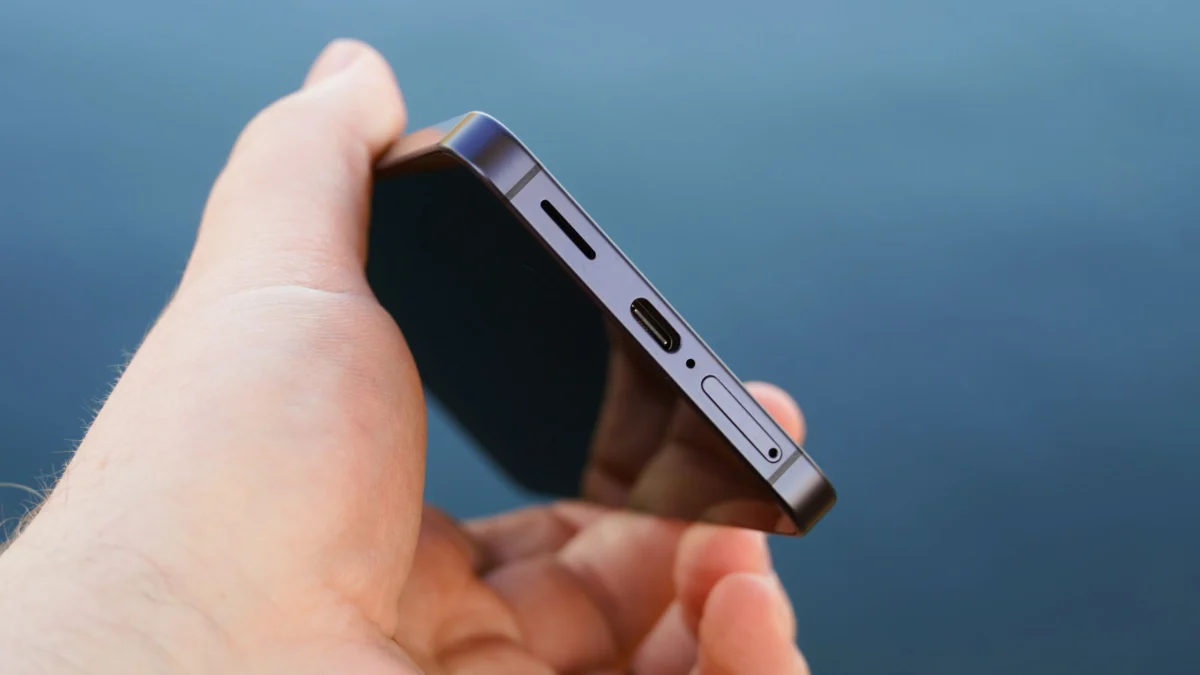
Recent regulatory documentation has shed light on Samsung’s upcoming entry-level flagship device, indicating that consumers should not anticipate significant hardware upgrades in the realm of wired power delivery. Freshly uncovered listings from the UL Solutions (Demko) database in Denmark confirm that the standard Samsung Galaxy S27 will continue to rely on a maximum wired charging speed of 25 watts. This specification places the upcoming flagship on the exact same technical baseline that Samsung has utilized for its base-tier high-end smartphones for over half a decade, raising fresh questions regarding the company’s hardware innovation strategy in an increasingly competitive global market.
The certification documents, logged in the regulatory database on October 23, explicitly cover multiple regional iterations under the broader SM-S952 model family. These variants span key international markets including the United States, Europe, Japan, and South Korea. According to the technical parameters outlined in the filings, the devices are rated for 9 volts of direct current at 2.77 amperes. Mathematical translation of these electrical metrics yields approximately 24.93 watts, effectively solidifying the device’s capability at the familiar 25W threshold. Furthermore, the presence of specific certification numbers—namely DK-187425-UL and DK-187435-UL—alongside ten distinct regional model numbers such as SM-S952U, SM-S952U1, SM-S952W, SM-S952B, and SM-S952N, demonstrates that this power restriction will be applied uniformly across the globe rather than being restricted to specific territories.
A Half-Decade Status Quo: The Chronology of Samsung Power Limits
To fully understand the implications of the Galaxy S27 filing, industry analysts must look back at the historical trajectory of Samsung’s flagship power delivery architectures. The 25W wired charging standard is far from a recent implementation for the South Korean technology conglomerate. Samsung initially introduced this specific power ceiling with the release of the Galaxy S20 series in February 2020. Since that time, the base models of the Galaxy S21, S22, S23, S24, S25, and S26 lineups have all adhered to this identical wired charging limitation.
While the broader mobile industry has undergone sweeping transformations—shifting toward silicon-carbon battery chemistries, multi-hundred-watt charging systems, and advanced thermal management solutions—Samsung has maintained a remarkably conservative approach to battery replenishment speeds for its entry-level flagship devices. Although the company occasionally reserves faster charging capabilities for its Plus and Ultra variants, the base model—often considered the volume driver for the company’s annual smartphone shipments—has remained fixed in time. This prolonged stagnation stands in stark contrast to the rapid iteration cycles observed in other hardware categories, such as mobile processors, camera sensors, and display technology.
Market Dynamics: Falling Behind the Global Competition
The decision to retain 25W charging on the Galaxy S27 places Samsung in a vulnerable position relative to its primary competitors, particularly aggressive original equipment manufacturers (OEMs) based in China. Over the past several years, brands such as Xiaomi, OnePlus, Vivo, and Oppo have revolutionized consumer expectations surrounding battery replenishment. Today, it is commonplace for mid-range and flagship devices originating from these manufacturers to feature wired charging speeds ranging from 80W to well over 120W, capable of driving a completely depleted battery to 100 percent capacity in under thirty minutes.
In comparison, charging a standard Samsung flagship from zero to full capacity typically requires well over an hour using a compatible 25W adapter. As consumers increasingly prioritize rapid turnaround times for mobile device power management, the stagnation of Samsung’s baseline charging speed risks alienating tech-savvy buyers who view fast charging as an indispensable modern convenience. Industry analysts point out that while Samsung continues to emphasize battery safety and long-term chemical degradation prevention as primary justifications for its conservative thresholds, the rationale becomes increasingly difficult to defend as competing firms successfully deploy ultra-fast charging systems without widespread hardware failures.
Divergent Charging Specs Across the Broader Galaxy S27 Family
While the base Galaxy S27 appears locked into the historical 25W standard, recent supply chain leaks and supplementary regulatory filings suggest a more varied landscape for the remainder of the upcoming flagship ecosystem. Earlier documentation sourced from Chinese 3C (China Compulsory Certification) filings indicates that Samsung may introduce tiered charging speeds across its broader product portfolio to better differentiate its pricing brackets.
According to those preliminary leaks, the mid-tier Galaxy S27 Plus is anticipated to support an upgraded wired charging speed of 45W, aligning it more closely with contemporary flagship standards. Meanwhile, the higher-end Galaxy S27 Pro and the top-tier Galaxy S27 Ultra are rumored to push boundaries further, potentially reaching wired charging speeds of up to 60W. While a move to 60W for the Ultra model does not represent a revolutionary leap compared to the extreme metrics advertised by international competitors, it nevertheless provides a welcome relief for consumers investing heavily in Samsung’s most expensive hardware configurations. However, the stark disparity between the 25W base model and its higher-end siblings risks creating a two-tier user experience within the same product generation.
Processor Efficiency and Thermal Management as Mitigation Strategies
In the absence of a hardware-based charging speed enhancement, Samsung is widely expected to rely on internal architectural advancements to improve the overall user experience regarding battery endurance. Industry insiders report that the regular Galaxy S27 will likely feature the proprietary Exynos 2700 system-on-chip in select global markets, while units destined for the United States and specific other regions are projected to house Qualcomm’s Snapdragon 8 Elite Gen 6 platform.
Both semiconductor architectures are being manufactured on increasingly advanced sub-nanometer process nodes, which promise substantial improvements in power efficiency over preceding generations. By drawing less electrical current during intensive computational tasks, background processing, and display rendering, the hardware can theoretically preserve battery charge for longer durations between plug-in cycles. While enhanced power efficiency successfully mitigates the frequency with which a user must charge their device, it does not directly solve the core frustration of prolonged tethering to a wall outlet when replenishment eventually becomes necessary. Furthermore, neither the recent Demko regulatory filings nor earlier leaks have provided concrete figures regarding the physical battery capacity—measured in milliamp-hours (mAh)—of the standard Galaxy S27, nor have they confirmed potential enhancements to wireless charging velocities or magnetic accessory integration.
Broader Industry Implications and Consumer Outlook
As the mobile device industry matures, flagship smartphones face mounting scrutiny over incremental year-over-year upgrades. When foundational specifications remain static across multiple generations, original equipment manufacturers often face skepticism regarding consumer value propositions. The choice to maintain 25W charging on the Galaxy S27 highlights a broader corporate philosophy that prioritizes conservative risk management, thermal safety margins, and component standardization over aggressive specification-sheet competition.
Samsung has yet to issue an official press release or public statement confirming the technical specifications, pricing, or official release window of the Galaxy S27 series. Traditionally, the company unveils its primary flagship lineups during major Unpacked events held in the early months of the calendar year. Until that official communication occurs, all regulatory listings, supply chain murmurs, and performance estimates must be treated as unconfirmed projections subject to final corporate adjustments. Nevertheless, should the 25W charging ceiling remain unyielding through the manufacturing and retail launch phases, consumers and industry observers alike will be left waiting yet another year for Samsung to bridge the widening technological gap in mobile power delivery.