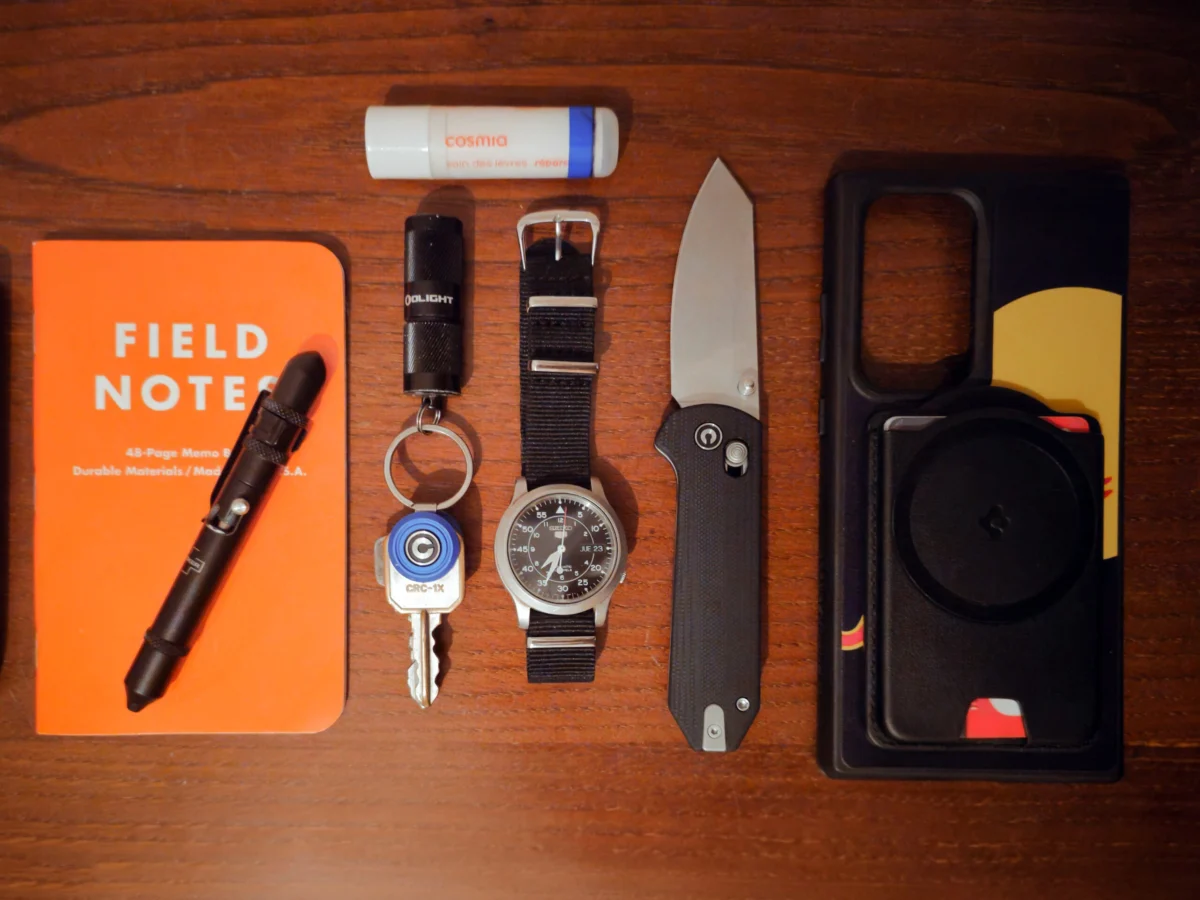
In the modern professional landscape, the concept of Everyday Carry (EDC)—the collection of essential items a person carries on their person daily—has transitioned from a niche hobbyist pursuit into a study of efficiency, utility, and professional preparedness. Ruben, an aeronautical automation operator based in Portugal, offers a compelling case study of this evolution. By prioritizing minimalist design and high-value performance, his setup reflects a broader trend toward intentional gear selection that balances the rigors of technical work with the practical demands of daily life.
The Anatomy of a High-Performance Carry
At the heart of the modern professional’s kit is a prioritization of weight-to-utility ratios. For an individual working in the complex, high-stakes environment of aeronautical automation, where technical precision is paramount, the gear selected must be both reliable and unobtrusive. Ruben’s current rotation centers on a curated selection of tools, including his recent acquisition of a Field Notes journal and the CIVIVI Yonder pocket knife.
The CIVIVI Yonder, designed by Zac Whitmore, has emerged as a significant player in the EDC market. Having earned the "Best Buy of the Year" designation at the 2024 Blade Show, the knife represents a pivot in consumer preference toward high-quality, accessible materials. Featuring a crossbar-locking mechanism, the Yonder offers an ambidextrous, secure, and ergonomic solution for tasks that require precision. In the context of his profession, where an operator might need to handle delicate components or cut through packaging and materials on short notice, the tool’s compact form factor is a critical asset.
Chronology of Gear Selection and Professional Utility
The integration of new tools into a professional’s daily rotation is rarely a random act; it is often the result of long-term testing and iterative improvement. Ruben’s transition into using a Field Notes notebook marks a return to tactile documentation in a digital-first industry. Despite the prevalence of automated data logging in aeronautical systems, the human element—the ability to record quick observations, task lists, or troubleshooting steps—remains a staple of operational efficiency.
Looking ahead, Ruben has identified potential modifications to his kit, specifically citing the Kizer Feist as a future alternative to his current blade. The Kizer Feist, known for its front-flipper deployment and sleek profile, underscores a desire for "dressier" or more refined aesthetics when off the clock. This duality—maintaining a rugged, highly functional kit for work, while keeping an interchangeable, sophisticated set for personal time—is a hallmark of the contemporary EDC philosophy.
Supporting Data: The Rise of the Value-Driven EDC Market
The market for EDC gear has seen explosive growth over the last decade. Industry data suggests that the global market for pocket knives and multi-tools is expected to continue its upward trajectory as consumers prioritize "buy-it-for-life" products. The popularity of the CIVIVI Yonder, as highlighted by its Blade Show accolades, points to a shift in market dynamics where "entry-level" no longer implies "low quality."
Manufacturing standards for folding knives have risen significantly, with materials like Nitro-V or 14C28N steels becoming standard in the sub-$100 price bracket. This democratization of high-performance materials has allowed professionals to curate kits that rival the durability of custom-made equipment at a fraction of the cost. For an aeronautical professional, this means access to reliable tools that do not require excessive capital investment, allowing for a more frequent, cost-effective replacement or upgrade cycle as personal needs evolve.
Analysis: The Philosophy of Minimalist Preparedness
The "minimalist" movement in EDC, as seen in Ruben’s kit, is driven by the psychological and practical desire to reduce "pocket clutter." By consolidating his wallet into a magnetic, phone-integrated solution, utilizing an ultra-compact key organizer, and carrying slim-profile tools like a bolt-action pen and a keychain flashlight, Ruben minimizes his physical footprint.
This approach has clear implications for productivity. In an environment like an aeronautical facility, mobility is often restricted, and the ability to navigate workspaces without being encumbered by bulky accessories is a distinct advantage. Furthermore, the use of a "dressier" watch, such as the Casio Edifice with a Tiffany dial, indicates that professional aesthetics are not sacrificed for utility. The Casio Edifice line, in particular, is frequently cited for its sapphire crystal durability and water resistance, proving that a watch can serve as both a fashion statement and a reliable timekeeping instrument in a technical environment.
Industry Implications and Professional Standards
While the specific items in a carry kit may seem inconsequential, they reflect a wider professional culture of accountability and readiness. Professionals in technical fields, such as those working in aeronautical automation, are conditioned to expect consistency from their systems. It is logical that this expectation extends to their personal gear.
Industry experts note that "EDC culture" is no longer just about the items themselves, but about the mindfulness behind them. When a professional chooses a tool, they are effectively conducting a risk assessment. Will this blade hold an edge when needed? Is this pen reliable in extreme conditions? Can this light illuminate a dark junction box during an emergency? By answering these questions through trial and error, professionals build a system that is customized to their unique operational environment.
Broader Impact: The Role of Community and Feedback
The emergence of platforms that allow professionals to share their "carries" has created a global feedback loop. When a user like Ruben shares his kit on social media or dedicated EDC forums, he contributes to a database of real-world testing. Other professionals in the aeronautical or engineering sectors can look at his setup and identify potential gaps in their own.
The feedback provided by the editor regarding the potential for a "dressier" transition highlights the social aspect of professional gear. In many industries, the transition from the shop floor to a client meeting or an off-site event necessitates a change in appearance. The ability to pivot between a functional, rugged carry and a refined, professional one without discarding the underlying efficiency is a skill that many high-achieving professionals are currently mastering.
Conclusion: Future Outlook
As technology continues to advance, the EDC community will likely see further integration of smart technology alongside traditional tools. However, as evidenced by Ruben’s reliance on a physical notebook and a high-quality manual knife, the demand for analog tools remains robust. The future of the professional kit is one of hybrid functionality—the seamless integration of smart devices with traditional, durable tools that require no battery or software to function.
The story of Ruben’s carry is ultimately one of equilibrium. By balancing the technical requirements of his role in aeronautical automation with the personal desire for aesthetic and organizational refinement, he exemplifies the modern professional who views their daily tools not as mere accessories, but as an extension of their professional capability. As more professionals adopt this intentional approach to their daily gear, the market will undoubtedly continue to evolve, offering increasingly sophisticated solutions for the everyday challenges of the modern workplace.
Whether through the adoption of award-winning knives like the CIVIVI Yonder or the transition to more sophisticated, water-resistant watches like the Casio Edifice, the trend is clear: quality, utility, and minimalism are the pillars upon which the professional carry of the future will be built. For those in high-stakes fields, the ability to curate such a collection is not just a hobby; it is a fundamental component of professional success and operational readiness.