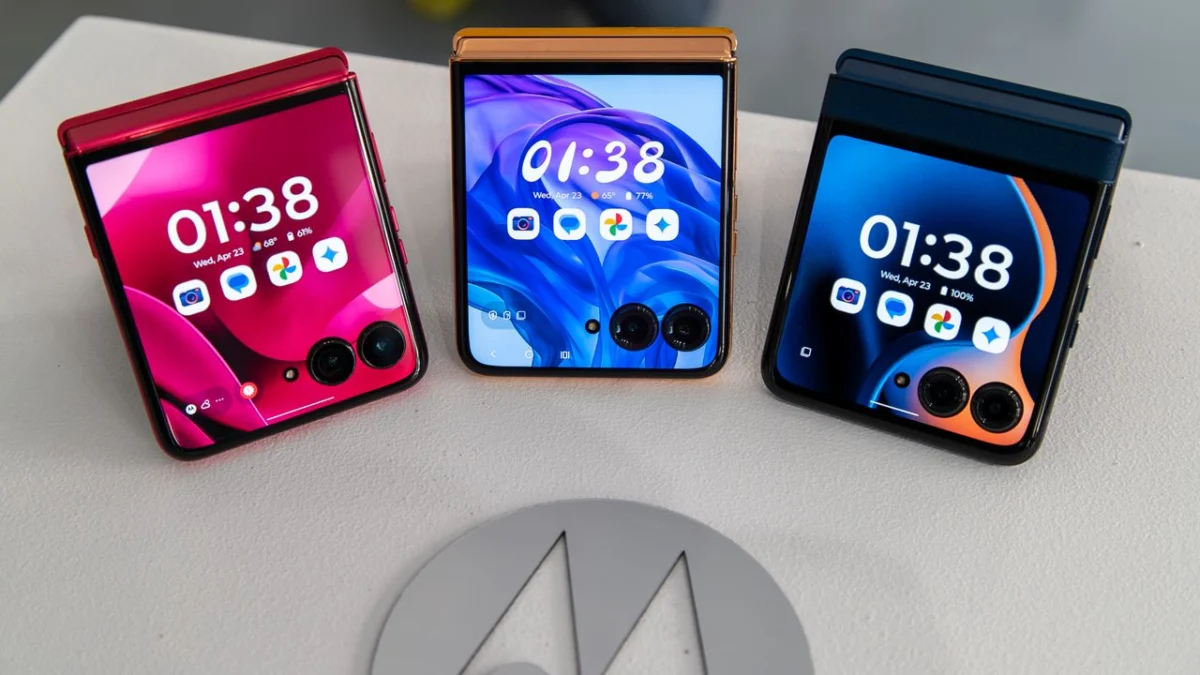
Motorola is expected to unveil its highly anticipated Razr 2026 series by the end of April, following a launch schedule consistent with previous iterations of its popular foldable smartphones. While an official announcement from the company regarding the precise launch date remains pending, industry observers and supply chain analyses point to a late April debut. This upcoming series, which is projected to include models like the Razr Ultra 2026, Razr Plus 2026, and Razr 2026, faces a complex market environment characterized by escalating component costs, particularly a global RAM crisis, which could significantly influence pricing strategies and hardware specifications.
The foldable smartphone segment continues to be a battleground for innovation and market share, with Motorola positioning itself as a key contender. The brand, which famously revitalized its iconic Razr flip phone design for the modern foldable era, has consistently aimed to offer a blend of nostalgic appeal and cutting-edge technology. The 2026 lineup is expected to build upon the design language and technological advancements seen in its predecessors, while also navigating economic pressures that could dictate its final configuration and market positioning.
Chronology of Motorola’s Foldable Launches and the 2026 Outlook
Motorola has established a fairly predictable rhythm for its Razr foldable releases, a pattern that industry analysts often rely on for forecasting future launches. Historically, the company has favored mid-year or late-spring announcements for its premium foldable devices. For instance, the Razr 2025 series was introduced around the same period, allowing the brand to capture consumer interest ahead of the crucial summer sales season and often before major competitors reveal their own flagship foldables later in the year.
If Motorola adheres to its established cadence, a late April 2026 launch would align perfectly with past performance. This timing allows the company to generate early buzz, secure pre-orders, and gain a head start in the highly competitive foldable market. However, the exact timing can also be influenced by factors such as global supply chain readiness, component availability, and strategic decisions to either precede or react to competitor announcements. The lack of an official date at this stage is typical for the industry, where companies often hold back formal declarations until closer to the event to maximize impact and control information flow. The anticipation builds as the end of April draws near, with tech enthusiasts eagerly awaiting confirmation from Motorola.
The Price Dilemma: Navigating the Global RAM Crisis
One of the most significant challenges facing the launch of the Razr 2026 series, and indeed the broader smartphone industry, is the ongoing global RAM crisis. This refers to a sustained period of increased demand and constrained supply for Dynamic Random Access Memory (DRAM) and NAND flash memory chips, essential components for virtually all modern electronic devices, especially high-performance smartphones. The crisis is driven by several factors, including:
- Increased Demand: The proliferation of AI capabilities in devices, the expansion of cloud computing, and the continuous growth of the Internet of Things (IoT) have dramatically boosted demand for high-capacity and high-speed memory.
- Production Constraints: Geopolitical tensions, natural disasters impacting manufacturing facilities, and the inherent complexities of semiconductor fabrication have led to bottlenecks in production.
- Technological Transitions: The industry is constantly transitioning to newer, more efficient memory standards, which can temporarily create supply shortages for older generations while new fabs ramp up.
- Raw Material Costs: The cost of materials required for chip manufacturing has also seen fluctuations, contributing to overall price increases.
The direct implication for smartphone manufacturers like Motorola is a significant rise in the cost of procuring these critical components. This "RAM crisis" could force Motorola to increase the retail prices of its Razr 2026 series compared to previous generations. For example, the Razr Ultra 2025 launched at $1,299. The Razr Ultra 2026 could potentially see a price tag exceeding this figure, a move that would reflect the added manufacturing costs.
Such a price adjustment is not a decision taken lightly by manufacturers. In the highly competitive foldable market, where consumers are already paying a premium, any significant price hike could impact sales volumes. Motorola, known for its strategic pricing to gain market share, will need to carefully balance profitability with consumer affordability. This situation prompts a deeper analysis of how the company might mitigate these cost pressures without compromising device performance or market appeal.
Strategic Silicon Choices: Snapdragon Processors and Performance Balancing
In response to potential price increases driven by the RAM crisis, rumors suggest that Motorola might adopt a strategic approach to its choice of System-on-Chip (SoC) for the Razr 2026 series. Specifically, there is speculation that the company could opt for last year’s Snapdragon 8 Elite processor instead of upgrading to the latest Snapdragon 8 Elite Gen 5.
This would be a notable departure from the typical flagship strategy of integrating the very latest silicon. However, such a decision would be driven by several logical considerations:
- Cost Efficiency: Newer generation processors typically come at a higher premium. By utilizing a slightly older but still highly capable chip, Motorola could significantly reduce its bill of materials (BOM) per device, thereby offsetting some of the increased RAM costs.
- Performance Realism: The Snapdragon 8 Elite (assuming it refers to the Snapdragon 8 Gen 3 or a similar high-end chip from the previous year) is still an incredibly powerful processor. For the vast majority of smartphone users, its performance would be more than sufficient for everyday tasks, demanding applications, and high-fidelity gaming. The incremental performance gains offered by the absolute latest generation might not be perceivable or essential for the target demographic of a foldable phone, which often prioritizes form factor and user experience.
- Thermal Management and Battery Life: Using a slightly older, well-optimized chip could potentially lead to better thermal management and more predictable battery performance, as the technology would have undergone more extensive testing and refinement.
- AI Capabilities: While newer chips often boast enhanced AI engines, the previous generation Snapdragon 8 Elite series already incorporates robust AI capabilities that can handle on-device AI tasks, camera enhancements, and smart features effectively.
The implication for consumers would be a device that still offers premium performance, albeit not the absolute bleeding edge, potentially at a more palatable price point than if all components were top-tier and current-generation. This strategic compromise could allow Motorola to maintain a competitive price while delivering a high-quality user experience, appealing to a segment of the market that values value and functional excellence over marginal performance increases.
Adding Value Through Bundles: A Proven Motorola Strategy
Beyond hardware specifications and pricing, Motorola has a track record of enhancing the value proposition of its devices through strategic bundling with accessories. This approach is particularly effective in the premium smartphone segment, where added perks can differentiate a product in a crowded market and sweeten the deal for potential buyers.
The current market offers examples of Motorola’s bundling prowess. For instance, the Razr Fold (a likely regional variant or misattribution in the source, possibly referring to a specific foldable model like the Razr+ or Razr Ultra) is priced at £1,799.99 in the UK, but a pre-order discount brings it down to £1,579.99, and it includes the Moto Pen Ultra. This stylus accessory adds significant functionality, particularly for productivity and creative tasks, making the foldable a more versatile device.
Similarly, the Moto G Stylus 2026 has been offered with bundles including the Moto Tag (a smart tracker akin to Apple’s AirTag) and/or the Moto Watch (a smartwatch). These bundles demonstrate Motorola’s commitment to creating an ecosystem around its devices, providing users with a more comprehensive technology experience from the outset.
For the Razr 2026 series, a bundling strategy could be critical in justifying its price point, especially if component costs necessitate an increase. Offering high-value accessories like a next-generation Moto Pen, premium earbuds, or a smartwatch could significantly enhance the perceived value of the Razr Ultra 2026 and its siblings. This strategy can:
- Attract New Customers: Bundles provide a compelling incentive, especially for consumers looking to invest in a new tech ecosystem.
- Increase Average Selling Price (ASP): While offering a discount on the bundle, it can still encourage customers to purchase the higher-tier phone or a complete set of accessories they might not have bought individually.
- Drive Ecosystem Adoption: Integrating accessories like smartwatches and trackers fosters loyalty to the Motorola brand and its connected devices.
- Mitigate Price Sensitivity: A slightly higher base price for the phone becomes more acceptable when it comes with valuable additions, making the overall package feel like a better deal.
This tactic aligns with a broader industry trend where manufacturers are increasingly looking beyond the device itself to offer a more holistic user experience. By proactively addressing potential consumer hesitation regarding price, Motorola can leverage its accessory portfolio to maintain competitive appeal.
Competitive Landscape and Broader Market Implications
The launch of the Motorola Razr 2026 series occurs within a dynamic and intensely competitive foldable market. Key players like Samsung, with its dominant Galaxy Z Flip and Z Fold series, continue to innovate, while Chinese manufacturers such as Honor, Huawei, Xiaomi, and OnePlus are rapidly expanding their global presence with increasingly sophisticated and competitively priced foldable offerings. Google’s Pixel Fold also adds another significant player to the premium foldable space.
Motorola’s strategy for the Razr 2026 series, particularly its approach to pricing and component selection, will have several implications:
- Market Positioning: By potentially holding the line on pricing through strategic chip choices and emphasizing bundled value, Motorola could further solidify its position as a brand offering accessible premium foldables. This differentiates it from ultra-premium offerings that push the boundaries of price.
- Consumer Choice: A competitive price point, coupled with a robust feature set, would provide consumers with more viable options in the foldable market, potentially accelerating the adoption of this innovative form factor.
- Innovation Pace: The decision to use a previous-generation processor could raise questions about Motorola’s commitment to cutting-edge performance. However, if executed well, it could demonstrate a pragmatic approach to delivering balanced value, shifting the focus from raw power to overall user experience and design.
- Supply Chain Resilience: The challenges posed by the RAM crisis highlight the vulnerabilities in global supply chains. Motorola’s response will be watched closely by other manufacturers as they navigate similar pressures, potentially setting a precedent for how to manage rising component costs without alienating consumers.
- Long-Term Strategy: Motorola’s moves in 2026 will be indicative of its long-term vision for the foldable segment. Is it aiming for volume, premium positioning, or a balanced approach? The choices made regarding hardware, pricing, and ecosystem integration will provide crucial insights.
In conclusion, the Motorola Razr 2026 series is poised for a late April launch, a timeline that aligns with the company’s historical patterns. This launch, however, is set against a backdrop of significant economic pressures, notably the global RAM crisis, which is driving up component costs across the industry. Motorola’s potential strategy of leveraging a previous-generation, yet highly capable, Snapdragon processor and enhancing value through accessory bundles reflects a pragmatic approach to delivering a competitive foldable experience without succumbing entirely to inflationary pressures. As the official launch approaches, the industry will keenly observe how these strategic decisions play out in the market, influencing not just Motorola’s fortunes but also the broader trajectory of the evolving foldable smartphone landscape.