The landscape of indie gaming has seen a significant surge in the popularity of deckbuilding roguelikes over the past five years, a trend spurred by the commercial and critical success of titles such as Slay the Spire and Monster Train. Joining this competitive ecosystem is Shroom and Gloom, a new project developed by Team Lazerbeam that officially launched into Steam Early Access today. The game distinguishes itself through a unique dual-deck mechanical system, an distinct aesthetic direction, and an emphasis on environmental interaction that separates it from standard combat-centric card battlers.
The Evolution of the Roguelike Deckbuilder
The roguelike deckbuilder sub-genre has evolved rapidly since its emergence into the mainstream. Initially defined by simple procedural generation and turn-based card play, the genre has seen developers increasingly integrate narrative depth and unconventional systems to stand out. Shroom and Gloom arrives at a time when player fatigue for "formulaic" deckbuilders is rising, prompting developers to experiment with more immersive, world-building elements.
Team Lazerbeam’s entry into this space is marked by its refusal to stick to a singular mechanical focus. By splitting the player’s agency between a combat deck and an exploration deck, the developers are attempting to bridge the gap between high-intensity tactical encounters and the slow-burn resource management found in survival RPGs.
Technical Specifications and Gameplay Mechanics
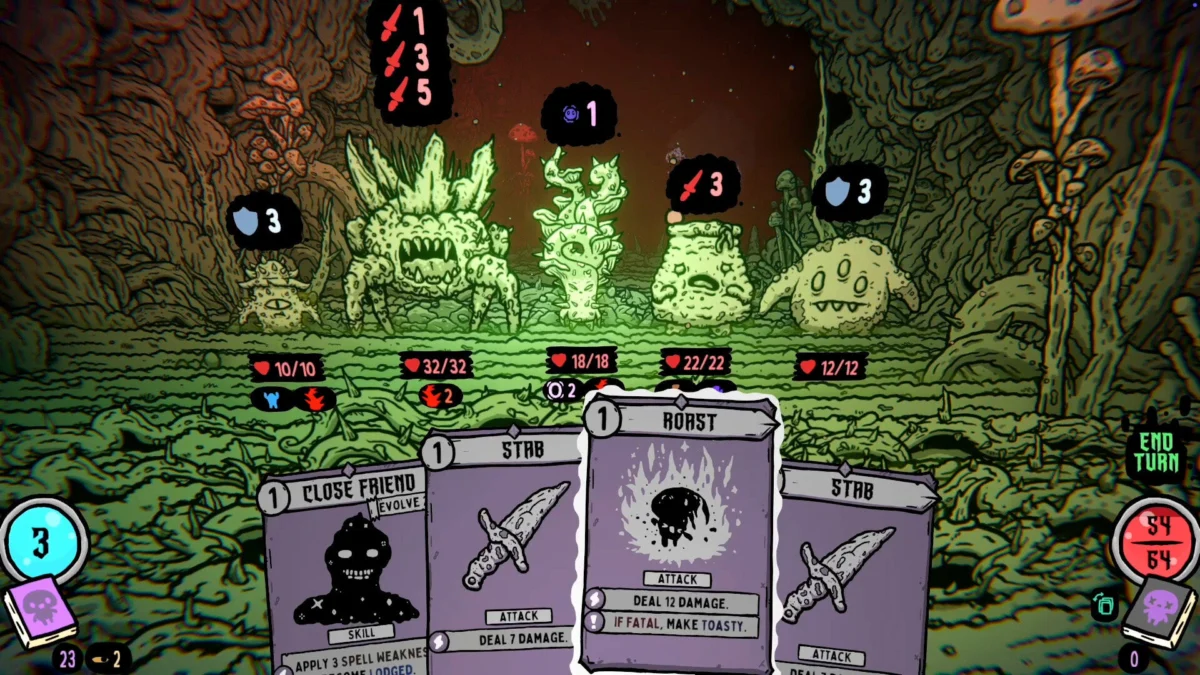
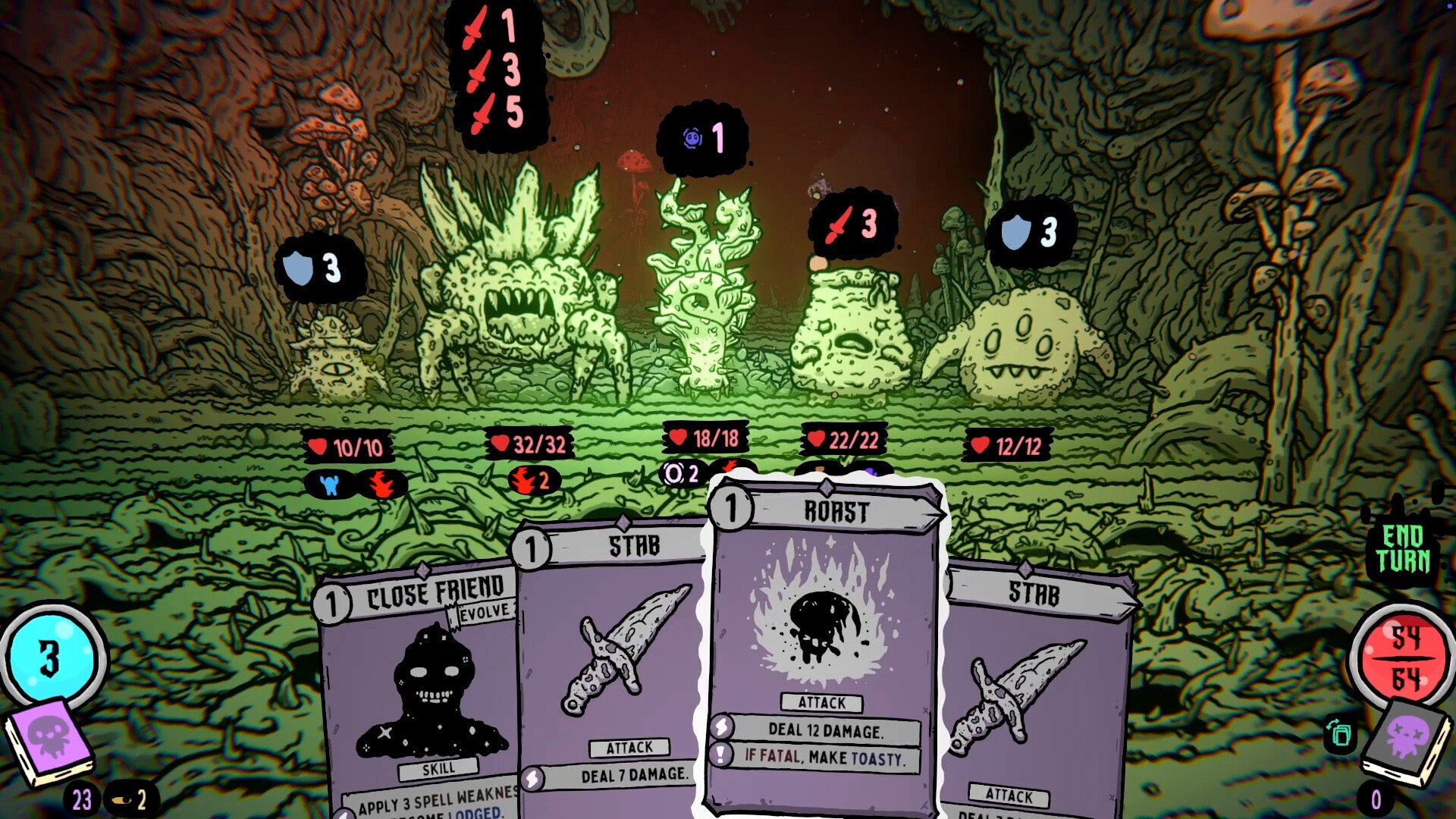
At its core, Shroom and Gloom utilizes a dual-deck architecture. The first deck, designated for combat, facilitates traditional turn-based card play. Mechanics within this deck include damage-dealing spells, defensive buffs, and a specialized "toasting" system, which allows players to prepare enemies as a food source, thereby integrating inventory management into the combat loop.
The second deck, focused on exploration, introduces a layer of environmental interaction that is rarely seen in the genre. Players utilize these cards to traverse the game’s spore-filled dungeons, interact with non-hostile entities, and engage in "base-level" activities such as preparing soup or setting up camp. This bifurcation of systems suggests a design philosophy centered on pacing; the combat deck provides the adrenaline-fueled tension typical of the genre, while the exploration deck offers a reprieve, allowing for tactical decision-making regarding long-term resource sustainability.
Visual Design and Aesthetic Identity
Visually, the game employs a highly stylized, dense artistic direction characterized by thick lineart and a "grubby," subterranean atmosphere. The aesthetic leans heavily into comic-book sensibilities, featuring creature designs that appear intentionally grotesque, reinforcing the game’s title. This design choice serves an important functional role: in a market flooded with minimalist or clean-UI interfaces, the high-density visuals of Shroom and Gloom serve as a branding differentiator.
The game world is split into two primary thematic paths: a traditional fantasy-dungeon aesthetic and a more abstract, science-fiction-inspired subterranean environment. This duality allows the developers to iterate on level design, providing varied visual and mechanical challenges for the player. At launch, the game features five distinct playable characters, each presumably offering unique card pools or starting attributes, though specific balance details regarding these characters remain to be finalized as part of the early access roadmap.
Chronology and Development Roadmap
The journey of Shroom and Gloom from concept to early access has been marked by a transparent development cycle. Team Lazerbeam utilized early prototypes and public demos to solicit player feedback, a common practice for indie studios looking to refine complex mechanical systems.
- Initial Concept Phase: Team Lazerbeam established the core premise of a spore-infested dungeon crawler.
- Demo Release: The developers released a playable trial version, which allowed the community to test the "toasting" and combat mechanics. This phase was critical in gathering data on player preferences regarding the balance between combat difficulty and exploration rewards.
- Early Access Launch: As of today, the game is available on Steam. This release marks the beginning of a sustained development period where the team plans to gather further telemetry data on player engagement, deck synergies, and bug reports.
Market Context and Strategic Implications
The decision to release in early access is a calculated strategic move for an indie studio of Team Lazerbeam’s size. The strategy allows for "live" balancing, where the developers can monitor player win-rates and card usage frequencies to adjust the game’s meta-balance in real-time.
From a market perspective, Shroom and Gloom enters a saturated field. The success of a deckbuilder in the current economy is often contingent upon "replayability" and the depth of the procedural generation algorithms. If the dual-deck system proves to have high skill-ceiling potential, the game could secure a dedicated audience. However, the game’s success will also depend on its long-term content cadence. Players in the deckbuilding community are notoriously demanding regarding the frequency of updates, new card additions, and character balancing.
Broader Impact on the Roguelike Genre
The integration of non-combat exploration as a primary mechanical pillar is a notable evolution. Many roguelikes treat "exploration" as a series of static events or binary choices on a map screen. By turning exploration into an active, card-based mechanical system, Team Lazerbeam is pushing the genre toward a more "sim-like" experience. This approach could influence future titles, encouraging developers to move away from purely combat-focused loops and toward more holistic, world-interactive systems.
Furthermore, the game’s reception will provide data on the appetite for "grotesque" or "grubby" art styles in a market that has recently favored high-fidelity or pixel-perfect aesthetics. Should Shroom and Gloom find success, it may signal a return to more hand-drawn, gritty, and visceral artistic expressions in indie game development.
Official Stance and Community Feedback
While formal reviews are currently pending as the game hits the storefront, early impressions from the community highlight the game’s "appetizing" mechanical split. The decision to keep the specific differences between the five launch characters somewhat opaque has generated a level of community intrigue, as players are currently tasked with discovering optimal build paths and character-specific strategies on their own.
For players interested in engaging with the project, the Steam Early Access release offers the current build of the game, with the expectation that feedback collected over the coming months will directly influence the final feature set, including additional character classes and expanded dungeon biomes. As the game transitions through this early phase, the primary metric for success will be the studio’s ability to maintain the delicate balance between the two disparate decks, ensuring that neither the combat nor the exploration feels like an afterthought.
In conclusion, Shroom and Gloom represents a bold attempt to complicate the established deckbuilder formula. By layering exploration mechanics over combat, Team Lazerbeam is betting on the idea that players want more than just strategic card play—they want a world that reacts to their presence in meaningful, albeit somewhat grubby, ways. Whether this dual-track design leads to a deeper, more satisfying roguelike experience remains to be seen, but the launch marks an interesting moment for the genre’s ongoing diversification.