






For many, the prospect of opening a television’s picture settings menu is a daunting experience, often leading to frustration as users navigate a labyrinth of technical jargon and obscure labels. The modern TV menu is a minefield where a single incorrect toggle can compromise the image quality, turning a premium display into a garish, over-processed eyesore. To mitigate this, manufacturers have long relied on picture presets—pre-configured settings intended to provide an optimal viewing experience straight out of the box. Among these, Filmmaker Mode has stood as the industry-standard "safe harbor" for home cinema enthusiasts. However, recent shifts in manufacturer strategies suggest that this consensus is beginning to fracture as brands pivot toward proprietary processing technologies.
The Origins and Purpose of Filmmaker Mode
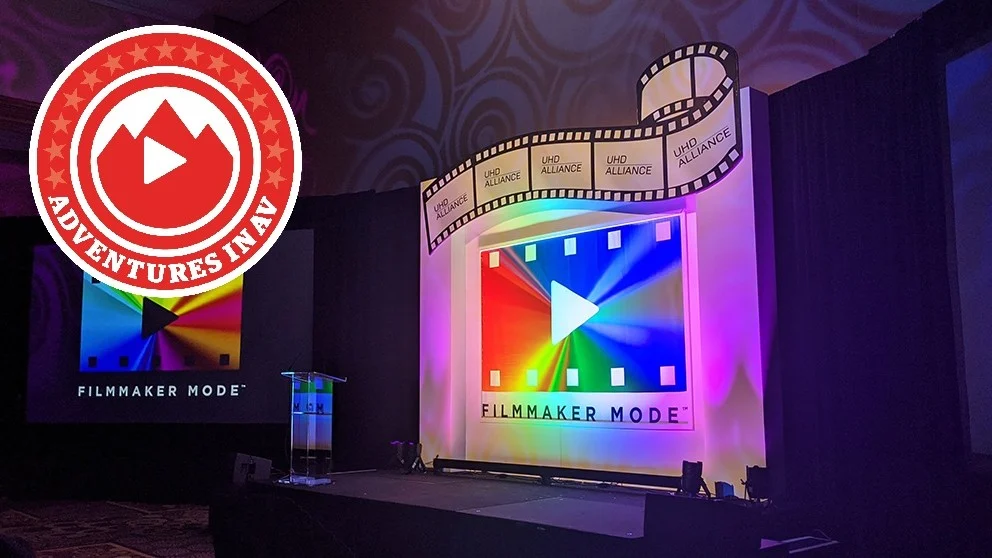
Filmmaker Mode was officially unveiled at CES 2020 by the UHD Alliance, an organization comprising leading consumer electronics manufacturers, film studios, and content creators. The primary objective was to address a long-standing grievance among directors and cinematographers: the "soap opera effect." Most televisions, by default, engage aggressive motion smoothing, noise reduction, and color enhancement algorithms that fundamentally alter the visual aesthetic intended by the filmmaker.
The mode was designed as a "neutral" baseline. When engaged, it automatically disables post-processing features such as motion interpolation, edge enhancement, and noise reduction. It also ensures that the TV adheres to the correct aspect ratio, color space, and frame rate (typically 24 frames per second) of the original source material. The certification carries significant weight, backed by industry heavyweights including Martin Scorsese, Christopher Nolan, and Denis Villeneuve, who have frequently argued that the "director’s intent" is often lost in the translation between the master monitor and the living room wall.
A Shifting Landscape: The Rise of Proprietary Presets
Despite its widespread adoption, the landscape of 2025 and 2026 hardware is seeing a noticeable departure from the universal implementation of Filmmaker Mode. Philips, for instance, has opted to omit the mode from its 2026 OLED911 lineup, replacing it with a proprietary "Reference" preset. The manufacturer claims this transition is driven by consumer research suggesting that the term "Filmmaker Mode" caused confusion, with some users mistakenly believing the setting was intended for video editing or content creation rather than playback.
This move follows a long-standing tradition established by Sony, which has historically refrained from adopting the UHD Alliance’s certification. Instead, Sony has championed its own "Professional" and "Cinema" modes, arguing that its internal image processing—specifically the XR Processor—is sophisticated enough to preserve artistic intent while simultaneously optimizing the signal for the specific hardware capabilities of the display.
The Paradox of Modern Image Processing
The core tension in this debate lies in the necessity of modern image processing. Today’s high-end televisions are far more than just panels; they are advanced computers that perform millions of calculations per second to account for panel limitations, source quality, and ambient light conditions.
Manufacturers argue that even in a "neutral" mode, some level of processing is required to deliver a high-quality image. For example, a TV must still perform tone mapping to handle HDR content, and it must manage bit-depth expansion to prevent banding. Sony’s approach relies on depth mapping and focal point identification, which the company claims enhances the three-dimensional quality of an image without violating the visual language of the source.
Critics, however, argue that these proprietary modes are opaque. When a manufacturer creates its own "Reference" or "Cinema" mode, there is no third-party oversight or standardized certification. This creates a fragmented ecosystem where "authenticity" is defined by the brand’s engineering team rather than an industry-wide agreement.
Comparative Performance and Industry Impact
The effectiveness of these modes varies significantly across brands. Data from recent independent display testing indicates that while LG and Panasonic have successfully leveraged Filmmaker Mode to provide a highly accurate "out-of-the-box" experience, other manufacturers have seen greater success with their own calibrated presets.
- LG and Panasonic: These brands remain the strongest proponents of the Filmmaker Mode certification, consistently achieving near-reference accuracy levels when the mode is activated.
- Samsung: The company has seen success with its "Movie Mode," which, while not adhering to the strict Filmmaker certification, offers a vibrant, bright, and accurate picture that appeals to viewers who find the standard Filmmaker Mode too dim for brightly lit living rooms.
- Sony: Through its Professional Mode, Sony continues to lead in motion handling and color accuracy, proving that a proprietary standard can compete with, or in some cases outperform, a universal certification.
The implications for the average consumer are significant. If the industry moves away from a universal standard, the "ideal" picture settings will become brand-dependent. A consumer who buys a Sony TV will need to learn the quirks of the "Professional" mode, while a Philips user must navigate "Reference" settings, and an LG user sticks with "Filmmaker." This lack of uniformity threatens to revive the very confusion that the UHD Alliance sought to eliminate six years ago.
The Future of Visual Authenticity
As television technology continues to evolve, the definition of "accuracy" is becoming increasingly complex. With the rise of AI-driven upscaling and real-time SDR-to-HDR conversion, the line between "enhancing the image" and "altering the source" is blurring.
For the UHD Alliance, the challenge will be to keep Filmmaker Mode relevant in an era where consumers demand more "impact" from their displays. If Filmmaker Mode is perceived as too conservative—resulting in a picture that feels dull compared to the vivid, AI-enhanced modes used in retail demonstrations—it risks being relegated to a niche setting for purists.
However, the consensus among industry experts remains that a standardized baseline is essential. Without it, the living room becomes a playground for aggressive, artificial algorithms that strip away the subtle details of shadow and texture that define high-end cinematography. Whether through a universal certification like Filmmaker Mode or through more transparent proprietary "Reference" modes, the industry must prioritize a path that makes professional-grade visual fidelity accessible to the average viewer.
Ultimately, the goal of the television industry should be to remove the barriers between the creator’s vision and the viewer’s experience. While the move toward proprietary modes may offer manufacturers greater control over their hardware, it places the burden of navigation back onto the consumer. If the industry is to succeed in the long term, it must ensure that "accuracy" does not become a proprietary secret, but a consistent, transparent, and user-friendly standard that defines the next generation of home entertainment.