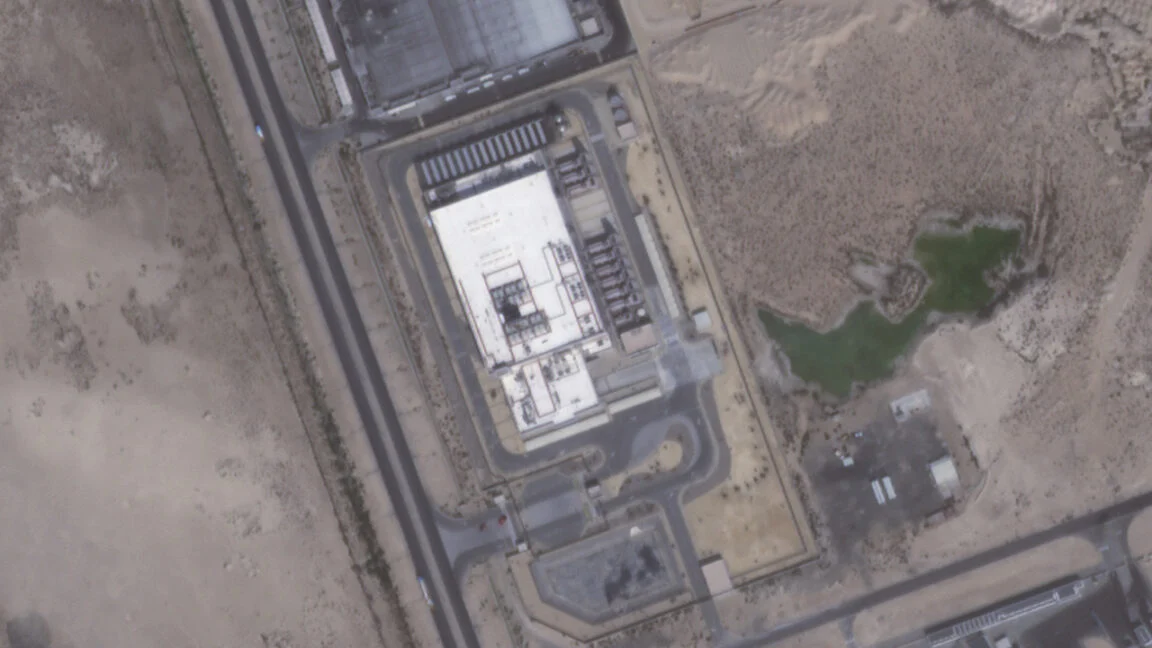
Six months after a series of targeted Iranian drone strikes paralyzed critical digital infrastructure across the Persian Gulf, Amazon Web Services (AWS) has officially acknowledged that a significant portion of customer data hosted in its Bahrain and United Arab Emirates (UAE) regions is irretrievably lost. The admission, detailed in a technical status update published on September 15, marks a somber milestone in what is arguably the most significant physical attack on cloud infrastructure in the history of the modern internet.
The technological fallout of the spring offensive has sent shockwaves through the global enterprise sector, forcing a fundamental reassessment of disaster recovery protocols, geographical redundancy, and the vulnerability of centralized cloud services to kinetic warfare. While AWS has historically been marketed as a bastion of high availability and fault tolerance, the sheer scale of the physical destruction caused by the drone swarms exceeded the thresholds designed into the company’s regional resilience models.
A Chronology of the Crisis
The origins of this digital catastrophe date back to the early hours of a spring morning six months ago, when Iranian drone swarms targeted industrial and technological hubs across the Middle East. The coordinated nature of the strikes—which utilized loitering munitions capable of penetrating hardened facilities—resulted in immediate and severe physical damage to the power grids, cooling systems, and server arrays housing some of the region’s most sensitive data.
In the immediate aftermath of the strikes, AWS initiated emergency failover procedures. However, as the situation on the ground unfolded, it became clear that the infrastructure damage was not merely limited to a single facility or a localized outage. By the time the fires were extinguished and the sites secured, it was evident that the structural integrity of the data centers had been compromised to an extent that rendered traditional data recovery efforts futile.
For several months, Amazon remained silent regarding the long-term outlook for the affected resources, focusing its efforts on damage assessment and attempting to extract hardware from the blast zones. The September 15 announcement serves as the first formal admission that these efforts have failed, with the company confirming that access to data in the Bahrain region—which spans three availability zones—has been entirely lost.
The Scope of the Destruction
The damage assessment provided by AWS highlights a grim reality for cloud architecture: even the most robust multi-zone systems have a breaking point. An availability zone (AZ) is typically defined as one or more discrete data centers with redundant power, networking, and connectivity, housed in separate facilities. Under normal circumstances, if one zone goes offline, services are designed to automatically migrate to another.
In the case of the Bahrain region, the physical damage was so pervasive that it rendered all three availability zones non-functional. AWS stated that the intensity and distribution of the strikes "exceeded what our regional and multi-AZ services are designed to withstand."
In the United Arab Emirates region, the situation is slightly less dire but nonetheless severe. The destruction was concentrated on a specific facility identified as the mec1-az2 availability zone. While AWS continues to work on restoring services in the remaining two UAE zones, the loss of data within the impacted AZ is permanent. For businesses that relied on these specific zones for primary data storage without secondary, off-region backups, the incident represents a total loss of their digital assets.
Industry Implications and Data Sovereignty
The permanent loss of data in these regions raises critical questions regarding the liability of cloud service providers and the responsibilities of enterprise clients. Historically, the "Shared Responsibility Model" has dictated that while the provider (AWS) is responsible for the security of the cloud, the customer is responsible for security in the cloud—including backups and data protection.
However, the unprecedented nature of this event—a sustained military strike on civilian infrastructure—has prompted legal and policy experts to debate whether traditional service level agreements (SLAs) are sufficient for the modern geopolitical landscape. Many enterprises operating in volatile regions are now expected to shift toward "multi-cloud" or "hybrid-cloud" strategies, where data is distributed across different providers and geographical jurisdictions to mitigate the risk of a single state-actor strike crippling their entire operation.
Furthermore, the incident has reignited the conversation around data sovereignty. Nations in the Middle East have been aggressively pushing for local data residency, requiring companies to host sensitive government and financial data within their borders. The recent destruction suggests that such mandates, while beneficial for privacy, may inadvertently increase the risk of catastrophic data loss if the local infrastructure is not adequately hardened against military threats.
Statements and Operational Recovery
In its update, Amazon Web Services emphasized that it is currently engaged in the "recovery of regional resources" for the unaffected zones in the UAE. The company has pledged to provide regular updates to its customers as they replace the decimated infrastructure. However, the company has remained notably opaque regarding the specific nature of the data lost, citing privacy and security concerns for its clients.
Enterprise customers affected by the outage have expressed varying degrees of frustration. While many cloud users were aware of the risks of downtime, few had prepared for the total evaporation of their primary storage arrays. Some industry observers have suggested that this event will act as a "Black Swan" for the cloud industry, driving a massive increase in demand for disaster recovery-as-a-service (DRaaS) and air-gapped backup solutions.
The Future of Resilient Cloud Infrastructure
As AWS works to rebuild, the physical design of data centers is likely to undergo a significant evolution. The integration of advanced air defense systems, structural reinforcement, and decentralized power microgrids will likely become standard for data centers operating in regions with a high risk of conflict.
The incident also serves as a stark reminder of the convergence between physical warfare and digital operations. As the world becomes increasingly reliant on centralized cloud storage, the physical facilities housing that data become high-value targets. The events of the last six months have effectively ended the era of viewing cloud infrastructure as a purely abstract, untouchable utility.
For the clients of Amazon Web Services, the road ahead is one of forensic data reconstruction and the arduous process of migrating to more resilient architectures. For the broader technology industry, the permanent loss of data in Bahrain and the UAE stands as a sobering lesson in the limitations of digital redundancy in the face of physical destruction. As global tensions persist, the ability to protect not just the data, but the very ground on which it rests, will become the defining challenge for the next generation of cloud computing.