










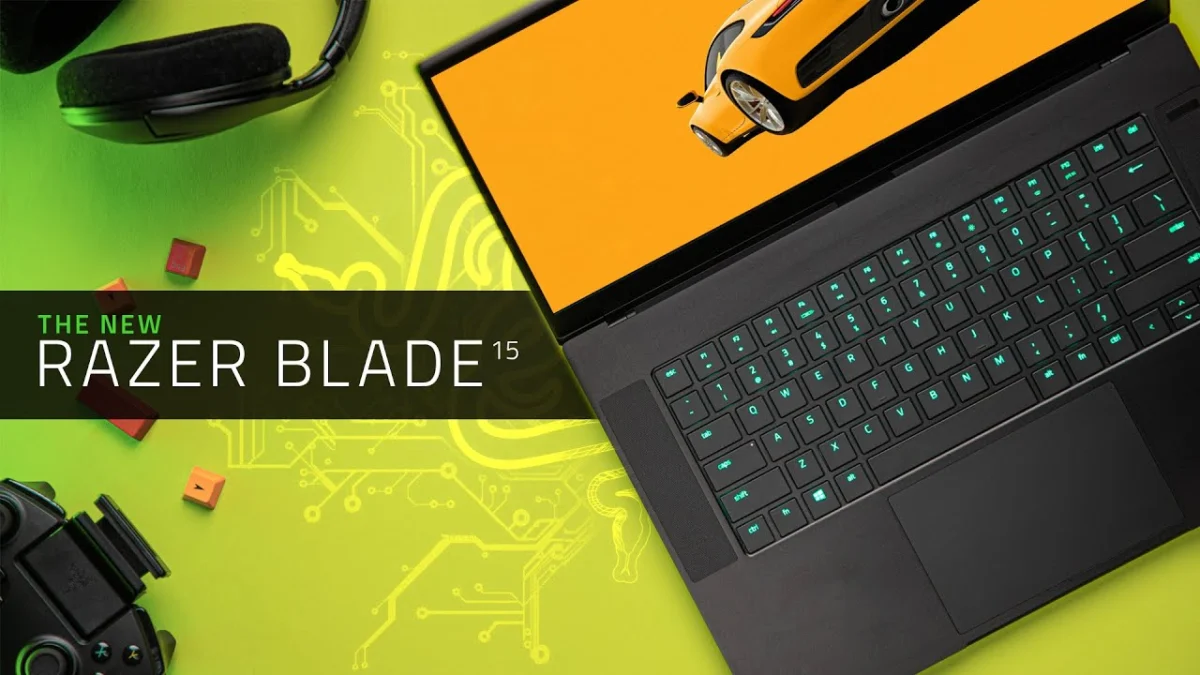
The high-end gaming laptop market has long been defined by a persistent compromise between thermal management, aesthetic refinement, and raw computational output. Into this competitive landscape stepped the 2021 iteration of the Razer Blade 15 Advanced, a machine designed to bridge the gap between desktop-class performance and portable form factors. Equipped with NVIDIA’s RTX 30-series graphics and Intel’s 10th-generation Core processors, this hardware refresh aimed to capitalize on next-generation architectures while maintaining the signature profile that has defined the Razer brand for years.
Market Positioning and Launch Context
Released during a volatile period for the global semiconductor industry, the 2021 Razer Blade 15 Advanced arrived against a backdrop of severe component shortages and widespread retail price inflation. While many manufacturers adjusted their MSRPs upward to account for supply chain constraints, Razer maintained a pricing structure remarkably consistent with its previous generation hardware.
The entry-level Advanced model debuted at an MSRP of $2,500 USD, equipping consumers with an eight-core, sixteen-thread Intel Core i7-10875H processor, 16GB of system memory, a 1TB NVMe solid-state drive, and an NVIDIA GeForce RTX 3070 laptop GPU. Display configurations for this tier centered on a Quad HD 240Hz IPS-grade panel, with alternative variants offering either a 1080p 360Hz display for an additional $100 or an RTX 3080 configuration starting at $2,900 USD. At the apex of the lineup stood a $3,300 USD flagship configuration featuring an RTX 3080 with 16GB of video memory paired with a 4K OLED 60Hz display.
This pricing strategy positioned the Blade 15 Advanced as a luxury tier product. Competitors such as the ASUS ROG Zephyrus G15 offered comparable or superior multi-threaded CPU performance via AMD Ryzen alternatives at a discount of roughly $500, though widespread inventory shortages frequently limited consumer availability.
Design Evolution and Ergonomic Analysis
From an exterior perspective, the 2021 model introduced virtually no modifications to Razer’s established design language. The chassis retained its signature boxy silhouette, constructed from CNC-milled anodized aluminum and accented by the illuminated green corporate logo on the display lid. Dimensional shifts were negligible; while engineers managed to shave fractions of a millimeter off the overall thickness, the device maintained a heavy, dense footprint comparable to its predecessors.
Ergonomically, long-term usability remained a point of friction. The sharp, unchamfered 90-degree edges surrounding the palm rest area proved abrasive during extended typing or gaming sessions, frequently leaving temporary indentations on the user’s wrists. Furthermore, the included power supply infrastructure drew criticism for utilizing a thick, heavily braided cable that complicated portable storage. The proprietary right-angle power connector also presented a layout conflict, frequently blocking adjacent USB ports depending on the directional orientation of the cable.
Input peripherals highlighted a growing disparity between Razer and its industry rivals. While the glass-surfaced trackpad remained among the most precise and responsive available on any Windows platform, the keyboard layout and mechanical switches fell short of expectations for a machine in this price bracket. Competitors like Dell, through its XPS lineup, and ASUS, through the ROG series, offered keyboard assemblies with deeper travel and more tactile bottom-out feedback. Razer’s low-profile switches offered a comparatively mushy typing experience that failed to justify the hardware’s premium cost.
Visual Fidelity and Display Performance
One of the most substantial hardware upgrades arrived in the form of the display panels. The reviewed configuration utilized a 15-inch Quad HD (2560 x 1440) panel operating at a 240Hz refresh rate. Testing revealed exceptional color reproduction, covering 100% of the sRGB color space, 88% of Adobe RGB, and 99% of DCI-P3, making the screen highly capable for professional color-grading, video editing, and content consumption.
However, technical drawbacks accompanied these improvements. Peak luminance topped out at approximately 315 nits, placing the display behind several competing flagship laptops in terms of raw outdoor and bright-room visibility. Additionally, software-level anomalies persisted regarding power management and display behavior. Upon disconnecting the laptop from alternating current, a noticeable contrast shift occurred as Intel’s integrated graphics processing unit (iGPU) altered gamma levels via proprietary power-saving protocols. Resolving this visual inconsistency required disabling NVIDIA Optimus entirely, forcing the system to route exclusively through the discrete RTX 3070 GPU at the expense of battery longevity.
Advanced Optimus technology also introduced eccentricities regarding refresh rate scaling. Unlike previous generations that maintained a constant 240Hz refresh rate across all power states, the 2021 model dynamically downshifted to 60Hz during desktop navigation, returning to the maximum 240Hz only when applications launched in exclusive full-screen mode.
Internal Architecture, Upgradability, and Thermal Performance
Beneath the aluminum chassis, Razer implemented a flexible internal layout designed to accommodate dual-storage configurations. Removing the lower panel exposed two accessible system memory slots alongside a primary NVMe SSD housed beneath a specialized cooling bracket. Ingeniously, engineers incorporated a secondary M.2 slot layered directly above the primary bay, allowing users to install an additional NVMe drive without sacrificing existing storage or increasing the overall footprint of the laptop.
Battery capacity, conversely, was constrained by the chassis dimensions. To maintain a slim profile while housing components capable of sustaining a 95W thermal design power (TDP) for the RTX 3070, Razer utilized a standard 80Wh lithium-ion battery. Combined with the power demands of Intel’s 10th-generation Comet Lake architecture, battery runtime under heavy loads plummeted to under ninety minutes, trailing behind newer architectures from competing manufacturers.
Thermal and acoustic management represented a notable engineering success. Razer implemented a granular power-customization suite within its software ecosystem, allowing users to scale CPU power consumption from a conservative 35W up to a sustained 55W in Boost mode, alongside GPU power allocations scaling between 85W and 95W.
During stress testing at maximum performance profiles, the RTX 3070 maintained stable core frequencies without thermal throttling, keeping core temperatures below 80 degrees Celsius. Fan noise remained impressively restrained, avoiding the high-pitched jet-engine whines typical of ultra-slim gaming laptops under heavy loads, though a faint electrical coil whine was occasionally audible under extreme system stress.
Processing Power and Gaming Benchmarks
The combination of an overclocked NVIDIA RTX 3070 running at a 95W ceiling and the Intel Core i7-10875H yielded exceptional gaming performance. In benchmark evaluations across demanding AAA titles at both 1080p and 1440p resolutions, the Blade 15 Advanced frequently outperformed rival systems equipped with higher-tier RTX 3080 GPUs configured with lower wattage limits. This demonstrated the vital importance of power delivery parameters over mere model nomenclature in mobile GPU specifications.
In non-gaming computational workloads, however, the architectural limitations of Intel’s aging 14nm Comet Lake processors became apparent. While single-threaded tasks remained competitive, multi-threaded CPU benchmarks demonstrated that Intel’s silicon was comprehensively outpaced by AMD’s Ryzen 5000-series mobile processors. Applications heavily reliant on raw multi-core CPU processing lagged behind competitors selling at substantially lower price points.
The performance deficit was partially mitigated in workloads optimized for GPU acceleration—such as Adobe Premiere Pro and DaVinci Resolve—where the robust RTX 3070 and solid lightly-threaded CPU performance combined to deliver efficient rendering times.
Broader Market Implications and Conclusions
The 2021 Razer Blade 15 Advanced succeeded as a masterclass in extracting maximum performance from constrained thermal architectures. By resisting widespread price inflation during a historical component shortage, Razer maintained a stable value proposition for high-end consumers seeking reliable gaming performance, solid thermal controls, and superior display fidelity within a portable workstation format.
Nevertheless, the device highlighted persistent stagnation in several critical areas. The unchanging boxy industrial design, ergonomic wrist discomfort, subpar webcam hardware, and mediocre keyboard tactile response indicated that Razer relied heavily on brand equity rather than iterative hardware improvement for its input peripherals. Furthermore, as competing manufacturers rapidly adopted 16:10 aspect ratio displays and transitioned toward more efficient AMD Ryzen silicon, the Blade 15 Advanced signaled that Razer’s reliance on mature Intel architecture was approaching the limits of its competitive viability.
Ultimately, the Razer Blade 15 Advanced (2021) remained a formidable, albeit exceptionally expensive, option for enthusiasts prioritizing premium build quality and top-tier graphics performance, provided they were willing to overlook enduring ergonomic and architectural compromises.