








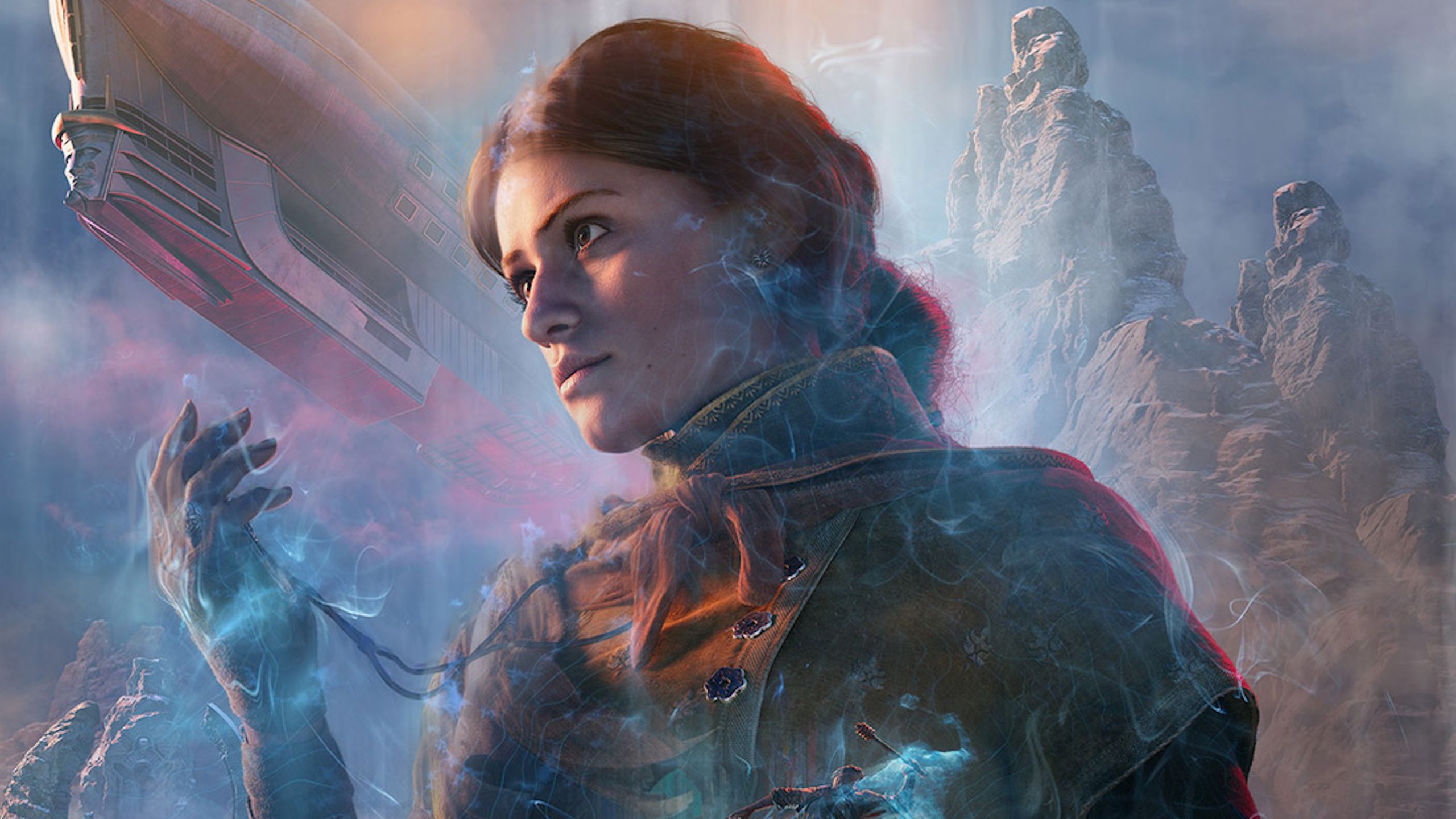
The gaming industry continues to face a period of significant contraction as Bandai Namco confirms it has passed a formal resolution to dissolve and liquidate Reflector Entertainment, the Montreal-based studio responsible for the 2024 action-adventure title Unknown 9: Awakening. This decision marks the end of a long-standing partnership and the conclusion of the studio’s operations, a move that follows a series of internal restructuring efforts and project cancellations that have plagued the developer since the release of its debut game.
The announcement was confirmed through a regulatory filing from Bandai Namco, which cited a comprehensive assessment of future business sustainability, the necessity of additional capital investment, and the unlikelihood of achieving future profitability. While the studio had been a cornerstone of Bandai Namco’s Western expansion strategy, the harsh economic realities of the modern games market have led the parent company to prioritize its resources elsewhere.
A Chronology of Decline
The trajectory of Reflector Entertainment has been turbulent, characterized by high expectations followed by a swift decline in organizational stability. Founded in 2016 by industry veterans, the studio was acquired by Bandai Namco in 2020 as part of a bid to bolster the publisher’s original intellectual property portfolio.
The timeline of the studio’s final year paints a stark picture of the challenges faced by mid-tier developers in an industry increasingly dominated by massive, long-tail live-service titles:
- October 2024: Unknown 9: Awakening is released to a lukewarm critical reception. While the game featured high-production values and starred Anya Chalotra, it failed to capture a significant audience.
- November 2024: Just one month after the game’s release, Reflector Entertainment undergoes a significant workforce reduction, laying off approximately 18% of its staff as the company attempted to pivot following disappointing sales data.
- January 2025: The studio implements further layoffs as it cancels an in-development follow-up project. During this period, CEO Herve Hoerdt publicly acknowledged that the debut title failed to meet the company’s internal performance metrics and financial projections.
- November 2026: Bandai Namco officially confirms the resolution to liquidate the studio, noting that after reviewing pre-production progress on new concepts and current market conditions, further investment was no longer justifiable.
Analysis of the Failure: The AA Gaming Dilemma
The story of Reflector Entertainment serves as a case study for the "AA" development tier—studios that operate with budgets larger than indie developers but smaller than massive AAA studios. These developers often struggle to find a foothold in an market that has become increasingly binary, where games are either massive hits or catastrophic commercial failures.
In its pre-release phase, Unknown 9: Awakening was viewed as a return to the linear, narrative-driven action games of the late 2000s—a genre many players felt had been neglected in favor of sprawling open-world maps and live-service monetization. However, the finished product struggled to justify its price point against modern competitors. Analysts suggest that the game’s inability to differentiate itself mechanically or narratively within a saturated market contributed to its rapid depreciation in value and lack of long-term player retention.
The studio’s reliance on a singular, ambitious project meant that the financial risk was heavily concentrated. When the title did not hit the "success threshold" defined by Bandai Namco, the studio had little in the way of a secondary revenue stream or a proven back catalog to absorb the losses, leading to the rapid series of layoffs and the eventual shuttering of the studio.
Corporate Strategy and Market Realities
Bandai Namco’s decision to liquidate is consistent with broader trends in the gaming sector. Major publishers have spent the last 24 months aggressively pruning their portfolios to mitigate rising development costs, which have reached record highs. The cost of producing a mid-to-large-scale game has grown exponentially, and the "margin for error" for developers has narrowed significantly.
"After reviewing the progress of our latest project in pre-production, future development requirements, and current market conditions, Bandai Namco concluded that it could not justify several more years of investment," the company noted in its official communication. This statement underscores the shift in corporate philosophy, where legacy publishers are increasingly unwilling to sustain "investment projects" that require multi-year runways to achieve profitability.
For Reflector Entertainment, the liquidation process is currently underway. While the specific legal schedule for the dissolution remains subject to local Quebec and Canadian regulations, the operational capacity of the studio has effectively ceased.
The Human and Intellectual Impact
The closure of the studio leaves behind a legacy defined by its singular attempt to create a transmedia universe—a project that aimed to tell stories across games, novels, and podcasts. While the "Unknown 9" intellectual property was ambitious in scope, the dissolution of the studio raises questions about the future of the franchise. It is currently unclear whether Bandai Namco intends to retain the rights to the IP or if the universe created by the studio will be mothballed indefinitely.
Beyond the corporate implications, the closure represents a significant loss of human capital within the Montreal game development scene, a hub that has historically been vital to the global industry. The loss of an entire studio staff—many of whom had been working on the "Unknown 9" project for years—highlights the precarious nature of employment in creative fields where project failure can lead to the permanent erasure of an entire workplace culture.
Future Implications for the Industry
The dissolution of Reflector Entertainment acts as a warning sign for other developers operating under the "AA" model. As development cycles extend and marketing costs balloon, the pressure to secure a "hit" from day one has never been higher. Publishers are increasingly moving toward a model of consolidation, preferring to focus their resources on established, low-risk franchises rather than experimental or unproven new IPs.
As the industry moves toward 2027, the focus for many publishers will likely remain on fiscal conservatism. The liquidation of Reflector is not an isolated incident; rather, it is part of a systemic correction within the video game industry that favors efficiency and proven scalability. For the employees and stakeholders affected by this closure, the event marks a somber conclusion to an ambitious attempt at creative world-building that ultimately fell victim to the unforgiving economics of modern interactive entertainment.
The formal procedures for the dissolution will be handled according to local legal requirements. Bandai Namco has indicated that it will manage the transition with the necessary transparency, though it has not provided specific details regarding severance packages or the redistribution of assets currently held by the studio. For now, the story of Reflector Entertainment serves as a definitive end-point for one of the more high-profile, albeit ultimately unsuccessful, attempts to launch a new multi-platform franchise in the current decade.