Updated April 7, 2026 04:11PM
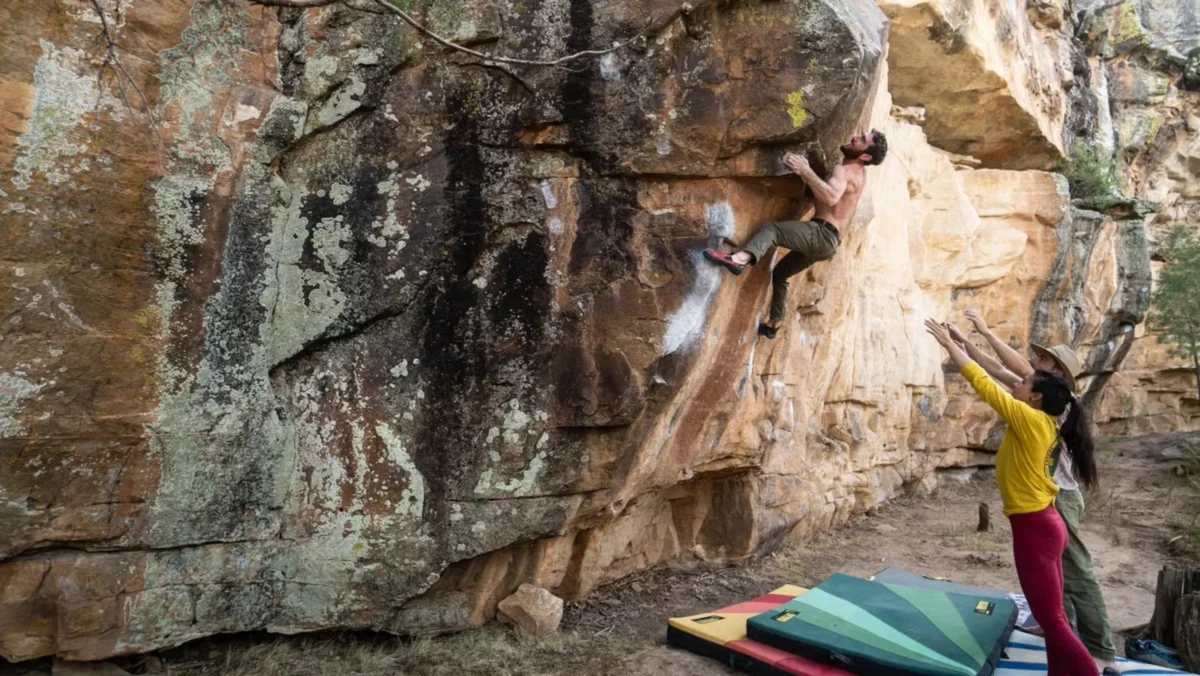
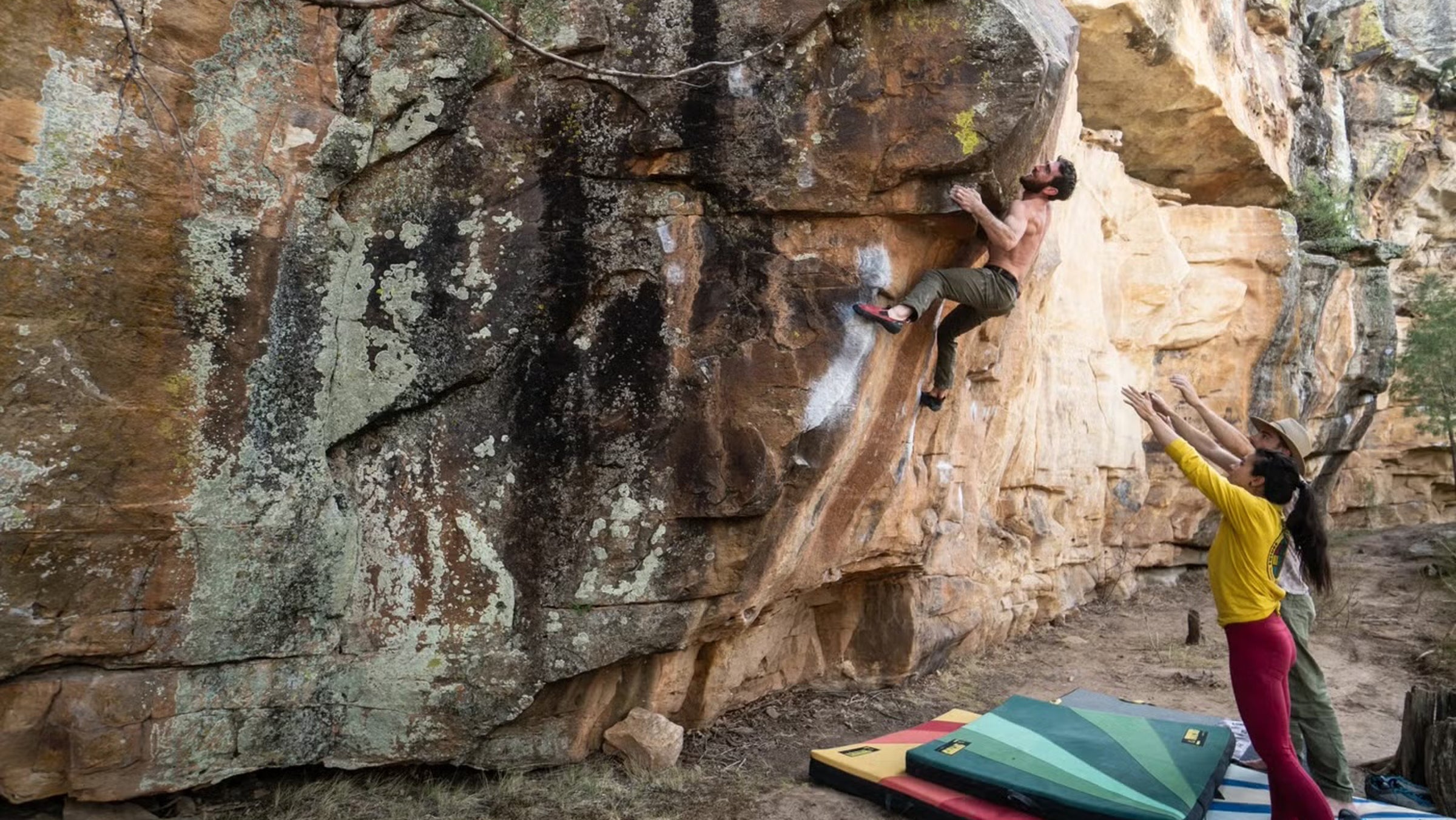
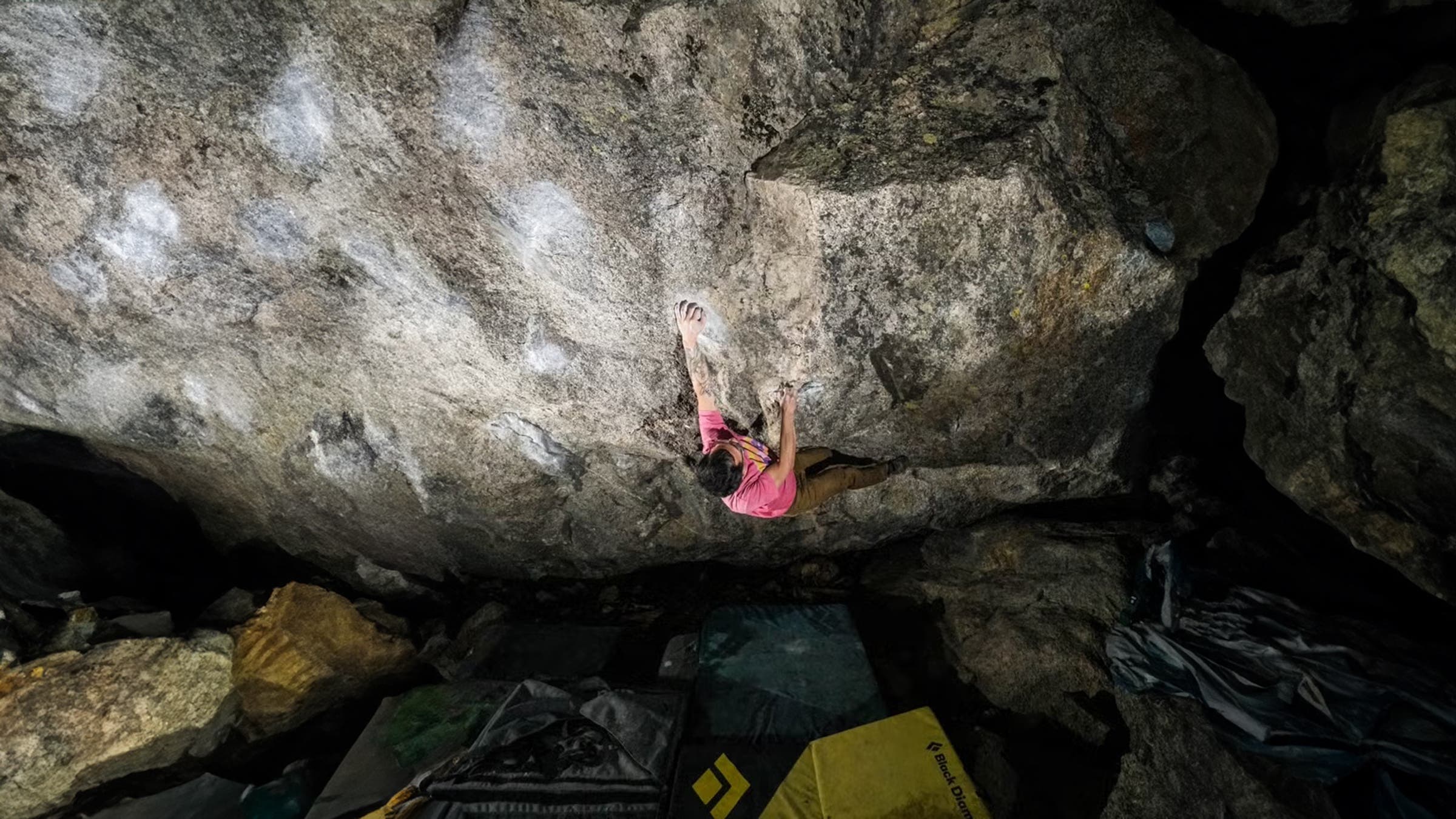
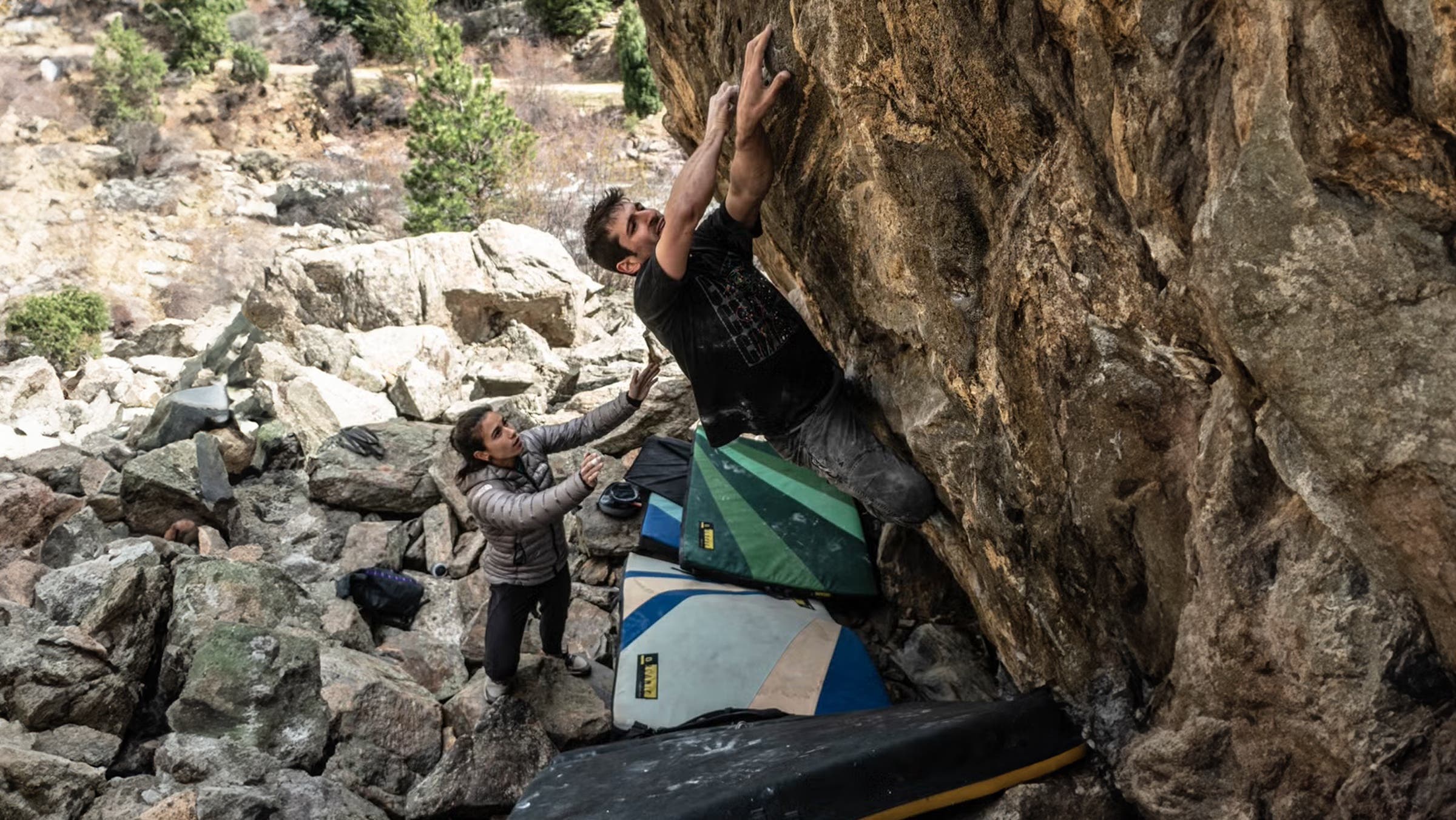
My thumb, slick with chalk, found purchase on a minuscule edge of granite – the crux of Crimping Matters (V10). This 20-move sequence at Guanella Pass, a stone’s throw from Georgetown, Colorado, demanded every ounce of concentration. As I lunged out of the overhang, elbows skyward, the final move loomed: a desperate cross to another crimp. The landing below, a treacherous 30-degree slope littered with jagged rocks, made a clean dismount improbable. My grip faltered, fingers uncurling, and I was airborne. The descent was punctuated by the disconcerting slide across seven strategically placed crashpads. Fortunately, the combination of meticulously positioned smaller pads filling critical gaps and larger ones blanketing the sloped sections ensured a safe, albeit abrupt, return to terra firma. I emerged unscathed. This near-miss underscored a fundamental truth in bouldering: the right crashpad setup isn’t just about comfort; it’s about injury prevention, potentially saving a climbing day, or even an entire season.
The evolution of bouldering safety has been a testament to climbers’ ingenuity. Early pioneers, like Ron Kauk during the first ascent of Thriller (V10) in Yosemite, resorted to placing discarded pallets beneath the landing zone, and even "borrowing" employee mattresses. Improvised solutions abounded, from sofa cushions duct-taped into serviceable pads to carefully arranged wooden pallets. It’s a stark contrast to the modern bouldering scene, where the late 1980s marked the nascent adoption of crashpads. Today, the global market boasts over 50 manufacturers, each offering pads equipped with advanced harness systems, ample gear storage, and sophisticated multi-density foam configurations engineered for maximum impact absorption. After extensive testing on the daunting highballs of Squamish, the notorious landings of Bishop, and the ankle-twisting terrain of Rocky Mountain National Park, this comprehensive guide presents the top crashpads available for every bouldering discipline.
Best Crashpads: At a Glance
- Best Climbing Crashpad Overall: Metolius Magnum ($400)
- Best for Long Approaches: Black Diamond Erratic ($450)
- Best Accessory Pad: Kinetic MicroNewton ($109)
Large Crashpads
Long Approaches
Standard Pads
Accessory Pads
Best Climbing Crashpad Overall
Metolius Magnum
Weight: 18.7 lbs
Landing Zone: 47" x 70" x 4"
Packed Dimensions: 47" x 25" x 13"
Foam Composition: 1-inch closed-cell upper layer; 2.5-inch open-cell center; 0.5-inch closed-cell base
Hinge Type: Trifold
Exterior Fabric: 900 denier body fabric
Carry System: Minimalist: lightly padded shoulder straps; thin nylon waist strap; no chest strap
Manufactured in Bend, Oregon, the Metolius Magnum stands as the brand’s largest offering. This tri-fold pad boasts an expansive landing zone, yet its relatively thin profile contributes to a lighter weight compared to many competitors. While this makes it more manageable, it also means it may be less effective at absorbing the impact of significant falls.
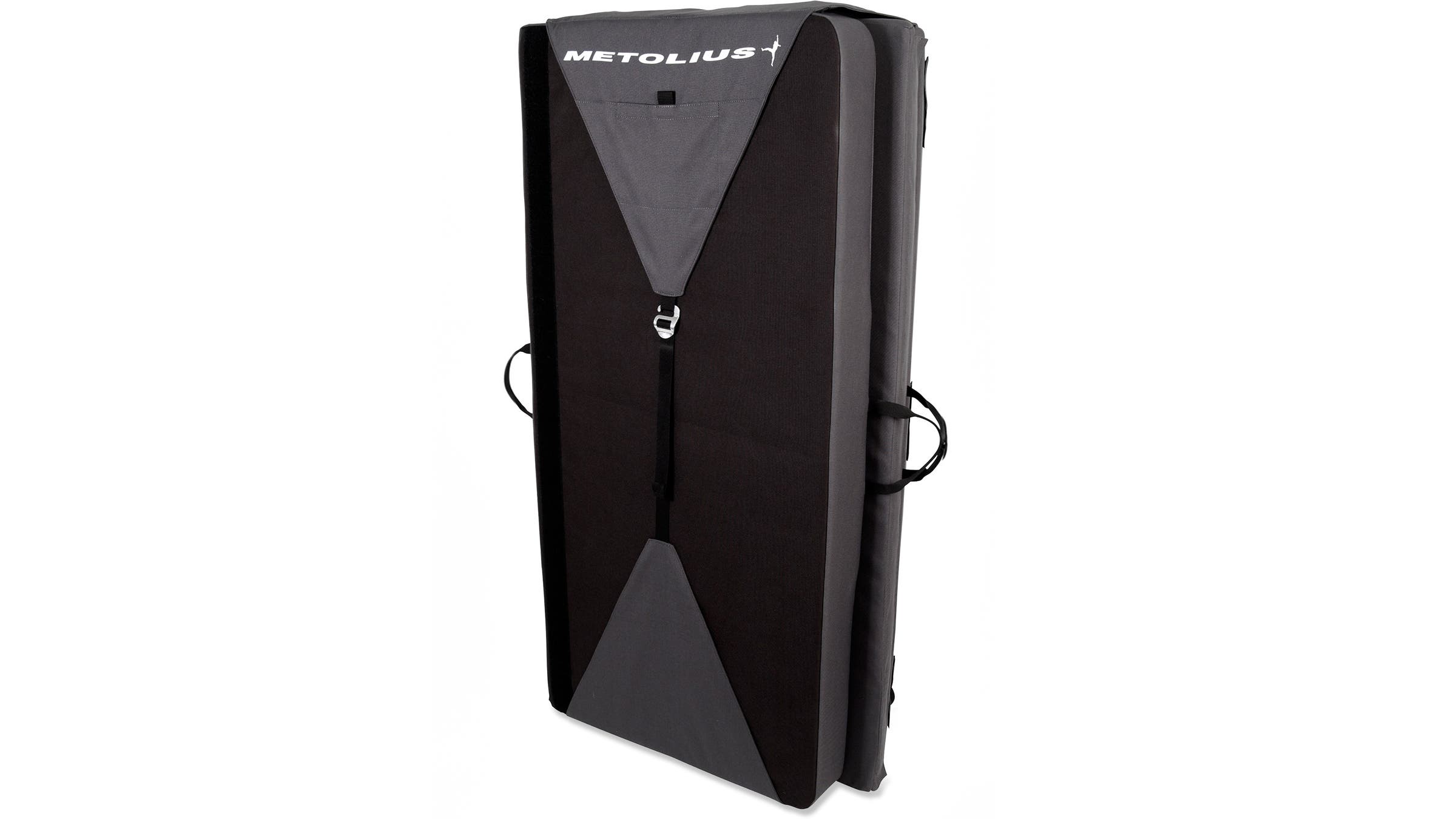
The Magnum strikes an excellent balance between landing area and weight. For lighter climbers seeking a generous drop zone but daunted by the heft of pads like the Big Pad, KiloNewton, or Mondo, the Magnum presents a compelling option. A potential drawback for some users, however, is the non-adjustable shoulder strap system. Shorter climbers may find it beneficial to test the fit before committing to a purchase. For those finding the Magnum slightly too large, its smaller sibling, the Recon, weighs in at 14 lbs and offers a landing zone of 42" x 60" x 4".
Best Crashpad for Long Approaches
Black Diamond Erratic
Weight: 12 lbs
Landing Zone: 48" x 40" x 4.3"
Packed Dimensions: 48" x 20" x 8.6"
Foam Composition: Cross-linked closed-cell foam surrounding a core of softer open-cell foam
Hinge Type: Bifold
Exterior Fabric: Dynex grid fabric with water-resistant TPU coating
Carry System: Black Diamond carry system (padded, easily adjustable, and particularly comfortable for shorter climbers)
Similar to the Mondo, the Erratic features a multi-pad piggyback system, though it’s not compatible with pads from other brands, requiring creative attachment methods if supplementing with different brands. The top-carry backpack strap allows for the attachment of an additional bag, creating a top-heavy but ergonomically sound carrying experience. An integrated exterior water bottle holder is a thoughtful touch, especially appreciated on extended approaches.
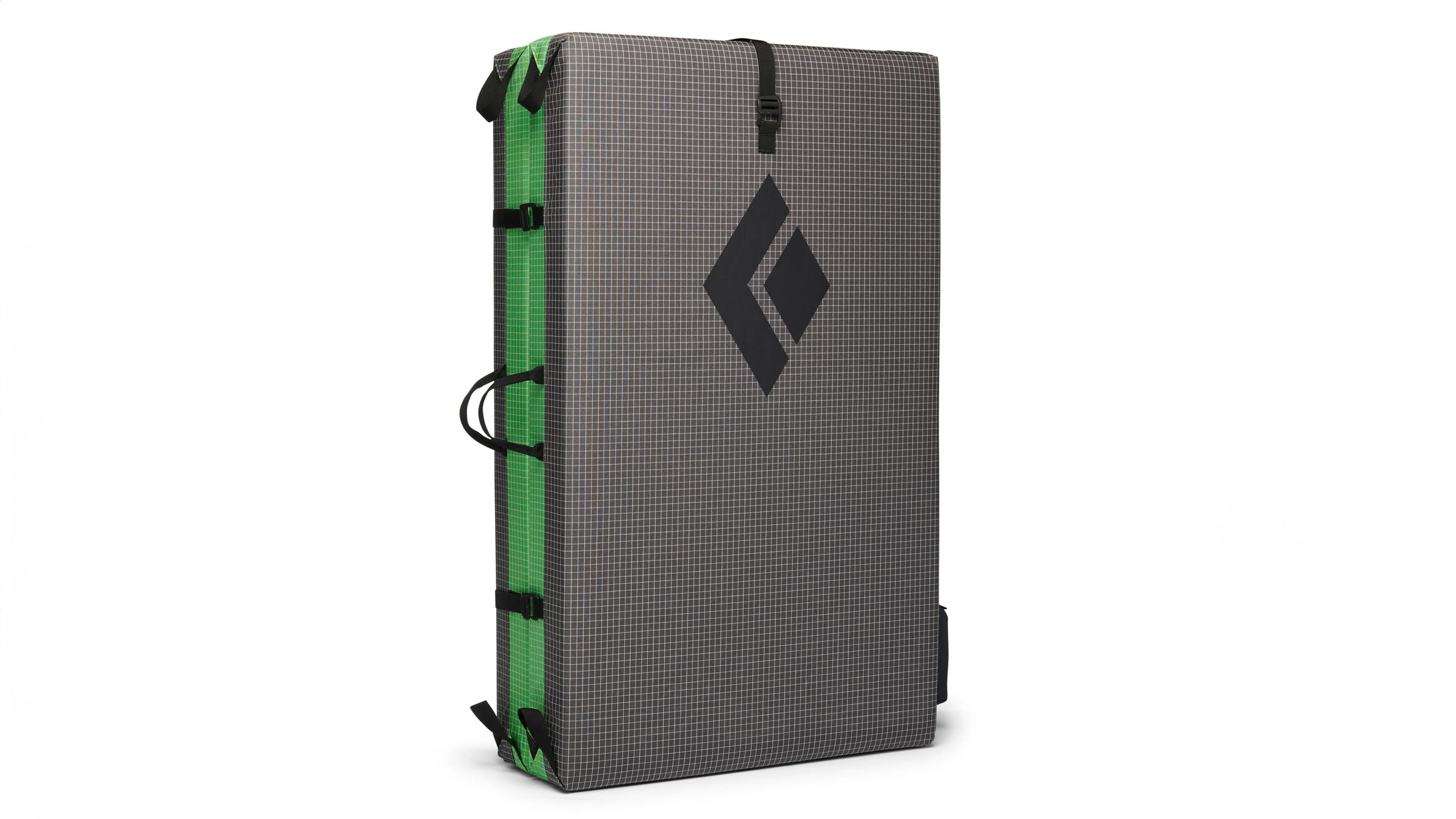
Black Diamond’s Erratic is a lightweight, medium-sized crashpad engineered with a robust suspension system ideal for long approaches. Its stiff landing surface is designed to handle significant falls. Furthermore, the Erratic is remarkably durable and nearly waterproof, preventing waterlogging during wet approaches or use on damp terrain.
For climbers embarking on extensive backcountry expeditions, the Erratic emerges as a top contender. While it may not offer the sheer volume of coverage or plushness of the Organic Backfourty or Mad Rock Duo, its significantly lighter weight – nearly half that of the Backfourty Big Pad – and larger-than-standard landing zone make it a practical choice. Organic’s Simple Pad, while compatible with the Backfourty setup, provides a substantially smaller landing zone and weighs as much as the Erratic. The Erratic’s adjustable carry system, light weight, and generous size are particularly attractive to smaller climbers. The primary drawback, aside from its price, is the pad’s stiffness and lightness, which, while beneficial for highball landings and morale, mean it doesn’t conform well to uneven terrain. Unlike softer, heavier pads that might mold around rocks and roots, the Erratic tends to rest precariously on top of them.
Best Accessory Pad
Kinetic MicroNewton
Weight: 5 lbs 7 oz
Landing Zone: 36" x 30" x 3"
Packed Dimensions: 18" x 30" x 6"
Foam Composition: 1-inch closed-cell foam over 2 inches of open-cell cushion
Hinge Type: Hybrid
Exterior Fabric: 1680 denier nylon body; 1000 denier nylon top sheet
Carry System: Briefcase handles
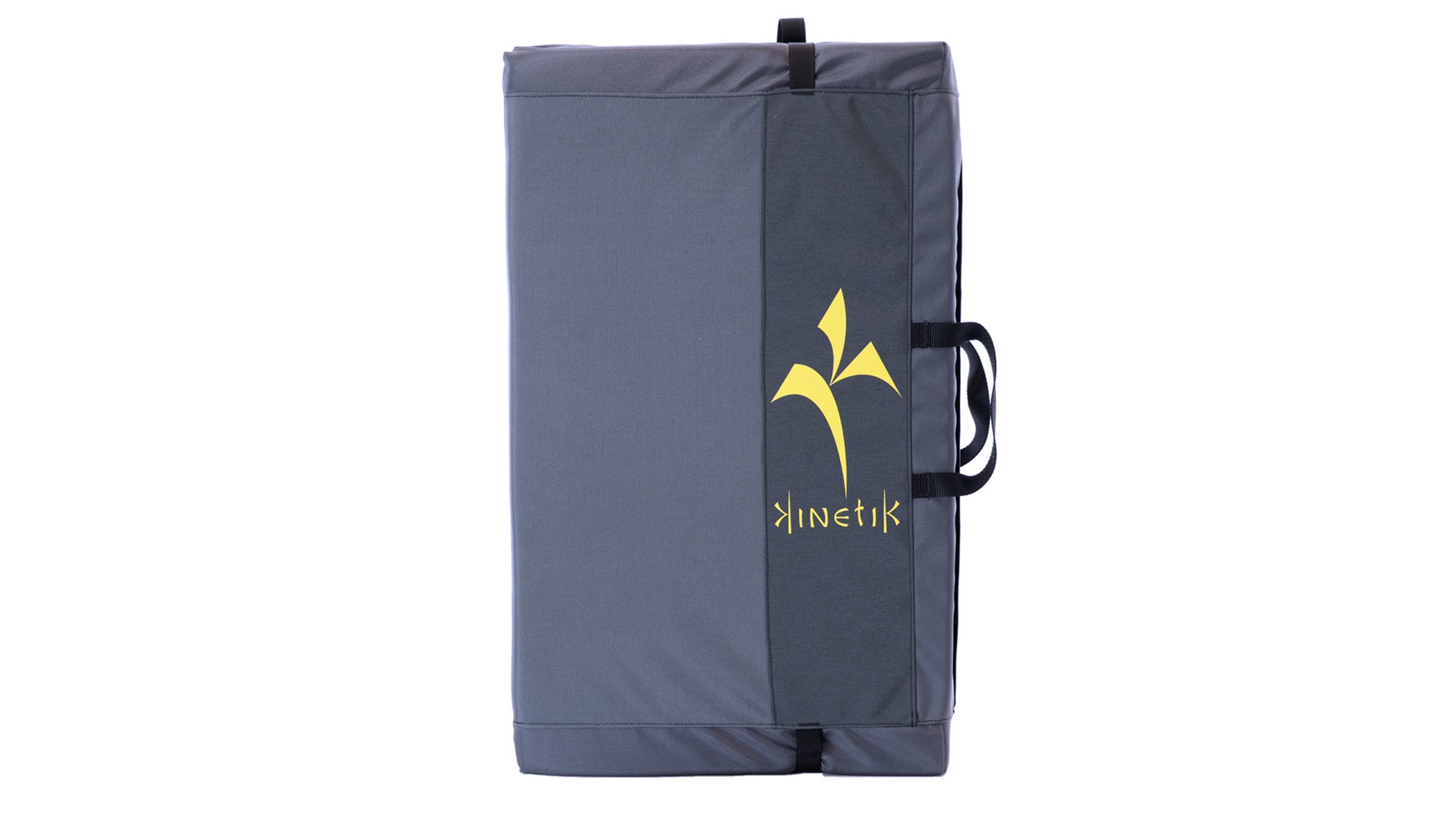
The MicroNewton is a compact pad designed to complement larger crashpads. While not intended for significant falls, it excels at filling gaps between larger pads, cushioning dabby sit-starts, or adding an extra layer of protection where needed. Its thoughtful design and impressive foam-to-weight ratio make it an invaluable addition to any bouldering kit.
Large Crashpads
Asana Superhero
Weight: 15 lbs
Landing Zone: 57" x 40" x 4"
Packed Dimensions: 29" x 40" x 8"
Foam Composition: 4 inches total: 1" closed cell, 2" open cell, 1" closed cell
Hinge Type: Bifold hybrid
Exterior Fabric: 1000 denier nylon cover; 1680 denier Ballistic nylon edges; 900 denier polyester landing deck
Carry System: Padded shoulder straps, thick (but unpadded) nylon waist straps, chest strap, and adjustable load lifters
The Superhero features an external cargo clip, allowing a backpack to be secured to the pad’s back. This configuration tucks the backpack into the load flap, preventing it from swinging freely and disrupting balance. While stuffing gear into pads is a common practice, it can lead to discomfort during transport and potentially compromise the foam’s longevity. Manufactured in Garden City, Idaho.
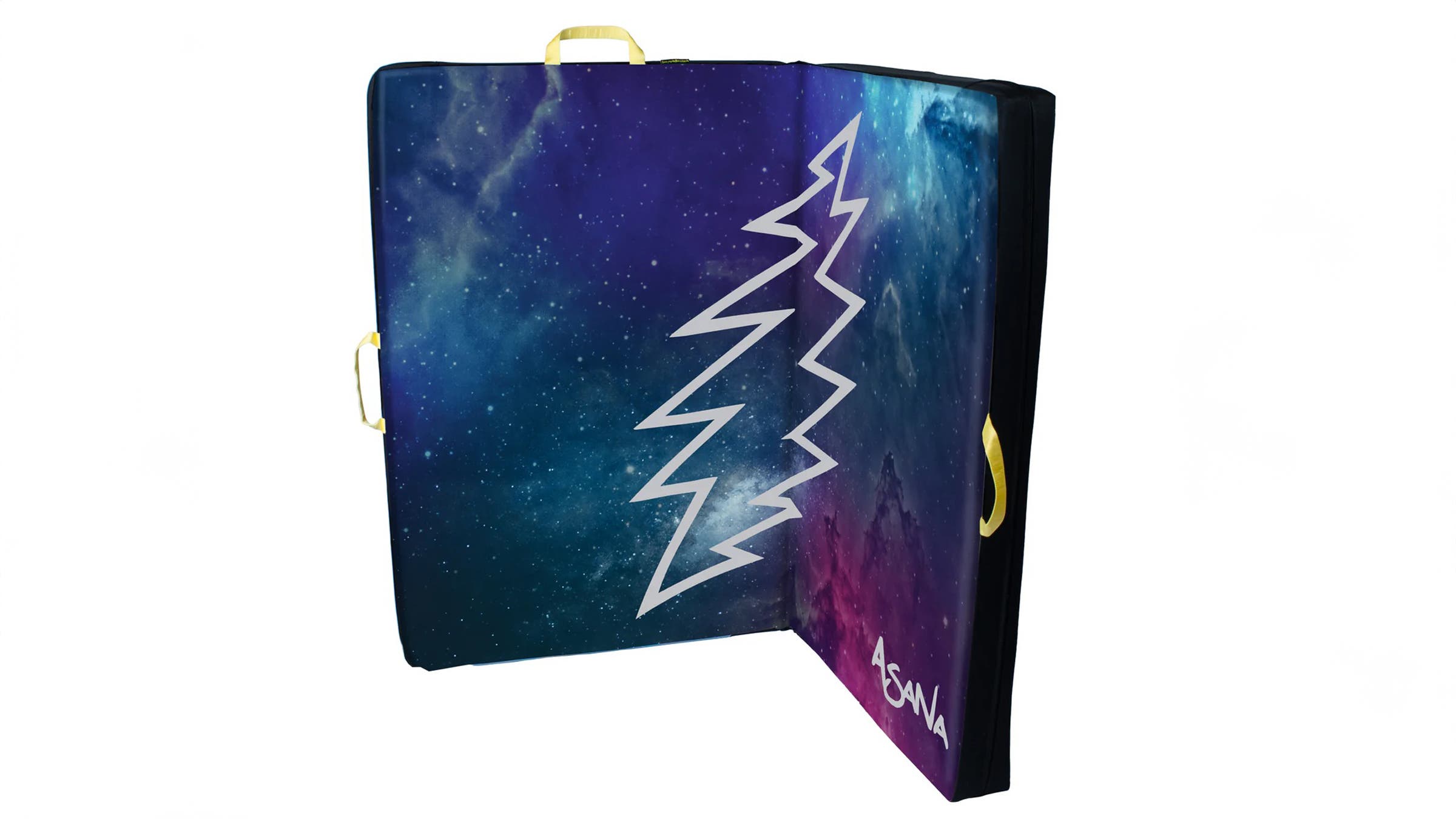
Asana’s Superhero is a bi-fold hybrid hinge pad, representing the largest model in their lineup. It is notably lighter than many comparable large pads, though also thinner. Asana’s load flap closure system facilitates the piggybacking of multiple pads without requiring a separate carrying system.
Positioned as one of the smaller and lighter options within the large pad category, the Asana Superhero is an excellent choice for climbers who don’t require the extensive coverage and plushness of pads like the Organic Big 5 or Black Diamond Mondo. It’s also well-suited for lighter climbers seeking to minimize their load. A significant advantage of the Asana system is its design for carrying multiple pads. It’s worth noting that the Superhero’s foam is initially quite stiff, which benefits heavier climbers by preventing bottoming out. However, lighter climbers might prefer more immediate cushioning. As the pad breaks in, heavier climbers might find themselves wishing for a thicker, 5-inch pad.
Black Diamond Mondo
Weight: 20 lbs 6 oz
Landing Zone: 47.6" x 60.2" x 4.7"
Packed Dimensions: 47.6" x 30.1" x 9.4"
Foam Composition: 1 inch of cross-linked closed-cell foam over 4 inches of open-cell foam
Hinge Type: Classic
Exterior Fabric: 100% recycled polyester shell fabric with ripstop grid
Carry System: Padded waist straps, shoulder straps, and load-lifters
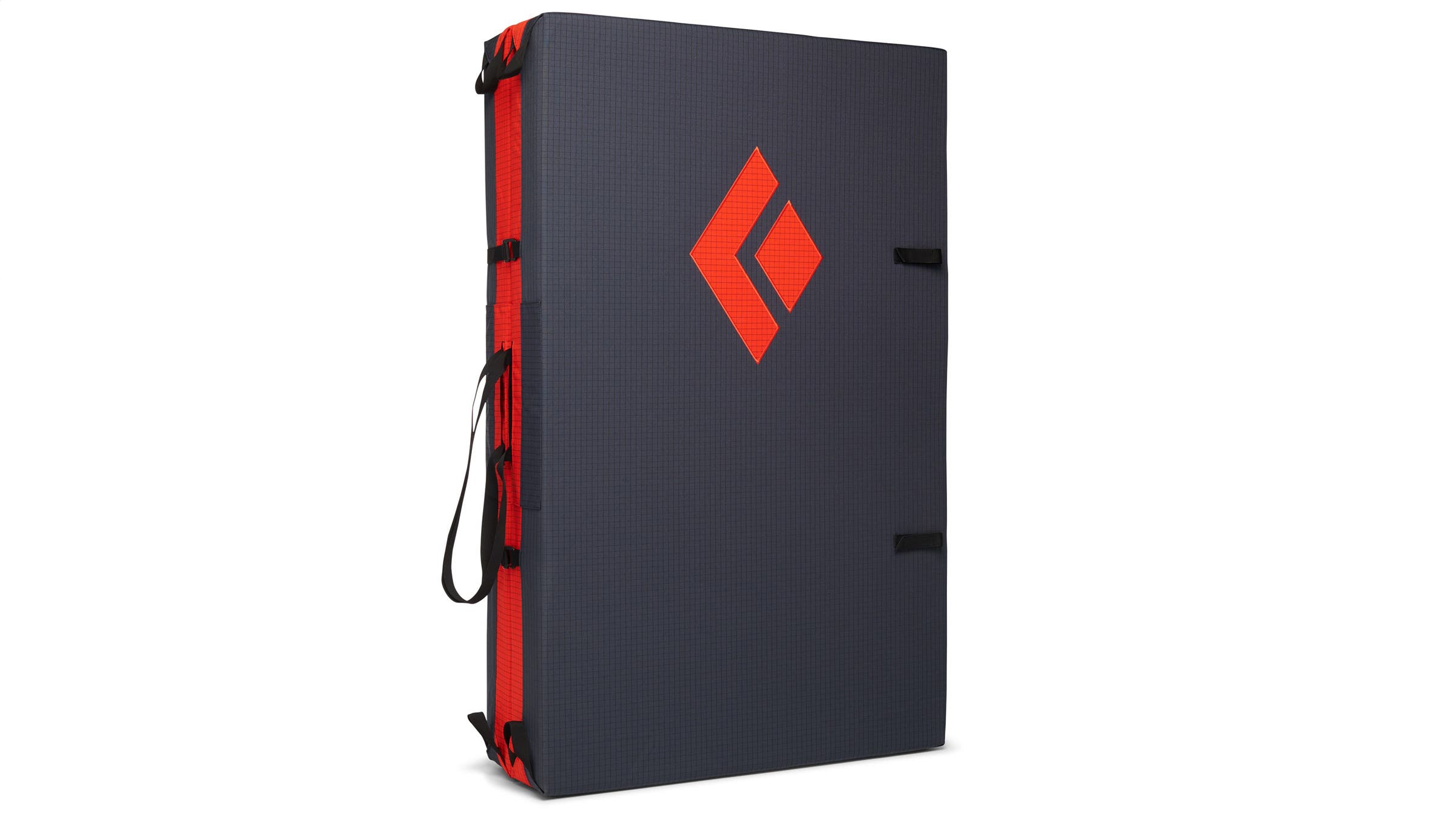
Corner grab handles facilitate on-the-fly landing adjustments, and the large handles make single-shoulder carrying convenient for short distances. Manufactured in Vietnam.
The Black Diamond Mondo is an exceptionally large pad, and it rightfully holds a revered status among highball bouldering enthusiasts worldwide. First introduced in 2001, the Mondo was revolutionary for its time, significantly expanding the perceived limits of highball bouldering. It has undergone several redesigns since its inception. The current iteration features a slightly reinforced (though still arguably minimalist) carry system and an abundance of impact-absorbing foam.
If maximizing foam coverage is your primary concern, the Mondo is a strong contender. While it is heavy and expensive, the value proposition lies in the sheer amount of landing surface it provides. A significant drawback is the carry system, which remains more basic than that of many other large pads and is notably inferior to those designed specifically for backcountry bouldering. For those planning regular long approaches (exceeding 30-45 minutes), investing in a pad with wider shoulder straps and a chest strap is highly recommended (refer to the "Pads for Long Approaches" section).
Organic Big Pad
Weight: 17 lbs (Big 4); 19 lbs (Big 5)
Landing Zone: 46" x 58" x 4" or 5"
Packed Dimensions: 29" x 46" x 8" or 10"
Foam Composition: 1-inch memory foam top layer; 1-inch urethane rubber closed-cell foam mid-layer; 2 inches (Big 4) or 3 inches (Big 5) soy-based open-cell foam base
Hinge Type: Bifold hybrid
Exterior Fabric: 1050 denier Ballistic nylon shell; 1000 denier Cordura nylon landing zone
Carry System: Simple padded shoulder-strap system with unpadded nylon waist belt (no load lifters), and chest strap
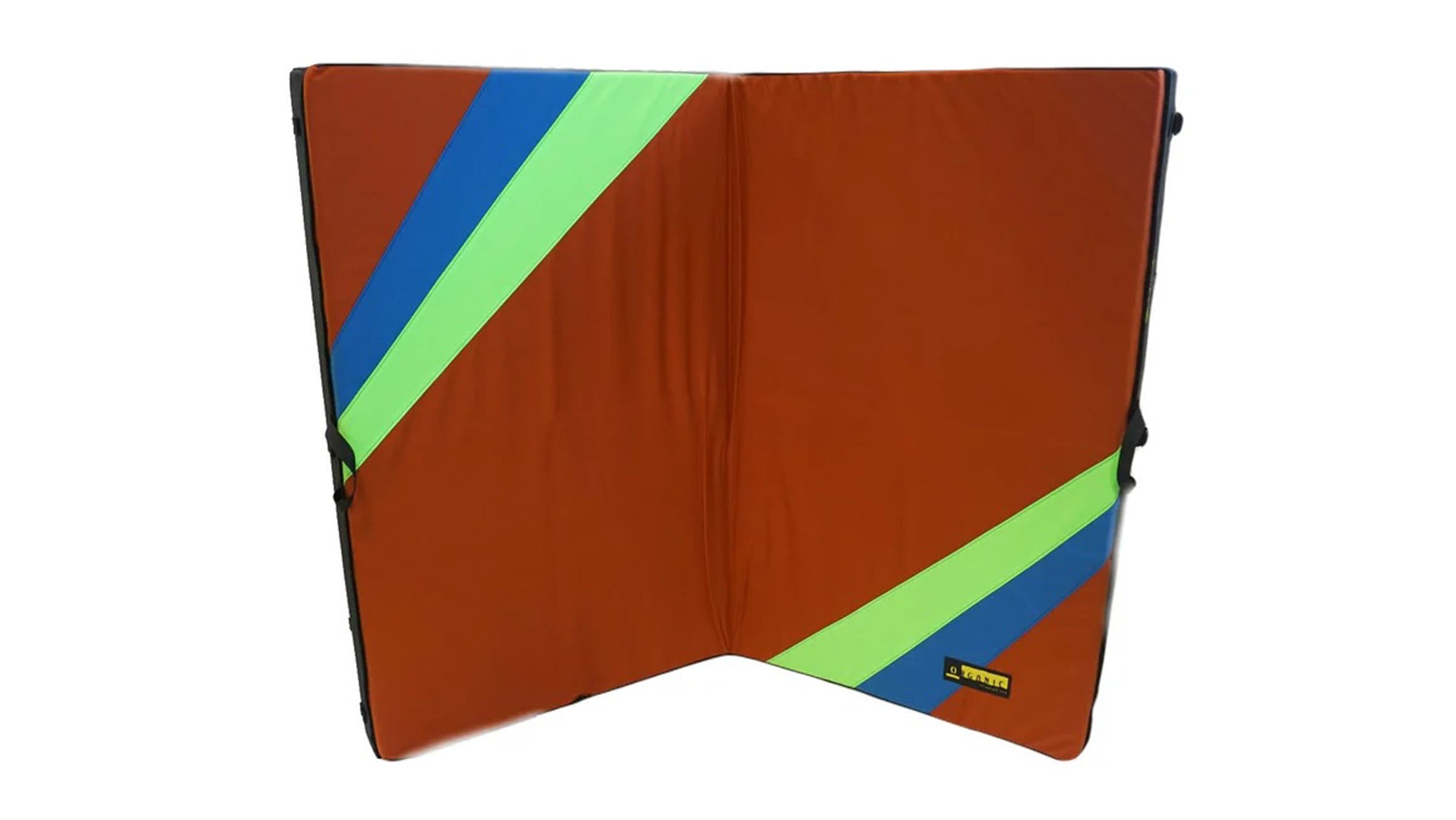
The iconic Organic Big Pad is a thick, stable, hybrid-hinged large pad available in three configurations: the Big 4, Big 5, and Backfourty (detailed in the "Pads for Long Approaches" section). All three pads offer identical ground coverage, but the Big 4, at four inches thick, is less cushioned yet lighter than the Big 5 and Backfourty. The latter two, at five inches thick, provide superior protection for highball problems.
Despite their weight and cost, Organic’s Big Pads are exceptionally popular, and for good reason. They are among the most durable and supportive pads on the market, often maintaining their integrity for over a decade of rigorous use. One former editor reported climbing on his pad for nine years before needing to replace the foam.
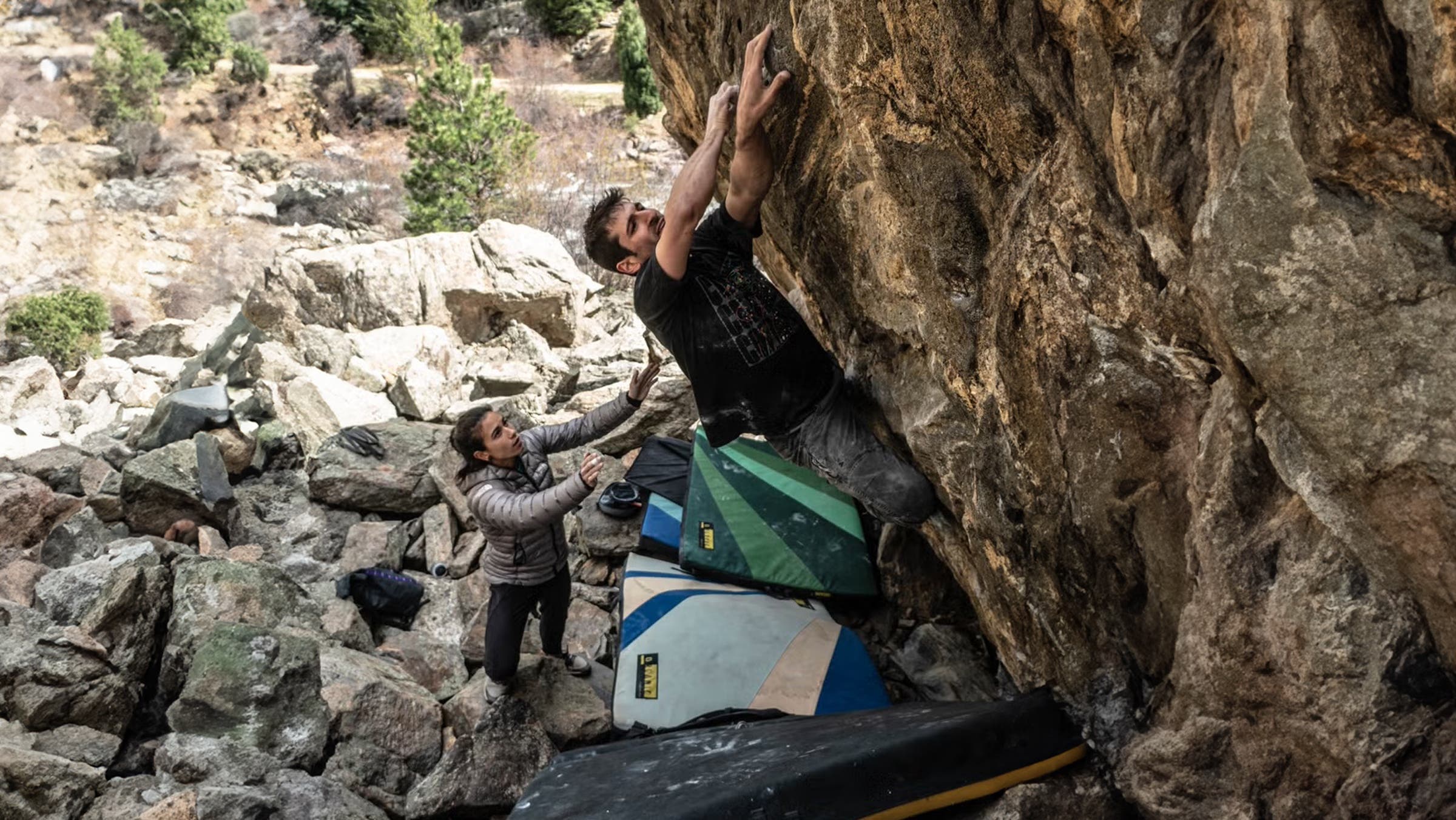
The choice between the Big 4 and Big 5 hinges on your priorities. For those anticipating significant falls or who are heavier climbers, the Big 5 is the recommended option. If long hikes and piggybacking other pads are on the agenda, the Backfourty is the superior choice. The weight and cost savings of the Big 4 are, in our opinion, somewhat marginal, with a substantial reduction in cushioning for a mere $10 price difference. However, for lighter climbers, those few pounds can make a noticeable difference, and the extra inch of foam might not be essential. The Big 4 also serves effectively as a piggyback pad for the Big 5 and Backfourty, with Organic offering a separate piggyback system.
Long Approaches
Organic Backfourty
Weight: 21 lbs (Backfourty Big Pad); 12 lbs (Backfourty Simple Pad)
Landing Zone: 46" x 58" x 5" (Big Pad); 36" x 48" x 4" (Simple Pad)
Packed Dimensions: 29" x 46" x 10" (Big Pad); 24" x 36" x 8.5" (Simple Pad)
Foam Composition: Big Pad: 1" memory foam top layer, 1" urethane rubber closed-cell foam middle, 3" soy-based open-cell foam base; Simple Pad: 1" closed-cell, 3" open-cell foam.
Hinge Type: Bifold hybrid
Exterior Fabric: Big Pad: 1050 denier Ballistic nylon shell, 1000 denier Cordura nylon landing zone; Simple Pad: 1050 denier Ballistic nylon shell, 1200 denier recycled Cordura landing zone
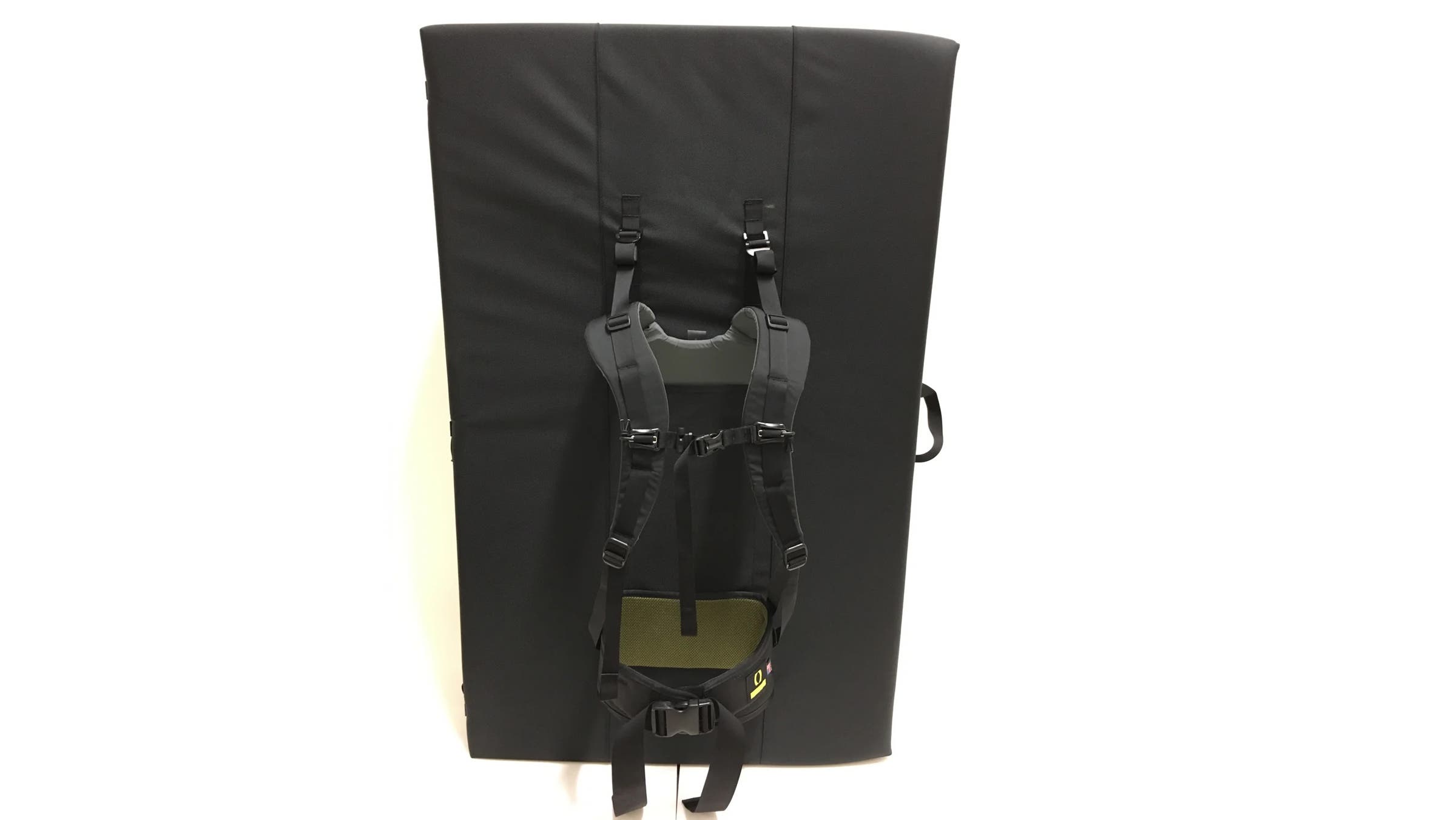
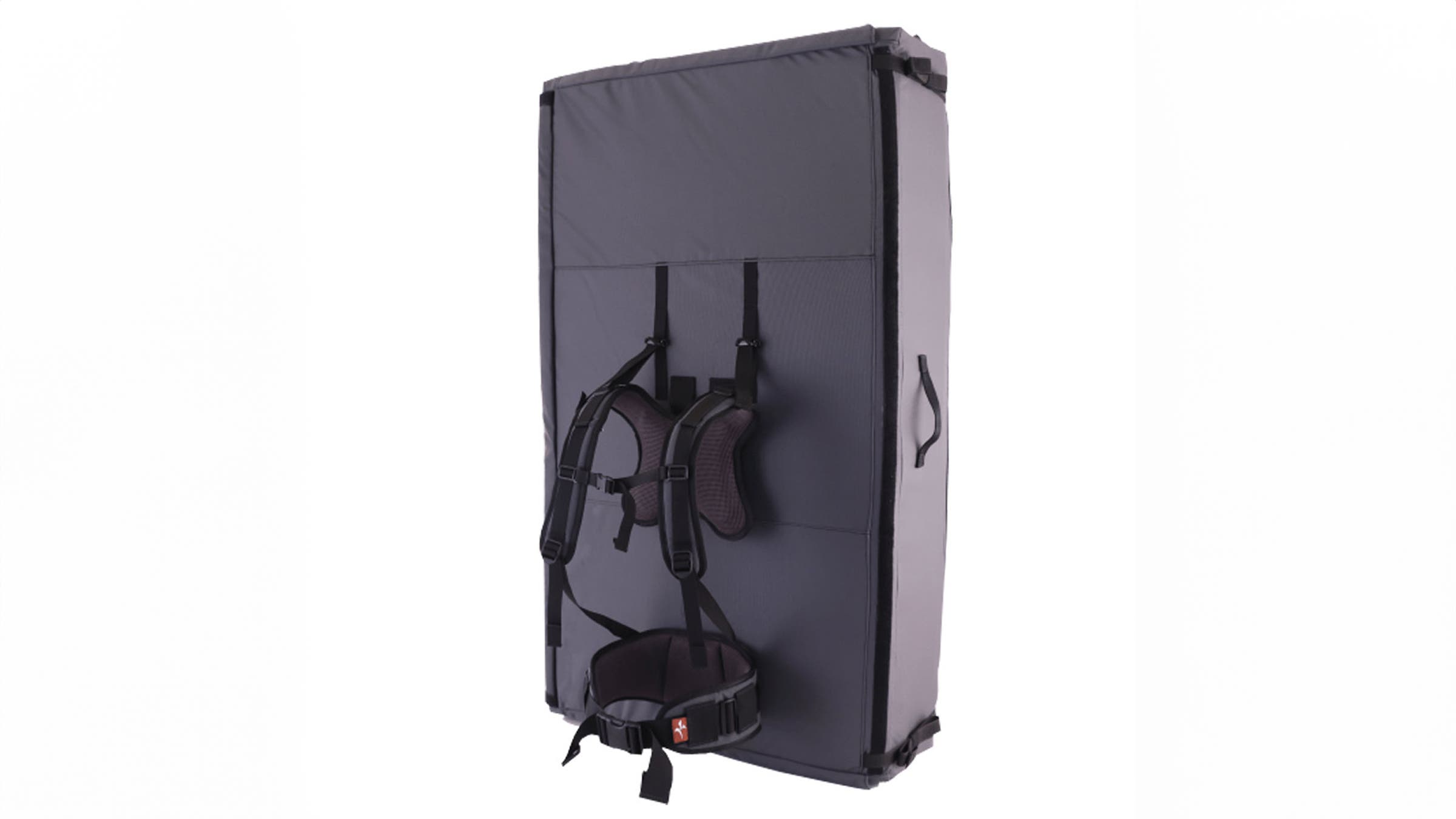
Carry System: Heavy-duty suspension system designed in collaboration with Mystery Ranch. Features plastic and foam shoulder straps for load distribution, a contoured plastic back frame, and 10 adjustment points for customizable fit.
Designed with extended loads in mind, the Backfourty includes supplementary attachment points and the Organic Load Flap, enabling the piggybacking of multiple pads.
Developed in partnership with the renowned backpacking company Mystery Ranch, Organic’s Backfourty Pad features an exceptionally comfortable carry system, engineered to alleviate back strain during long approaches. Organic integrates this system into two of its popular pad sizes: the Big 5 Pad and the Simple Pad. The Big 5 Pad is substantial – heavy and highly cushioned, offering one of the largest landing zones available, making it one of the finest pads ever created. The Simple Pad is its lighter counterpart, thinner, less cushioned, and with a standard drop zone size.
For those undertaking significant hikes, planning to carry multiple pads, and seeking a durable, cushioned solution, the Backfourty Big Pad is highly recommended. When paired with the relatively light (12 pounds) Simple Pad, the Backfourty system can be an excellent option for smaller climbers who find the Big Pad too heavy, the Duo too bulky, and the Erratic too stiff. Organic’s renowned durability further enhances the long-term value, with pads often lasting over a decade, making the initial investment highly justifiable.
Standard Pads
Asana Hero
Weight: 13 lbs
Landing Zone: 36" x 48" x 4"
Packed Dimensions: 36" x 24" x 8"
Foam Composition: 1 inch closed cell; 2 inches open cell; 1 inch closed cell
Hinge Type: Bifold hybrid
Exterior Fabric: 900 denier landing zone; 900 denier exterior; 1680 denier Ballistic nylon edges
Carry System: Asana Deluxe Suspension System: contoured padded shoulder straps, adjustable load lifting straps, a chest strap, and a wide (but unpadded) nylon waist belt
Similar to the Super Hero, the Hero incorporates a Cargo Clip, allowing a backpack to be attached to the pad’s exterior. This allows the backpack to be stowed within the load flap, preventing free movement and maintaining balance. This feature reduces the need to stuff gear inside the pad, which can deform the foam and shorten its lifespan. It also shifts the gear’s weight higher, over the shoulders, for a more ergonomic carry.
The Asana Hero is the smaller counterpart to the Super Hero, sharing many of its features. It’s a durable, well-designed four-inch pad equipped with a robust carrying system, a stiff landing zone, and an integrated piggybacking system.
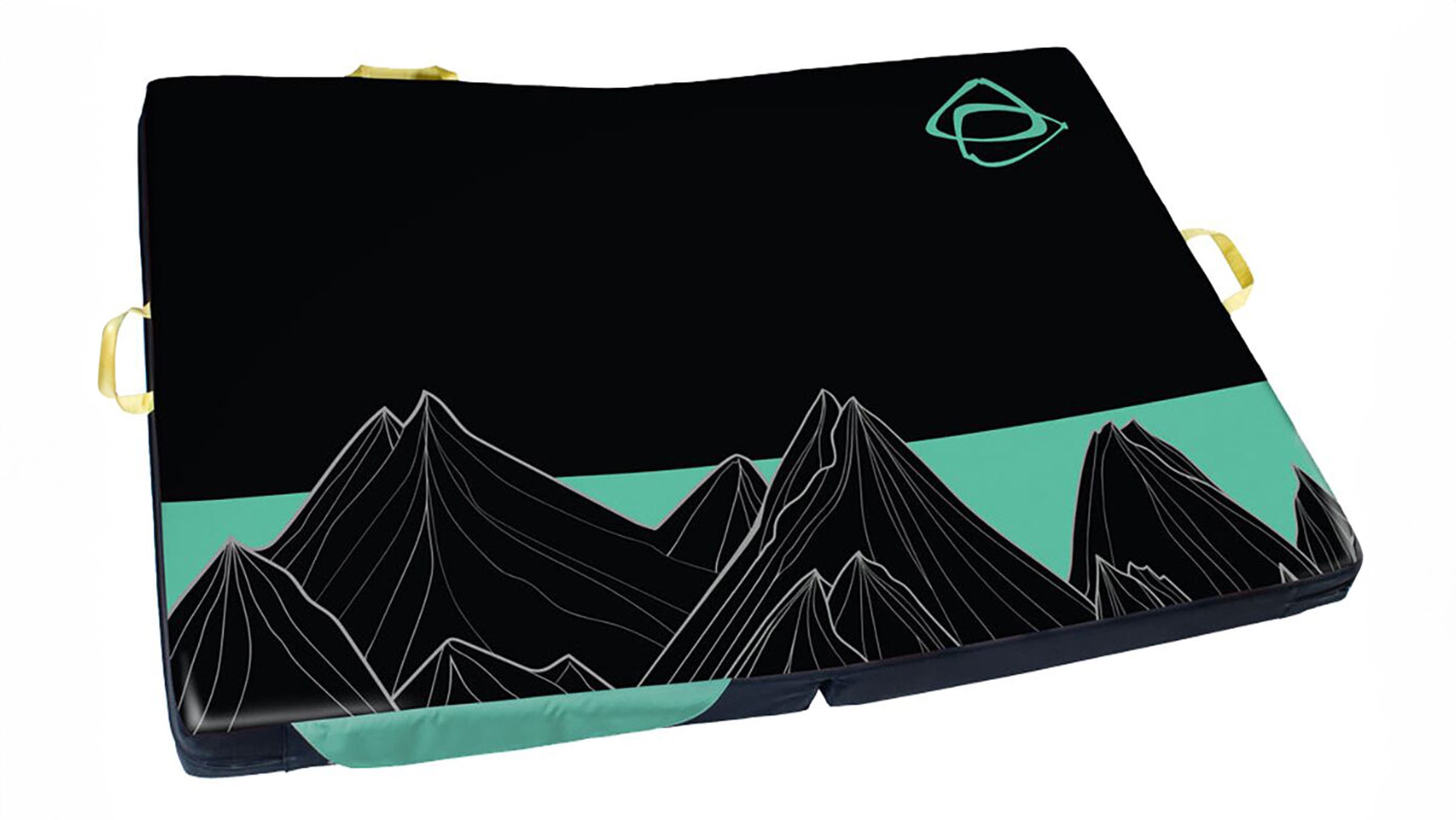
While the SuperHero ranks among the lightest large pads, the Hero is one of the heavier standard-sized pads. This means it must compete on its other merits, which, given Asana’s reputation for quality, are numerous. We particularly commend its durability, closure system, and comprehensive carry system, making it a solid choice for climbers seeking a versatile, mid-sized pad.
Kinetic Newton
Weight: 13 lbs
Landing Zone: 36" x 48" x 4"
Packed Dimensions: 36" x 24" x 8"
Foam Composition: 1 inch closed-cell, high-density foam; 2-3 inches open-cell, high-force-deflection foam; 1 inch closed-cell, high-strength foam
Hinge Type: Bifold hybrid
Exterior Fabric: 680 denier Ballistic nylon exterior; 1000 denier nylon landing zone
Carry System: Basic nylon waist strap and breathable moisture-wicking mesh shoulder straps. Adjustable load lifters on the shoulder straps with adjustable vertical height to modify frame height.
In 2019, shortly after its release, the Newton received Climbing‘s Editor’s Choice Award, and it continues to be a standout in the standard-sized pad category. The KiloNewton remains a remarkable pad. While the Omni-flap system adds a step to the pre-climbing routine, it effectively keeps the climber’s back dry and clean. This feature is particularly valuable for climbers encountering mud and snow.
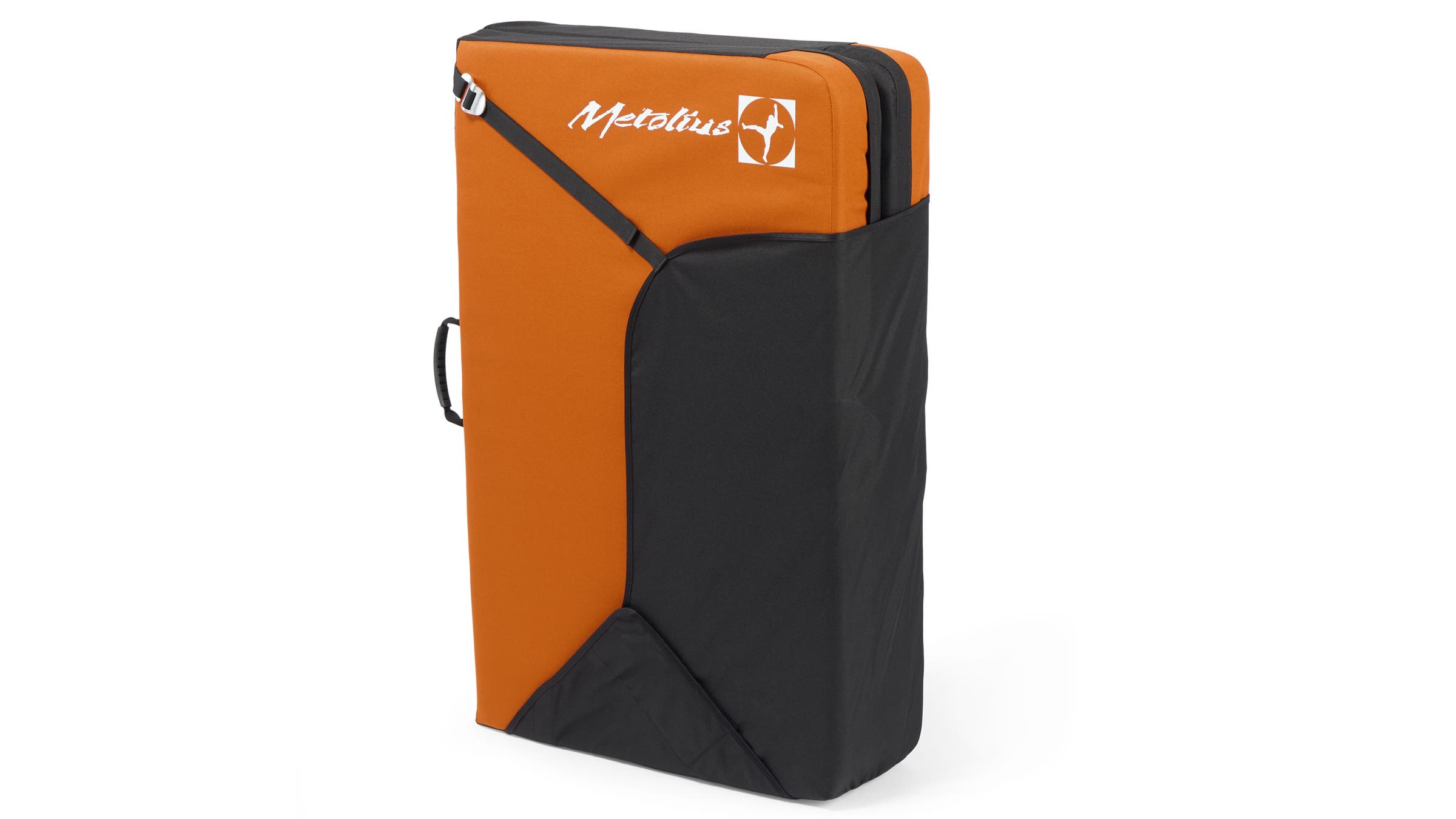
Metolius Session II
Weight: 9 lbs
Landing Zone: 36" x 48" x 4"
Packed Dimensions: 36" x 26" x 8"
Foam Composition: 1 inch closed-cell foam; 2 inches open-cell foam; 1 inch closed-cell foam
Hinge Type: Bifold angled
Exterior Fabric: 900 denier poly outer fabric; built-in rug at landing zone to clean shoes
Carry System: Padded shoulder straps, non-padded nylon waist belt, no chest belt, and no load lifters
Lightweight, affordably priced, and elegantly designed, the Session II is Metolius’s update to one of the best-selling pads of all time, and it’s poised to maintain its popularity. The Session II embodies a minimalist yet exceptionally well-thought-out design. It serves as an excellent starter pad or a cost-effective supplement, but it may not be the ideal choice for those anticipating significant falls from great heights.
Organic Full Pad
Weight: 12 lbs
Landing Zone: 36" x 48" x 4"
Packed Dimensions: 36" x 24" x 8"
Foam Composition: 1 inch closed-cell; 3 inches softer open-cell
Hinge Type: Bifold hybrid
Exterior Fabric: 1050 denier Ballistic shell; 1000 denier Cordura landing zone
Carry System: Standard and minimalist, with padded shoulder straps and a 2-inch nylon hip belt
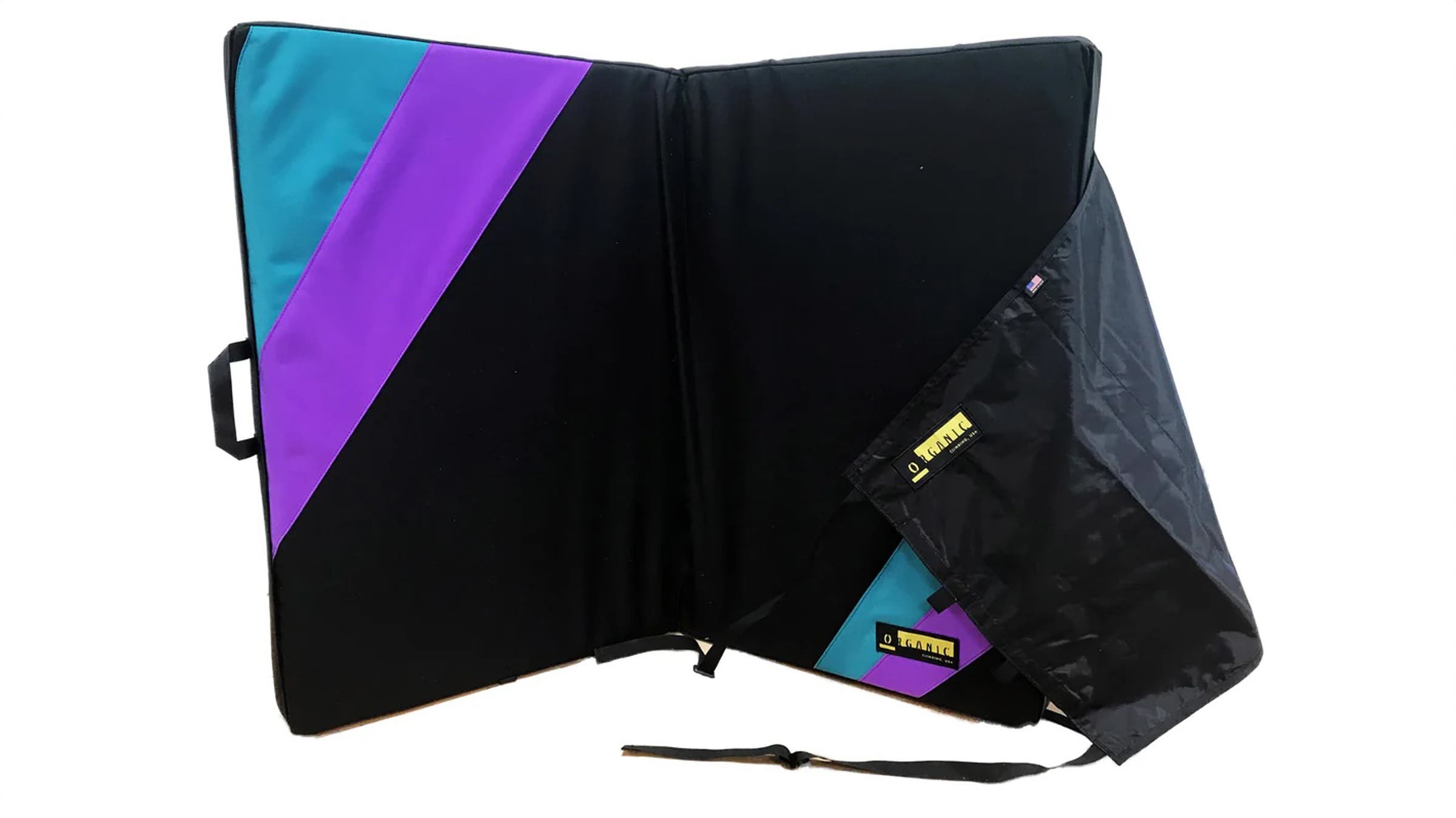
In 2016, Climbing‘s editors inducted the Organic Full Pad into the Gear Hall of Fame, and it remains one of the premier standard-sized pads available. Unlike other pads in the Organic lineup, the Full Pad features a 24" x 15" nylon closure system with a pocket flap for gear storage. This flap not only secures items packed within the pad but also functions as an integrated piggyback system, allowing another pad of equal or smaller size to be attached.
The Full Pad boasts a convenient closure system, highly durable exterior materials, and solid foam construction. If you intend to use a standard-sized pad as your primary landing protection, the Full Pad is an excellent choice. For those looking to supplement a larger pad, Organic’s less feature-rich Simple Pad is a more suitable alternative.
Accessory Pads
Asana VersaPad
Weight: 5 lbs
Landing Zone: 74" x 44" x 3/4"
Packed Dimensions: 36" x 22" x 3"
Foam Composition: 3/4 inch stiff, closed-cell foam
Hinge Type: Quad hinge
Exterior Fabric: Unknown nylon
Carry System: Handles
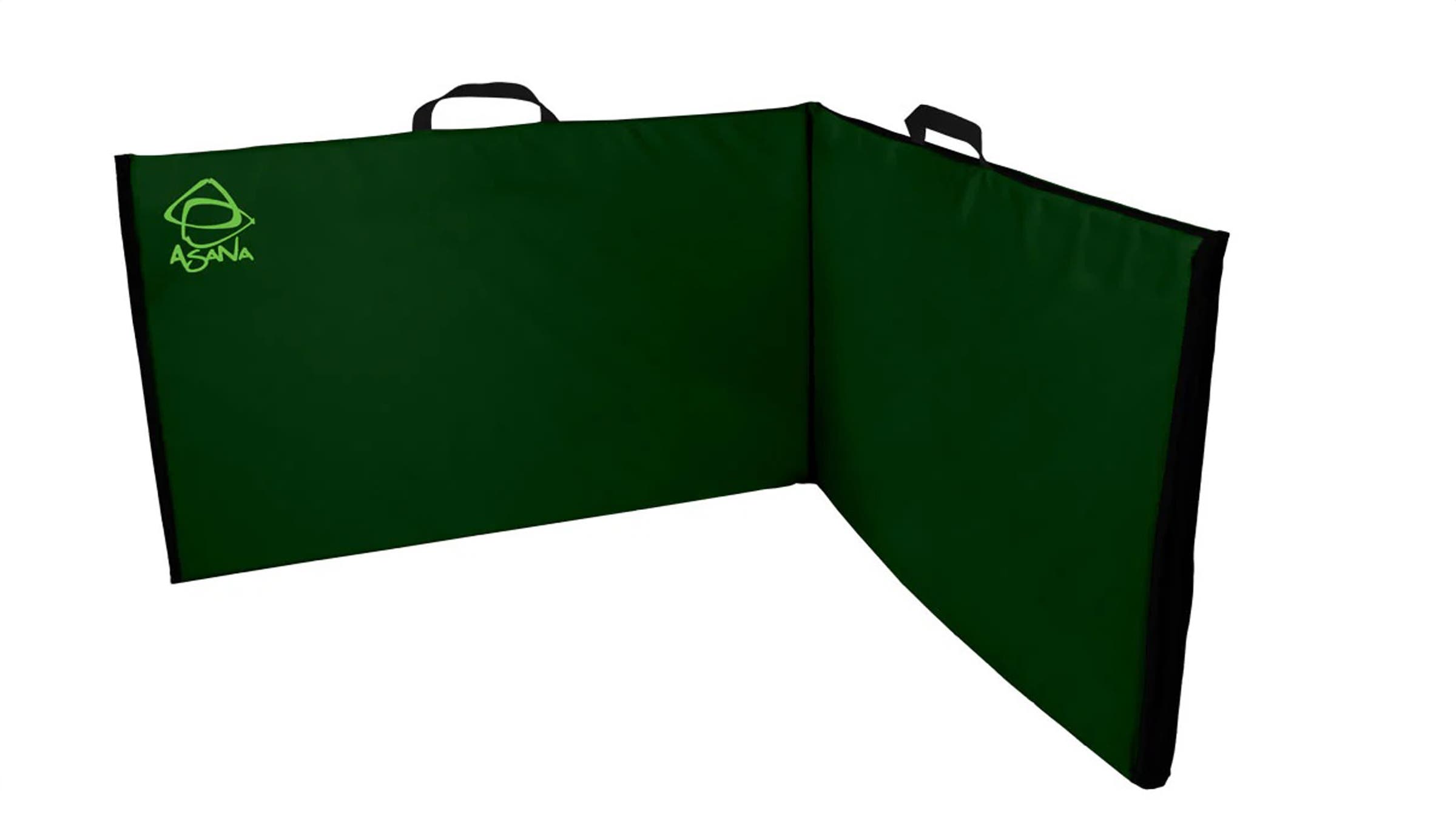
Asana’s interpretation of Organic’s innovative Blubber pad, the VersaPad is a large-area, 3/4-inch supplemental pad. It can be used to cover gaps between larger pads, add an energy-diffusing layer to highball landings, or folded to serve as a sit-start pad. Unlike the Blubber, the VersaPad’s hinged design allows it to stay folded more easily.
Blubbers are relatively simple designs, and Asana has executed this concept effectively. It is a superb product. If 3/4 inch of thickness feels insufficient, consider their 1-inch-thick VersaPad Pro.
Organic Blubber
Weight: 8 lbs
Landing Zone: 48" x 72" x 1"
Packed Dimensions: 48" x 72" x 1"
Foam Composition: 1-inch layer of closed-cell foam
Hinge Type: Taco
Exterior Fabric: 1000 denier nylon shell and landing zone
Carry System: None
Primarily designed as a pad topper, the Blubber is a 1-inch-thick sheet of hardshell foam that prevents falls between larger pads and further disperses impact energy on significant drops. It can also be used to cover talus, wet landings, or as a makeshift sleeping surface in a vehicle. Organic pioneered this type of thin topper pad, and despite increasing competition, it remains the industry benchmark for quality.
Organic Big Tri
Weight: 22 lbs
Landing Zone: 46" x 88" x 3"
Packed Dimensions: 29" x 46" x 9.5"
Foam Composition: Closed- and open-cell foam
Hinge Type: Trifold
Exterior Fabric: 1050 denier Ballistic nylon shell; 1000 denier recycled nylon landing zone
Carry System: Minimalist: padded shoulder straps, nylon waist belt, and chest strap (no load lifters)
Is this a very thin pad, a gigantic pad supplement, or both? Organic continues to challenge conventional definitions. At 3 inches thick, the Big Tri is "designed to be the ultimate topper over large pad piles," yet it’s also substantial enough to function as a standalone pad on lower boulders, particularly given its expansive landing zone.
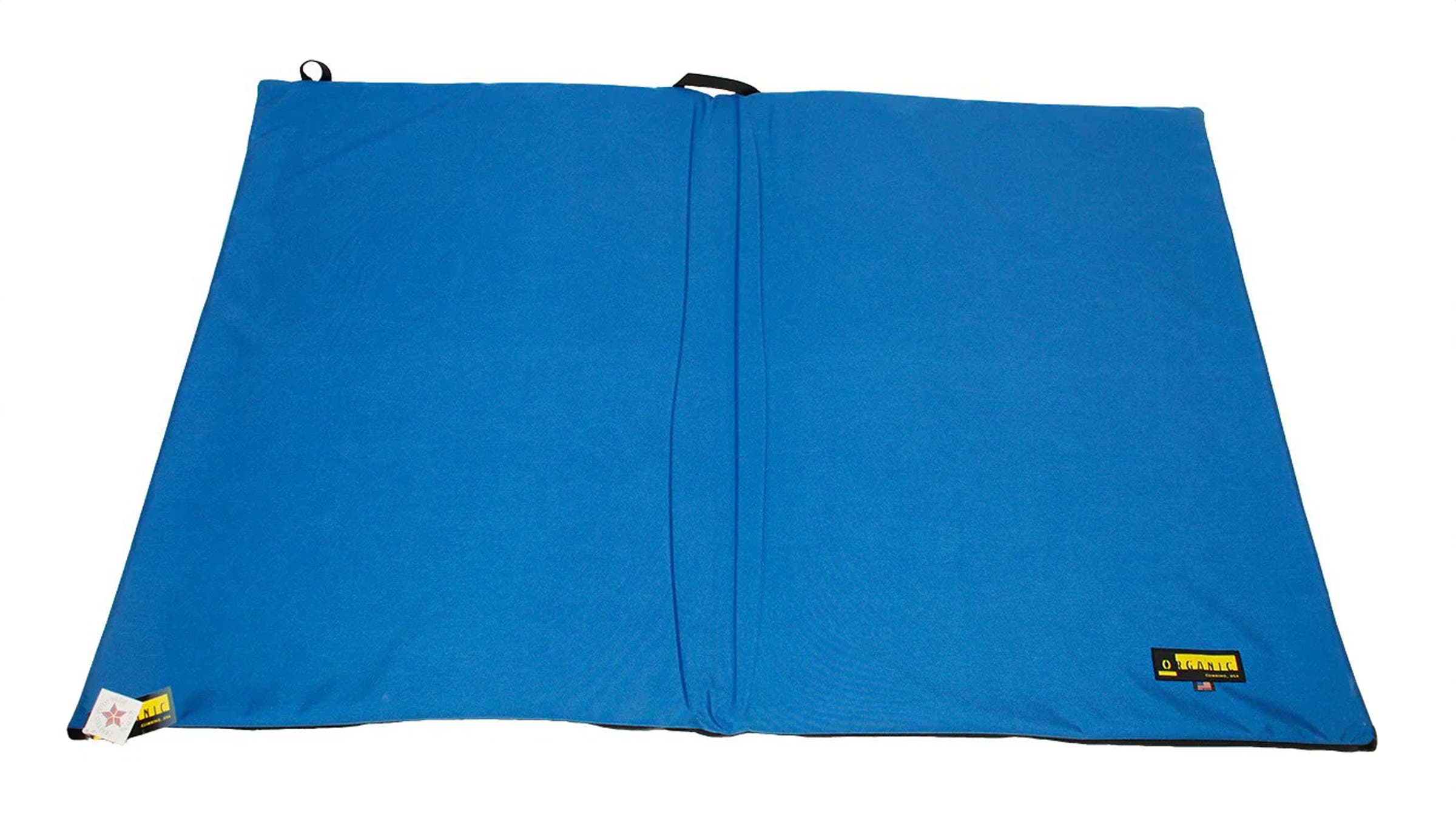
While the price is considerable, this is one of the more innovative recent additions to the crashpad market, offering extensive coverage for its weight. Although its thinness limits its utility as a standalone highball pad, it serves as a formidable supplement to 4- or 5-inch pad setups and would excel on a circuit of smaller boulders. If the weight is a concern, consider Asana’s smaller, lighter, and more affordable Triptick Trifold, which omits shoulder straps.
Send 4×6 Skinny Pad
Weight: 5 lbs
Landing Zone: 45" x 66.5" x 0.75"
Packed Dimensions: 45" x 23" x 3"
Foam Composition: 3/4 inch closed-cell foam
Hinge Type: Trifold
Exterior Fabric: 1000 denier Cordura nylon
Carry System: Carry handle made of recycled climbing rope
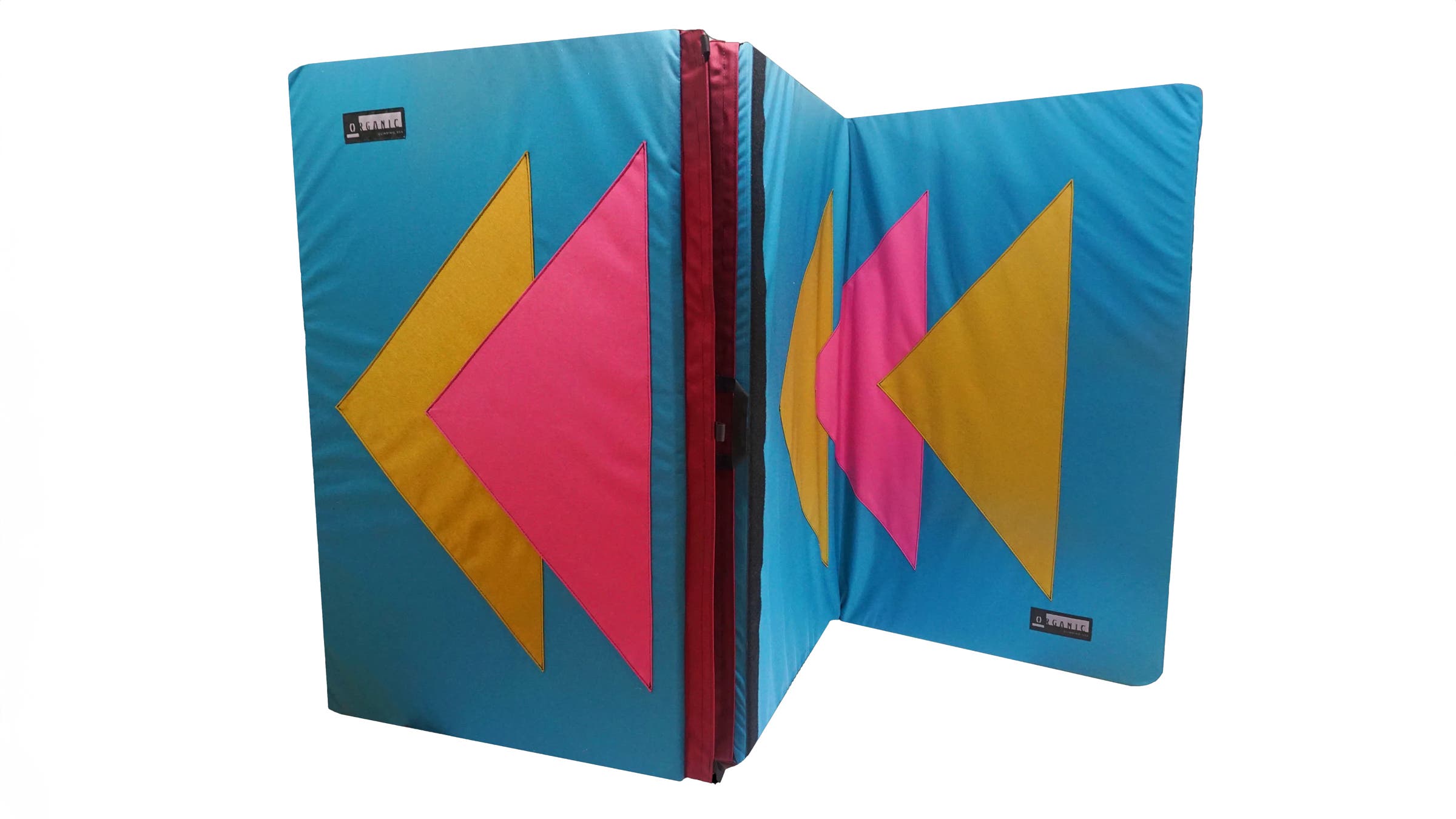
This trifold design is Send’s take on Organic’s Blubber (taco-style) and Asana’s VersaPad (quad-fold). Send, known for its high-quality kneepads, has applied similar thoughtfulness to its crashpad. We particularly appreciate the "PadLink" loops, which allow the pad to be secured on angled landings—a common feature on talus slopes. These loops also provide an anchor point on windy days.
Climbing Crashpads Comparison Chart
What to Know About Crashpads
What size crashpad should I buy?
Crashpads vary significantly in size and thickness. Generally, "large" pads offer approximately 4′ x 5′ coverage, while "standard" pads provide around 3′ x 4′. Pad thickness typically ranges from 3 to 5 inches. The optimal choice depends on your climbing environment and whether you typically climb alone or with a group. For instance, in areas like Rocky Mountain National Park (RMNP), where climbs are often steep (resulting in significant horizontal travel during falls) and landings are composed of talus (uneven terrain), a collection of standard pads often proves more effective than one or two large pads. If you primarily climb solo, two or three smaller pads might be ideal. Conversely, in locations like Bishop, California, characterized by high boulders and flat, sandy landings, larger pads are preferred to maximize coverage and minimize gaps.
Smaller pads, such as sliders or sit pads, are generally thinner, though their coverage area can still be substantial. The Organic Slider Pad, for example, measures 23" x 35" x 1". Many manufacturers base their size considerations on factors like ease of carrying, overall weight, vehicle fit, and shipping dimensions to maintain reasonable costs for consumers.
Are accessory pads worth it?
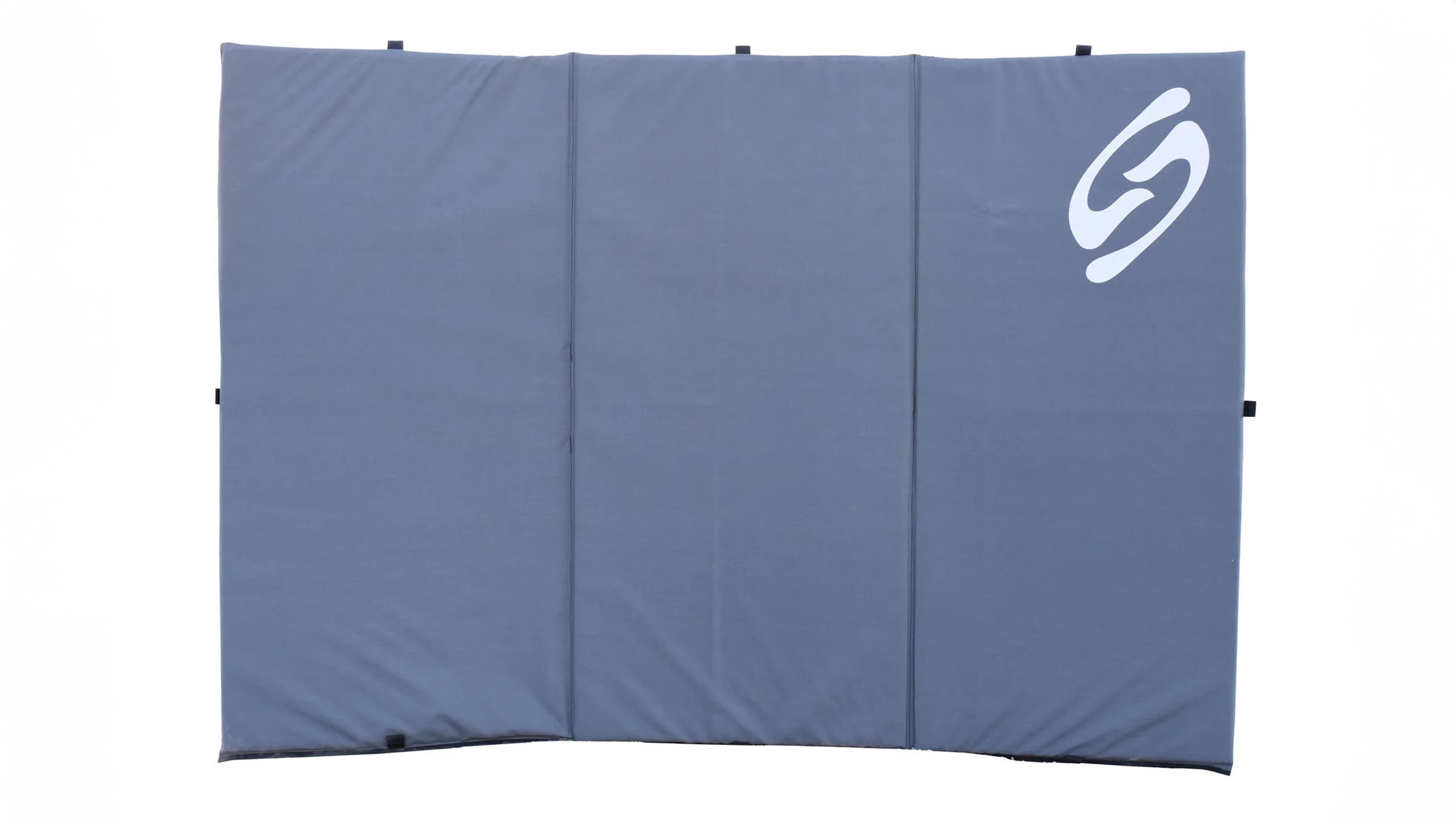
Small pads, often referred to as "mini" pads, are smaller, thinner versions of crashpads designed to serve as supplements. They are primarily useful for cushioning dabby sit-starts, bridging gaps between larger pads, or covering rocks or trees that might be encountered during a fall. In areas with shorter boulders and flat, sandy landings, such as Fontainebleau, France, these "lily pads" are frequently used by climbers undertaking extensive circuits.
What type of foam should I buy?
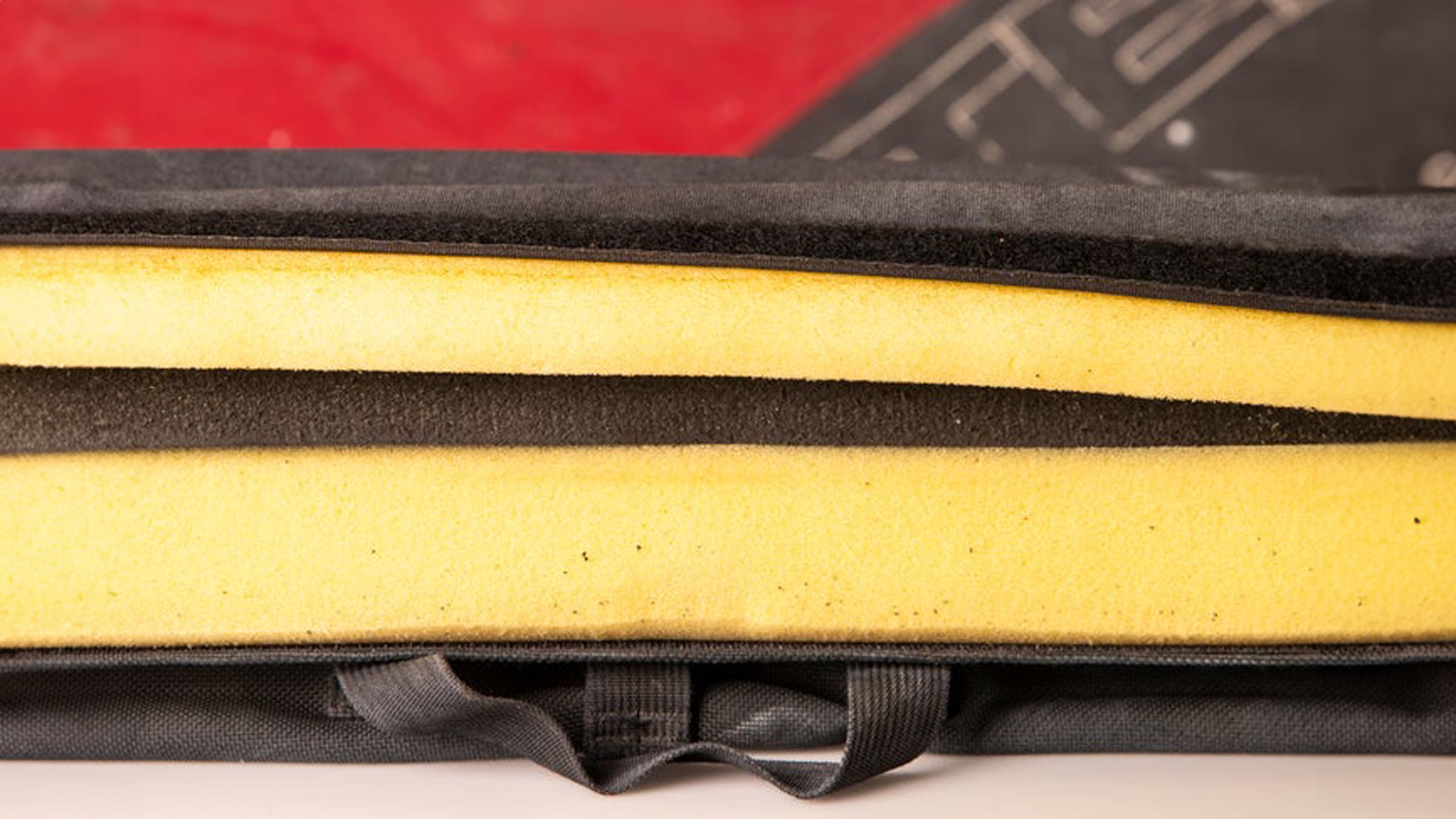
When considering foam ratios, your body weight and the anticipated fall height are the primary factors. Heavier climbers may benefit from pads with a higher proportion of closed-cell foam, which offers greater resistance to bottoming out. Lighter climbers might prefer softer, more responsive pads with more open-cell foam, as closed-cell foam can feel harder, and lighter individuals are less likely to compress through softer materials.