






The Evolution of E-Reader Form Factors
For years, the e-reader market has been dominated by devices ranging from 6 to 10 inches. While larger screens offer an immersive experience for technical documents, academic papers, and graphic-heavy comic books, they often lack the portability required for casual, on-the-go reading. The industry has long grappled with the "second device" dilemma: consumers are often reluctant to carry a dedicated e-reader in addition to a smartphone, leading many to default to reading on their phone’s high-resolution, eye-straining OLED screens.

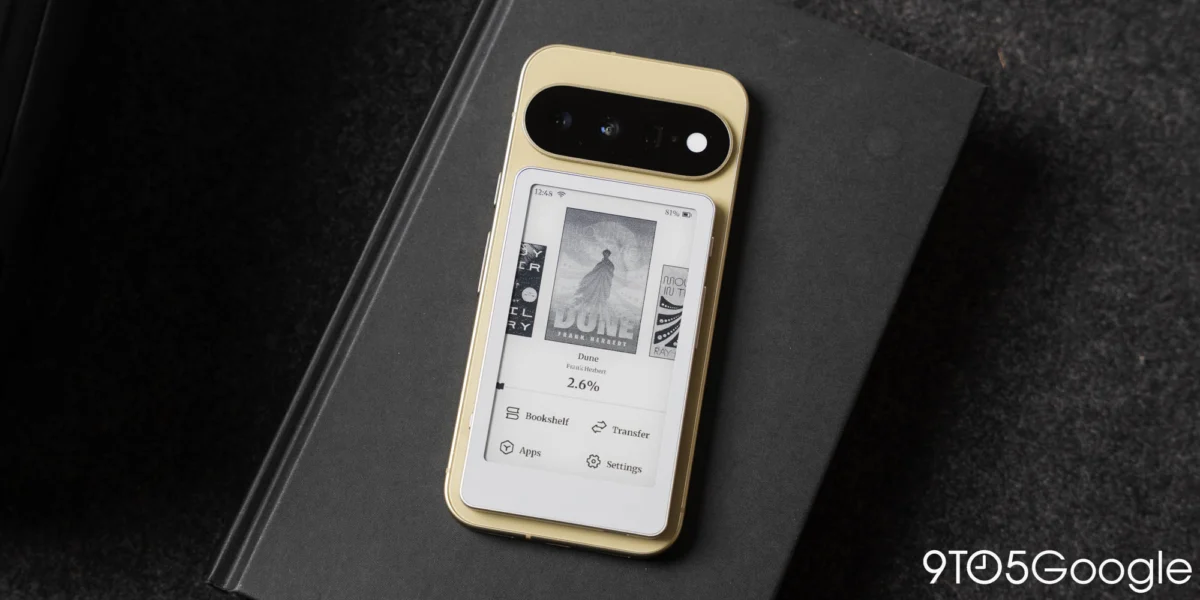
The Boox Picco, which measures just 4.15 inches in height with a 3.97-inch display, positions itself as the answer to this friction. By shrinking the hardware footprint to the size of a standard MagSafe or Qi2-compatible smartphone wallet, the device aims to integrate seamlessly into a user’s existing mobile setup. With a chassis thickness of only 5.5 millimeters, the device is designed to reside permanently in a pocket or magnetically attached to the back of a primary smartphone, effectively eliminating the need to choose between a dedicated reader and a phone.
Chronology and Development
The emergence of the Boox Picco follows a period of rapid experimentation within the Onyx Boox product line. Following the success of the Boox Palma—which offered a phone-like form factor but retained a full Android operating system—the company sought to create an even more specialized niche product.

Public interest was first piqued during the 2026 IFA trade show in Berlin, where early prototypes demonstrated the company’s pivot toward extreme portability. Throughout the third and fourth quarters of 2026, industry analysts noted that Boox was moving away from the "all-in-one" tablet approach for its smaller devices, favoring a "companion" philosophy. The official release in late November 2026 marked the culmination of this strategy, prioritizing a proprietary, closed-loop software experience over the versatility of third-party application support.
Technical Specifications and Design Philosophy
The device’s technical architecture is defined by its restraint. Unlike the Boox Palma or the company’s larger Tab-series tablets, the Picco does not run a full Android OS. This design choice serves several purposes:

- Battery Efficiency: By stripping away the overhead of a full mobile operating system, the device maximizes the longevity of its compact internal battery, allowing for an estimated week of regular, casual reading on a single charge.
- Simplified Interface: The UI is limited to a core library management system. Users transfer EPUB files via a dedicated companion app, which handles file synchronization from cloud or local storage.
- Hardware-Level Controls: Eschewing on-screen software sliders, the Picco incorporates a physical switch for its front-light intensity and dedicated physical buttons for page-turning, providing a tactile experience that mimics traditional print media.
The decision to omit third-party store support, such as the Google Play Store or Amazon Kindle app integration, represents a significant shift. For the power user, this may be perceived as a limitation; for the minimalist, it is a deliberate move to prevent "feature creep" and distraction.
The Magnetic Integration Strategy
A standout feature of the Picco is its optional magnetic case, which leverages Qi2/MagSafe standards. This integration allows users to mount the e-reader directly to the rear of their smartphone. While this increases the total thickness of the combined device stack, it offers a novel solution for users who prefer to treat their e-reader as a functional accessory to their phone rather than a separate piece of hardware.

Market analysis suggests that this "piggybacking" design is targeted at the "Everyday Carry" (EDC) demographic—users who prioritize weight reduction and organizational efficiency. However, the ergonomic reality of the device is a subject of ongoing discussion. When attached to a phone, the user’s grip must accommodate both the smartphone and the e-reader, which may present challenges for users with smaller hands or those using larger "Plus" or "Ultra" sized smartphones.
Economic and Market Implications
Priced at $109, the Boox Picco occupies a unique market segment. It is significantly cheaper than premium, large-screen e-readers, yet it occupies a space where competition is sparse. By focusing on a "do-one-thing-well" approach, Boox is attempting to capture the segment of the market that values the benefits of E-Ink technology—specifically eye comfort and high contrast in direct sunlight—without the cost and complexity of a full-fledged tablet.

The implications for the broader e-reader market are notable. If the Picco proves successful, it may signal a trend toward "micro-readers." Manufacturers have historically avoided screens smaller than 6 inches, fearing that the reduced text area would lead to a poor user experience. The success of the Picco suggests that, for the right subset of users, the trade-off between screen size and extreme portability is one that is readily accepted.
User Experience and Workflow
The workflow for the Picco requires a shift in user behavior. Because it lacks native support for third-party storefronts, the burden of library management shifts to the user. This necessitates a "Bring Your Own Content" (BYOC) model. For users who maintain local archives of EPUB files or utilize DRM-free libraries, the transition is seamless. For those accustomed to the "one-tap" purchase and download ecosystem of platforms like Kindle or Kobo, the necessity of a companion app to push files to the device may represent a barrier to entry.

However, the speed of the handshake connection between the phone and the device, combined with the quick file transfer protocols, suggests that the "friction" of this process is minimal. The inclusion of a physical switch for the front light is particularly noteworthy, as it remains a highly sought-after feature that is frequently omitted from even the most expensive modern e-readers in favor of touch-based software controls.
Summary of Impact
The Boox Picco is a deliberate, targeted product. It does not attempt to compete with the feature sets of high-end e-ink tablets, nor does it aim to replace the smartphone. Instead, it carves out a niche for the digital reader who values the tactile nature of a dedicated device and the portability of a pocket-sized accessory.

As the technology sector continues to move toward more complex, multi-functional devices, the Boox Picco stands as a contrarian example of success through simplification. Its market performance over the coming year will likely determine whether the "micro-reader" becomes a permanent fixture in the consumer electronics landscape or remains a specialized tool for the minimalist reader. By successfully marrying the E-Ink display technology with a magnetic, smartphone-integrated form factor, Boox has provided a blueprint for how future peripheral devices might be integrated into the modern mobile experience.
With its compact footprint, durable construction, and clear, dedicated functionality, the Picco demonstrates that even in a world of increasingly powerful and large-screened smartphones, there remains a persistent, valid demand for hardware that serves a single, refined purpose. The device’s reliance on manual file management and its exclusion of the broader app ecosystem are defining characteristics that dictate its intended audience: readers who seek a quiet, dedicated, and, above all, portable way to engage with their digital libraries.