








The open-source smart home ecosystem has officially rolled out its latest major update, Home Assistant 2026.9, introducing a wide array of structural enhancements designed to bridge the gap between complex industrial communication protocols and user-friendly consumer interfaces. Spearheaded by core developer Paulus Schoutsen, alongside the Open Home Foundation and commercial partner Nabu Casa, this release focuses heavily on untangling legacy networking hurdles, elevating dashboard accessibility, and refining local voice-processing engines. As smart home automation continues to scale in mainstream adoption, the platform’s latest iteration underscores a broader industry pivot toward unified device management, stringent security measures, and inclusive design principles.
Overhauling Industrial Communication: The Modernization of Modbus
For years, Modbus has served as the silent backbone of residential energy management, driving solar inverters, heat pumps, and high-capacity electrical meters. Despite its reliability, the protocol long remained inaccessible to average consumers due to its reliance on manual register mapping via YAML configuration files. Users were forced to manually decode vendor documentation and write custom scripts to pull basic telemetry from hardware components.
Home Assistant 2026.9 permanently alters this dynamic by modernizing Modbus integration architecture. Rather than forcing individual devices to fight over exclusive bus connections, the platform now utilizes a unified connection layer powered by tmodbus, a modern, fully-typed Python library. This foundation enables native, UI-driven device discovery. Manufacturers such as Fronius—with the introduction of optional Modbus TCP (SunSpec) support—alongside Sofar Inverter Modbus and Flexit, are among the first to benefit. Users can now natively configure and monitor granular string-level solar data, including current, voltage, power, and lifetime energy yields, directly from the graphical interface without writing a single line of code.
Advanced Voice Processing for Non-English and Noisy Environments
As privacy concerns drive users away from major commercial cloud assistants, local and hybrid voice alternatives have experienced exponential growth. However, private voice architectures frequently struggle with regional accents, background environmental noise, and non-English linguistic structures.
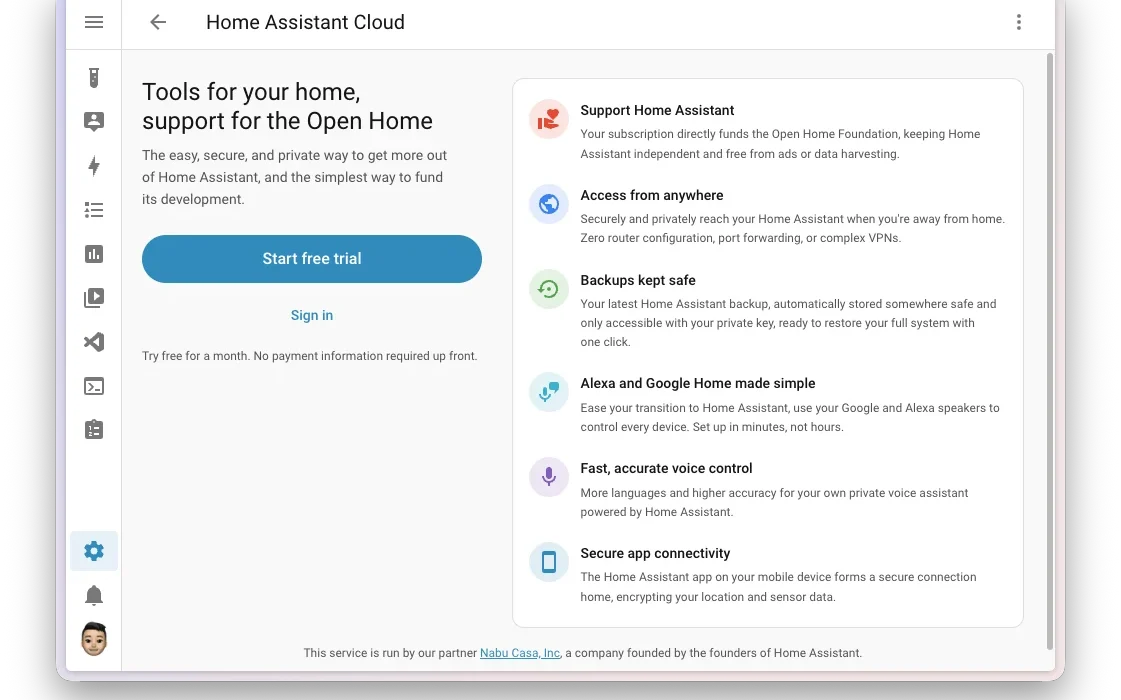
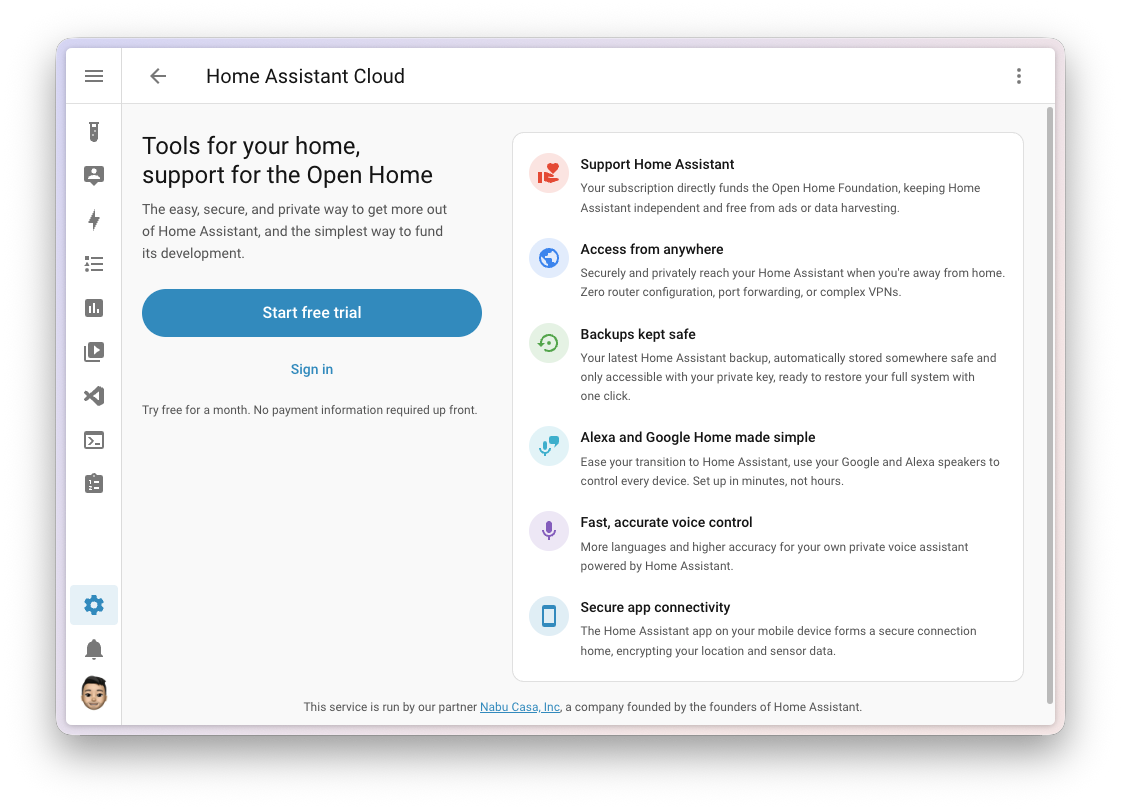
To combat these friction points, Home Assistant Cloud subscribers gain access to an experimental speech-to-text engine integrated via Labs. Partnering with audio AI firm Soniox, Nabu Casa has deployed a high-performance processing engine specifically targeted at complex acoustic environments and accented speech. Despite routing through a third-party provider for processing, the foundation maintains its strict privacy guarantee: audio streams are never logged, stored, or utilized for machine learning training. For households operating outside of English-speaking markets, this update marks a significant step toward achieving parity with mainstream, big-tech voice assistants while preserving local data sovereignty.
Streamlining Security Dashboards and Activity Logs
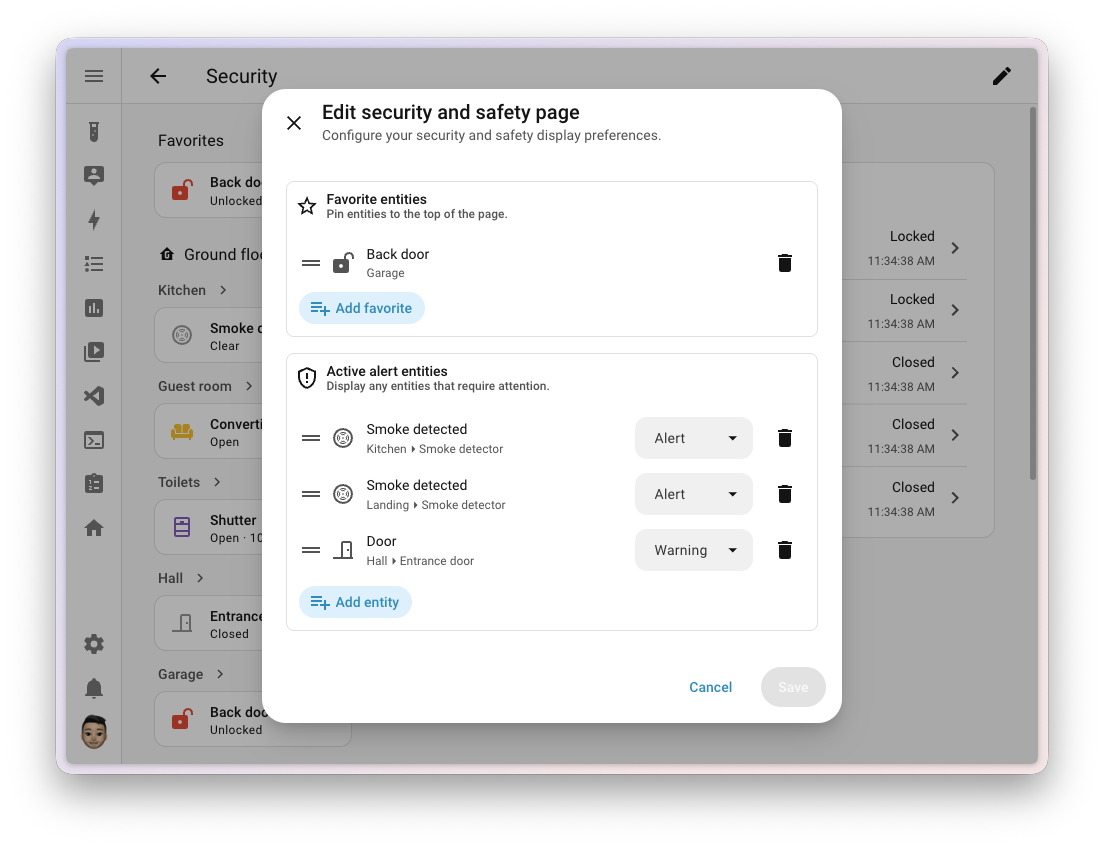
Dashboard utility and forensic auditing receive a substantial upgrade in the 2026.9 release, driven largely by community-submitted design concepts originating from the Open Home Foundation roadmap. The native Security dashboard now features dynamic "Active alerts" and "Favorites" sections. Unlike legacy iterations that permanently display every connected sensor, the Active alerts panel remains entirely hidden until an actionable event occurs—such as an unlatched perimeter door or a triggered smoke detector—and applies color-coded severity metrics to differentiate between routine warnings and critical emergencies.
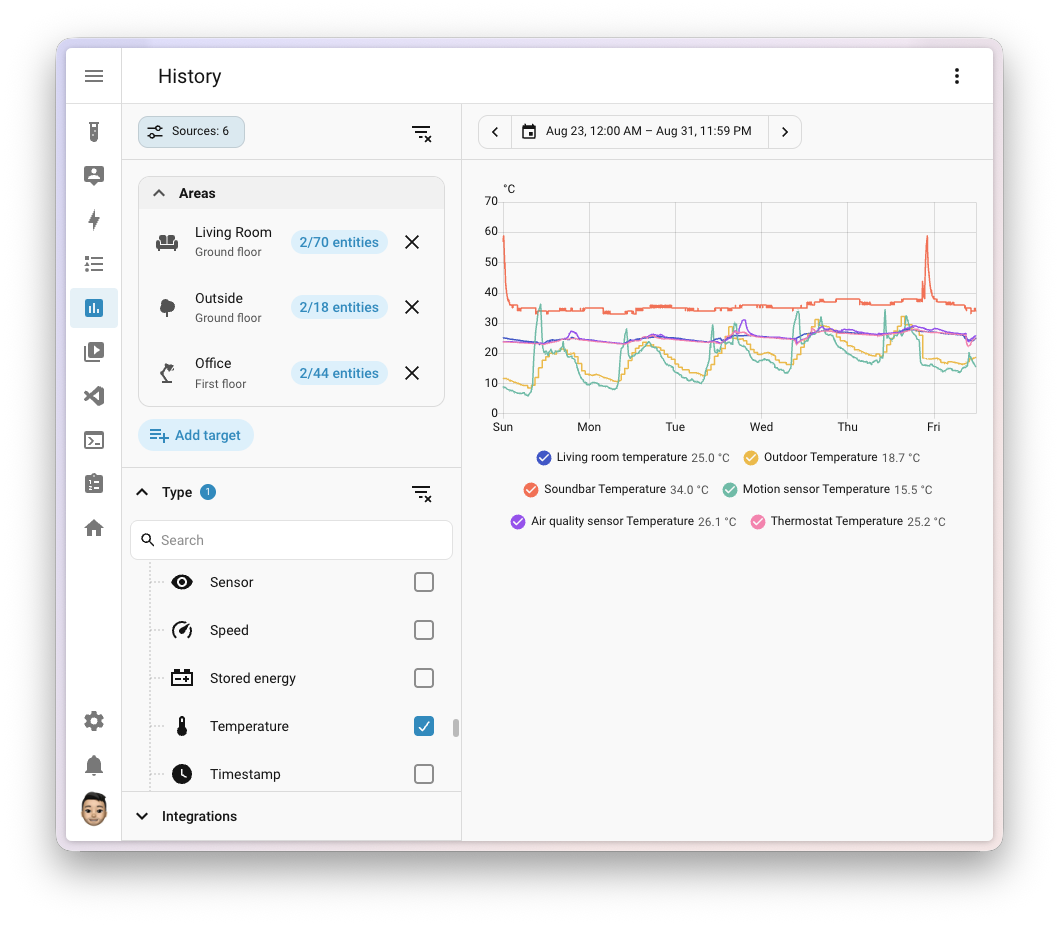
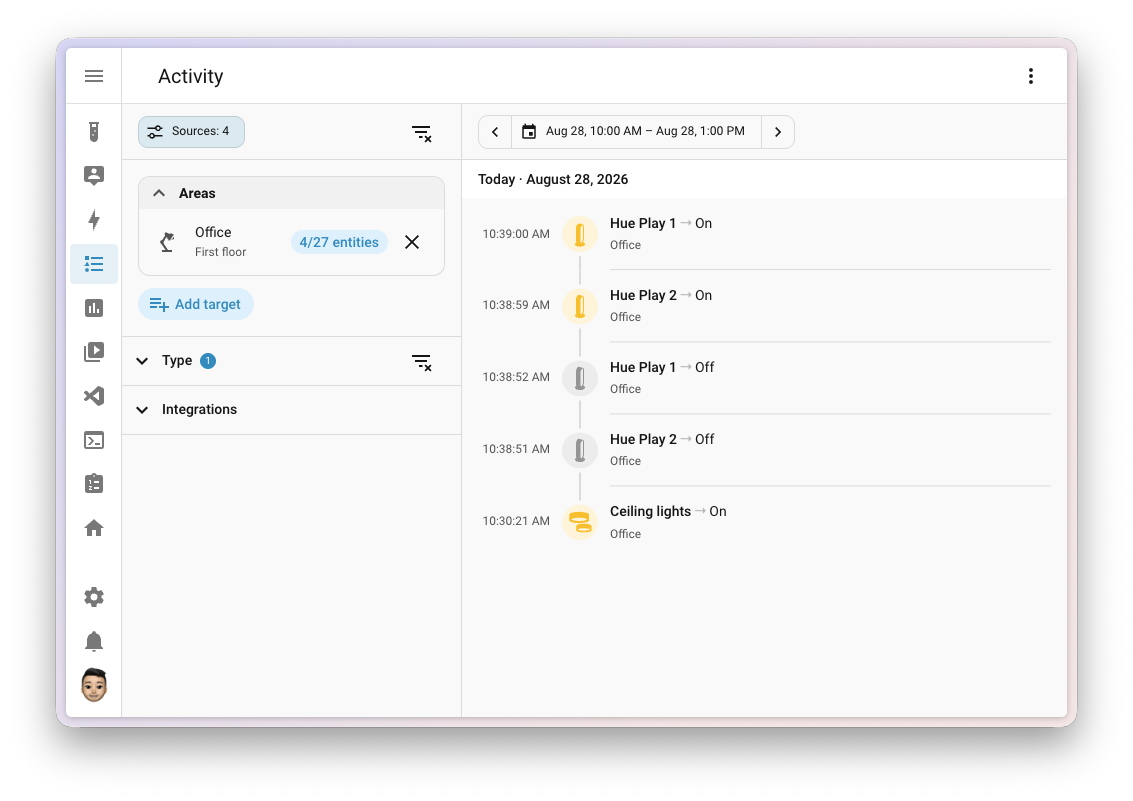
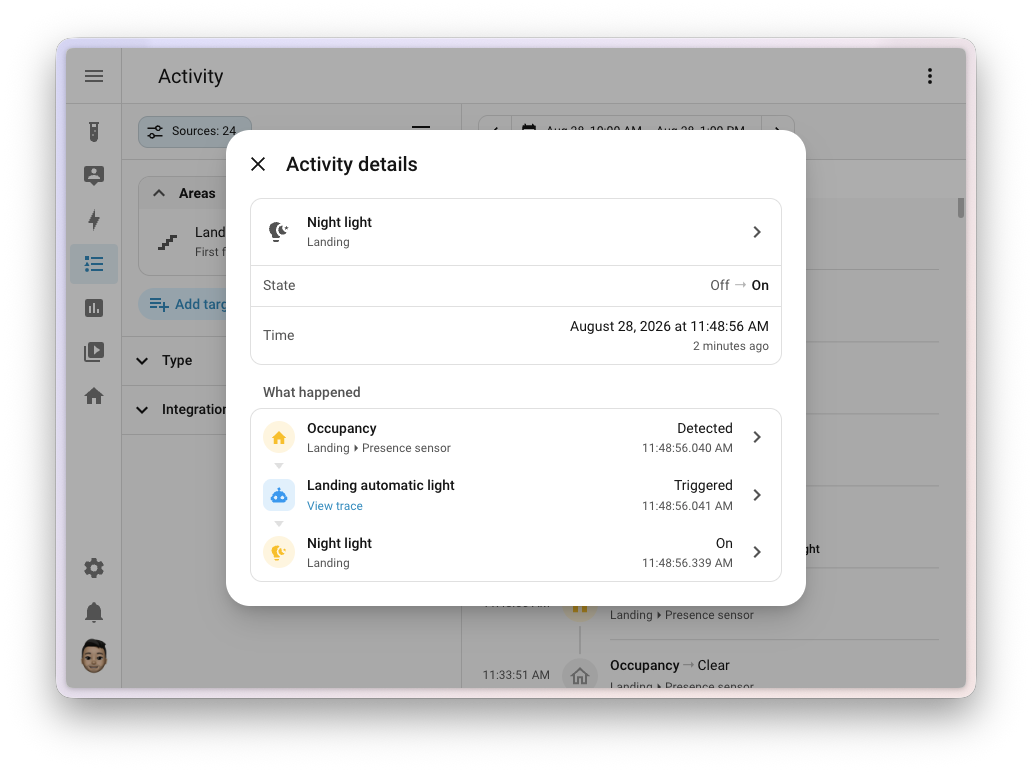
Concurrently, the History and Activity logs have been merged under a unified "Sources" panel layout. Users can now filter historical events across floors, areas, devices, and domains from a single sidebar interface. Furthermore, the Activity log transitions from a basic statement of what changed to an exhaustive chronological breakdown of why it changed. Selecting any log entry now opens a multi-tiered inspection dialog displaying the exact chain of custody—ranging from the physical trigger source and evaluating scripts or automations down to the final entity state change, complete with millisecond-precision timestamps.
Bridging Matter, Zigbee, and Z-Wave Ecosystems
The fragmentation of smart home mesh networks has historically complicated troubleshooting when devices drop offline. While protocols like Zigbee (via ZHA) and Z-Wave long featured graphical network topology maps, the emerging Matter standard lacked equivalent native visualization tools within Home Assistant, forcing administrators to interact with separate, obscure server interfaces.
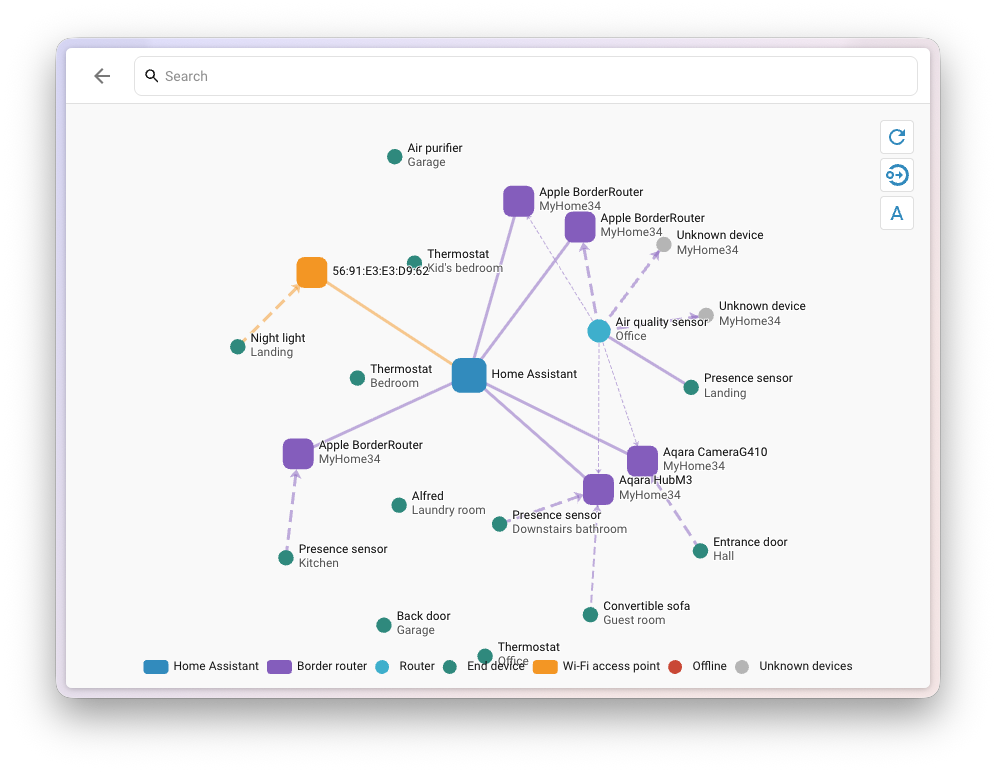
The 2026.9 update integrates the Matter network map directly into the core platform. By selecting the new map interface, users can inspect a comprehensive graph illustrating the relationships between Wi-Fi access points, Thread border routers, and battery-powered edge nodes. Signal strength, transport type, and device roles are explicitly mapped, replacing cryptic hardware serial numbers with human-readable hostnames. This addition harmonizes Matter diagnostic capabilities with established protocols, simplifying network expansion and maintenance.
Broadening Accessibility and Protocol Management
Demonstrating a continuous commitment to digital inclusivity, Home Assistant 2026.9 introduces comprehensive accessibility features for data charts. Historically rendered as static images, charts were entirely inaccessible to screen readers and keyboard-only navigators. The new update converts charts into active focus targets, allowing users to traverse individual data points using directional arrow keys while a live region reads out precise timestamps and values.
Most notably, the interface introduces an auditory representation of data trends: as users navigate across line or bar charts, the system generates synthesized rising and falling tones corresponding to data fluctuations. This sonic data visualization allows users to perceive overarching trends and anomalies intuitively.
In parallel, hardware management under the Settings panel is consolidated through dedicated connectivity hubs. Following the introduction of infrared and radio frequency panels in previous updates, a new Serial panel now categorizes and monitors USB dongles and connected hardware ports in real time, alerting administrators to disconnected radios or unresponsive integrations before operational failures cascade through automated routines.
Ecosystem Expansion and Deprecations
The release incorporates 13 new integrations, alongside critical quality-scale advancements and expanded user-interface setup options for legacy YAML-only integrations. Network storage monitoring has also been improved; network-attached storage (NAS) shares linked for backups or media streaming now feature dynamic capacity usage bars that provide early visual warnings (shifting amber at 85% utilization and red at 95%) to prevent unexpected storage exhaustion.
As part of ongoing codebase maintenance, several backward-incompatible changes accompany the update. Notably, configuration-level actions within the Update, Vacuum, and Z-Wave JS integrations—such as installing firmware updates or managing lock credentials—now strictly require administrator user privileges to mitigate security vulnerabilities. Furthermore, legacy entities like the Flexit Nordic fireplace mode switch have been deprecated in favor of standardized climate preset actions.
Commercial and Community Outlook
Home Assistant 2026.9 is available immediately for deployment across supported installation types. As the Open Home Foundation showcases these developments at IFA Berlin 2026, the platform continues to demonstrate that robust home automation does not require sacrificing data privacy or architectural transparency. Users are encouraged to review the complete changelog and verify custom integration compatibility before initiating the update process.