





The smart home industry has long grappled with a significant barrier to entry: the "complexity gap." For decades, the domain of automated living was reserved for hobbyists willing to navigate intricate networking configurations, soldering, and disparate software ecosystems. However, the recent introduction of the Apple Home Collection—a curated suite of smart home accessories developed in collaboration with industry leaders LG and Schneider Electric—marks a strategic pivot toward mass-market accessibility. By prioritizing the user experience over technical specification sheets, Apple is signaling a transition from a fragmented niche market to a unified consumer standard.
The Evolution of Home Automation: A Chronology
To understand the significance of the Apple Home Collection, one must look at the trajectory of home automation. In the 1970s and 1980s, the X10 industry standard introduced the concept of power-line communication, allowing users to control lights and appliances through existing electrical wiring. Despite its innovative nature, it was notoriously unreliable and required technical proficiency to implement.
The turn of the millennium brought the internet era, shifting control from physical switches to web-based interfaces and, eventually, smartphone applications. Yet, this evolution introduced a new problem: the "app silo" effect. A user might require separate applications for a smart thermostat, a security camera, and a lighting system, none of which were designed to communicate with one another.
In 2014, Apple attempted to solve this with the launch of HomeKit. The platform provided a centralized framework for device manufacturers to ensure cross-compatibility. While it established a higher security standard and brought voice control via Siri to the forefront, the reality of implementation remained challenging. Users frequently encountered "bridge" devices and third-party app requirements that turned simple installations into troubleshooting exercises for the average consumer.
The subsequent introduction of Matter and Thread protocols in recent years served as a critical foundation. By establishing a universal language for devices, the industry reduced the necessity for brand-specific hubs. However, even with these protocols, the initial pairing process remained a hurdle for non-technical users.
The Apple Home Collection: A Shift in Strategy
The Apple Home Collection, unveiled in mid-October 2026, represents the next logical step in this evolution. At its core, the collection does not introduce entirely new device categories; instead, it refines the integration process.
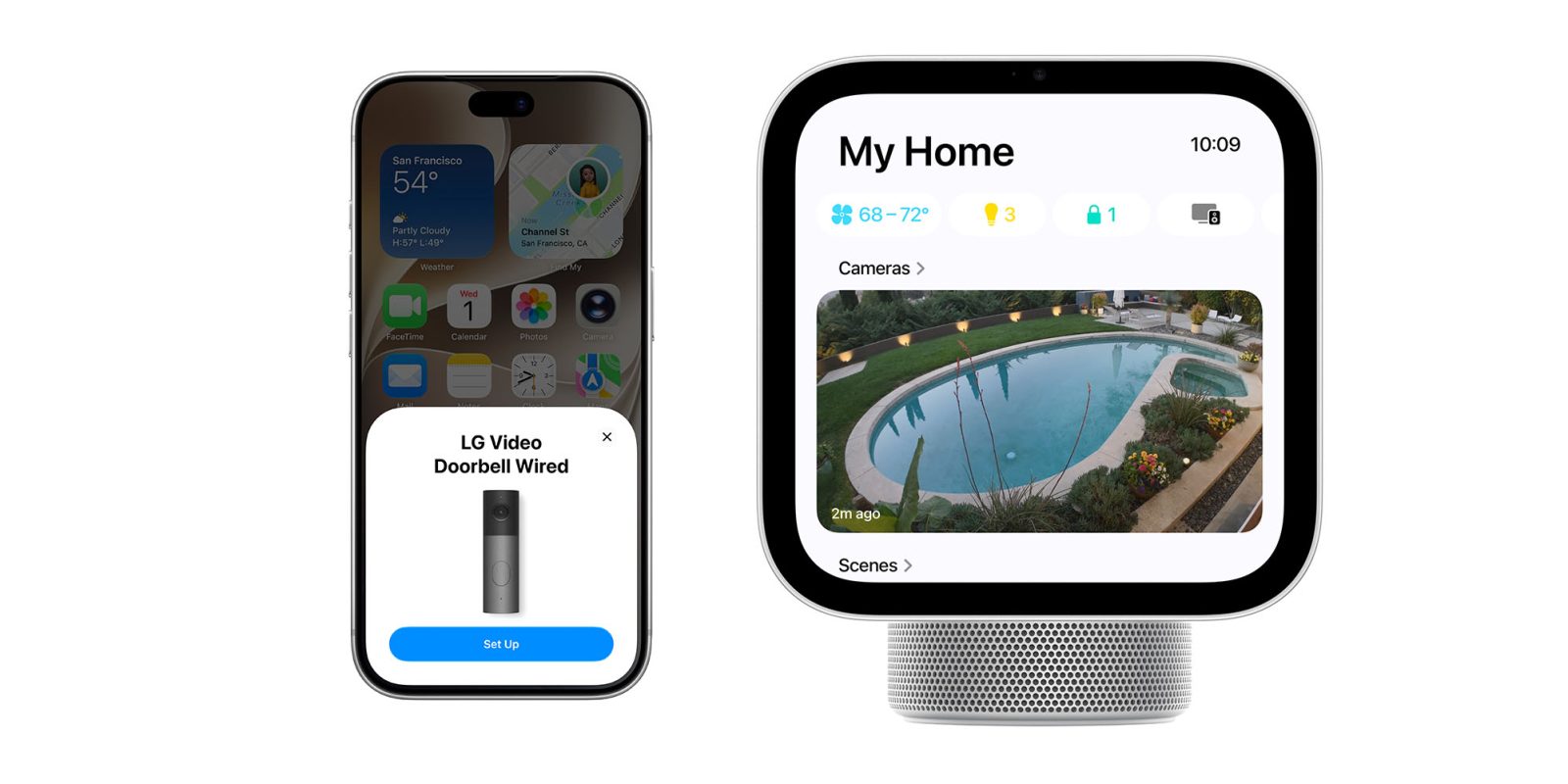
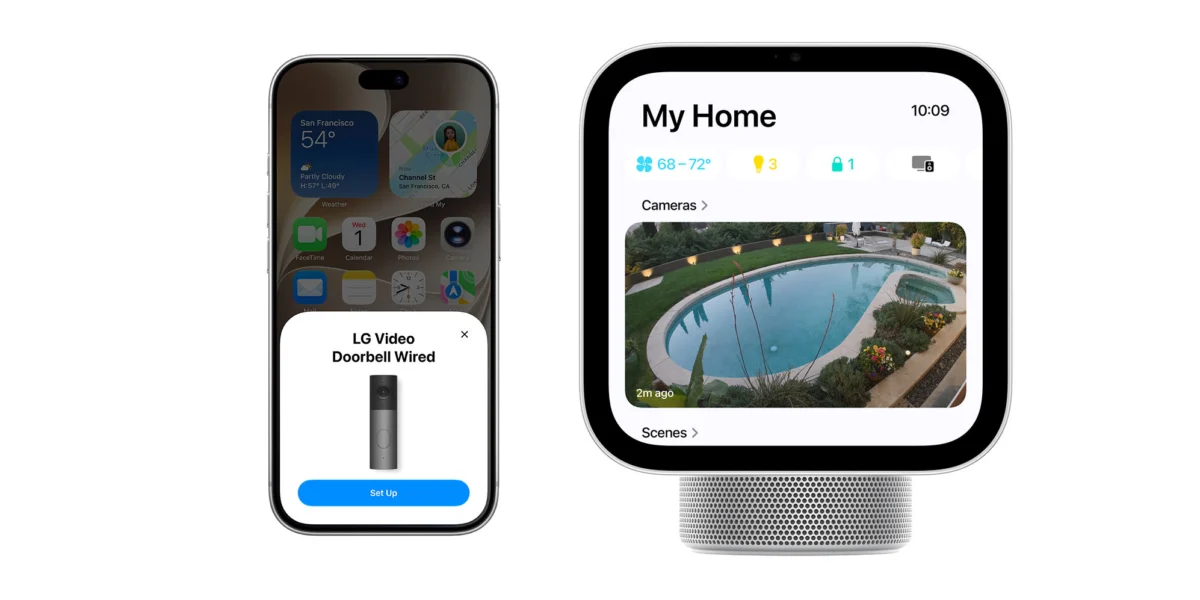
Industry analysts have noted that while the hardware specs of the LG-developed doorbell or the Schneider-integrated sensors are comparable to existing market offerings, the differentiator is the "Proximity Pairing" technology. By utilizing the same near-field communication (NFC) and low-energy Bluetooth handshakes that made the AirPods a consumer phenomenon, Apple has effectively eliminated the manual configuration process.
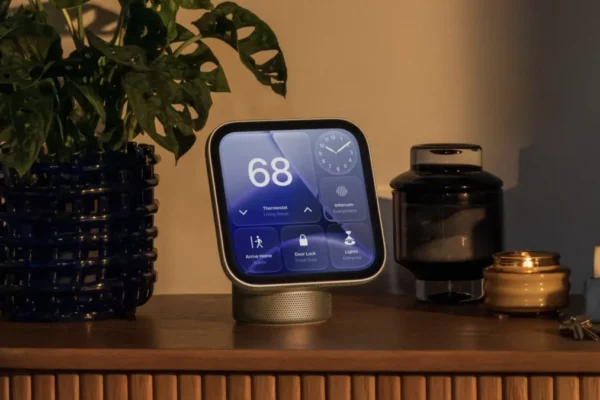
During recent demonstrations, including those attended by technology journalists at the launch event, it was observed that devices were automatically recognized by the iPhone and the Apple HomeView hub upon being powered on. This "zero-touch" configuration mirrors the simplicity that the mainstream market has come to expect from consumer electronics.
Supporting Data and Market Trends
Market research firms have consistently cited "setup complexity" and "interoperability concerns" as the primary reasons for the slow adoption of smart home technology. According to data from the Consumer Technology Association (CTA), while the smart home market is projected to reach a valuation exceeding $250 billion by 2030, current penetration in North American households remains below 40% for active, multi-device ecosystems.
The Apple Home Collection aims to capture the remaining 60% of the market. The cost premium associated with these devices is widely interpreted by analysts as an "ease-of-use tax"—a trade-off that many consumers are willing to make for reliability and time savings. For a household to adopt smart technology, the benefit must outweigh the installation time; by reducing that time from an hour of configuration to a few seconds of proximity pairing, Apple is dramatically altering the cost-benefit analysis for the average consumer.
Official Responses and Industry Reception
The reaction from industry stakeholders has been one of cautious optimism. Partners like Schneider Electric have emphasized that the collaboration was born out of a shared goal: to move smart home technology from "novelty" to "utility."
"Our goal was to ensure that the hardware performance we are known for would not be hidden behind a layer of digital friction," a representative from the project stated during the announcement. "By integrating Apple’s software ecosystem at the silicon level during the design phase, we have achieved a level of plug-and-play functionality that was previously impossible."
Conversely, some competitors have noted that the ecosystem remains "walled," expressing concerns that this level of integration could potentially limit consumer choice. However, the consensus among hardware manufacturers is that Apple’s move will likely expand the total addressable market, benefiting all players by normalizing smart home technology as a standard feature of modern domestic life.

Broader Implications for the Smart Home Industry
The implications of the Apple Home Collection extend beyond a single product line. It sets a new benchmark for "The Integrated Home." If Apple successfully lowers the barrier to entry, it will force competitors to innovate on the user experience rather than just competing on price or raw hardware specifications.
- Standardization of Setup: The expectation for "AirPods-like" pairing will likely become the industry standard. Future devices from other manufacturers will be under immense pressure to replicate this level of seamlessness to remain competitive.
- Retail Dynamics: Retailers are expected to shift their smart home displays to prioritize "Apple Home Collection Certified" products, as these devices are less likely to result in customer support inquiries or product returns due to configuration errors.
- Professional Installation Integration: For the professional smart home installer, this shift represents a change in the business model. Rather than charging for hours of network configuration, installers will likely focus on consulting and architectural integration, as the software setup is now largely self-service.
A Turning Point for Mass Adoption
The "tech bubble" argument—that geeks often overestimate the average consumer’s interest in tinkering with technology—is highly relevant here. While the smart home community has spent years debating the merits of various communication protocols, the average homeowner simply wants a doorbell that works when they open the box.
The Apple Home Collection does not claim to be the most advanced system in terms of raw specifications or open-source customizability. It does, however, claim to be the most accessible. By effectively removing the "unpaid network engineer" requirement from the setup process, Apple has addressed the single most significant friction point in the industry.
As the collection begins to reach retail shelves, the success of the initiative will be measured not just by unit sales, but by the decrease in consumer support tickets and the increase in "active ecosystems" per household. If the initial demonstrations hold true in real-world, non-laboratory environments, the industry may well look back at this moment as the point where the smart home transitioned from a gadget-focused hobby to a standard, expected component of the modern residence.
In conclusion, the Apple Home Collection represents a pivot toward maturity. By focusing on the user experience and leveraging existing ecosystem strengths, Apple is positioning itself to capture the mass market, ultimately driving the smart home industry toward a future where "smart" is no longer a label for a specific product, but a baseline expectation for the home itself.