











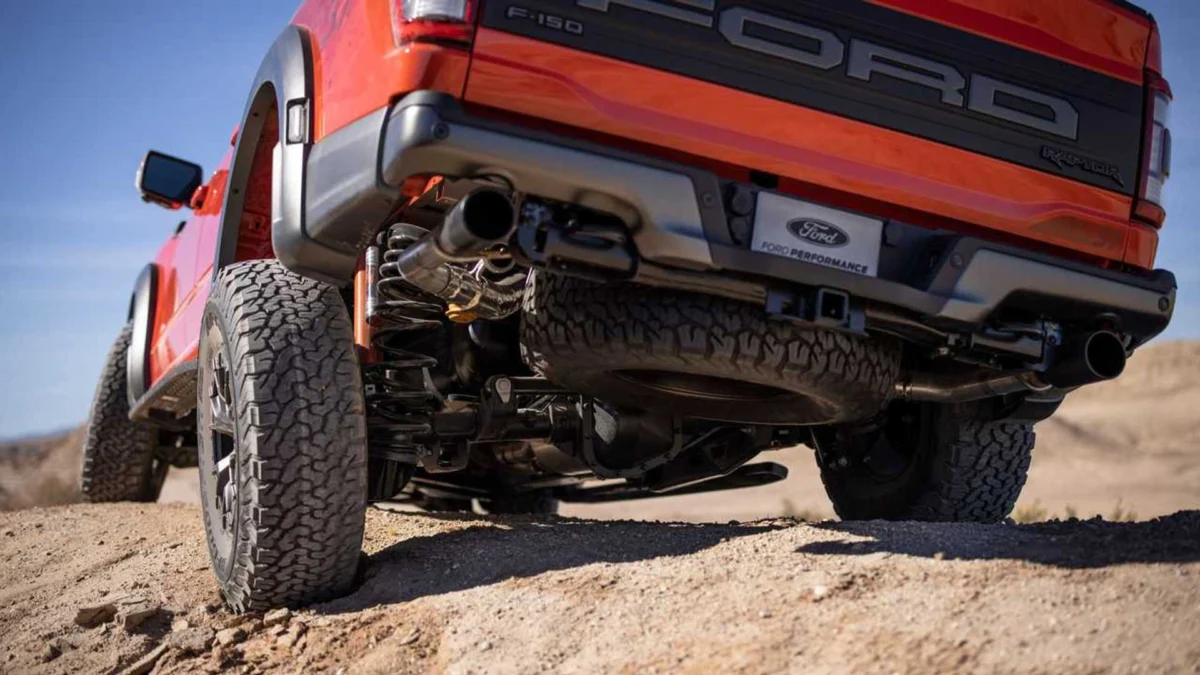
The patent application, identified by serial number 12773055 and dated March 18, 2024, describes a sophisticated movable spare-tire rack assembly. Unlike traditional under-vehicle stowage systems that require the driver to operate a manual hand-crank winch while lying on the ground, the Ford proposal utilizes a mechanical, folding arm system. This system is designed to pivot and extend, physically displacing the spare tire from its cramped position beneath the vehicle’s frame or truck bed and lowering it to a height that is both accessible and manageable for the driver.
The Evolution of Roadside Tire Maintenance
For decades, the standard for body-on-frame vehicles—including the Ford F-Series, the Expedition, and various heavy-duty commercial trucks—has been the underside carrier. While this configuration maximizes interior and cargo space by keeping the spare tire out of the cabin or bed, it presents significant usability challenges.
Typically, these systems rely on a vertical cable winch. To retrieve the tire, a driver must locate a specific access point, insert a rod, and crank the mechanism repeatedly. In ideal conditions, this is a labor-intensive chore. However, the task becomes exponentially more difficult when a vehicle is stalled on a narrow highway shoulder, in inclement weather, or on uneven terrain. The tire, often covered in road grime, mud, or snow, must be dragged out from underneath the vehicle chassis, a process that is as physically taxing as it is unhygienic.
Ford’s newly patented design addresses these friction points by incorporating a folding rack. According to the technical drawings, the mechanism does not simply drop the wheel vertically; it carries the wheel outward as it descends. By extending the tire away from the underside of the vehicle, the system aims to clear the frame rails and body panels, allowing the driver to access the spare without having to crawl underneath the vehicle at all.
Technical Innovations in the Patent Filing
Beyond the movement of the rack, the patent application introduces two critical features that distinguish this system from existing automotive hardware.
First, the design integrates the necessary tools directly into the rack assembly. One of the most common frustrations reported by motorists during a tire failure is the discovery that the jack or the lug wrench is buried beneath heavy cargo or stored in a difficult-to-reach compartment. By embedding a lug wrench into the rack mechanism, Ford ensures that the essential tool is physically tethered to the spare tire itself, reducing the time required to initiate the repair.
Second, the patent details a positioning function that addresses the physical weight of modern truck tires. Modern pickup truck tires are significantly larger and heavier than those found on passenger sedans. Lifting a full-size wheel to align it with the hub bolts while simultaneously trying to start a lug nut is a task that often requires two people or extreme physical exertion. The proposed folding arm system is designed to hold the spare wheel in a stable position against the vehicle’s hub, effectively acting as an assistant that holds the weight of the tire while the operator threads the lug nuts. This feature could prove to be a significant ergonomic advancement for solo drivers and those with physical limitations.
Industry Context and the "Right to Repair"
The filing of this patent arrives at a time when the automotive industry is undergoing a significant transition regarding the inclusion of spare tires. In recent years, a growing number of manufacturers have begun phasing out full-size spare tires entirely, replacing them with tire inflation kits, liquid sealant, or run-flat tires.
The rationale behind this trend is twofold: reducing vehicle weight to improve fuel economy and CO2 emissions ratings, and increasing available storage capacity. However, these solutions are often criticized by off-road enthusiasts and long-haul drivers who argue that they are inadequate for the rigorous demands placed on trucks and SUVs. Ford’s decision to continue developing solutions for full-size spare tire storage suggests that the company recognizes a segment of its consumer base—specifically those who utilize their vehicles for towing, overlanding, or heavy-duty labor—still demands the reliability of a traditional, full-size spare.

Intellectual Property and Future Integration
It is important to note that the existence of a patent does not guarantee a feature will reach mass production. Major automotive manufacturers like Ford, General Motors, and Toyota file thousands of patents annually, many of which serve to protect intellectual property or explore potential R&D avenues rather than indicate an immediate product launch.
Ford has historically maintained a policy of protecting its innovative ideas through the patent process, regardless of whether those concepts are destined for the showroom floor. The company’s legal and engineering departments use these filings to secure a competitive advantage in the event that the technology becomes a market necessity or if the cost of implementation drops significantly.
Industry analysts suggest that the complexity of a mechanical folding rack, while beneficial, would add cost and weight to the vehicle. For this feature to reach production, Ford would need to determine that the customer demand for ease of use outweighs the additional manufacturing expense and the marginal impact on fuel efficiency. Given the current focus on electrification, it is also possible that such a mechanism could be adapted for use in electric trucks, where the lack of a traditional internal combustion engine and transmission might offer more space for complex under-chassis storage systems.
Broader Implications for Vehicle Design
If Ford were to implement this system, it would signal a broader trend toward "human-centric" engineering in the utility segment. As trucks become increasingly premium and technologically advanced, the contrast between high-tech cabin features and the primitive nature of roadside repairs becomes more pronounced.
The integration of the lug wrench and the "holding" arm function mirrors the trajectory of other automotive technologies that have moved from aftermarket concepts to standard equipment. For instance, the transition from manual tailgates to power-operated versions took years but is now a standard convenience feature on mid-to-high-trim trucks. A "smart" spare-tire rack could be viewed as the next logical step in the evolution of truck utility.
Furthermore, this patent fits into a larger pattern of Ford experimenting with unconventional storage and utility configurations. Recent patent filings from the company have included ideas such as front-mounted "frunk" storage with integrated entertainment systems and specialized roof-mounted camping configurations for the Bronco. These filings collectively paint a picture of a manufacturer looking to differentiate its vehicles not just through powertrain performance, but through the versatility and usability of the hardware.
Conclusion
The Ford patent for a movable spare-tire mount is a compelling look at how an automotive giant is addressing one of the most persistent and frustrating aspects of vehicle maintenance. By replacing the archaic manual winch with an automated, folding, and tool-integrated rack, Ford is acknowledging the physical demands placed on its owners.
While the technology may remain on the drawing board for the foreseeable future, its existence highlights a commitment to practical engineering. As vehicles continue to grow in size and weight, the need for intuitive and accessible maintenance solutions will only increase. Whether this specific mechanism makes it to the assembly line or remains a piece of automotive history in a patent database, it serves as a clear indication that for the pickup truck market, the era of "crawling in the mud" may eventually be nearing its end.
For now, drivers of Ford vehicles will continue to rely on traditional methods, but the filing offers a glimpse into a future where the task of changing a flat tire is designed to be as efficient as the vehicles themselves. As automotive competition intensifies, such innovative mechanical solutions may become the decisive factor for consumers prioritizing utility and convenience in their next vehicle purchase.