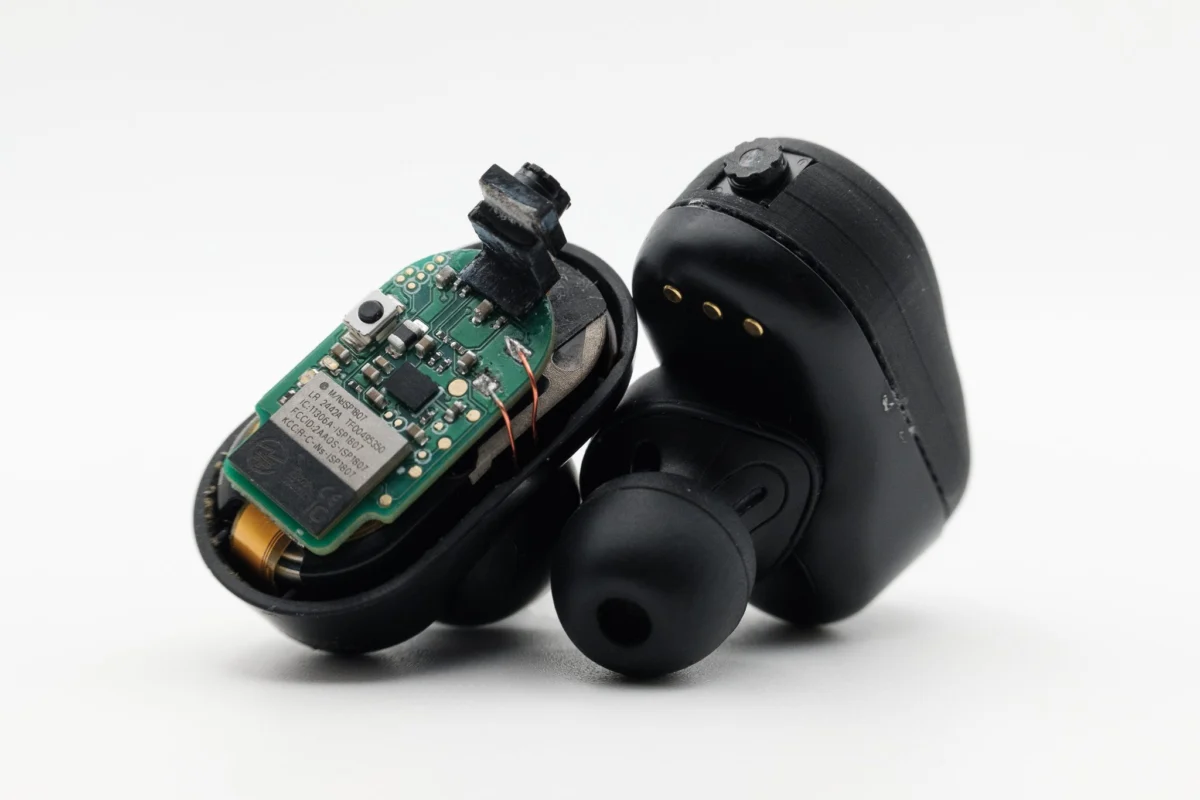
The landscape of personal audio technology is undergoing a significant evolution, moving beyond mere sound delivery to encompass a broader spectrum of intelligent interaction. While wireless earbuds have firmly established themselves as an indispensable part of modern life for a vast number of consumers, the focus is increasingly shifting towards integrating more sophisticated functionalities. A recent development from researchers at the University of Washington, dubbed VueBuds, offers a compelling glimpse into this future, demonstrating how a ubiquitous device like the AirPods could be imbued with enhanced visual and analytical capabilities. This innovative prototype integrates miniature cameras and artificial intelligence into off-the-shelf wireless earbuds, potentially transforming them into proactive assistants capable of interpreting the user’s visual environment.
The core innovation of VueBuds lies in its ability to provide users with an AI-powered understanding of their surroundings, directly through their earbuds. In a practical demonstration, a user wearing VueBuds could direct their gaze at an item, such as a foreign-language food label, and pose a query. The earbuds, equipped with tiny cameras, would capture low-resolution, black-and-white still images. These images are then transmitted wirelessly via Bluetooth to a nearby smart device, such as a smartphone. A compact AI model, running locally on the device to enhance privacy and reduce latency, processes the visual data and generates a spoken response. This entire process, from image capture to audio feedback, is designed to occur within approximately one second, a testament to the efficiency of the on-device AI.
This approach to visual processing is a critical differentiator for VueBuds. By prioritizing local processing, the research team actively seeks to mitigate the privacy concerns that have often accompanied the development of smart glasses and cloud-dependent vision systems. The desire to avoid the "always-on" data transmission inherent in many sophisticated AI vision products suggests a deliberate effort to build user trust and address potential anxieties about constant surveillance.

Technical Underpinnings and Design Compromises
The engineering behind VueBuds showcases a pragmatic approach to integrating advanced technology into a compact form factor. The cameras themselves are remarkably small, described as being approximately the size of a grain of rice. This miniaturization is crucial for maintaining the aesthetic and ergonomic appeal of earbuds. Furthermore, the choice of low-power, low-resolution grayscale imaging is a strategic decision. High-resolution, full-color video processing would present significant challenges in terms of battery consumption and data transmission bandwidth, particularly over Bluetooth. The research team’s focus on these constraints highlights a commitment to creating a functional and sustainable prototype.
The researchers meticulously optimized the field of view for the cameras. By angling each camera outward by a modest 5 to 10 degrees, they achieved a usable visual span of 98 to 108 degrees. This range is sufficient for many practical applications without requiring the user to make exaggerated head movements. A further enhancement involves the intelligent stitching of images captured by both earbuds. This process effectively creates a more comprehensive visual panorama, reducing the response time from an estimated two seconds to the impressive one-second mark. This dual-camera approach not only expands the visual input but also leverages the inherent redundancy of wearing two earbuds to improve system performance.
To further address user concerns and enhance transparency, VueBuds incorporates several user-centric features. A clear recording indicator light signals when the camera is active, providing immediate visual feedback. The system also allows users to delete captured images promptly, offering a measure of control over their data. These design elements are indicative of a thoughtful consideration for the end-user experience and the ethical implications of embedding visual technology into personal devices.

A Potential Pathway for Future AirPods
The research behind VueBuds gains significant traction when considered in the context of the broader consumer electronics market, particularly concerning the future trajectory of devices like Apple’s AirPods. The senior author of the study, Shyam Gollakota, articulated the team’s motivation: to explore visual intelligence in earbuds as an alternative to smart glasses and VR headsets, which have not yet achieved widespread mainstream adoption. This sentiment resonates with the challenges faced by many hardware innovators in bringing futuristic technologies into everyday use.
The timing of this research also aligns intriguingly with ongoing speculation and reports surrounding Apple’s development plans for its AirPods. Rumors have surfaced suggesting that Apple is actively investigating the integration of tiny infrared cameras or advanced sensors into future iterations of its popular wireless earbuds. Such advancements could significantly enhance spatial awareness capabilities and unlock novel AI-driven features, all while maintaining a design language that is familiar to consumers and avoiding a substantial increase in cost.
While VueBuds is a research prototype and not a direct product announcement from Apple, it serves as a compelling proof-of-concept for the underlying technology. The success of VueBuds in demonstrating practical, privacy-conscious visual AI within the constraints of an earbud form factor makes the broader concept of camera-equipped AirPods feel considerably less speculative and more grounded in tangible possibility. It suggests that the future of personal audio devices may well involve a convergence of auditory and visual intelligence, offering users a more intuitive and integrated way to interact with their digital and physical worlds.

Broader Implications and Future Potential
The implications of this research extend beyond the immediate functionality of VueBuds. It opens up a new frontier for wearable technology, challenging the established roles of existing devices. Imagine a scenario where earbuds could assist with navigation by identifying street signs, provide real-time information about objects encountered in a museum, or even offer subtle prompts based on visual cues in a meeting. The potential applications are vast and span various aspects of daily life, from accessibility for individuals with visual impairments to enhanced learning and everyday convenience.
The development of VueBuds also highlights a critical trend in AI: the shift towards edge computing and on-device processing. As AI models become more sophisticated, the ability to run them locally on user devices is paramount for privacy, speed, and reduced reliance on constant connectivity. This approach not only safeguards user data but also ensures a more responsive and reliable user experience, even in environments with limited network access.
The research team’s careful consideration of hardware compromises, such as opting for lower-resolution imaging and grayscale output, is a testament to the iterative nature of technological innovation. By focusing on achievable advancements, they have created a functional prototype that paves the way for more sophisticated iterations in the future. As camera sensor technology continues to shrink and AI processing power on mobile devices increases, the capabilities of earbud-integrated visual systems will undoubtedly expand.

A Vision for Smarter Personal Assistants
The integration of visual intelligence into earbuds represents a significant step towards creating truly ambient and context-aware personal assistants. Unlike current voice-activated assistants that rely solely on audio input, future iterations equipped with visual capabilities could offer a far richer and more nuanced understanding of user needs and environmental context. This could lead to proactive suggestions, more personalized interactions, and a seamless blend of the digital and physical realms.
The success of VueBuds in demonstrating a viable and privacy-conscious approach to visual AI in earbuds provides a compelling blueprint for the industry. As companies like Apple continue to explore new avenues for their wearable technologies, the insights gained from this research could significantly shape the future of personal computing and the very definition of what an earbud can be. The prospect of earbuds that can not only deliver sound but also "see" and interpret the world around us marks an exciting new chapter in the evolution of wearable technology. The "smart" in smart earbuds is poised to become significantly more intelligent.