






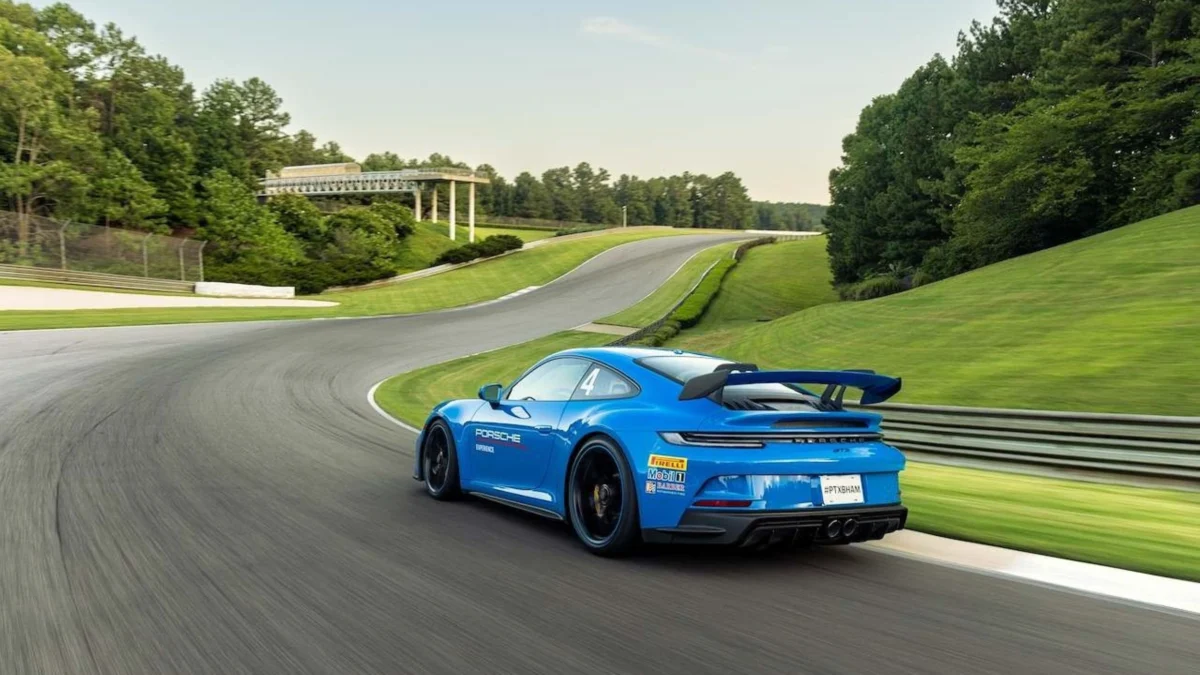
Owning a Porsche is often considered a hallmark of automotive appreciation, yet the gap between merely operating a high-performance vehicle and mastering one remains significant. Recognizing this, Porsche Cars North America (PCNA) has announced a strategic expansion of its Porsche Track Experience (PTX) curriculum. By introducing two specialized courses—GT Drift and Masters GT—the manufacturer aims to transition owners from casual enthusiasts to precision drivers, utilizing the track-focused 911 GT3 as the primary pedagogical tool.
This expansion reflects a broader industry trend where premium automotive brands are shifting from simple sales models to "experiential ecosystems." For Porsche, the PTX program serves as both a customer retention strategy and a safety initiative, ensuring that owners understand the mechanical limits and capabilities of the engineering marvels housed in their garages.
The Evolution of the Porsche Track Experience
The Porsche Track Experience has long been the gold standard for manufacturer-led driver development. Historically, the program offered a tiered structure, beginning with entry-level "Precision" courses—designed to teach basic car control and accident avoidance—and scaling up to "Masters" level courses that focus on competitive lap times and telemetry analysis.

The introduction of the GT3-specific curriculum marks a pivot toward more granular, specialized training. By isolating specific disciplines like vehicle rotation and data-driven performance, Porsche is acknowledging that modern owners are seeking more than just high-speed driving; they are seeking professional-grade motorsport skills.
GT Drift: Mastering Vehicle Dynamics
The first of the new offerings, GT Drift, is a half-day intensive program designed to demystify the physics of oversteer. Priced at $1,500, the course focuses on the "art of the slide." While drifting is often associated with the aftermarket street-tuning scene, Porsche is framing it as a vital component of advanced car control.
The curriculum begins in a classroom environment, where instructors cover the fundamentals of vehicle dynamics—specifically weight transfer, slip angles, and the relationship between steering input and throttle modulation. Participants then transition to a skid pad, a low-friction environment where the consequences of an error are minimized.
The exercises include:

- Trail Braking: Learning how to maintain weight on the front tires while entering a corner to induce rotation.
- Rotation Practice: Understanding how to use the rear-biased weight distribution of the 911 platform to pivot the car mid-corner.
- Throttle Steering: Utilizing the engine’s torque to maintain the drift angle without spinning out.
By limiting the program to the 911 GT3, Porsche ensures that students are learning on a platform with a naturally aspirated engine, rear-wheel steering, and track-tuned suspension, providing a consistent feedback loop that less-capable vehicles cannot replicate.
Masters GT: The Pinnacle of Driver Development
For the most dedicated enthusiasts, Porsche has introduced Masters GT, a three-day advanced program that functions as the most rigorous entry in the current PTX catalog. At a cost of $23,000, this program is positioned as an exclusive gateway for graduates of the Masters RS course.
The Masters GT program is structured to mimic the lifestyle of a professional racing driver. Held at the Barber Proving Grounds, the itinerary is divided into three distinct phases:
- Phase One: Advanced Dynamics: The opening day is dedicated to refining individual inputs. Instructors utilize the Barber track to isolate specific technical challenges, such as high-speed weight transition and threshold braking, ensuring that the driver’s "muscle memory" is calibrated to the GT3’s specific braking and acceleration curves.
- Phase Two: Data-Driven Lapping: The second day introduces telemetry analysis. Using professional-grade data logging software, students review their laps alongside instructors to identify inefficiencies in their racing lines, gear selection, and corner exit speeds.
- Phase Three: Comprehensive Integration: The final day is designed to synthesize the lessons from the previous two days into a cohesive, fast, and safe lap. The focus shifts from individual skill-building to consistency and race-pace management.
Strategic Context and Industry Implications
Timo Resch, President and CEO of Porsche Cars North America, emphasized that these programs are designed to highlight the "beating heart of a race car." The 911 GT3, which serves as the centerpiece for both new courses, is widely regarded as the most faithful representation of Porsche’s motorsport division available to the public.

From an industry perspective, the rise of such high-end driving programs serves three primary functions:
- Risk Mitigation: By teaching owners how to handle their vehicles in extreme scenarios on a closed circuit, Porsche effectively reduces the likelihood of reckless behavior on public roads.
- Brand Loyalty: These immersive experiences build a community. Owners who spend thousands of dollars and several days under the tutelage of Porsche professionals are statistically more likely to remain loyal to the brand, viewing their vehicle not as a commodity, but as a gateway to a lifestyle.
- Technological Demonstration: The GT3 is an expensive, high-maintenance machine. By putting it into the hands of students, Porsche is effectively proving the reliability and durability of its engineering under sustained, high-stress conditions.
A Comparative Analysis of High-Performance Training
The current PTX expansion places Porsche in direct competition with other "brand-experience" centers, such as the BMW Performance Center and the AMG Driving Academy. However, the Porsche approach is distinct in its emphasis on the 911 platform. While many manufacturers use a variety of models for their driving schools, Porsche’s commitment to the GT3 signals a shift toward "specialist training."
The data-heavy nature of the Masters GT program aligns with the modern obsession with performance metrics. In an era where amateur drivers have access to professional-level data logging apps on their smartphones, Porsche’s integration of professional coaching adds a layer of human expertise that software alone cannot provide.
Conclusion: The Future of the Porsche Experience
The expansion of the Porsche Track Experience is a testament to the changing nature of luxury automotive ownership. As vehicles become more automated and software-dependent, there is an increasing premium placed on the "analog" experience of driving—the tactile feedback of the steering wheel, the sound of a high-revving flat-six engine, and the satisfaction of mastering a difficult corner.

By offering these new programs, Porsche is not merely selling seats in a car; they are selling the opportunity to master a craft. Whether it is the $1,500 introductory drift course or the $23,000 professional-grade Masters GT program, the goal remains the same: to ensure that when a Porsche driver is on the road—or the track—they possess the skills necessary to match the capabilities of the machine.
As the automotive industry continues its pivot toward electrification and autonomous technology, the existence of these programs suggests that Porsche remains committed to its core identity: a brand built for those who find the act of driving, in its purest form, to be an essential pursuit. For the prospective student, these courses offer a rare look behind the curtain of one of the world’s most successful motorsport legacies, providing a bridge between the enthusiast and the elite driver.