










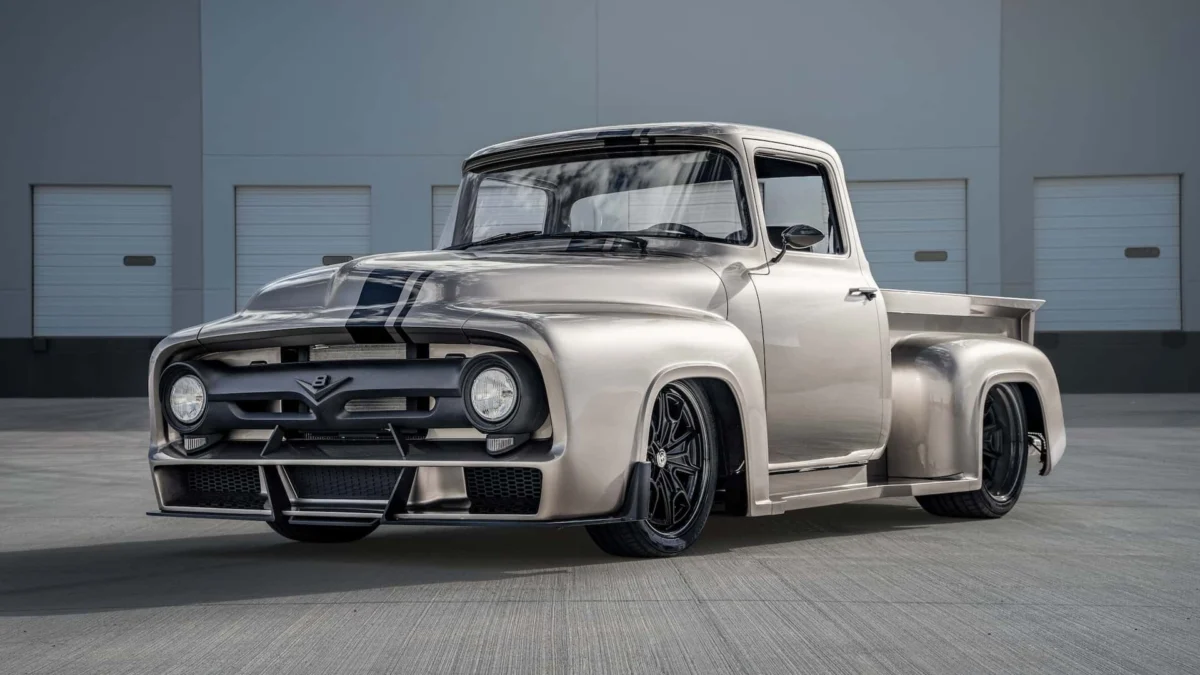
The automotive landscape is defined by a constant tension between the reverence for historical design and the relentless pursuit of modern performance. At the most recent Specialty Equipment Market Association (SEMA) Show in Las Vegas, the Arizona-based custom house Fat Fender Garage showcased a build that effectively bridges this divide. The GT/FX, a heavily reimagined 1956 Ford F-100, stands as a testament to the evolution of the restomod movement, integrating the aggressive mechanical profile of a modern Ford Mustang GT into the iconic, soft-contoured silhouette of a mid-century workhorse.
A Decade of Evolution in the Custom Truck Segment
The SEMA Show has long served as the premier stage for the world’s most ambitious automotive projects. Historically, the show was dominated by factory-backed performance cars and off-road builds. However, the last decade has seen a dramatic shift toward high-end, bespoke truck restorations. Where early restomods focused primarily on engine swaps and modern suspension components, current builds like the GT/FX reflect a total-vehicle engineering philosophy.
Fat Fender Garage’s project represents the pinnacle of this shift. While many builders focus on singular aspects—such as horsepower or aesthetic patina—the GT/FX was built with a holistic approach that required more than 15,000 hours of design, engineering, and fabrication. This massive investment of labor signifies the changing expectations of the collector market, where buyers and enthusiasts demand supercar-level build quality, reliability, and ergonomics in vehicles that were originally designed as rudimentary utility tools.
The Mechanical Heart: Coyote Power
At the core of the GT/FX is a third-generation Ford 5.0-liter Coyote V8 engine. This powerplant, which has become the gold standard for Ford-based restomods due to its reliability and high ceiling for modifications, has been further enhanced with a 3.0-liter Whipple supercharger. The resulting output—800 horsepower and 750 pound-feet of torque—places this classic truck firmly in the territory of modern hypercars.
To manage this substantial power delivery, the builders opted for the Ford 10R80 10-speed automatic transmission. The integration of this modern transmission into a 1956 chassis is a complex engineering task, requiring sophisticated electronic control modules to ensure that the shift points and power delivery align with the vehicle’s significantly lighter, yet aerodynamic-deficient, body. To manage the thermal output and acoustic profile of the engine, Fat Fender Garage engineered a custom three-inch exhaust system. By utilizing Borla XR-1 Raceline mufflers and JMD resonators, the team balanced the aggressive roar of a supercharged V8 with the refinement required for street drivability. The inclusion of electric cutouts allows the operator to dictate the exhaust note, providing a level of control typical of modern performance sedans.
Engineering the Chassis for Modern Dynamics
The most significant challenge in restomodding a 1950s truck is the inherent limitation of the original chassis design, which utilized rudimentary leaf springs and ladder-frame construction. These platforms were never intended to handle the cornering loads generated by modern performance tires or the raw acceleration of a supercharged Coyote V8.
To solve this, the GT/FX utilizes Fat Fender Garage’s proprietary FF1 Performance Coilover Chassis. This bespoke frame is designed to provide modern supercar-like handling. By focusing on geometry that minimizes body roll and maximizes grip, the chassis transforms the F-100 from a bouncy, imprecise vehicle into a platform capable of handling high-speed cornering and emergency braking. The suspension setup is complemented by high-performance HRE wheels and Toyo Proxes Sport 2 tires, which provide the necessary contact patch to translate 800 horsepower into forward momentum without excessive wheel spin.
Aesthetic Craftsmanship and Body Modification
While the mechanical upgrades are substantial, the visual transformation of the 1956 Ford F-100 is equally impressive. The bodywork involved extensive modifications to achieve a stance that is simultaneously classic and aggressive. The "pancaking" of the roof and hood, combined with a two-inch sectioning of the cab, creates a lower, more streamlined profile.
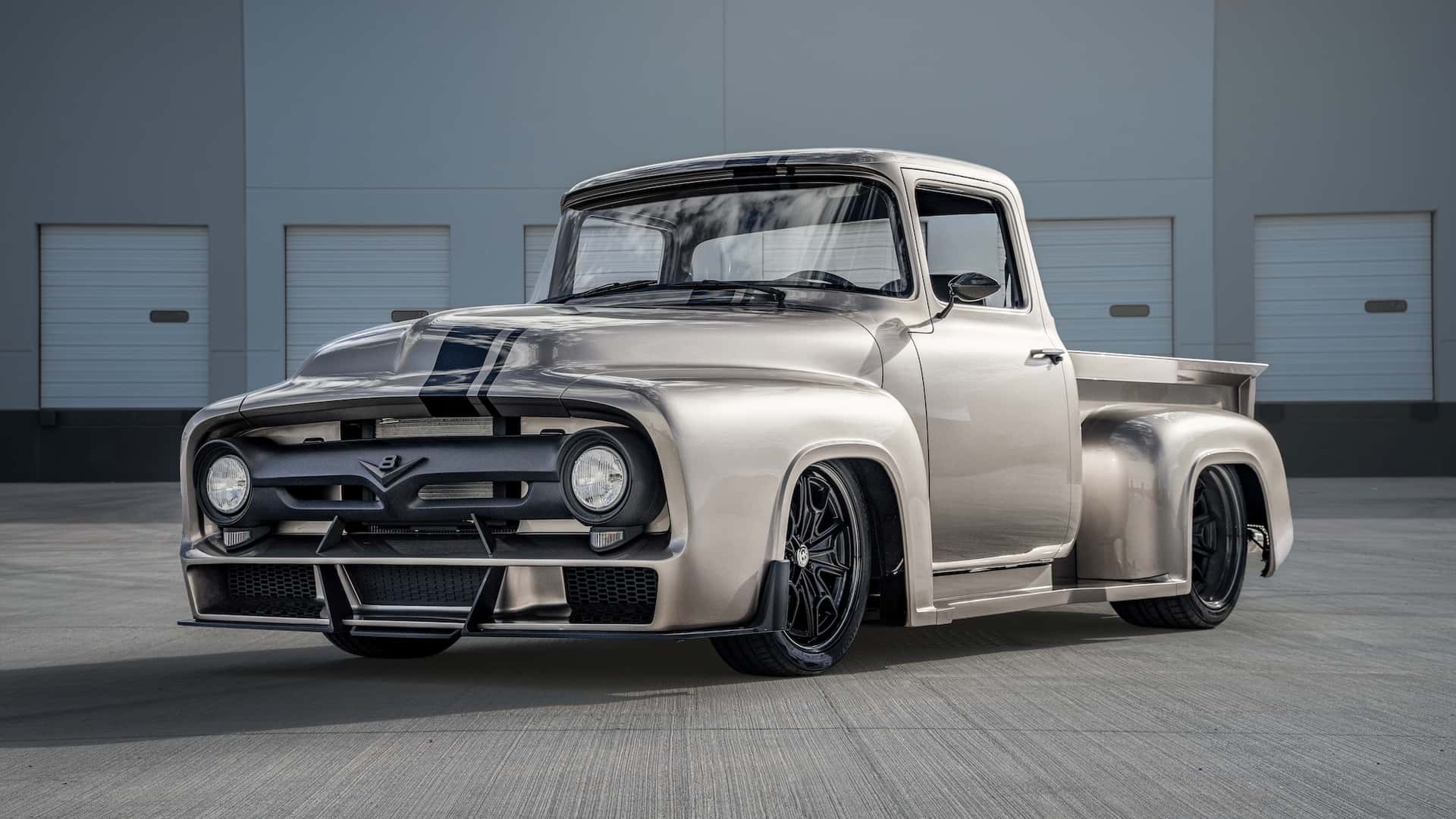
The fenders, both front and rear, have been widened to accommodate the modern wheel-and-tire package, giving the truck a muscular, planted appearance. The integration of a Ford Mustang Shelby GT350 rear diffuser into the bed area is a particularly notable design choice, signaling the intent to blend the DNA of the Ford Performance line with the truck’s heritage. The custom-built, double-walled bed features an automated tailgate, further highlighting the transition from a work-ready pickup to a luxury custom build.
The exterior finish was achieved using custom BASF paint, with a racing stripe motif applied through a rigorous, in-house hand-finishing process. Every detail, from the flush-mounted glass to the carbon-fiber side mirrors and custom LED taillights, suggests a design-first approach that avoids the "kit-car" aesthetic often found in lower-budget builds. Even the bumpers and trim were treated with a Cerakote finish to ensure durability and a contemporary aesthetic, leaving only the original grille as a nod to the truck’s 1956 origins.
Interior Refinement and Ergonomics
The interior of the GT/FX moves away from the utilitarian metal-and-vinyl aesthetic of the 1950s in favor of a modern, luxury-cabin experience. The cabin features extensive leather upholstery, custom-fitted bucket seats, and a leather-wrapped dashboard. While the cabin is visually minimalist, it is technologically dense.
A key challenge in the build was maintaining a clean, uncluttered dashboard while providing modern creature comforts. To achieve this, the team engineered a hidden climate control system that funnels air through a single, discreetly placed vent. The integration of modern audio systems, digital gauges, and electronic door actuators demonstrates that the builder prioritized daily usability alongside SEMA-grade aesthetics. By utilizing modern materials and sound-deadening techniques, the cabin provides a quiet, refined environment that contrasts sharply with the raw performance of the powertrain.
Broader Implications for the Custom Automotive Industry
The GT/FX build is emblematic of the "pro-touring" movement, which has gained significant momentum in recent years. Pro-touring is characterized by the desire to make vintage cars perform and handle as well as, or better than, their modern counterparts. This trend has shifted the focus of custom shops from mere restoration to advanced automotive engineering.
The 15,000-hour investment mentioned by Fat Fender Garage serves as a benchmark for the complexity of these projects. When such high levels of labor are required, it elevates the vehicle beyond a simple hobbyist build and into the realm of bespoke coachbuilding. This creates an interesting economic dynamic: such vehicles are often not priced for the mass market but for high-end collectors who value the unique engineering, design provenance, and exclusivity of a "one-of-one" creation.
Furthermore, the success of this build at SEMA underscores the continued relevance of the Ford F-Series as a canvas for modification. Despite the rise of electric vehicles and modern high-tech performance cars, there remains a deep-seated demand for the emotional connection provided by a V8-powered, retro-styled vehicle. The GT/FX proves that as long as there is an appetite for this connection, companies like Fat Fender Garage will continue to find ways to push the boundaries of what is possible in the world of custom automotive manufacturing.
As the industry looks toward the future, the GT/FX stands as a reminder that the most compelling vehicles are those that balance the best of the past with the technological advancements of the present. While the cost and exclusivity of such a machine remain out of reach for the average consumer, its influence on the wider custom car culture—specifically in terms of chassis design, engine integration, and aesthetic refinement—will likely be felt for years to come. The GT/FX is not merely a truck; it is an engineering statement, a tribute to American automotive heritage, and a clear signal of the direction in which the high-end restomod market is headed.