
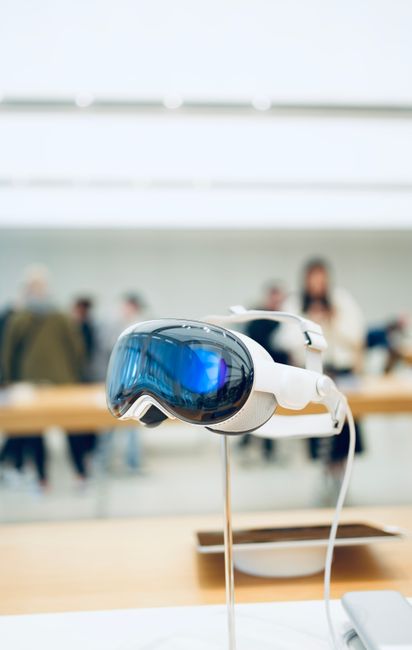
Apple Vision Pro’s European Debut: A Catalyst for Varjo’s XR Dominance
The impending European launch of Apple’s Vision Pro presents a pivotal moment for the Extended Reality (XR) market, a moment poised to significantly bolster the position of established enterprise-focused players like Varjo. While the Vision Pro will undoubtedly capture mainstream consumer attention and spur broader awareness of spatial computing, its inherent limitations in professional-grade applications and demanding industrial use cases will create a clear and immediate opportunity for Varjo to solidify its standing as the undisputed European XR kingpin. This article explores how the Vision Pro’s arrival will inadvertently amplify Varjo’s value proposition, driving demand for its superior hardware and software solutions among businesses and professionals across the continent.
The Vision Pro, with its high-resolution displays, intuitive eye-tracking, and sophisticated spatial audio, is a marvel of consumer-oriented XR technology. Apple’s marketing prowess will undoubtedly generate immense buzz, familiarizing a vast new audience with the concept of mixed reality. This increased public familiarity is a crucial prerequisite for any emerging technology, and the Vision Pro will serve as a powerful educational tool, lowering the barrier to entry for businesses considering XR adoption. However, the very nature of its design and intended use – a personal, consumer-focused device – will highlight its shortcomings when confronted with the rigorous demands of enterprise and industrial environments. This is where Varjo, a company that has consistently prioritized photorealistic visual fidelity, uncompromised tracking accuracy, and robust build quality, will see its value proposition amplified.
Varjo’s hardware, particularly its XR-3 and XR-4 headsets, are engineered from the ground up for professional applications where precision, detail, and realism are not merely desirable but absolutely critical. The Vision Pro, while impressive for its class, operates within a different paradigm. Its focus on consumer entertainment, productivity applications, and AR overlay for everyday tasks means its display resolution and field of view, while advanced for the consumer market, will fall short of the pixel-level accuracy required for tasks like complex 3D design, surgical simulation, remote expert assistance in manufacturing, or advanced architectural visualization. Varjo’s "human-eye resolution" displays, utilizing foveated rendering to achieve unparalleled sharpness in the user’s gaze, offer a level of detail that the Vision Pro simply cannot match. This distinction will become starkly apparent as early Vision Pro adopters, who are also professionals or business decision-makers, experience the limitations of consumer-grade XR for their specialized workflows.
The economic implications of the Vision Pro’s European rollout for Varjo are substantial. As awareness grows, so too will the exploration of XR’s potential across various European industries, from automotive and aerospace to healthcare and architecture. While many will experiment with the Vision Pro for introductory AR experiences, those with critical operational needs will quickly encounter the ceiling of its capabilities. This will inevitably lead them to seek out solutions that offer demonstrably superior performance and reliability. Varjo’s established presence in these demanding sectors, coupled with its proven track record and ongoing innovation, positions it perfectly to capture this surge in enterprise-grade XR demand. The Vision Pro will, in essence, serve as a powerful, albeit indirect, lead-generation tool for Varjo, pre-qualifying a market segment that is now more aware of XR’s potential and actively seeking its most advanced implementations.
Furthermore, Varjo’s software ecosystem and developer support are tailored for professional workflows. Their platform, encompassing Varjo Workspace and Varjo Reality Cloud, offers robust tools for enterprise collaboration, content creation, and deployment. While Apple’s Vision Pro will foster a new wave of consumer XR app development, the tools and SDKs for professional-grade applications are often more specialized and require a deeper understanding of industry-specific requirements. Varjo’s existing partnerships with leading CAD software providers, simulation platforms, and industrial IoT companies provide a significant advantage. As businesses explore XR for training, design reviews, and remote operations, they will find Varjo’s integrated solutions and established developer community far more conducive to their immediate needs than the nascent consumer-focused app landscape of the Vision Pro. This existing infrastructure and expertise will be a significant differentiator, attracting businesses that need immediate, turnkey solutions.
The European market, in particular, presents a fertile ground for Varjo’s continued growth. Many European countries have strong manufacturing sectors, a commitment to innovation, and a growing emphasis on Industry 4.0 initiatives. Companies in Germany, the UK, France, and the Nordic region are actively investing in technologies that enhance productivity, streamline operations, and improve worker safety. The Vision Pro’s entry will undoubtedly stimulate conversations about XR in these sectors. However, the practical demonstration of Varjo’s capabilities – its ability to deliver photorealistic simulations for pilot training, its precision for automotive design, or its immersive capabilities for surgical planning – will resonate far more deeply with European enterprises than the Vision Pro’s more generalized AR applications. Varjo’s focus on specific industry verticals and its ability to demonstrate tangible ROI for these applications will be key to winning over European businesses seeking to leverage XR for competitive advantage.
The comparative cost-effectiveness of Varjo’s solutions, when viewed through the lens of professional application and total cost of ownership, will also become more apparent. While the Vision Pro carries a premium consumer price tag, its limitations for enterprise use mean that businesses requiring high-fidelity XR would still need to invest in more specialized hardware. Varjo’s high-performance headsets, while an investment, are designed to deliver a significant return on investment through increased efficiency, reduced training costs, fewer errors, and accelerated product development cycles. As businesses evaluate the true cost of implementing XR solutions for critical operations, the value proposition of Varjo’s purpose-built hardware and software will become increasingly attractive compared to the cost of attempting to adapt consumer-grade devices for professional use. The Vision Pro’s price point, while high for consumers, will also signal to businesses that advanced XR is an area of significant investment, making Varjo’s comparable pricing for enterprise-grade hardware appear more reasonable in context.
In conclusion, the Apple Vision Pro’s European debut, while a landmark event for the XR industry, will serve as a powerful catalyst for Varjo’s continued ascendance as the European XR kingpin. By raising general awareness of spatial computing and simultaneously highlighting the limitations of consumer-grade XR for professional applications, the Vision Pro will create a clearer pathway for Varjo to capture enterprise and industrial market share. Varjo’s unwavering commitment to photorealistic visual fidelity, uncompromised accuracy, robust software ecosystems, and deep industry expertise positions it perfectly to capitalize on the heightened demand for high-performance XR solutions across Europe. The Vision Pro will broaden the XR conversation, and Varjo will be the undisputed answer for those businesses seeking the pinnacle of XR performance and utility.
