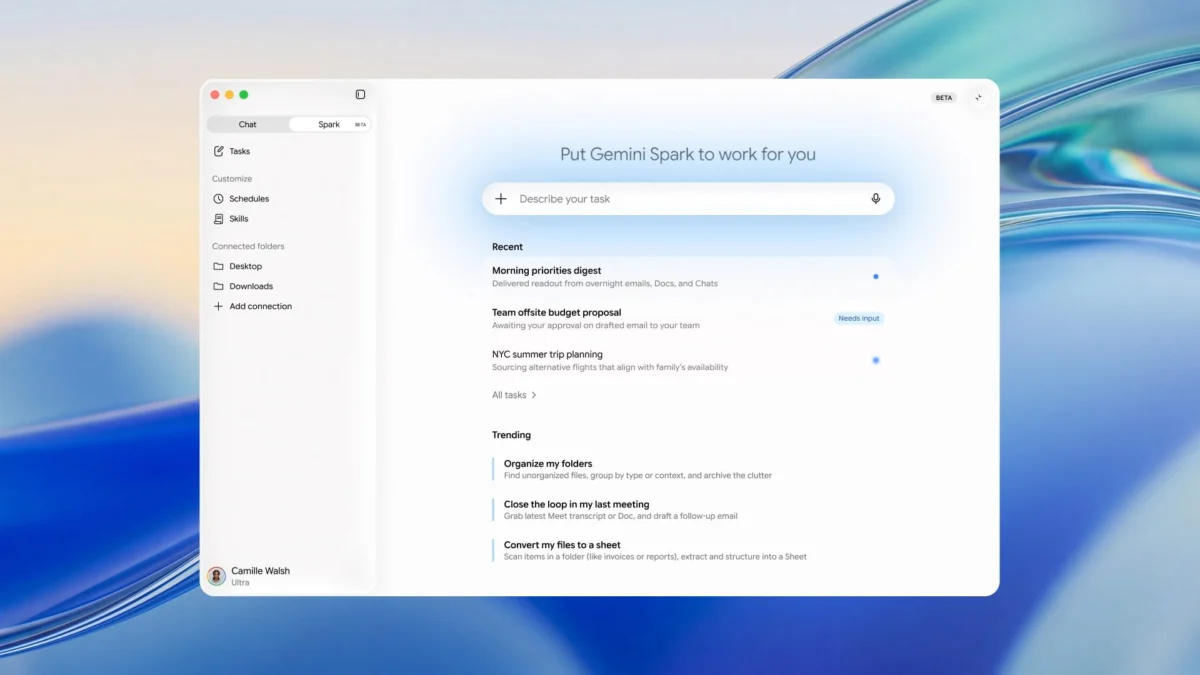
Google’s ambitious personal AI agent, Gemini Spark, is now expanding its availability to Google AI Pro subscribers across the United States, marking a significant step in the company’s strategy to integrate advanced artificial intelligence directly into users’ daily workflows. This broader rollout follows its initial debut in May with AI Ultra, signalling Google’s intent to make sophisticated AI-driven automation more accessible. The company has also indicated that Gemini Spark will "soon" become available to AI Pro members in other international markets, setting the stage for a global transformation in personal and professional productivity. This expansion underscores Google’s commitment to leveraging its formidable AI research capabilities, particularly within the Gemini family of models, to deliver tangible, practical benefits to its user base.
The Dawn of Autonomous AI: Gemini Spark’s Core Functionality
Gemini Spark is engineered as Google’s premier personal AI agent, designed with the explicit purpose of automating complex, multi-step tasks that traditionally demand significant human intervention. Far from a mere chatbot, Spark represents a leap towards proactive, intelligent assistance, capable of orchestrating a variety of digital actions. At its core, Spark leverages a sophisticated architecture that integrates "Connected Apps" such as the ubiquitous Google Workspace suite and Google Search, alongside a novel concept termed "Personal Intelligence." This "Personal Intelligence" allows Spark to learn and adapt to individual user habits, preferences, and operational contexts, thereby refining its automation capabilities over time.
Beyond its direct integrations, Spark is equipped with a remote web browser and a computer with code execution capabilities, enabling it to interact with the broader internet and perform computational tasks independently. This robust toolkit is complemented by traditional chat interfaces for direct user interaction, a "Canvas" for collaborative and creative tasks, and location awareness to provide contextually relevant assistance. Together, these components allow Spark to accomplish intricate workflows, ranging from managing schedules and drafting communications to analysing data and generating reports, all with a higher degree of autonomy than previous AI assistants.
A pivotal innovation introduced with Spark is the concept of "Skills" and "Schedules." "Skills" are essentially reusable instructions or modular capabilities that Spark can execute, enriched with additional context to perform specific functions efficiently. For instance, a "Skill" might be "Summarize emails related to Project X" or "Find market trends for Product Y." "Schedules," on the other hand, define automated triggers, allowing tasks to be initiated based on specific times (e.g., "every Monday morning") or conditions (e.g., "when a new document is shared"). A "Task" is the overarching, high-level goal a user wishes to achieve, which Spark then breaks down and executes using its available Skills and Schedules. Users are currently allowed to have "up to 15 tasks running at a given time," with Spark operating under the same compute-based usage limits as other Gemini services, ensuring resource allocation and preventing overuse. This structured approach to automation empowers users to delegate intricate sequences of actions, freeing up valuable time and mental resources.
A Strategic Rollout: From Ultra to Pro and Beyond
The current expansion of Gemini Spark to Google AI Pro subscribers in the US marks a critical phase in Google’s broader AI deployment strategy. The journey began in May with Gemini Spark’s initial launch exclusively for users subscribed to AI Ultra, Google’s most advanced and powerful AI model tier. This phased rollout strategy is common in the technology industry, often used to test new features with a smaller, highly engaged user base before scaling to a wider audience. The transition from AI Ultra to AI Pro indicates that Spark has matured sufficiently, demonstrating stability and utility to a broader segment of Google’s premium AI users.
This move is part of Google’s overarching vision for its Gemini family of models, which represents a new era for the company’s artificial intelligence initiatives. Following the rebranding of its conversational AI, Bard, to Gemini, Google has been steadily integrating its most capable AI models across its product ecosystem. The Gemini platform, underpinned by models like Gemini Ultra and Gemini Pro, aims to be multimodal, capable of understanding and operating across text, code, audio, image, and video. Spark, as a personal AI agent, leverages the power of these foundational models to not just process information but to actively perform actions based on that understanding.

The imminent global expansion to AI Pro members in other countries highlights Google’s ambition to position Gemini Spark as a universally accessible tool for advanced productivity. This international rollout will necessitate careful localisation, adapting Spark’s capabilities and integrations to diverse languages, cultural contexts, and regional digital ecosystems. The methodical progression from a limited, high-tier launch to a broader premium subscription base, followed by international availability, underscores Google’s strategic approach to ensuring robust performance and user satisfaction as it rolls out increasingly autonomous AI solutions.
Deep Integration: Gemini Spark’s Ecosystem Advantage
One of Gemini Spark’s most compelling strengths lies in its deep and seamless integration with Google’s vast ecosystem of services, particularly the Google Workspace suite. This native connectivity allows Spark to operate as an intrinsic part of a user’s digital life, leveraging existing data and workflows without requiring complex configurations or third-party connectors. The original article highlights several key Workspace applications that Spark can interact with, offering specific functionalities and, importantly, outlining critical user considerations.
For Google Calendar, Spark can manage schedules, create events, send invitations, and even proactively suggest meeting times based on participants’ availability and preferences. This automation can significantly reduce the administrative burden of scheduling.
In Gmail, Spark can assist with email management, drafting responses, prioritizing important messages, summarizing long threads, and even filtering spam or categorizing incoming mail. This can be a game-changer for individuals overwhelmed by high email volumes.
The integration with Docs, Sheets, Slides, and Drive extends Spark’s capabilities into content creation, data analysis, and document management. Spark can help users draft documents, populate spreadsheets with data, create presentation slides, and organize files within Google Drive. A crucial caveat, however, is highlighted: "To edit shared documents, spreadsheets, and presentations, you’ll need to review and confirm Gemini Spark’s planned edits." This emphasizes Google’s commitment to user control and data integrity, especially in collaborative environments where unintended automated changes could have significant consequences. It ensures that human oversight remains paramount for sensitive actions.
Google Keep integration allows Spark to manage notes, create lists, and retrieve information stored within Keep, enhancing personal organization and information recall.
Finally, with Google Tasks, Spark can automate task creation, prioritize items, and manage to-do lists. The article notes an "Important" distinction here: "Gemini can perform bulk actions on private tasks in Google Tasks without your confirmation. Please review your request before you submit or manage directly in Google Tasks." This specific detail underscores the nuanced approach to automation, differentiating between individual, private tasks where bulk actions might be more readily accepted, and collaborative or highly sensitive actions that require explicit user approval. This balance between efficiency and security is a central theme in the design of advanced AI agents.
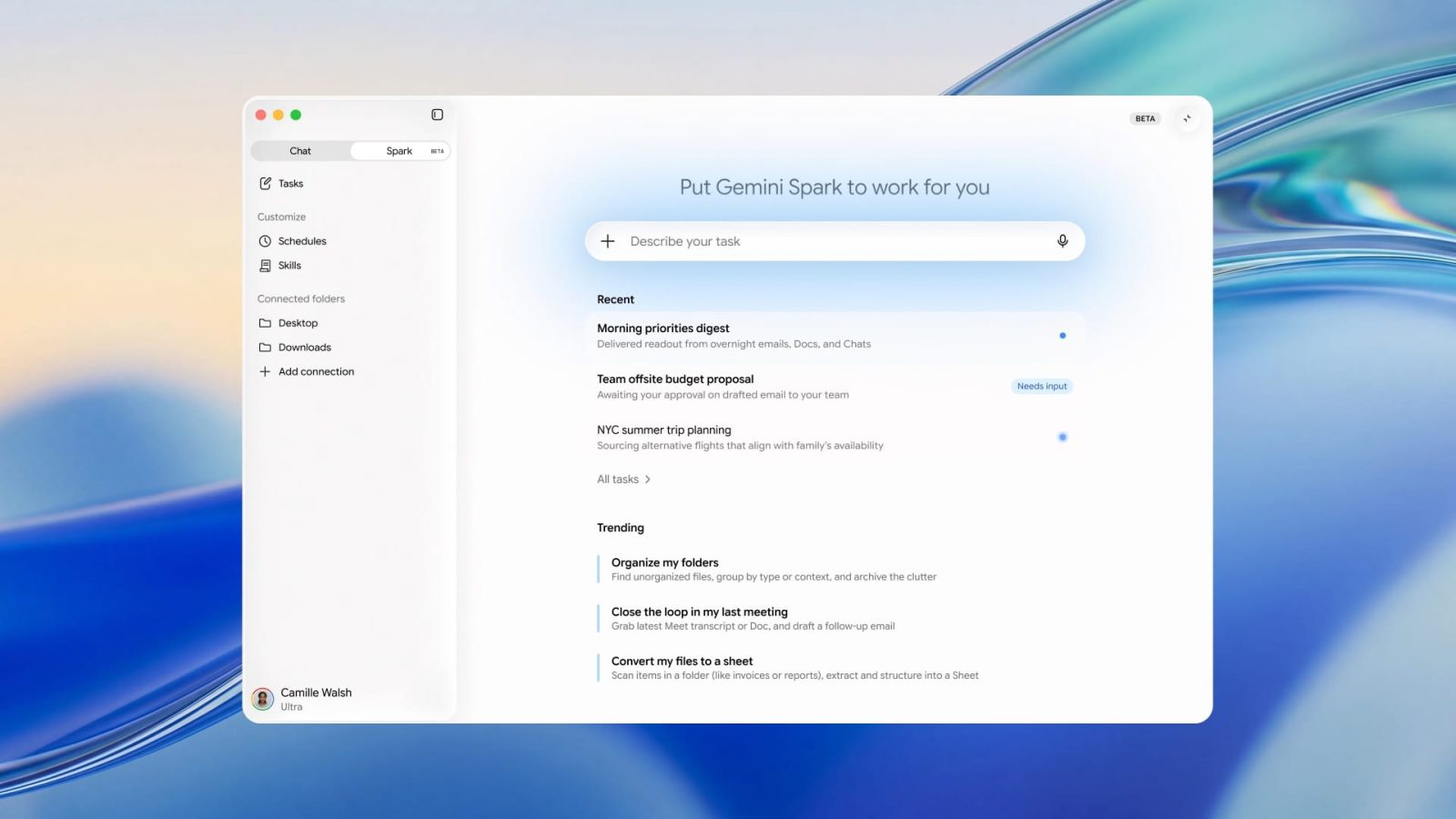
Beyond Workspace, Google has also expanded Spark’s reach to other platforms, notably with a dedicated macOS app. This app enables users to initiate tasks, such as browsing files, directly from their Apple devices, further cementing Spark’s role as a cross-platform productivity tool. This multi-device integration ensures that Spark’s capabilities are available wherever and whenever users need them, fostering a truly seamless digital experience.
The Evolving Landscape of Personal AI Agents
The introduction and expansion of Gemini Spark are set against a rapidly evolving backdrop of artificial intelligence, particularly in the domain of personal and enterprise AI agents. The industry is witnessing a significant shift from reactive AI assistants (like traditional chatbots) to proactive, autonomous agents capable of performing complex actions. This paradigm shift is driven by advancements in large language models (LLMs) and multimodal AI, which allow these agents to understand context, reason, and execute tasks with unprecedented sophistication.
Google’s entry into this space with Gemini Spark positions it directly against competitors like Microsoft Copilot, which integrates AI across the Microsoft 365 ecosystem, and other emerging AI agent platforms from companies like OpenAI. The race is on to develop the most capable, reliable, and user-friendly AI agent that can truly transform productivity. Google’s advantage lies in its vast data infrastructure, its deep expertise in search and information retrieval, and its expansive ecosystem of consumer and enterprise products. By leveraging "Connected Apps" and "Personal Intelligence," Google aims to create an agent that is uniquely tailored to the individual user, learning from their interactions across all Google services.
The vision of AI moving beyond mere information retrieval to active execution represents a fundamental change in how humans interact with technology. Instead of users needing to navigate multiple applications and perform repetitive actions, an AI agent like Spark can act as a central orchestrator, delegating tasks and streamlining workflows. This shift has profound implications for how work is done, promising to offload cognitive load and enable individuals to focus on higher-value, more creative endeavors. The success of Gemini Spark will depend not only on its technical prowess but also on its ability to build user trust and demonstrate clear, tangible benefits in daily use.
Under the Hood: Technical Foundations and User Control
At its technical core, Gemini Spark is powered by Google’s state-of-the-art Gemini family of AI models, specifically leveraging the capabilities of Gemini Ultra and Gemini Pro. These foundational models provide Spark with its ability to understand natural language, reason about complex tasks, generate code, process information from various modalities, and interact intelligently with integrated applications. The "Personal Intelligence" aspect is likely driven by sophisticated machine learning algorithms that analyze user data (with appropriate privacy safeguards and consent) to build a profile of preferences, common tasks, and communication styles. This allows Spark to not just follow instructions but to anticipate needs and offer more personalized, proactive assistance.
The design philosophy behind Gemini Spark clearly attempts to strike a delicate balance between automation and human oversight, recognizing the inherent risks and ethical considerations of granting AI agents significant autonomy. The explicit requirements for user review and confirmation for certain actions, particularly when dealing with shared documents or potentially sensitive bulk operations in Google Tasks, are crucial examples of this. This tiered approach to user control acknowledges that while some tasks can be fully automated for efficiency, others demand a human checkpoint to prevent errors, ensure compliance, or maintain creative control.
This emphasis on user consent and verification is not merely a technical feature but a critical ethical and trust-building component. In an era where concerns about AI hallucination, data privacy, and algorithmic bias are prevalent, giving users clear control points helps to mitigate risks and foster confidence in the AI agent’s capabilities. Google’s approach suggests a recognition that for AI agents to be widely adopted, they must be perceived as reliable partners rather than autonomous entities operating without supervision. The ongoing development of Spark will likely see continued refinement of these control mechanisms, adapting to user feedback and evolving best practices in responsible AI.

Implications for Productivity and the Future of Work
The widespread adoption of a sophisticated AI agent like Gemini Spark has profound implications for productivity across various sectors and for the very nature of work itself. For individuals, Spark promises to be a significant time-saver, automating tedious administrative tasks, managing schedules, and synthesizing information, thereby freeing up mental bandwidth for more creative and strategic thinking. Professionals in fields such as marketing, finance, research, and project management could leverage Spark to automate data analysis, report generation, content drafting, and client communication, leading to substantial efficiency gains.
For organizations, the deployment of such an agent could lead to optimized workflows, reduced operational costs, and enhanced decision-making through faster information processing. Teams could utilize Spark for collaborative tasks, streamlining communication, and ensuring projects stay on track. However, the integration of such powerful AI also presents challenges. Companies will need to invest in training employees to effectively utilize these new tools, adapt existing processes to incorporate AI automation, and establish clear guidelines for AI interaction to maintain data security and ethical standards.
The long-term impact on the future of work could be transformative. As AI agents become more capable, they are likely to redefine job roles, shifting human effort away from repetitive, rule-based tasks towards activities that require uniquely human attributes like complex problem-solving, emotional intelligence, and creativity. While some fear job displacement, the prevailing view in the industry is that AI agents will augment human capabilities, creating new types of jobs and enabling existing professionals to achieve more. The learning curve for adopting these advanced tools will be a key factor in their successful integration into daily professional life.
Looking Ahead: Global Expansion and Future Capabilities
With Gemini Spark now expanding its reach within the US and poised for international rollout, Google is clearly investing heavily in the future of AI-driven automation. The "soon" for AI Pro members in other countries suggests that the company is actively preparing for a global deployment, which will involve overcoming challenges related to language diversity, regulatory frameworks, and regional market needs. This expansion is critical for Google to solidify its position as a global leader in AI innovation.
The future capabilities of Gemini Spark are likely to extend far beyond its current impressive feature set. One could anticipate further integrations with a broader array of third-party applications, moving beyond the Google ecosystem to encompass a wider range of software tools used by businesses and individuals. Enhanced multimodal capabilities, allowing Spark to better understand and interact with visual and auditory inputs, could also be on the horizon. Imagine Spark automatically generating video summaries, editing images based on natural language commands, or even controlling smart home devices through complex schedules.
As AI models continue to advance, the "Skills" and "Schedules" framework could become even more sophisticated, allowing for increasingly complex and adaptive automations. The concept of "Personal Intelligence" will also likely deepen, leading to a more intuitive and predictive agent that can anticipate user needs with even greater accuracy. The long-term vision for Google’s AI agents is to create a truly intelligent, indispensable digital companion that seamlessly integrates into every facet of a user’s digital and physical life, continuously learning and adapting to provide unparalleled assistance.
In conclusion, the expanded rollout of Gemini Spark to Google AI Pro subscribers in the US marks a pivotal moment in the evolution of personal AI agents. By leveraging its advanced Gemini models and deep ecosystem integration, Google is offering a powerful tool designed to automate complex tasks, enhance productivity, and redefine the boundaries of digital assistance. As Spark moves towards global availability and continues to evolve, it stands as a testament to Google’s commitment to shaping the future of artificial intelligence and its profound impact on how we live and work.