The field of artificial intelligence is currently witnessing a paradigm shift in how computer vision models are developed and trained. Traditionally, computer vision has relied on highly specialized architectures tailored to specific tasks, such as depth estimation, object segmentation, or pose recognition. However, a new research initiative from Google DeepMind suggests that the next generation of visual intelligence may not come from specialized vision models at all, but rather from the emergent capabilities within large-scale video generation systems. Their new model, dubbed GenCeption, utilizes a pre-trained video generation framework as a foundation for a wide array of classic computer vision tasks, achieving state-of-the-art performance while requiring a fraction of the training data typically used by industry-standard models.
The core hypothesis behind GenCeption is rooted in the success of Large Language Models (LLMs). Systems like GPT-4 became versatile, general-purpose processors almost as a byproduct of learning a single, fundamental task: predicting the next word in a sequence. To succeed at this, the models had to internalize the underlying structures of grammar, logic, world history, and social context. DeepMind researchers argue that video generation serves a similar "pre-training" purpose for the physical world. To generate a realistic video of a person walking through a room, a model must inherently understand 3D geometry, the consistency of lighting, the physics of movement, and the spatial relationships between objects. By tapping into these internal representations, GenCeption bridges the gap between creative generation and analytical perception.
The Architectural Evolution of GenCeption
GenCeption is built upon the foundation of Alibaba’s open-source Wan2.1 video generation model. While video generation models are typically designed to produce high-quality visual content through a process of denoising—often requiring dozens of iterative steps—the DeepMind team modified this architecture to prioritize speed and analytical accuracy. One of the most significant technical shifts in GenCeption is the move to a single forward-pass architecture. Unlike standard diffusion models that generate video from noise over several seconds or minutes, GenCeption produces its perception predictions in one go. This makes the model fast enough for practical, real-world computer vision applications where latency is a critical factor.

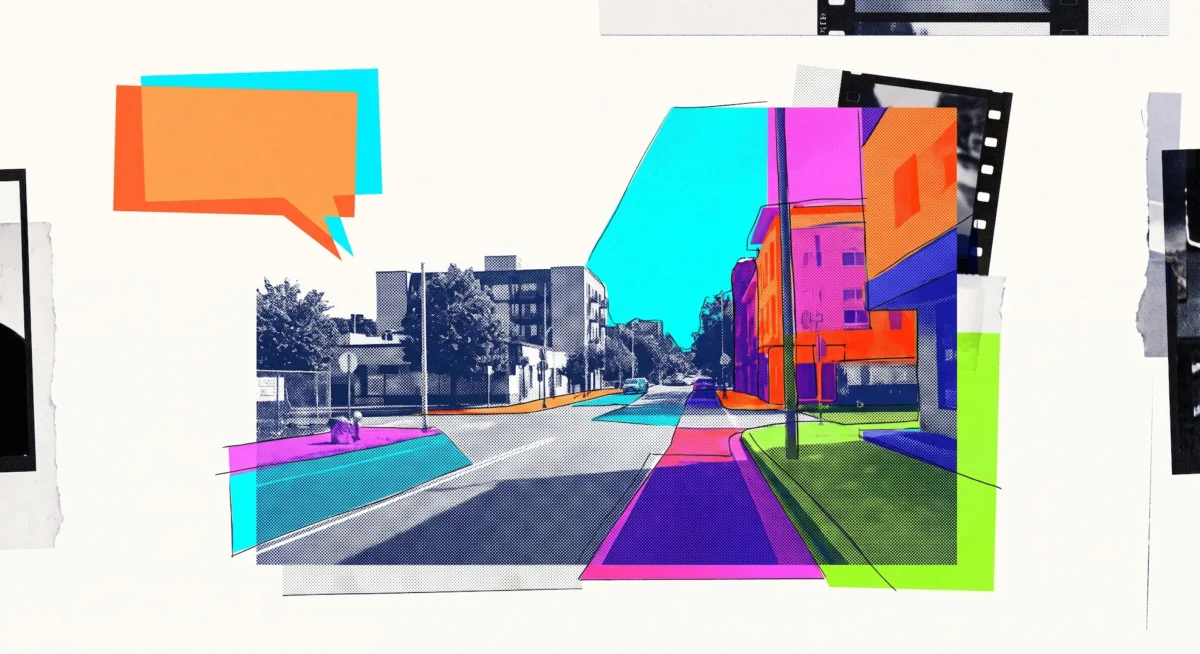
The researchers adopted a remarkably unified approach to task management. Rather than creating different output heads for different types of data, GenCeption represents nearly every output as a standard three-channel RGB image. Whether the model is calculating a depth map, identifying surface normals, or creating a segmentation mask, the output is formatted as a visual map. Even camera movement is translated into an image-based representation. This "visual-as-data" approach allows a single model to handle a diverse range of tasks without requiring structural changes for each new objective.
To direct the model, GenCeption uses text prompts, functioning similarly to how a user might interact with a chatbot. A prompt such as "generate a depth map for this scene" triggers the specific internal weights required for that task. For tasks that cannot be easily represented as images, such as 3D keypoint prediction for skeletal tracking, the team added small, trainable modules known as learnable tokens and Multi-Layer Perceptrons (MLPs). This hybrid approach ensures that the model remains a generalist while maintaining the precision required for specialized engineering and robotics tasks.
Efficiency Through Synthetic Data and Foundation Pre-training
One of the most striking aspects of the GenCeption study is its extreme data efficiency. In the contemporary AI landscape, training a high-performing vision model usually requires millions of annotated images or video frames. For example, models like D4RT and VGGT-Omega are trained on massive datasets to achieve high accuracy. In contrast, GenCeption achieved comparable or superior results using a synthetic dataset consisting of only 7,500 videos—a volume of data that is between seven and 500 times smaller than what is used by its competitors.
The training pipeline relied heavily on synthetic environments. The researchers utilized 800 digital human models paired with 200 motion sequences derived from professional motion-capture data. These were rendered using the Blender software suite across various digital backgrounds and camera angles. This synthetic-first approach is significant because it bypasses the "labeling bottleneck" that plagues the AI industry. Labeling real-world video for depth and 3D pose is notoriously expensive and prone to human error; synthetic data, by contrast, comes with "perfect" labels generated by the rendering engine itself.

The success of GenCeption suggests that the volume of data is less important than the quality of the pre-existing representations within the base model. Because the model had already "learned" how the world looks and moves during its initial training as a video generator (Wan2.1), it required very little additional instruction to translate those internal "concepts" into specific vision outputs.
Comparative Performance and Benchmarking Results
In rigorous benchmarking tests, GenCeption demonstrated that a generalist model could indeed compete with, and often outperform, the industry’s leading specialists. In depth estimation, GenCeption matched the performance of DepthAnything 3, currently considered a gold standard in the field. When tasked with surface normal estimation—calculating the orientation of surfaces in a 3D space—GenCeption surpassed specialized models such as NormalCrafter and Lotus-2.
The model’s performance in 3D pose recognition was particularly noteworthy, as it outperformed Genmo and TRAM, models specifically designed for human motion analysis. Furthermore, in the realm of complex, language-guided segmentation—where a model must identify an object based on a descriptive text prompt—GenCeption achieved results on par with Meta’s Segment Anything Model (SAM 3) when combined with Gemini 3.5 Flash.
The researchers also compared GenCeption against other "foundation" vision models like Meta’s V-JEPA (Video Joint-Embedding Predictive Architecture) and VideoMAE V2. Even when tested under identical conditions, the video-generation-based pre-training of GenCeption yielded superior results. The authors attribute this to the "generative objective" itself; the act of having to recreate pixels from scratch forces a model to learn more detailed spatial and temporal features than models that simply predict abstract representations or masked sections of an image.

Generalization Capabilities and Current Limitations
A recurring challenge in AI is "overfitting," where a model performs well on its training data but fails in the real world. Because GenCeption was trained almost exclusively on synthetic videos of individual humans, there was a high risk that it would struggle with real-world footage or non-human subjects. However, the study revealed robust generalization capabilities.
When presented with real-world footage of crowded streets, electronics stores, or warehouses, GenCeption maintained high accuracy. Remarkably, it successfully transferred its perception abilities to categories it had never seen during training, such as animals (dogs, tigers, hippopotamuses) and humanoid robots. In some instances, the model’s outputs were more detailed than the synthetic data it was trained on, accurately capturing fine details like a cat’s whiskers or individual strands of hair. This suggests that the underlying video generation model (Wan2.1) had already absorbed these details from its vast, unlabelled pre-training data.
Despite these successes, the researchers noted clear limits. The integration of 3D keypoint estimation—the "skeletal" tracking of joints—proved difficult to master alongside other tasks. The team found that joint training across all tasks slightly degraded the performance of keypoint prediction. They hypothesized that the additional MLP modules required for this task might interfere with the core mechanisms the model learned during its pre-training phase.
Additionally, processing speed remains a hurdle for real-time deployment. While a single forward pass is faster than iterative diffusion, the computational cost of a 14-billion-parameter model is high. Currently, the larger version of GenCeption takes approximately ten seconds to process a video clip of 81 frames. For applications like autonomous driving or high-speed robotics, this latency must be significantly reduced.

The "World Model" Debate and Industry Implications
The emergence of GenCeption adds a significant new chapter to the ongoing debate regarding "World Models" in AI. Researchers are currently divided on whether generative models truly "understand" the world or are merely "stochastic parrots" that predict pixels without any grasp of underlying causality.
The DeepMind team argues that video generators are essentially universal world models. They believe these models provide a foundation for computer vision that is analogous to the role LLMs play in natural language processing. This view, however, is not universally accepted. Critics, including former Meta Chief AI Scientist Yann LeCun, have argued that pixel-prediction models are a "dead end" for true AI reasoning. LeCun’s preferred approach, exemplified by Meta’s V-JEPA, involves predicting abstract concepts rather than specific pixels, arguing that this better reflects how the human brain processes information.
Furthermore, recent benchmarks from institutions like Tsinghua University have shown that even the most advanced video generators, including OpenAI’s Sora, frequently fail basic tests of physics and logic. However, the GenCeption researchers suggest that for the purposes of computer vision—where the goal is to analyze what is in a frame rather than predict what will happen next—the generative framework is more than sufficient.
The implications of this research are far-reaching. If computer vision can be "solved" by repurposing generative models, the cost of developing AI for robotics, medical imaging, and augmented reality could plummet. Instead of building a new model for every niche task, developers could simply "prompt" a large, pre-trained video foundation model. As Google DeepMind continues to explore this path with other projects like Genie 3—which focuses on creating interactive 3D environments—the line between "creating" the world and "perceiving" the world continues to blur. GenCeption stands as a powerful proof of concept that the internal logic required to create a realistic image is the very same logic needed to understand the physical reality of our world.