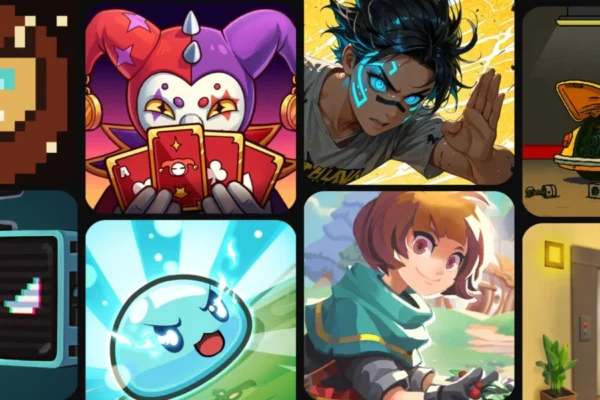





The global mobile application landscape witnessed a significant influx of creative ingenuity this November as RevenueCat announced the winners of its annual Shipaton competition. A high-stakes event designed to encourage developers to move from ideation to deployment, the 2026 edition saw a record-breaking 3,985 project submissions. Across 20 distinct categories, independent developers and small teams showcased how mobile technology can address both niche professional requirements and broader consumer lifestyle challenges. The results underscore a shifting trend in app development, where functional utility is increasingly paired with high-fidelity design and sustainable monetization models.

The Evolution and Context of the Shipaton Competition
The Shipaton has evolved into a premier fixture for the indie developer community, serving as both a launchpad for new software and a critical testing ground for business viability. Unlike traditional hackathons, which often prioritize rapid prototyping over long-term stability, the Shipaton emphasizes the "ship" aspect of software development—the transition from a concept to a live, functional product available on platforms like the Apple App Store and Google Play.

In 2026, the competition’s scope expanded significantly, reflecting the maturing market for subscription-based mobile apps. RevenueCat, which provides infrastructure for in-app purchases and subscription management, utilizes this event to highlight the importance of "indie" economics. By providing a platform that mandates a viable path to market, the organization ensures that the projects presented are not merely academic exercises but real-world solutions capable of generating revenue and sustaining a user base.

Grand Prize Winners and Standout Innovations
The 2026 competition was defined by a commitment to "cozy" user experiences and practical, problem-solving utilities. The Grand Prize was awarded to Mio, an app that gamifies habit tracking by integrating self-care routines with a digital, evolving companion. The success of Mio highlights a broader market trend: users are increasingly gravitating toward apps that provide psychological reinforcement and positive feedback loops rather than simple, static checklists.

In the gaming sector, Nitelore emerged as a standout, securing a Grand Prize for its focus on arcade-style, high-performance racing. Judges noted that the app’s success was predicated on superior art direction, low-latency haptics, and a business model that balances free-to-play accessibility with premium content unlocks. Similarly, the puzzle-based game Adversary was recognized for its innovative "Catvertising" model, which incorporates advertisements into the mechanics of the game as a narrative obstacle, effectively neutralizing the common user frustration associated with intrusive ads.

Addressing Real-World Friction and Social Connection
A significant portion of this year’s submissions focused on removing friction from daily life. For instance, the #BuildInPublic winner, Boop, successfully gamified the experience of pet ownership by allowing users to create a digital collection of animals they encounter during walks. This app exemplifies the "real-world integration" category, where software encourages physical activity and social interaction rather than digital isolation.

The issue of accessibility was also a primary focus, with the RevenueCat Peace Prize awarded to See as Me: Colorblind. The app utilizes sophisticated split-screen camera technology to simulate various types of color vision deficiency. By allowing users to share their visual experience with others in real-time, the developer, Javier Jiménez, has created a tool that serves as a bridge for empathy and communication, proving that mobile technology remains one of the most effective mediums for social advocacy.

Technical Proficiency and Multi-Platform Versatility
The 2026 Shipaton also highlighted the increasing maturity of cross-platform development frameworks. The "Ship Kotlin Everywhere" award went to BoatBrawl, a multiplayer naval combat game. By leveraging Kotlin Multiplatform and Compose Multiplatform, the developers were able to ensure the game performed seamlessly across iOS, Android, Windows, and web browsers. This technical feat is indicative of a larger shift in the industry: developers are no longer willing to silo their projects to a single operating system, opting instead for "write once, deploy everywhere" architectures that maximize market reach.

Furthermore, the "Next Gen Award" for Bubble Games demonstrated the potential for local, proximity-based gaming. By allowing multiple smartphones to act as a unified, shared game board, the project utilizes the hardware users already own to create novel social experiences. This approach minimizes the barrier to entry, as users do not need to purchase specialized controllers or consoles to engage with the software.

Professional Productivity and Educational Tools
The "Influencer Awards," which were categorized by specific industry experts, showcased how niche software can address complex professional needs. SnipStash, the winner of the Productivity challenge hosted by Christopher Lawley, provides a centralized library for reusable content across Apple’s ecosystem. The app’s success lies in its native integration and use of system-level tools like Shortcuts and Quick Palettes, which allow professional users to reclaim time lost in repetitive tasks.

Similarly, the Rehearse: Hard Conversations app addressed a gap in professional development by providing an AI-driven platform for practicing difficult workplace dialogues. By focusing on variables like tone, empathy, and clarity, the app provides a safe, low-stakes environment for professional growth. This tool reflects a growing trend of integrating generative AI into specialized coaching apps to provide personalized feedback, a sector that is expected to see significant growth over the next fiscal year.

Economic Implications and Future Outlook
The success of the 2026 Shipaton winners provides a window into the future of the "creator economy" within the app space. The "HAMM Award" (Help Apps Make Money) given to the tic-tac-toe variant GRIDLOCK signifies that even simple, legacy concepts can be transformed into profitable ventures if the monetization strategy—in this case, a hybrid of credits, ads, and subscriptions—is thoughtfully integrated into the user experience.

Analysts observing the event noted that the quality of the 2026 submissions is a direct result of improved developer tools and the democratization of AI. As creating high-quality, functional apps becomes more accessible, the barrier to entry for independent developers has lowered, leading to a more saturated but also more diverse marketplace.

However, this saturation brings its own set of challenges. As evidenced by the "Most Viral App" winner, Trazo, success is no longer determined solely by code quality or design. Developers must now be skilled in digital marketing, community engagement, and organic content creation. Trazo’s victory, earned through clever use of golf humor and practical instructional content, highlights that the "shipping" of an app is only the beginning of the product lifecycle.

A Call to Action for Future Developers
The 2026 Shipaton concludes on a note of optimistic momentum. With nearly 4,000 projects submitted, the event has effectively demonstrated that the "indie" spirit is alive and well. RevenueCat’s ongoing support of this competition serves as a critical catalyst for the industry, providing a structural framework that forces developers to confront the realities of the market—from UI/UX design to subscription lifecycle management—before they even reach the launch phase.

For those looking to enter the space, the takeaway from this year’s competition is clear: the most successful apps are those that identify a specific, relatable point of friction and apply a focused, well-executed solution. Whether it is a better way to track a hobby, a more efficient method for managing code snippets, or a more engaging way to wake up in the morning, the next wave of innovation is likely to come from developers who prioritize the human experience alongside technical precision.

As the industry looks toward 2027, the focus is expected to shift further toward the integration of local, on-device AI and more robust cross-platform synchronization. If the 2026 Shipaton is any indication, the future of mobile development will be defined by smaller, more specialized teams creating highly personalized, high-value tools that turn the smartphone from a passive entertainment device into an active partner in the user’s daily life.