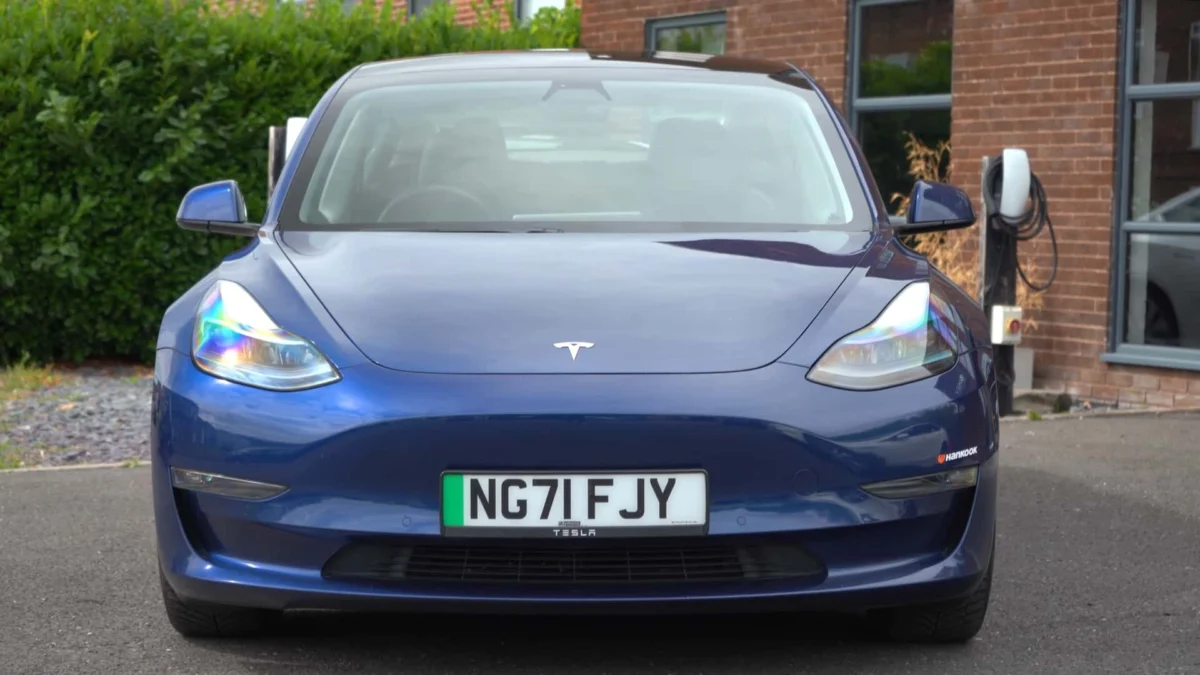
For years, the discourse surrounding the widespread adoption of electric vehicles (EVs) has been punctuated by skepticism regarding long-term ownership costs, battery longevity, and the durability of components under high-mileage conditions. However, as the global fleet of battery-electric vehicles grows, real-world data is beginning to replace speculative concerns. A recent high-mileage stress test involving a 2021 Tesla Model 3, previously utilized as a taxi service in the United Kingdom, provides empirical evidence that modern EV architectures are capable of sustaining significant operational lifespans with minimal mechanical intervention.
A Real-World Durability Benchmark
The vehicle in question, a 2021 Tesla Model 3 Long Range, reached a notable milestone by surpassing 250,000 miles. This specific unit was acquired by Richard Symons, proprietor of a prominent used Tesla dealership in the UK, to determine the structural and performance integrity of an EV subjected to the intensive duty cycles of commercial taxi use.
Commercial vehicles typically endure far more wear than personal commuter cars. Daily operation in a taxi fleet involves frequent start-stop cycles, heavy reliance on fast-charging infrastructure, and constant exposure to varied road conditions. Despite these stressors, the vehicle’s performance metrics at the quarter-million-mile mark challenge prevailing myths about "disposable" electric technology.
Mechanical Resilience and Maintenance Requirements
The primary advantage of the electric drivetrain is the reduction in moving parts. Whereas an internal combustion engine (ICE) requires regular oil changes, timing belt replacements, spark plug maintenance, and complex transmission servicing, the electric powertrain relies on a singular motor assembly and a battery pack.
The findings from the 250,000-mile Model 3 reflect this engineering simplicity. Aside from an early failure of the front bumper speaker—a peripheral component rather than a core drivetrain element—the vehicle required only standard maintenance items. Over the course of its high-mileage tenure, the car consumed six sets of tires, multiple sets of wiper blades, and various suspension bushings.
Perhaps most significantly, the vehicle retains its original battery pack and electric motors. Technical analysis confirms that the traction battery still holds 84% of its original factory capacity. Under optimal conditions, the vehicle remains capable of delivering approximately 284 miles on a single charge. This retention rate is particularly impressive given the cumulative degradation usually associated with high-cycle fast charging.
The Role of Battery Chemistry and Thermal Management
The longevity of the Tesla’s battery can be attributed to advancements in battery chemistry and sophisticated thermal management systems. Modern lithium-ion packs, particularly those manufactured after 2022, have seen significant improvements in energy density and cycle life. Industry data indicates that the failure rate for these modern battery modules is approximately 0.3%, a testament to the maturation of battery manufacturing processes.
When subjected to a 30% state-of-charge increase via an 11-minute Supercharger session, the vehicle demonstrated that its charging curves remain remarkably consistent with factory specifications. The ability to recover 85 miles of real-world range in under 12 minutes suggests that the battery management system (BMS) has successfully mitigated the potential for accelerated cell degradation, even after years of commercial-grade exploitation.
Financial Implications of High-Mileage Ownership
The total cost of ownership (TCO) remains the most compelling argument for EV adoption. Beyond the reduced maintenance frequency, the efficiency of the drivetrain—measured at 4.15 miles per kilowatt-hour in this specific case—translates into a significantly lower cost-per-mile compared to equivalent gasoline-powered vehicles.
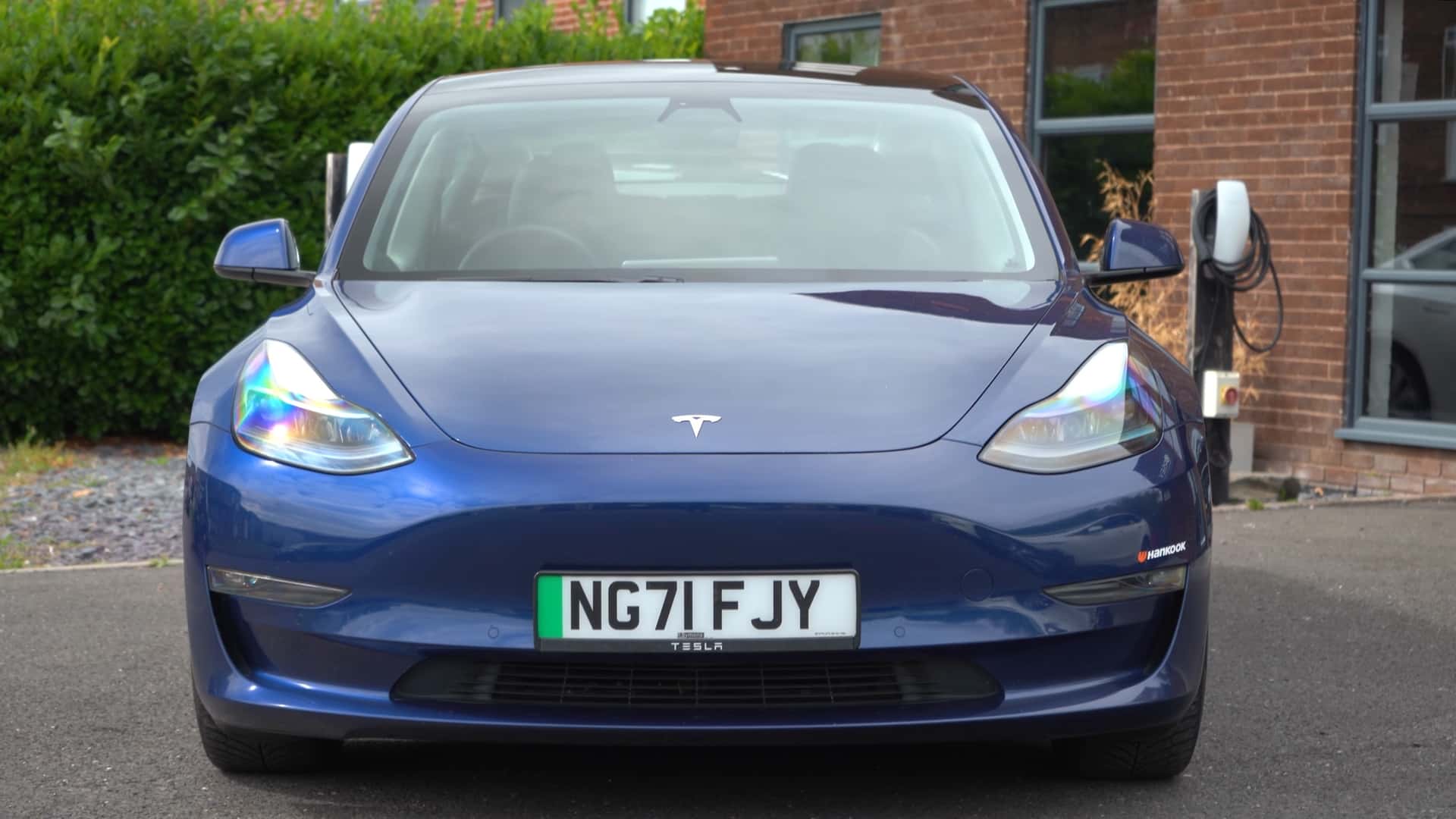
When owners leverage off-peak home charging or renewable energy sources, such as solar arrays, the marginal cost of "fueling" drops drastically. Furthermore, the regenerative braking systems present in most EVs reduce the reliance on friction brakes. In the case of the 250,000-mile Model 3, the original brake rotors, pads, and fluid remain in service, further reducing the operational overhead that typically accumulates with high-mileage ICE vehicles.
Industry Context and Comparative Analysis
This case study is not an isolated anomaly. As more fleets transition to electrification, anecdotal and fleet-managed data continues to support the durability of the platform. A 2015 Tesla Model S P85D, currently in operation with over 160,000 miles, has similarly demonstrated that core vehicle systems, including the infotainment and powertrain, remain functional and responsive.
These findings are essential for the secondary market. One of the primary barriers to the mass adoption of used EVs is the "battery anxiety" felt by potential buyers. As data points like the 250,000-mile Model 3 become more public, the valuation of used electric vehicles is expected to stabilize. Buyers are beginning to realize that an EV with high mileage does not inherently imply an impending major component failure, provided the vehicle has been maintained according to manufacturer specifications.
The Evolution of Vehicle Longevity
The automotive industry is currently in a transition period where the definition of "high mileage" is being recalibrated. For internal combustion engines, 200,000 miles is often viewed as the twilight of a vehicle’s life, often coinciding with expensive repairs to the transmission or engine block. For EVs, the absence of combustion-related stress suggests a potential shift toward a service life that could theoretically extend well beyond 300,000 or 400,000 miles.
However, researchers caution that longevity is also dependent on the specific battery chemistry (e.g., LFP versus NMC cells). Lithium Iron Phosphate (LFP) batteries, which are becoming increasingly common in standard-range Tesla models, are known for their exceptional cycle life, often exceeding 3,000 to 5,000 charge cycles before significant degradation occurs. This makes them particularly well-suited for high-utilization scenarios like ride-sharing and taxi services.
Broader Implications for Sustainable Transportation
The environmental impact of vehicle production is significant, primarily due to the energy-intensive nature of battery manufacturing. Therefore, the "green" credentials of an electric vehicle are amplified by its lifespan. If a vehicle can stay on the road for 250,000 miles or more, the carbon debt incurred during the manufacturing process is spread over a much longer period, significantly improving the lifecycle environmental footprint of the vehicle.
Furthermore, the data suggests that manufacturers are increasingly confident in their hardware. Extended battery warranties, which are now standard across most major automakers, provide a layer of consumer protection that mirrors or exceeds the coverage provided for conventional engines. As the technology matures, we are likely to see an increase in modular repairs, where individual battery modules or components can be replaced rather than the entire pack, further extending the vehicle’s useful life.
Future Outlook
The evidence provided by long-term durability testing serves to validate the engineering decisions made by EV manufacturers over the past decade. While early adopters faced the brunt of "teething issues" common with any new technology, the current generation of electric vehicles appears to be robust, reliable, and economically viable for long-term use.
For consumers and commercial operators alike, the message is clear: the transition to electric mobility is no longer just an environmental or performance-based choice; it is increasingly a rational financial decision. As the secondary market for EVs continues to expand, the data gleaned from high-mileage vehicles will play a pivotal role in shaping consumer confidence and driving the next phase of global electrification.
In conclusion, the 250,000-mile Tesla Model 3 stands as a benchmark for what is possible with current-generation electric technology. By minimizing the number of failure points and focusing on thermal efficiency and battery health, the industry has successfully created a vehicle that is not only capable of meeting the demands of daily life but is also designed to withstand the rigors of high-intensity, long-term use. As more data emerges, the narrative surrounding the lifespan of the electric car is poised to shift from one of uncertainty to one of established, proven reliability.