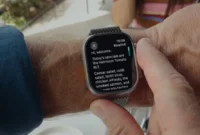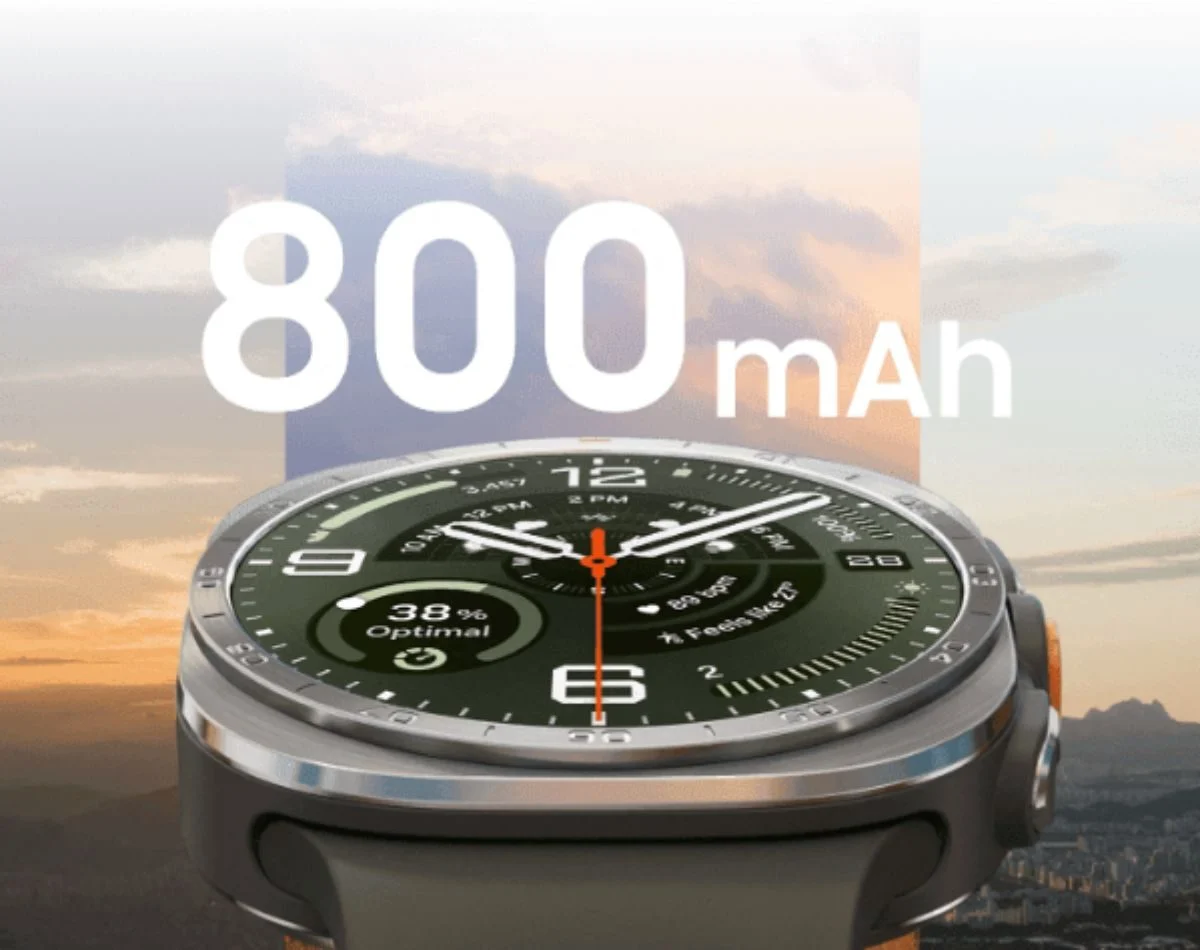
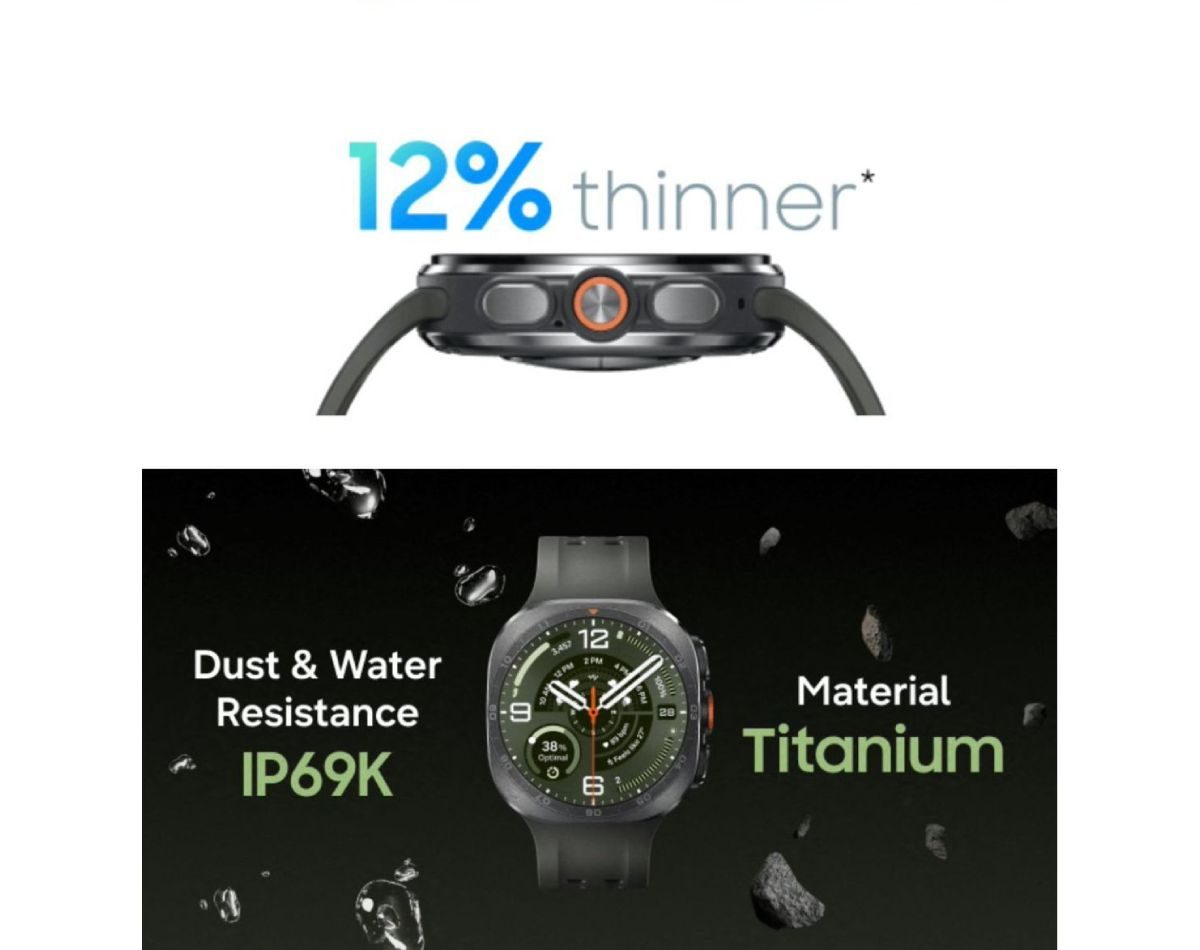
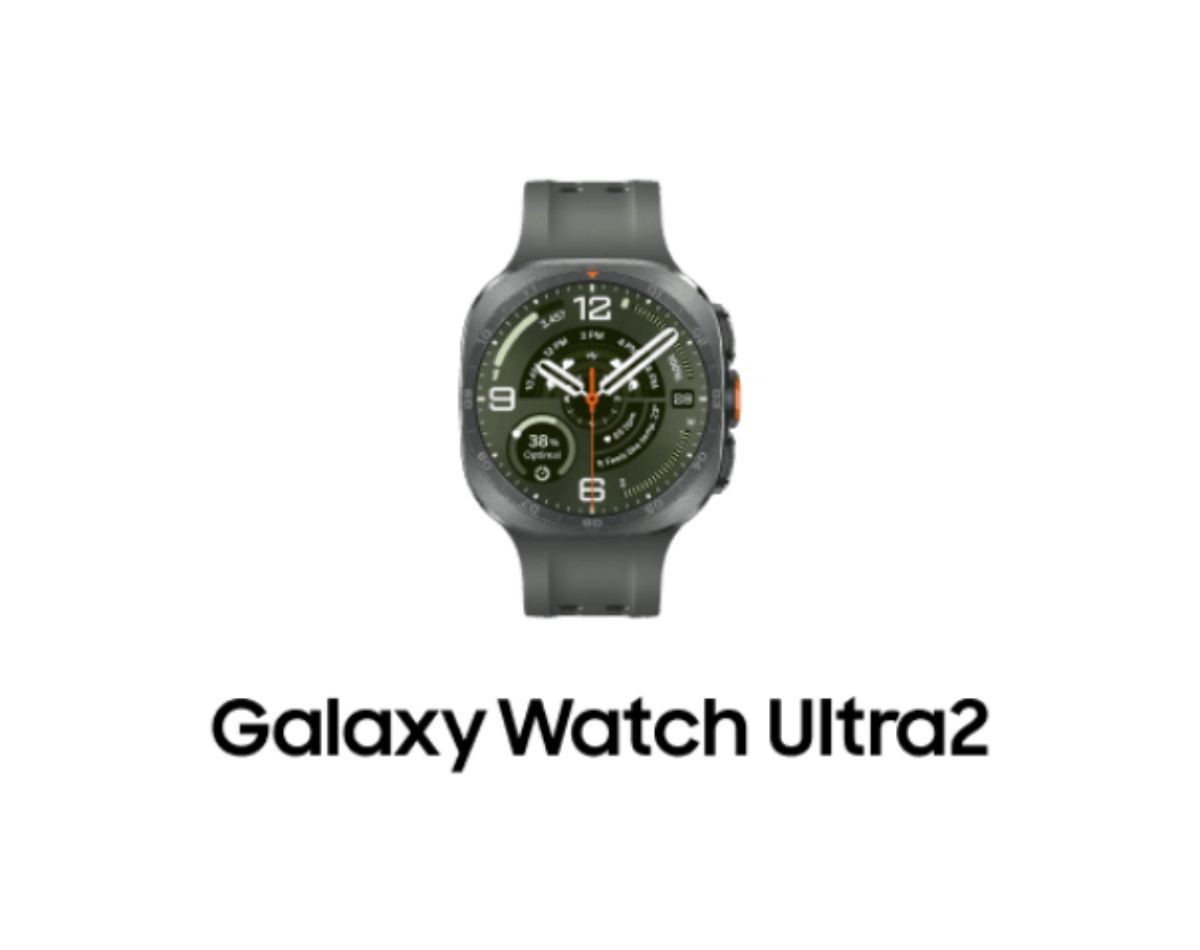
The leaked images reveal a device that maintains the rugged, "squircle" aesthetic of its predecessor while introducing critical structural improvements. Most notable among these is the confirmation of a titanium build, a material choice that balances lightweight comfort with the structural integrity required for professional-grade outdoor sports. Furthermore, the marketing materials highlight an upgraded ingress protection rating of IP69K. This rating represents a significant step up from the standard IP68 rating found on most consumer electronics, as it indicates the device can withstand not only total immersion in water but also high-pressure, high-temperature water jets. This technical upgrade suggests that the Galaxy Watch Ultra 2 is being positioned as a direct competitor to high-end diving watches and ruggedized sports wearables from manufacturers like Apple and Garmin.
Engineering a Slimmer Profile with Increased Power
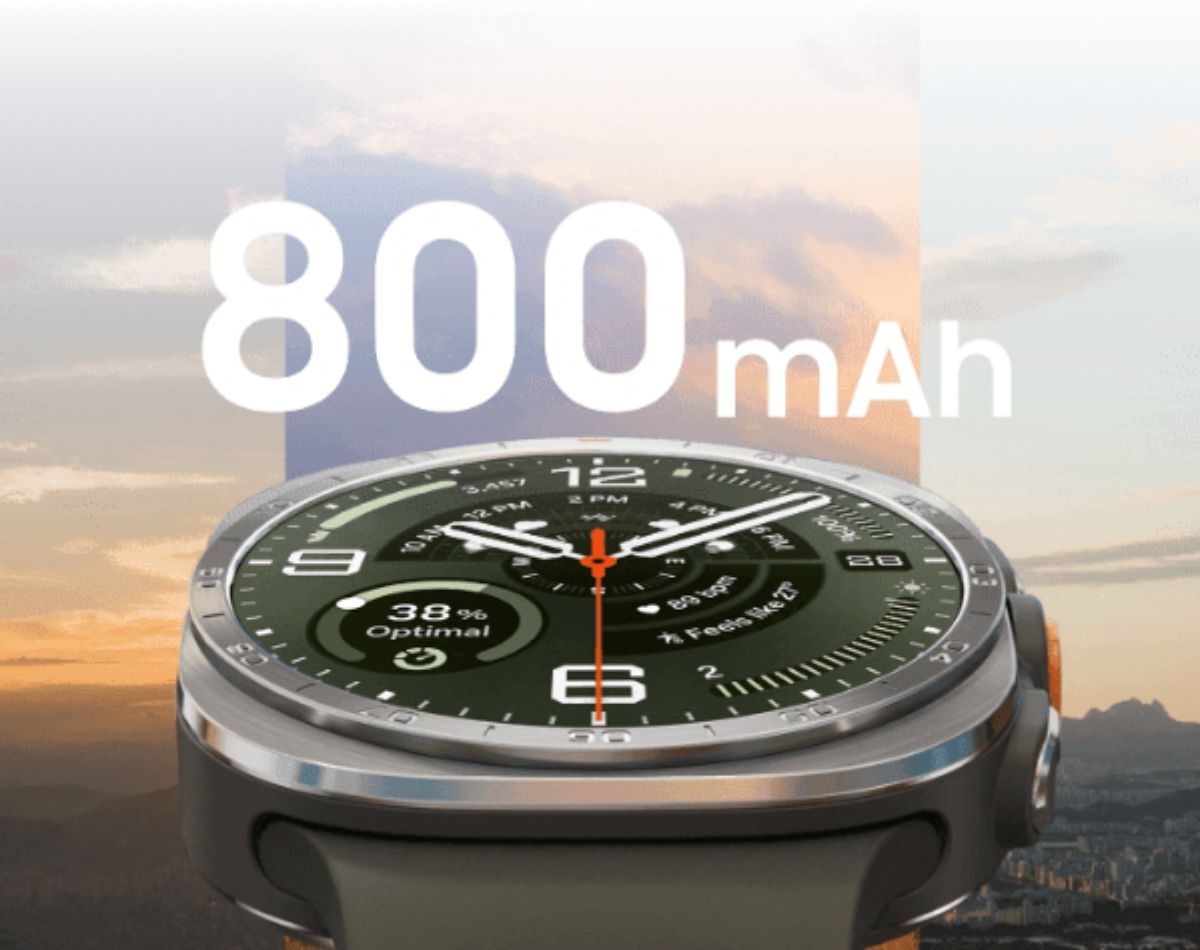
One of the most striking revelations from the leaked marketing campaign is the paradoxical improvement in battery capacity alongside a reduction in chassis thickness. According to the promotional materials, the Galaxy Watch Ultra 2 will feature a massive 800mAh battery. When compared to the 590mAh battery found in the original Galaxy Watch Ultra, this represents an approximate 35% increase in total capacity. Typically, such a substantial increase in power storage requires a corresponding increase in physical volume; however, Samsung’s leaked data indicates that the new model is actually 12% slimmer than the current iteration.
This engineering feat suggests a significant advancement in Samsung’s internal component stacking and battery density technologies. A slimmer profile is a critical ergonomic improvement for a device intended for 24/7 wear, including sleep tracking and high-intensity athletics, where bulk can be a primary deterrent for users. The increased battery capacity, paired with a more efficient internal architecture, is expected to push the device’s endurance well beyond the multi-day threshold, addressing a perennial pain point for Wear OS users who have long sought parity with the week-long battery lives of dedicated fitness trackers.
The Strategic Shift to Snapdragon Wear Elite
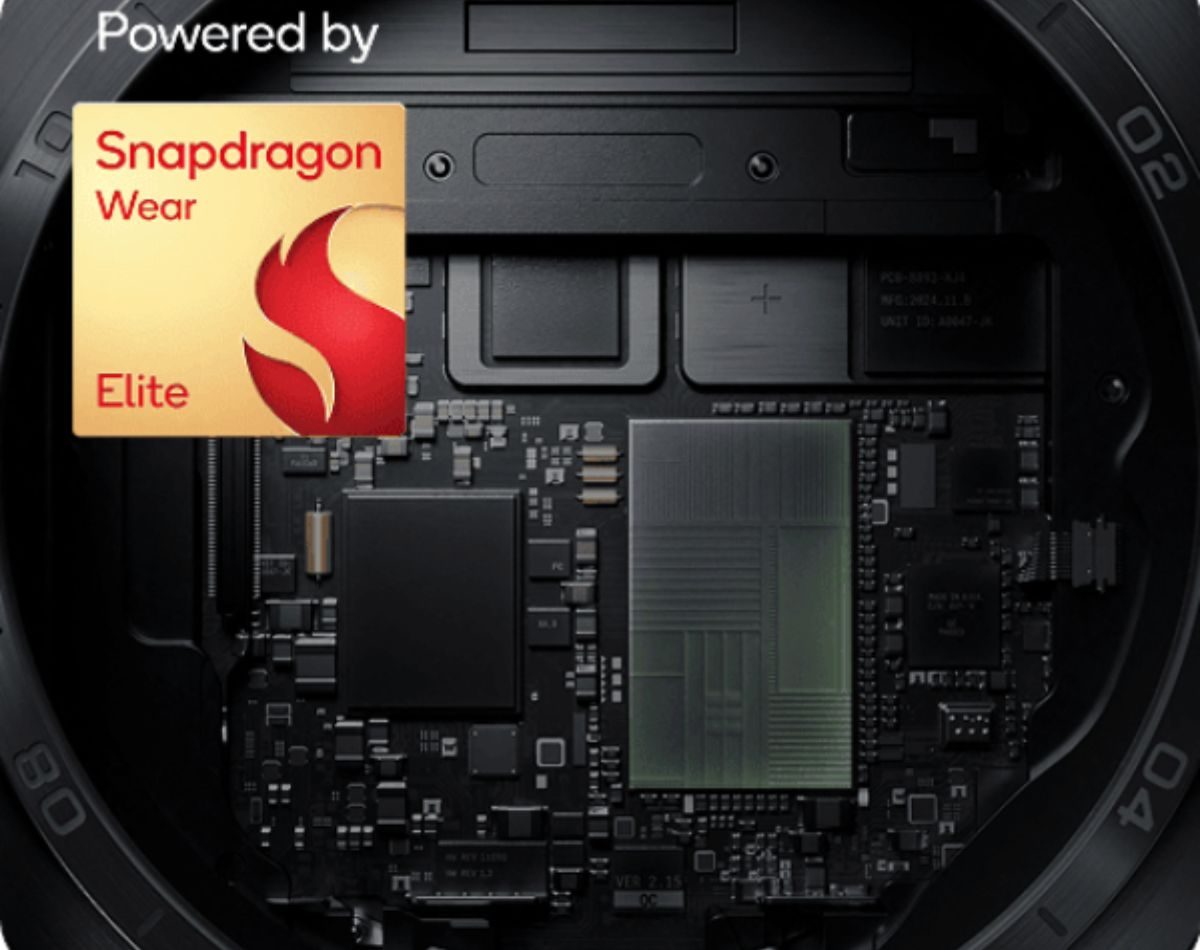
In a move that marks a significant departure from its recent hardware strategy, the leaked images confirm that Samsung is moving away from its in-house Exynos chipsets for the Ultra 2. A "Powered by Snapdragon Wear Elite" badge is prominently displayed in the promotional graphics, confirming that Qualcomm’s latest specialized silicon will drive the device. This shift is particularly noteworthy as Samsung has historically utilized its own Exynos W-series chips to maintain vertical integration within its wearable ecosystem.
The transition to the Snapdragon Wear Elite platform is likely driven by the need for superior artificial intelligence processing. The chip features a dedicated Neural Processing Unit (NPU), which the marketing materials link to the next generation of "Galaxy AI" features. Industry analysts anticipate that this on-device AI capability will be used to provide more nuanced health insights, predictive fitness coaching, and more responsive voice interactions. By leveraging Qualcomm’s architecture, Samsung may also be seeking to improve thermal management and power efficiency, as the Snapdragon Wear Elite is built on a cutting-edge process node designed specifically for the constraints of a smartwatch form factor.
Unprecedented Visual Clarity and Brightness
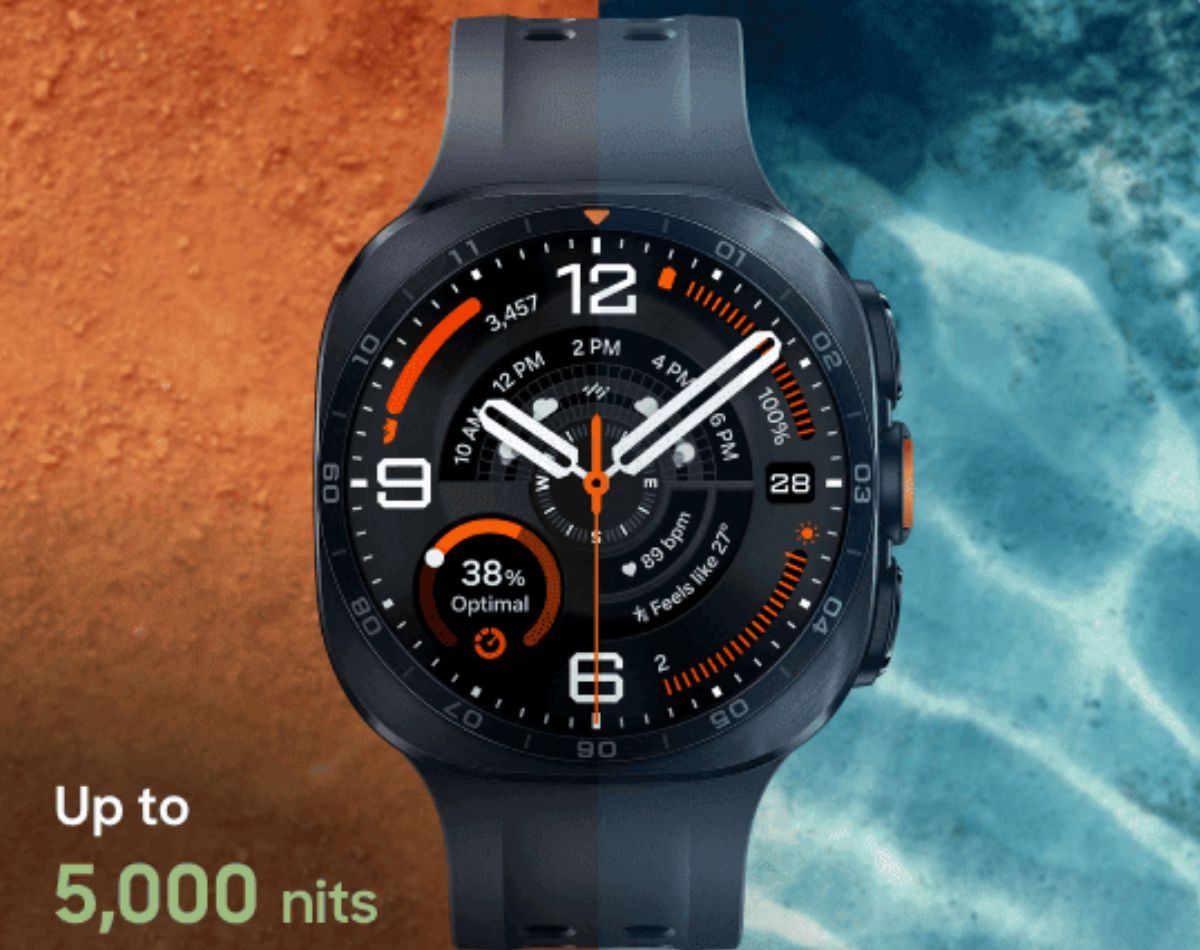
The display technology featured in the Galaxy Watch Ultra 2 appears set to break industry records. The leaked marketing assets explicitly mention a peak brightness of 5,000 nits. To put this figure in perspective, the current market leaders in the premium smartwatch space, such as the Apple Watch Ultra 2, typically top out at around 3,000 nits. A 5,000-nit display would ensure perfect legibility in the harshest direct sunlight, a crucial requirement for hikers, sailors, and mountaineers who rely on glanceable data in high-glare environments.
This level of brightness is often associated with MicroLED technology, although it remains to be seen if Samsung has managed to integrate MicroLED into a mass-market wearable or if they are pushing the limits of specialized OLED panels. Regardless of the underlying panel technology, the high brightness level will necessitate sophisticated ambient light sensors and power management software to ensure that the screen does not unnecessarily drain the newly enlarged 800mAh battery during indoor use.
Design Aesthetics and Colorways
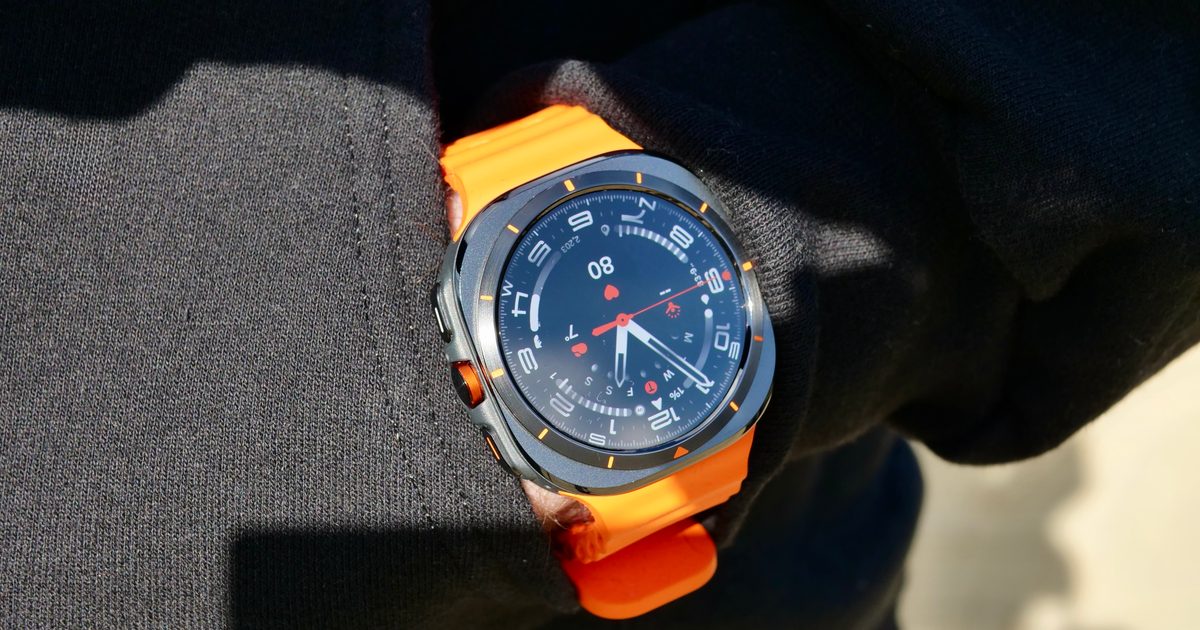
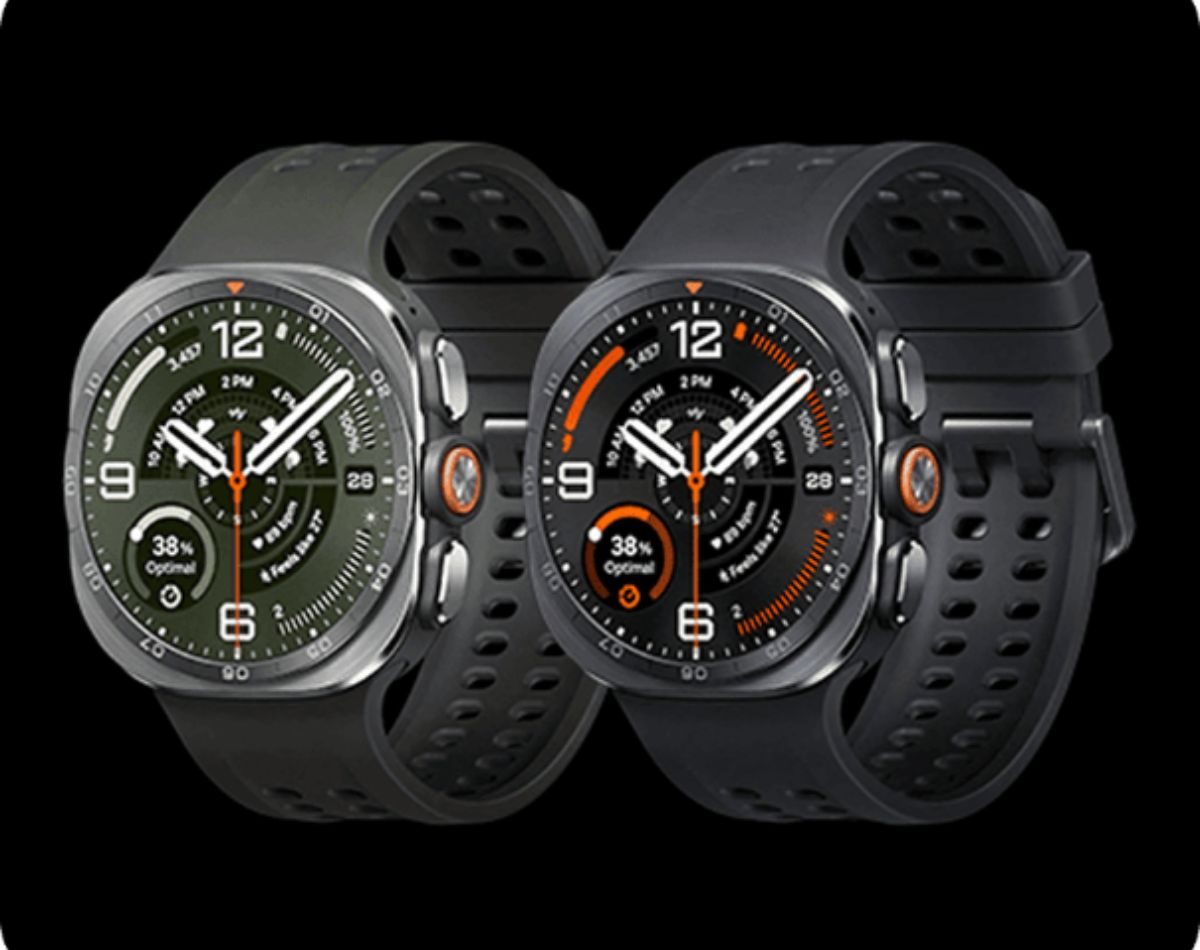
Visually, the Galaxy Watch Ultra 2 maintains a professional and utilitarian look. The leaks showcase two primary colorways that emphasize the premium materials used in construction. The first is a natural titanium finish paired with an olive-green ruggedized band, targeting the "outdoor adventurer" demographic. The second is an all-black titanium version with a matching black band, offering a more stealthy and urban aesthetic.
Both versions feature a distinctive orange accent ring around the crown, a design language that has become synonymous with "Ultra" grade wearables across the industry. This functional element is not merely for show; the textured crown is designed for ease of use when wearing gloves or when the user’s hands are wet, reinforcing the device’s status as a tool for extreme environments. The images also suggest a refined band-locking mechanism, likely designed to ensure the watch remains secure during high-impact activities like rock climbing or rapid-water sports.
Chronology and Context of the Galaxy Watch Evolution
The journey toward the Galaxy Watch Ultra 2 reflects Samsung’s broader strategy of segmenting its wearable line to capture different tiers of the market.
- 2021-2022: Samsung transitioned to Wear OS with the Galaxy Watch 4, focusing on health sensors and the Google ecosystem.
- 2023: The company introduced the "Classic" line with a rotating bezel, catering to traditional watch enthusiasts.
- 2024: The first Galaxy Watch Ultra was launched, signaling Samsung’s intent to compete in the high-end, ruggedized category previously dominated by Garmin and Apple.
- Late 2024 – Early 2025: Rumors began to circulate regarding a "pro-level" upgrade to the Ultra line, focusing on battery and diving certifications.
- July 2025 (Projected): The official unveiling of the Ultra 2 at Galaxy Unpacked, alongside the Galaxy Watch 9 and new foldable smartphones.
This timeline shows a rapid acceleration in Samsung’s development cycle. By releasing the Ultra 2 so soon after the original, Samsung is signaling that it views the premium rugged sector as its most important growth area in the wearable market.
Market Implications and Competitive Analysis
The release of the Galaxy Watch Ultra 2 is poised to disrupt the current hierarchy of premium smartwatches. By combining a 5,000-nit display with an 800mAh battery and a Snapdragon Wear Elite chip, Samsung is effectively checking every box that power users have demanded.
In the competitive landscape, the Apple Watch Ultra 3 (expected around the same timeframe) will be the primary rival. While Apple has a strong hold on the ecosystem-loyal user base, Samsung’s move to a more open hardware standard with Qualcomm and its focus on extreme brightness could peel away users who prioritize raw hardware specifications. Furthermore, for Garmin users, the Galaxy Watch Ultra 2 represents a more "connected" alternative that offers a full suite of smartwatch apps and LTE capabilities without sacrificing the ruggedness they require.
However, these hardware advancements come with a projected cost. Industry insiders suggest that the inclusion of titanium, high-density batteries, and the Snapdragon Wear Elite chip will lead to a price hike across the Galaxy Watch lineup. The Ultra 2 is expected to sit at the top of this pricing structure, potentially exceeding the $799 entry point of its predecessor.
Anticipation for Galaxy Unpacked
While Samsung has yet to officially comment on the leaked marketing materials, the level of detail in the images provided by Evan Blass suggests that the product is in its final stages of readiness. The official debut is widely expected to take place at the Galaxy Unpacked event scheduled for July 22. This event will likely serve as the platform where Samsung details the software side of the equation—specifically how the "Galaxy AI" will utilize the new hardware to provide a more holistic health and fitness experience.

The Galaxy Watch Ultra 2 appears to be more than just an incremental update; it is an ambitious attempt to redefine the ceiling of what a consumer smartwatch can achieve. With its focus on extreme durability, record-breaking display brightness, and a significant leap in processing efficiency, it stands as a testament to Samsung’s engineering capabilities and its determination to lead the premium wearable market. As the July 22 date approaches, the industry’s attention remains fixed on whether the real-world performance of the Ultra 2 can match the high bar set by these leaked marketing images.