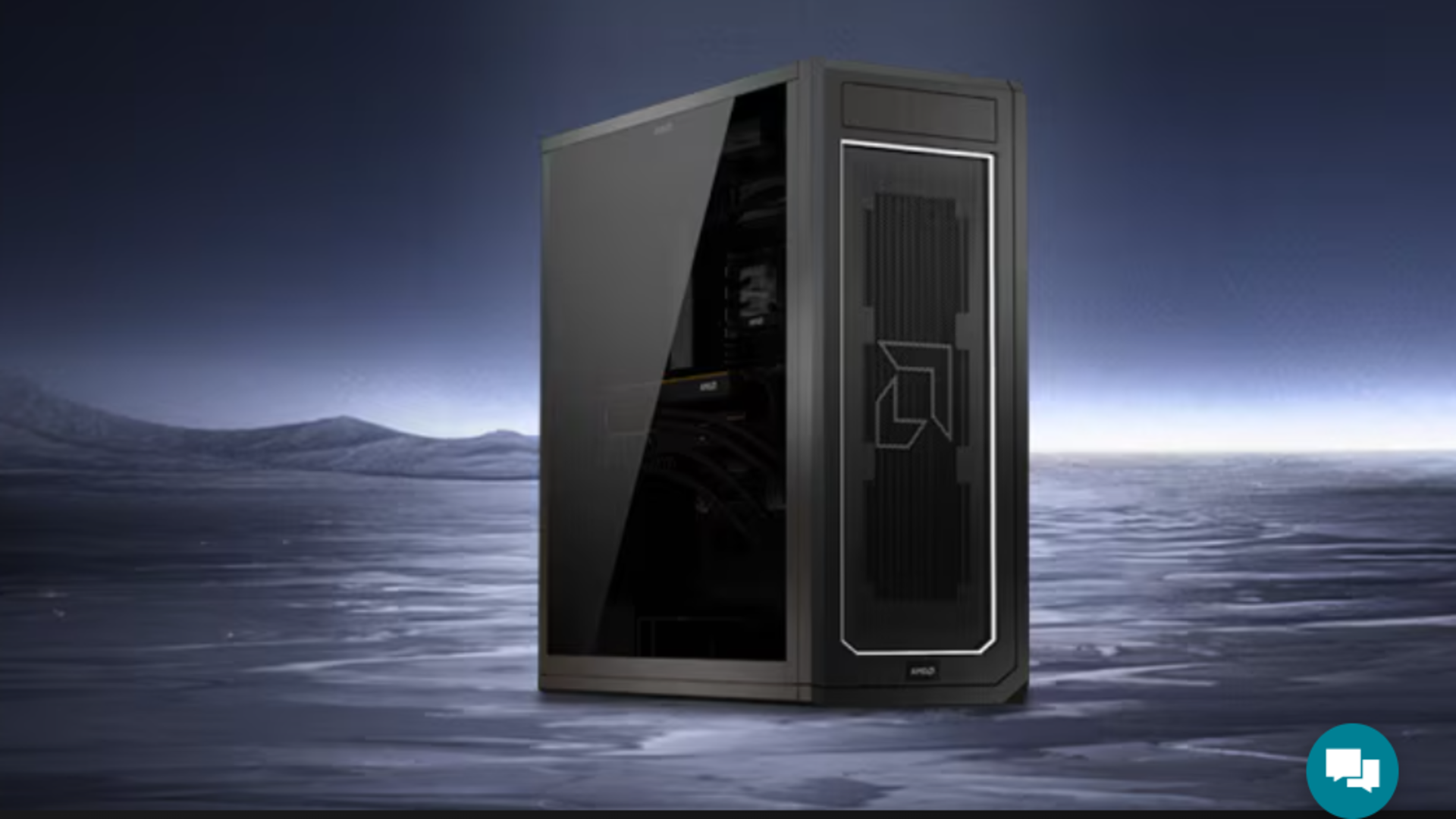
AMD has introduced what it calls the most powerful workstation in the world, the Threadripper Halo Station, fundamentally blurring the line between enterprise data center infrastructure and local desktop computing. Unveiled as a prototype, the system is engineered specifically to tackle the punishing computational demands of modern artificial intelligence workloads, frontier-class model training, and complex multi-agent simulations directly from a deskside enclosure. By packing server-grade silicon, unprecedented memory pools, and advanced AI accelerators into a single physical workstation, AMD aims to liberate researchers, engineers, and enterprises from the latency, security vulnerabilities, and exorbitant costs traditionally associated with remote cloud infrastructure.
Bridging the Gap Between Deskside Workstations and Enterprise Data Centers
For years, developers and enterprises working with large-scale artificial intelligence faced a rigid dichotomy. Standard professional workstations—even those equipped with high-end multi-core processors and top-tier consumer or workstation graphics cards—frequently fall short when tasked with running, training, or fine-tuning massive localized models. Consequently, teams have been forced to rely on cloud-based clusters or bulky rack-mounted server hardware housed in remote data centers.
The Threadripper Halo Station aggressively disrupts this paradigm. Rather than merely upgrading a conventional desktop motherboard, AMD has integrated data center-class architecture into a form factor designed to sit quietly beneath or beside an office desk. This engineering feat allows organizations to bypass the logistical bottlenecks of cloud computing, offering a localized environment where sensitive intellectual property and proprietary datasets never have to leave the physical premises. For industries bound by strict data sovereignty and security regulations—such as defense, healthcare, and finance—this capability represents a transformative shift in workflow management.
Architectural Breakdown: Unprecedented Hardware Scale
At the core of the Halo Station lies AMD’s formidable Ryzen Threadripper PRO 9995WX processor. Built upon the advanced Zen 5 architecture, this flagship CPU boasts 96 physical cores and 192 processing threads, delivering staggering multi-threaded performance capable of managing heavy pre-processing pipelines and concurrent enterprise tasks without breaking a sweat.
However, the true marvel of the Halo Station lies in its memory architecture and accelerator integration. The system supports up to 2TB of high-speed RDIMM system memory. When paired with the accelerator side, which can accommodate up to 576GB of High Bandwidth Memory (HBM3e), the combined memory pool reaches an astonishing 2.6 terabytes.
To put this raw power into perspective, the accelerator configuration can leverage up to four AMD Instinct MI350P units. Each individual Instinct unit is equipped with 144GB of HBM3e memory alongside a staggering 4TB/s of bandwidth. Cumulatively, the machine delivers a combined memory bandwidth of up to 16.4TB/s. This immense bandwidth ensures that massive datasets and parameters can be fed to the compute units instantaneously, eliminating the performance throttling that typically occurs when memory pools are fragmented across slower buses.
To contextualize its positioning in the market, AMD has drawn direct comparisons to Nvidia’s prestigious DGX Station. While Nvidia’s GB300 platform offers an impressive 748GB of coherent memory distributed across its CPU and GPU resources, AMD’s Halo Station dwarfs this figure in raw capacity, signaling a strategic pivot toward memory-centric design. By prioritizing immense memory pools over core count alone, AMD ensures that developers can load frontier models entirely into local memory rather than constantly swapping weights back and forth from slower storage drives.
Target Audiences and Practical Applications
The intended beneficiaries of the Threadripper Halo Station span a broad spectrum of advanced technical fields. AI researchers, machine learning model developers, enterprise engineers, and digital content creators form the primary target demographic.
In a practical deployment, the system is built to facilitate:
- Full-Scale Local Training and Fine-Tuning: Developers can fine-tune multi-billion parameter foundation models locally, observing the results in real-time without scheduling cloud cluster time or incurring per-hour server fees.
- Multi-Agent Ecosystems: The workstation possesses the headroom required to support hundreds of autonomous AI agents operating simultaneously within a synchronized local environment.
- Reduced Latency and Iteration Cycles: By eliminating the need to transfer massive datasets back and forth over external networks, engineering teams can iterate on models exponentially faster.
- Enhanced Data Privacy: Maintaining proprietary source code, internal documents, and sensitive training data strictly on-premises mitigates the risk of exposure through third-party cloud breaches.
Chronology and Development Roadmap
The journey toward the unveiling of the Threadripper Halo Station represents a multi-year engineering initiative by AMD to consolidate server capabilities into smaller form factors.
- Pre-2026 Conception: As generative AI models expanded rapidly in size, AMD identified a growing market gap for enterprise-grade local hardware that could handle inference and fine-tuning without mandatory cloud integration.
- Late 2026 (IFA Debut): AMD officially unveiled a working prototype of the Threadripper Halo Station, catching the attention of the global tech industry and establishing new performance benchmarks for deskside machinery.
- 2027 Projected Commercial Launch: AMD has scheduled the official commercial rollout of the workstation for 2027, during which final pricing, distribution channels, and localized configuration options will be confirmed.
Industry Reception and Pricing Speculation
While AMD has maintained a measured silence regarding the official retail price of the fully configured Halo Station, industry analysts and hardware insiders have pieced together realistic estimates based on component costs. Fully equipped systems featuring the Ryzen Threadripper PRO 9995WX and a quad-array of AMD Instinct MI350P accelerators are projected to command a price tag in the neighborhood of $150,000.
While this figure places the Halo Station far beyond the budget of standard consumer desktop users, industry experts point out that it occupies a completely different economic category. Traditional enterprise rack-mounted servers configured for equivalent workloads routinely cost significantly more and require dedicated server rooms equipped with specialized cooling and power infrastructure. By comparison, a $150,000 deskside unit that plugs into standard high-output office environments represents a cost-effective, decentralized alternative for corporate research and development departments.
Strategic Implications for the AI Hardware Market
The introduction of the Threadripper Halo Station underscores a broader industry trend: the decentralization of enterprise AI infrastructure. As artificial intelligence becomes deeply embedded in corporate workflows, organizations are increasingly seeking autonomy from centralized cloud providers.
By pushing data center-class density into a desktop form factor, AMD is challenging dominant market players and offering a compelling value proposition to enterprises striving for self-reliance. If commercial adoption aligns with early industry enthusiasm when the system launches in 2027, the Halo Station could redefine the baseline expectations for professional computing workstations, proving that the future of heavy AI development does not necessarily require a remote server farm—it can sit quietly right next to your desk.