The unveiling of the Apple Watch Series 12 and the rugged Apple Watch Ultra 4 marks a significant milestone in the evolution of wearable health technology. While the industry has long anticipated iterative updates to processor speed and display brightness, Apple has opted for a fundamental architectural shift in its sensor array. Central to this update is the debut of the proprietary Health Sensing System, a hardware-software integration that dramatically improves the granularity of cardiovascular data collection. Most notably, this advancement manifests in a redesigned heart rate complication that offers users unprecedented, real-time visibility into their physiological state directly from their watch face.
The Evolution of Heart Rate Monitoring: A Chronology
Since the inception of the Apple Watch, the device has served as a primary tool for passive health monitoring. In the early iterations, heart rate data was captured sporadically, often requiring the user to remain still for a successful reading. Over the last decade, Apple has steadily reduced the latency of these sensors.
By the time the Series 11 and Ultra 3 were released, heart rate monitoring had become a staple of daily life, relying on watchOS 27 to manage data flow. However, users were constrained by the limitations of the interface. The standard heart rate complication functioned primarily as an application launcher or, in its wider “modular” format, provided a historical graph updated at significant intervals. This delay meant that while the data was accurate, it was rarely “live.”

The introduction of the Series 12 and Ultra 4 shifts this paradigm. With the new Health Sensing System, Apple has increased the polling frequency of the heart rate sensor to once every five seconds. This represents a 60-fold increase in data frequency compared to previous generations. This technical leap allows the operating system to push live, near-instantaneous heart rate updates to the smallest complication slots on the watch face, a feature previously reserved for larger, more resource-intensive UI elements.
Technical Breakthrough: The Health Sensing System
The core innovation enabling this capability lies in the redesigned sensor cluster located on the underside of the watch chassis. Previous Apple Watch models utilized a series of photoplethysmography (PPG) sensors that emitted green LED light to measure blood flow volume. While effective, the processing overhead required to filter out motion artifacts and environmental noise necessitated longer sampling windows.
The Series 12 hardware integrates an advanced signal-processing chip that filters noise at the hardware level. By performing the heavy lifting of data cleaning before the information reaches the S-series processor, the system consumes less battery while sampling significantly more often. This efficiency is why the five-second interval is now possible without compromising the battery life that Apple Watch users expect.
From a data-integrity standpoint, the increased sampling rate provides a smoother, more continuous representation of the heart’s activity. This is particularly relevant for athletes and users monitoring cardiovascular health, as it allows for the capture of rapid changes in heart rate during high-intensity interval training (HIIT) that were previously smoothed over or missed by the legacy hardware.
Redesigning the User Interface
The transition of the heart rate complication from a static icon to a dynamic data field is a subtle but profound change in the Apple Watch user experience. In previous versions, users seeking real-time heart rate data were forced to open the dedicated Heart Rate application, creating a friction point that discouraged casual monitoring.
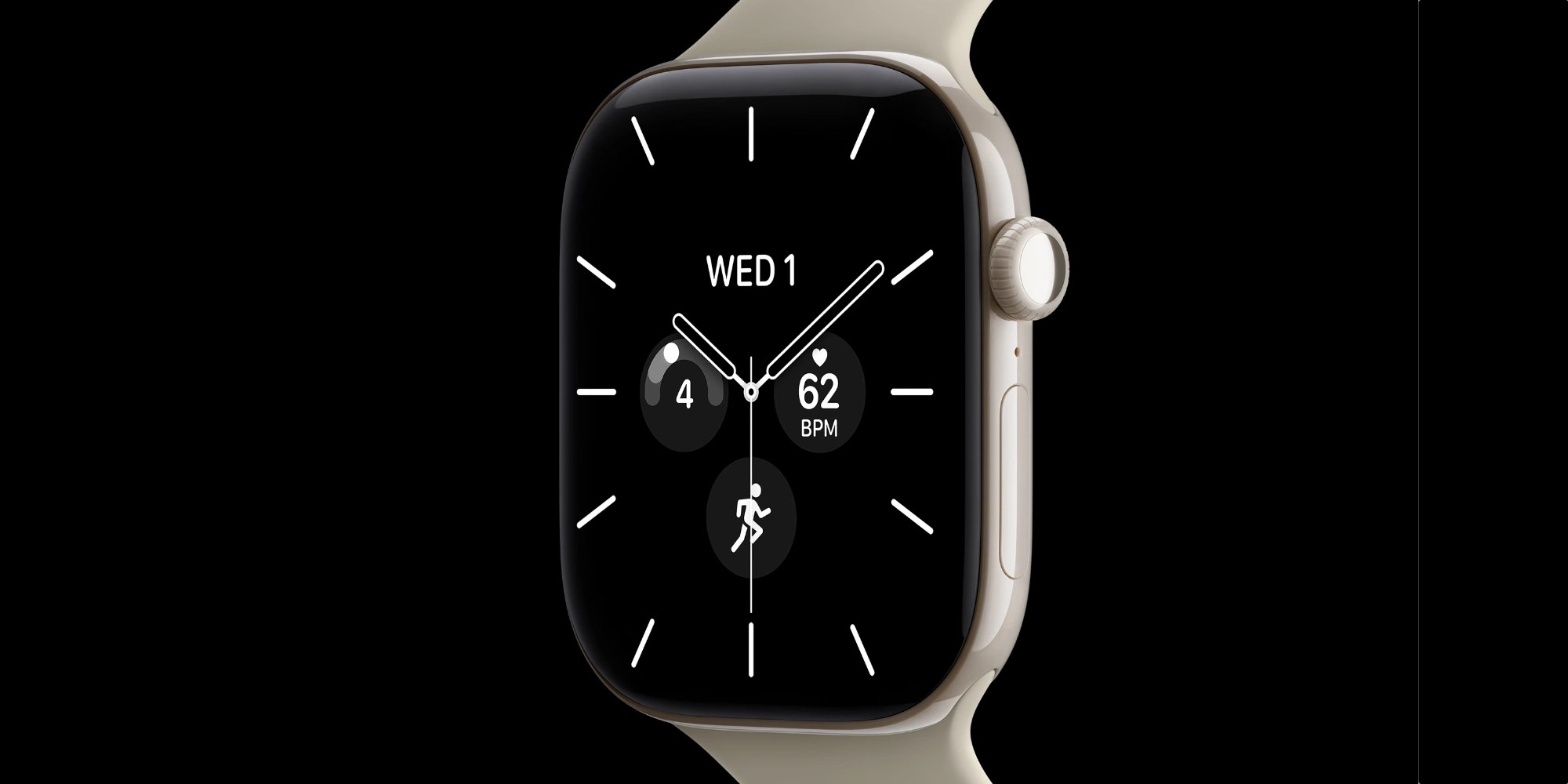
With the Series 12, the complication now functions as a "live" widget. Apple’s marketing materials demonstrate the small, circular complication—previously relegated to merely launching the app—now displaying a live numerical reading. This change is facilitated by the increased polling rate, ensuring that the number displayed is always fresh.
Industry analysts suggest that this shift is part of a broader design philosophy at Apple: "glanceability." By offloading critical health metrics to the home screen in a format that requires no interaction, Apple is effectively turning the watch face into a personalized health dashboard. This reduces the cognitive load on the user while maintaining the high-resolution data standard that the company has established over the past decade.
Market Context and Strategic Implications
The release of the Series 12 and Ultra 4 comes at a time of intensifying competition in the wearable sector. Competitors, including Garmin, Google’s Pixel Watch, and various Oura-integrated devices, have all focused on the "continuous monitoring" aspect of health tech. Apple’s move to increase the sampling frequency to five seconds is a direct response to the demand for more granular data.

From a clinical perspective, this update has significant implications for long-term health tracking. A higher density of data points provides a more accurate baseline for resting heart rate (RHR) and heart rate variability (HRV), both of which are critical indicators of cardiovascular health, recovery status, and stress levels. By providing this information at a glance, Apple is encouraging more consistent, informed health behaviors among its user base.
Furthermore, this development signals a shift in how Apple handles watchOS updates. While the software provides the framework, the hardware capability of the Series 12 acts as a gatekeeper. Owners of older devices, even those running the latest software, will likely remain restricted to the historical graph or app-launcher functionality, creating a clear value proposition for users who prioritize the most accurate and up-to-date health metrics.
Availability and Official Launch Details
The Apple Watch Series 12, which serves as the standard-bearer for this new technology, is currently available for pre-order with a starting price of $399. The premium Apple Watch Ultra 4, designed for extreme environments and extended battery life, is available starting at $799.
Both devices are scheduled to reach consumers on September 18. The rollout follows a rigorous testing phase, and Apple has indicated that the Health Sensing System will be supported by a suite of updated health features within the Fitness app, allowing for deeper historical analysis of the new, more frequent data points.

Future Outlook
As wearables move from being mere notification hubs to sophisticated health diagnostic tools, the line between consumer electronics and medical devices continues to blur. The move to a five-second polling interval is likely just the beginning. Future iterations may see even higher frequencies or the integration of additional biometrics, such as non-invasive blood glucose estimation or continuous blood pressure monitoring, both of which require the high-frequency, low-noise signal processing pioneered by this new sensor system.
For now, the upgrade to the heart rate complication serves as a testament to Apple’s commitment to incremental, meaningful improvement. It is a refinement that prioritizes user utility over aesthetic flourishes, proving that in the world of wearable technology, the most impactful innovations are often the ones that integrate seamlessly into the user’s daily flow, providing critical information precisely when and where it is needed. As the market prepares for the September 18 launch, the consensus among tech observers is that the Series 12 sets a new benchmark for what a health-focused wearable should offer in terms of both data depth and ease of access.