The smart home lighting sector is witnessing a significant shift in consumer accessibility as Signify, the parent company of Philips Hue, has initiated one of its most aggressive pricing strategies to date for the 2024 Cyber Monday shopping event. Long regarded as the premium, high-entry-cost leader in the smart lighting industry, Philips Hue has traditionally maintained price points that reflect its market dominance and technical reliability. However, the 2024 holiday season has brought a wave of substantial discounts, some reaching as high as 50 percent, across major retail platforms including Amazon, Best Buy, and Walmart. This strategic move appears aimed at capturing a larger share of the mid-market consumer base while reinforcing the brand’s ecosystem in an increasingly competitive smart home landscape.
At the forefront of these deals is the classic three-pack of Philips Hue A19 White and Color Ambiance smart bulbs. Usually retailing at a price point that positions them as a luxury upgrade, the bundle is currently priced at $75.98, representing a 44 percent reduction from its standard MSRP. This specific deal is being highlighted by industry analysts as a pivotal entry point for new users. Additionally, the Philips Hue Starter Kit, which includes two color A19 bulbs and the essential Hue Bridge, is being offered at $79.98, a 38 percent discount. Other notable reductions include the Hue Go portable table lamp, now priced at $111.98, and the 10-foot Hue Solo light strip, which has seen its price drop to $48.99.
The Evolution of the Smart Lighting Market and Philips Hue’s Position
To understand the significance of these Cyber Monday discounts, one must look at the trajectory of Signify and the Philips Hue brand. Since its inception in 2012, Philips Hue has been the gold standard for smart lighting, utilizing the Zigbee protocol to ensure high reliability and low latency compared to Wi-Fi-based competitors. While the market has since been flooded with lower-cost alternatives from brands like Govee, Nanoleaf, and LIFX, Philips Hue has maintained its premium status through superior color accuracy, a robust app ecosystem, and seamless integration with major smart home platforms including Apple Home (formerly HomeKit), Amazon Alexa, and Google Home.
The 2024 discounts signal a response to two major market pressures: the maturation of the smart home industry and the official rollout of the Matter interoperability standard. Matter, a collaborative effort by Apple, Google, Amazon, and the Connectivity Standards Alliance (CSA), aims to make smart home devices work together regardless of the manufacturer. By offering deep discounts on its hardware, Signify is effectively lowering the barrier to entry for its proprietary "Bridge" ecosystem, ensuring that consumers remain within the Hue environment even as universal standards become more prevalent.
Chronology of the 2024 Holiday Sales Cycle
The 2024 holiday shopping window has followed a distinct timeline, reflecting a broader trend in retail where "Black Friday" is no longer a single day but a multi-week promotional period.
- Early November Phase: Signify began with modest discounts of 10 to 15 percent on select outdoor fixtures and older generation bulbs, primarily aimed at clearing inventory ahead of new product refreshes.
- Black Friday Week (November 22–29): Major retailers synchronized their pricing, introducing the first wave of "Buy More, Save More" bundles. This period saw the introduction of the 30 percent discount on the Hue Solo light strip.
- Cyber Monday Peak (December 2): This represents the zenith of the discount cycle. The 44 percent price cut on the A19 three-pack and the 38 percent cut on starter kits were specifically reserved for this digital-first shopping day.
- Post-Cyber Monday Outlook: Historical data suggests that while some deals may linger through "Cyber Week," the deepest discounts—particularly those exceeding 40 percent—are expected to expire as inventory levels stabilize.
Technical Specifications and Consumer Value Analysis
The products currently on sale represent the core of the Philips Hue experience. The A19 White and Color Ambiance bulbs, for instance, are capable of producing 16 million colors and 50,000 shades of white light, ranging from warm to cool. Their integration with the Hue Bridge allows for advanced features such as "Entertainment Areas," where lights sync with movies, music, or gaming via the Hue Sync desktop app or the Hue Play HDMI Sync Box.
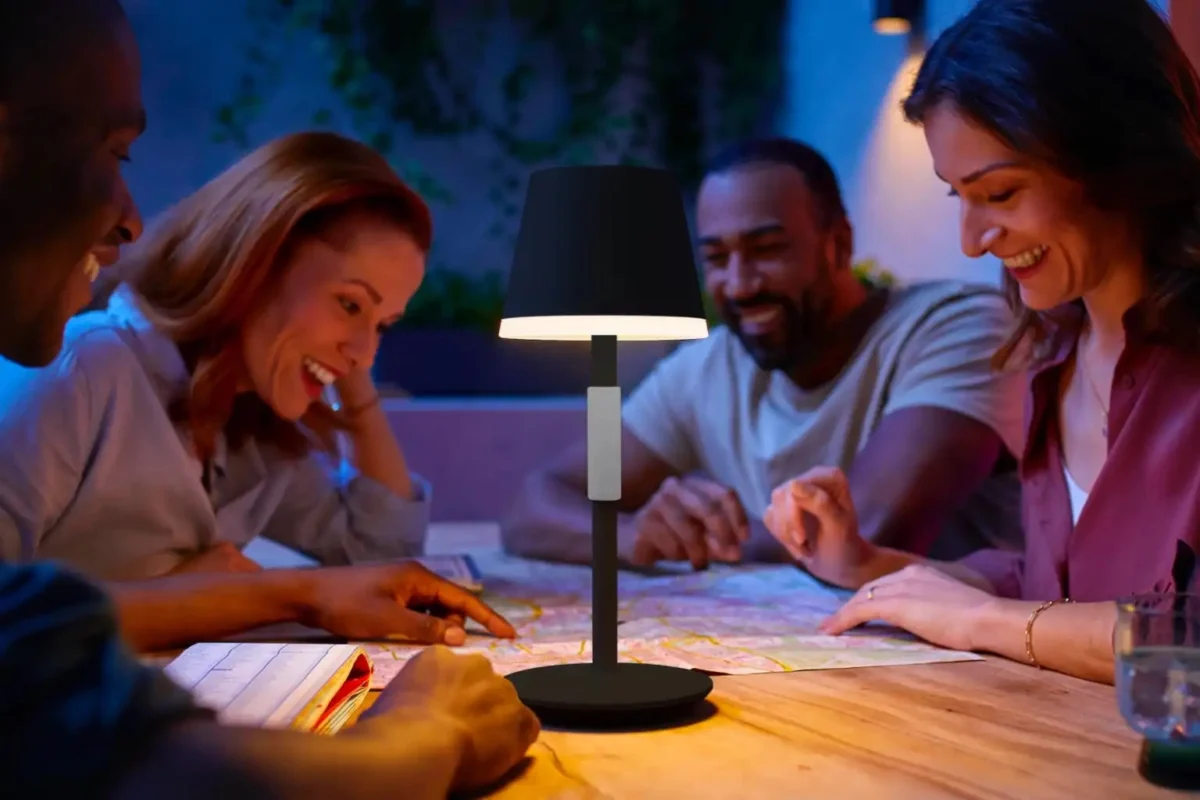
The Hue Go portable table lamp, discounted by 30 percent, represents the brand’s push into versatile, lifestyle-oriented hardware. Unlike standard bulbs, the Hue Go features an internal rechargeable battery, allowing it to be used as a cordless centerpiece or an outdoor accent light. Its inclusion in the Cyber Monday sale suggests that Signify is looking to move beyond traditional ceiling and lamp fixtures into the "accent lighting" category, which has seen explosive growth on social media platforms like TikTok and Instagram.
Furthermore, the 10-foot Hue Solo light strip at $48.99 is a strategic pricing move. Light strips are often the "gateway drug" of smart lighting, frequently used for under-cabinet illumination or behind-television bias lighting. By pricing this under $50, Philips Hue is directly competing with budget-friendly brands that have traditionally dominated this price bracket.

Market Implications and Competitive Landscape
The aggressive pricing of Philips Hue during this Cyber Monday cycle has significant implications for the broader smart home industry. For years, the primary criticism of the Hue ecosystem was the "bridge tax"—the requirement of a $60 hub to unlock the system’s full potential. By discounting starter kits that include the Bridge to nearly the price of the bulbs alone, Signify is effectively neutralizing this criticism.
Industry analysts suggest that these discounts are also a preemptive strike against the rising tide of "no-hub" Wi-Fi and Thread-enabled bulbs. While Wi-Fi bulbs are cheaper to manufacture and easier to set up for novices, they can often congest a home network. Philips Hue’s Zigbee-based system remains technically superior for large-scale installations (up to 50 bulbs per bridge), and by lowering the entry cost, Signify is reminding consumers of the stability that comes with a dedicated hub.
From a competitive standpoint, rivals such as Govee have gained massive traction by offering feature-rich products at a fraction of Hue’s traditional cost. However, Hue’s Cyber Monday pricing brings the "cost-per-bulb" down to approximately $25 in certain bundles, which is within striking distance of high-end budget competitors. This narrows the "premium gap" and may sway undecided consumers toward the more established brand.
Economic Context and Consumer Sentiment
The 2024 holiday season is occurring against a backdrop of cautious consumer spending. Despite a cooling of inflation in some sectors, consumer electronics have remained a luxury for many households. The decision to offer 40 to 50 percent discounts reflects a "volume-over-margin" strategy. Retailers like Amazon and Best Buy are likely using these Hue deals as "loss leaders"—products sold at little to no profit to entice customers into their digital storefronts, where they might purchase additional, higher-margin accessories.
Furthermore, the shift in Cyber Monday’s identity is notable. Originally conceived as the online alternative to Black Friday’s in-person chaos, it has evolved into a period where technical enthusiasts wait for specific "price floor" events. The data from 2024 shows that smart home technology is among the most searched categories on Cyber Monday, surpassing even traditional categories like clothing or small kitchen appliances.
Looking Ahead: The Future of Philips Hue and Signify
As the Cyber Monday sales conclude, the focus will shift to how Signify integrates these new users into its ecosystem. The company has been vocal about its commitment to the Matter standard, having updated the Hue Bridge to support the protocol earlier this year. This means that the thousands of new users who purchased starter kits this week will have a future-proofed system that can interact with devices from other manufacturers seamlessly.
The broader impact of this sale will likely be seen in the first quarter of 2025, as Signify prepares to announce its next generation of hardware. Aggressive holiday clearing of current stock often precedes the launch of new iterations—potentially featuring higher lumen output, improved energy efficiency, or native Thread support within the bulbs themselves.
In conclusion, the 2024 Philips Hue Cyber Monday sale is more than just a seasonal discount; it is a strategic repositioning of a premium brand in a democratizing market. By making its ecosystem accessible to a wider demographic, Signify is securing its legacy as the foundational brand of the modern smart home, ensuring that even as technology evolves, the "Hue" remains the central light in millions of households worldwide. Consumers who have previously balked at the high cost of entry now have a unique, albeit brief, window to invest in a system that remains the industry benchmark for quality and reliability.