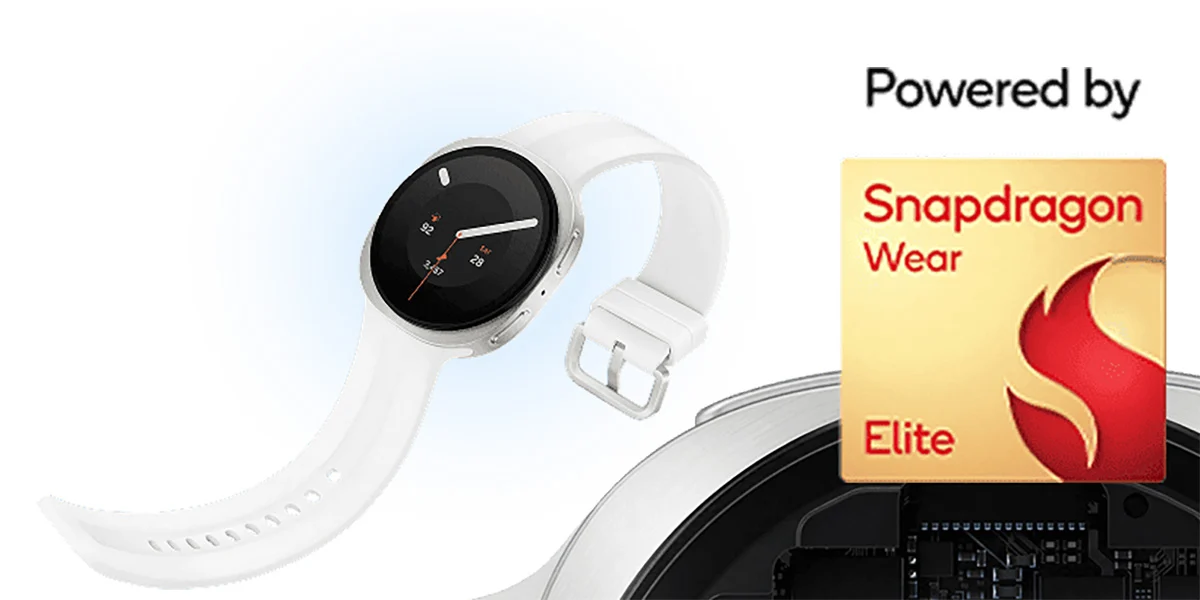
Samsung is set to transition its highly anticipated Galaxy Watch 9 series to a Qualcomm Snapdragon Wear Elite chipset, a significant departure from its long-standing reliance on proprietary Exynos processors for its smartwatches. This strategic shift has been definitively confirmed through newly surfaced images, providing concrete evidence of the integration of Qualcomm’s latest wearable silicon. The move marks a pivotal moment for Samsung’s wearable strategy and the broader Android smartwatch ecosystem, promising enhanced performance, efficiency, and advanced AI capabilities.
The confirmation stems from a series of leaked images, notably shared by the renowned tipster Evan Blass via his "Leakmail" newsletter. One particular image explicitly displays the text "Powered by Snapdragon Wear Elite" in relation to the standard Galaxy Watch 9 model, unequivocally verifying the chipset change. This revelation arrives just ahead of the device’s expected launch next week, where it will be unveiled alongside Samsung’s latest generation of foldable smartphones. The detailed leak leaves little room for doubt, ending months of speculation regarding Samsung’s choice of processor for its next flagship wearable.
The Dawn of Snapdragon Wear Elite
![Galaxy Watch 9 is ‘Powered by Snapdragon Wear Elite,’ leaked images confirm [Gallery]](https://i0.wp.com/9to5google.com/wp-content/uploads/sites/4/2026/07/galaxy-watch-9-snapdragon-2.jpg?resize=1200%2C628&quality=82&strip=all&ssl=1)
Qualcomm first unveiled its Snapdragon Wear Elite platform earlier this year, positioning it as a groundbreaking advancement in smartwatch technology. The chip is fabricated using a cutting-edge 3nm process, a significant leap forward that promises substantial improvements in both raw performance and power efficiency. During its initial announcement, Qualcomm highlighted the Elite’s robust capabilities, particularly its enhanced prowess for handling artificial intelligence (AI) tasks. This focus on AI aligns perfectly with the evolving demands of modern wearables, which increasingly rely on on-device machine learning for features such as advanced health tracking, personalized fitness coaching, contextual awareness, and more intuitive user interactions.
The 3nm manufacturing process is a crucial differentiator for the Snapdragon Wear Elite. Smaller process nodes allow for a higher density of transistors, leading to more powerful and efficient chips. This directly translates to faster application loading times, smoother UI navigation, and more responsive interactions on the smartwatch. Critically, it also contributes to improved battery life, a perpetual challenge for all wearable devices. The integration of dedicated AI accelerators within the Elite chip means that complex AI computations can be performed directly on the watch, reducing reliance on cloud processing and enhancing privacy, speed, and offline functionality. Qualcomm’s initial teasing of Samsung’s adoption of this chip has now been substantiated, setting the stage for a new era of performance in the Galaxy Watch lineup.
A Historic Shift: Moving Beyond Exynos
For years, Samsung’s Galaxy Watch series has exclusively featured its in-house Exynos chipsets. This strategy provided Samsung with a degree of vertical integration, allowing for optimized hardware-software synergy and greater control over its supply chain. During a period when Qualcomm’s wearable chips, particularly the Snapdragon Wear 2100 and 3100, were widely criticized for their underwhelming performance, sluggishness, and poor power efficiency, Samsung’s commitment to Exynos proved to be a significant advantage. The Exynos W920 and W930 chips, found in recent Galaxy Watch models, generally offered a more satisfactory user experience compared to their contemporary Qualcomm counterparts, earning Samsung praise for its consistent performance in the wearable sector.
![Galaxy Watch 9 is ‘Powered by Snapdragon Wear Elite,’ leaked images confirm [Gallery]](https://9to5google.com/wp-content/uploads/sites/4/2026/07/galaxy-watch-9-snapdragon-2.jpg?quality=82&strip=all&w=1200)
However, the landscape of wearable processors has evolved dramatically. Qualcomm has invested heavily in reinvigorating its Snapdragon Wear lineup, culminating in the high-performance Elite chip. This resurgence, coupled with the increasing complexity and demands of modern smartwatch features, appears to have prompted Samsung to re-evaluate its processor strategy. The question that lingered after Qualcomm’s announcement was whether Samsung would completely abandon Exynos for its wearables, or perhaps adopt a hybrid approach. The confirmed integration of the Snapdragon Wear Elite into the Galaxy Watch 9 suggests a comprehensive pivot, indicating that Samsung sees significant benefits in leveraging Qualcomm’s latest advancements.
Competitive Landscape and Market Dynamics
This shift occurs within a fiercely competitive wearable market. Apple, a dominant force, has always relied on its custom-designed S-series chips for the Apple Watch, ensuring tight integration and optimized performance within its closed ecosystem. On the Android side, Google has also entered the chip design arena with its Tensor chips, which power the Pixel Watch series. While the Pixel Watch’s Tensor chips are optimized for Google’s Wear OS, they have faced some scrutiny regarding their power efficiency compared to newer architectures.
Samsung’s decision to embrace Qualcomm’s Snapdragon Wear Elite can be interpreted as a strategic move to ensure its Galaxy Watch series remains at the forefront of performance and feature innovation within the broader Android wearable ecosystem. By adopting a leading-edge 3nm chip, Samsung aims to deliver a user experience that can compete directly with the best in the market, including Apple’s offerings, and potentially set a new benchmark for Android smartwatches. This decision could also simplify development for third-party app developers, as a more standardized, high-performance platform could encourage greater innovation and app availability on Wear OS devices.
![Galaxy Watch 9 is ‘Powered by Snapdragon Wear Elite,’ leaked images confirm [Gallery]](https://9to5google.com/wp-content/uploads/sites/4/2026/07/galaxy-watch-9-snapdragon-1.png)
Implications for User Experience and Future Features
The adoption of the Snapdragon Wear Elite chip is poised to bring a host of tangible benefits to the Galaxy Watch 9 user experience:
- Enhanced Performance: Users can expect a noticeably snappier and more fluid interface. Applications should launch faster, animations will be smoother, and multitasking capabilities are likely to improve significantly. This translates to a more premium and responsive feel during daily interactions.
- Improved Battery Life: The 3nm process node is inherently more power-efficient. While software optimization plays a crucial role, the underlying hardware foundation of the Elite chip should contribute to extended battery longevity, a key desire for all smartwatch users. This could mean longer periods between charges, even with increased usage of demanding features.
- Advanced AI Capabilities: The chip’s dedicated AI processing power will unlock new possibilities for the Galaxy Watch. This could include more accurate and nuanced health tracking (e.g., better sleep analysis, stress detection), more intelligent voice assistant interactions, predictive health insights, and on-device machine learning for personalized fitness recommendations without constant cloud connectivity.
- Future-Proofing: With a powerful and efficient chip, the Galaxy Watch 9 will be better equipped to handle future software updates and increasingly complex applications, extending its functional lifespan and value proposition for consumers.
- Robust Connectivity: While not explicitly detailed in the leak, new generation chips typically bring advancements in connectivity standards, potentially offering more stable Bluetooth, faster Wi-Fi, and improved cellular performance for LTE-equipped models.
Strategic Rationale for Samsung and Qualcomm
From Samsung’s perspective, the decision to switch to Qualcomm’s Snapdragon Wear Elite is likely driven by several strategic factors:
![Galaxy Watch 9 is ‘Powered by Snapdragon Wear Elite,’ leaked images confirm [Gallery]](https://i0.wp.com/9to5google.com/wp-content/uploads/sites/4/2026/07/galaxy-watch-9-leakmail-1.png?ssl=1)
- Performance Parity: To maintain its competitive edge, Samsung needs access to the most advanced and powerful chips available. Qualcomm’s renewed focus and success with the Elite chip offer a compelling performance advantage that Samsung might have found difficult to match immediately with its own Exynos roadmap for wearables.
- Resource Allocation: By leveraging Qualcomm’s expertise in wearable chip design, Samsung can potentially reallocate its internal R&D resources to other critical areas, such as display technology, sensor development, or advanced software features, where it can maintain a unique competitive advantage.
- Supply Chain Diversification: Relying on a single vendor (even if it’s an internal division) carries risks. Partnering with Qualcomm can diversify Samsung’s supply chain, potentially leading to more stable production and cost efficiencies.
- Wear OS Optimization: As Google’s Wear OS continues to evolve, a chip optimized by Qualcomm, which works closely with Google, might offer a more seamless and optimized experience for the operating system compared to a proprietary Exynos solution.
For Qualcomm, securing Samsung, a leading global smartwatch vendor, as a key customer for its Snapdragon Wear Elite platform is a monumental win. It re-establishes Qualcomm’s dominance in the high-end Android wearable market and validates its significant investment in revitalizing its wearable chip division. This partnership could also encourage other Android smartwatch manufacturers to adopt the Elite chip, further solidifying Qualcomm’s market position and ecosystem influence.
The Road Ahead: Unpacked Event and Beyond
The Galaxy Watch 9 series is scheduled to be officially unveiled next week at Samsung’s highly anticipated Unpacked event. Alongside the new smartwatches, Samsung is expected to introduce its latest foldable smartphones, likely the Galaxy Z Fold 6 and Galaxy Z Flip 6. The Unpacked event will serve as the platform for Samsung to elaborate on the technical specifications of the Galaxy Watch 9, highlight the specific advantages of the Snapdragon Wear Elite chip, and showcase the new features and improvements it enables.
Beyond the initial launch, the performance and reception of the Galaxy Watch 9 with its new Qualcomm heart will be closely watched by industry analysts and consumers alike. This strategic pivot could redefine expectations for Android smartwatches, pushing the boundaries of what is possible in terms of performance, AI integration, and battery efficiency. It underscores the dynamic nature of the technology industry, where even established partnerships and strategies can evolve rapidly in pursuit of innovation and market leadership. The shift away from Exynos is not merely a component change; it represents a significant strategic realignment that could have lasting implications for Samsung’s wearable future and the broader smartwatch landscape.