The global cutlery and tool steel industry has long been characterized by a lack of standardized, third-party comparative data, leaving knife enthusiasts and professional makers to rely on manufacturer-provided data sheets that are often incomplete or non-comparable across brands. While major producers such as Crucible Industries, Uddeholm, and Carpenter Technology provide technical specifications for their respective alloys, these documents frequently omit critical experimental results regarding wear resistance or impact toughness. In response to this information gap, metallurgical researchers have spent years developing empirical models to demystify how elemental compositions—specifically carbon, chromium, and vanadium—dictate the real-world performance of a blade. The latest findings in this field suggest that while complex equations offer the highest precision, a simplified analysis of key elements can provide a remarkably accurate estimate of a steel’s edge retention, toughness, and corrosion resistance.
The Evolution of Cutlery Metallurgy and Testing Standards
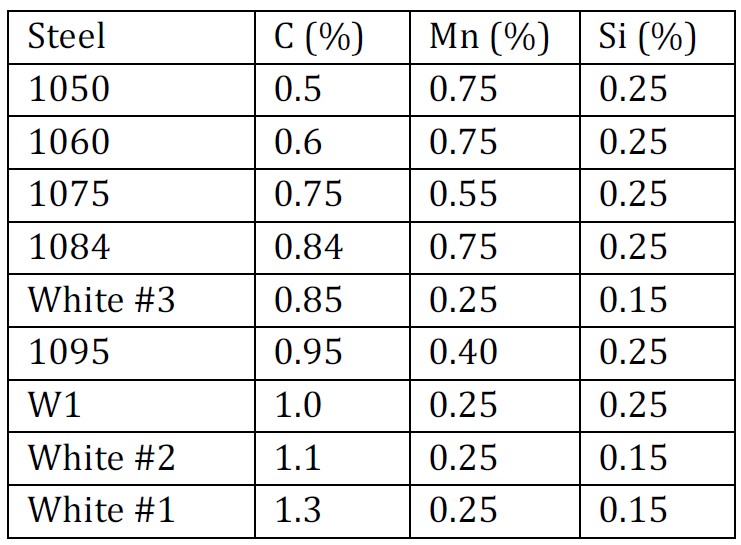
For much of the 20th century, knife steel selection was driven by tradition and anecdotal evidence. Carbon steels like 1095 and low-alloy tool steels like O1 were the standards for performance. However, the advent of high-speed steels and later the revolution of Powder Metallurgy (PM) in the late 1970s and 1980s introduced a level of complexity that traditional blacksmithing knowledge could not fully address. The industry required more sophisticated methods to measure performance, leading to the adoption of the CATRA (Cutlery Allied Trades Research Association) edge retention test.
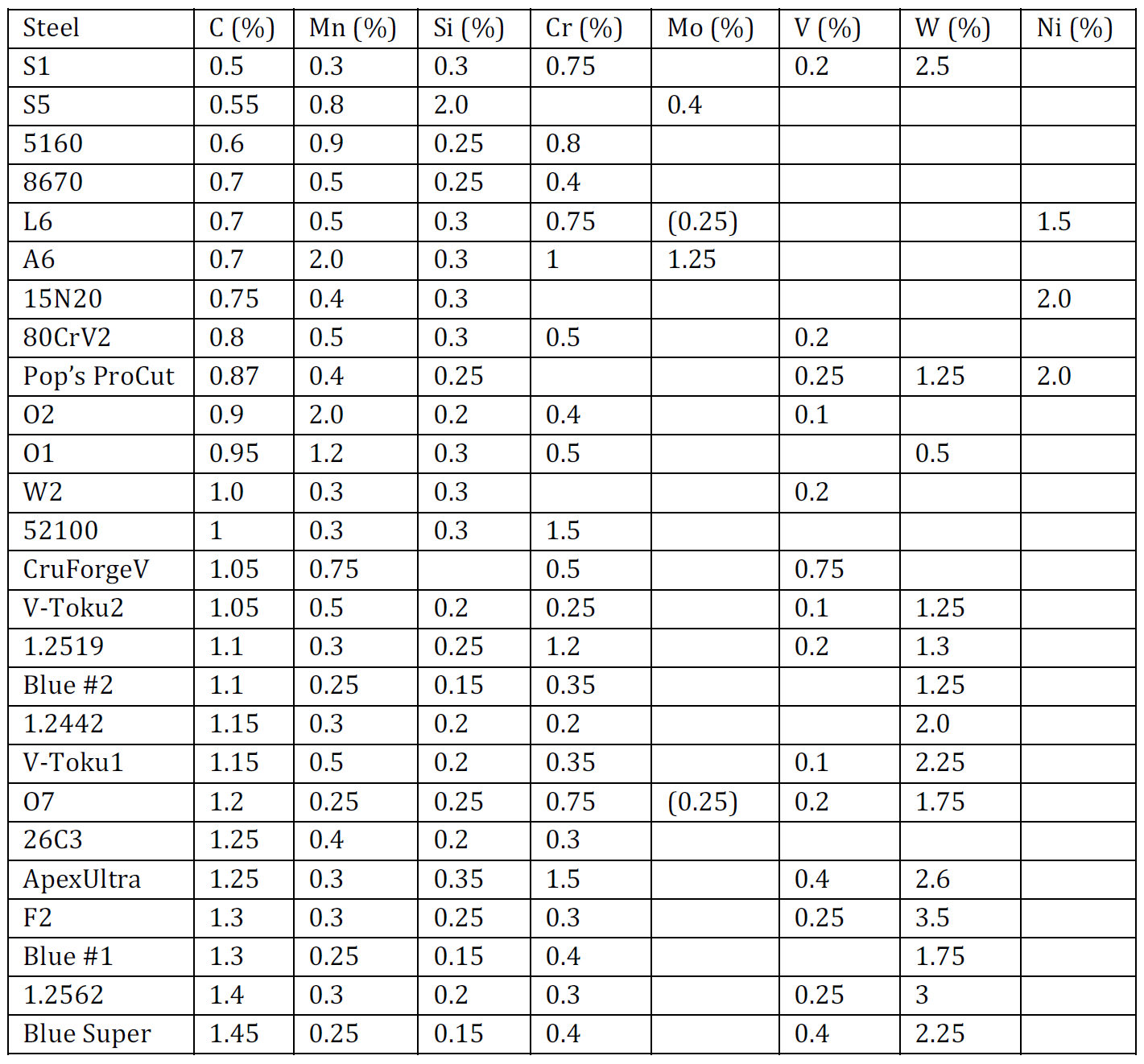
The CATRA test involves a mechanized blade cutting through stacks of silica-impregnated paper, providing a quantitative measurement in millimeters of paper cut. Over the past decade, independent metallurgical testing has sought to correlate these CATRA results with the chemical "DNA" of the steel. In 2021, a landmark study by Dr. Larrin Thomas established a predictive equation for edge retention based on carbide types, carbide volume, steel hardness, and edge angle. This research has since evolved to determine if the average enthusiast can make similar predictions using only basic elemental charts, bypassing the need for advanced metallurgical software or artificial intelligence, the latter of which has frequently proven less accurate than human-derived empirical models in predicting steel properties.
Quantifying Edge Retention: The Carbon and Vanadium Correlation
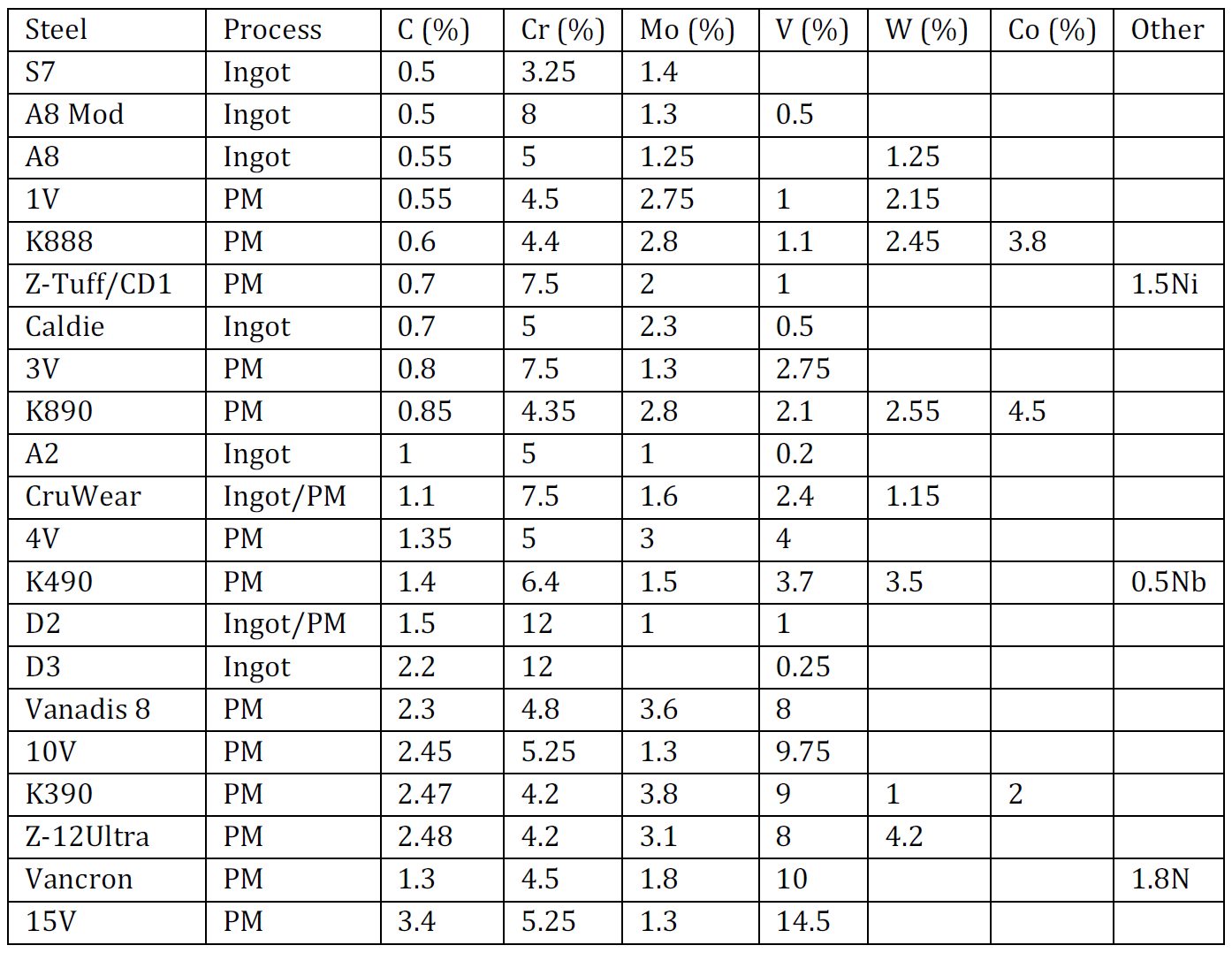
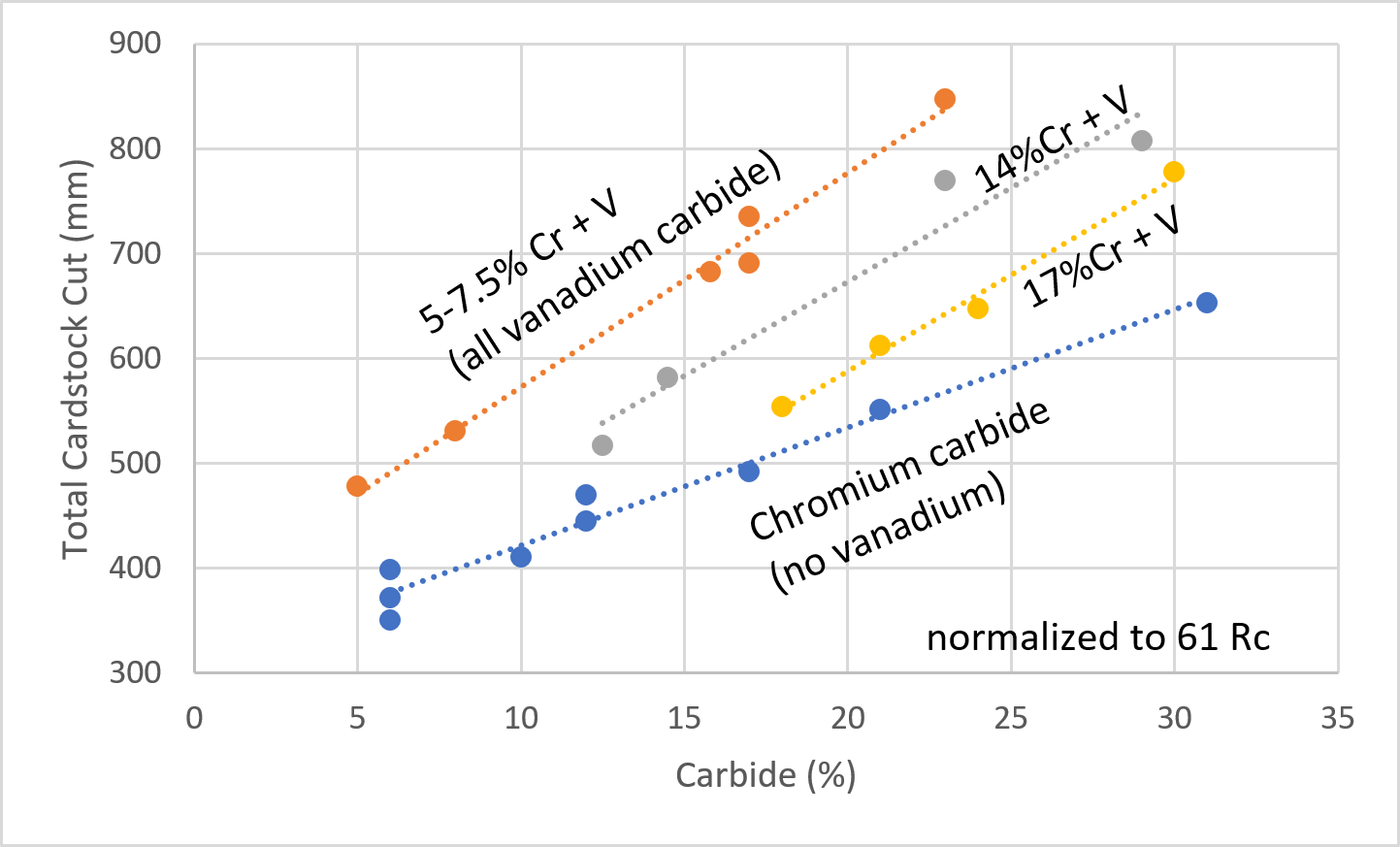
Edge retention is arguably the most sought-after property in the premium knife market. Metallurgical analysis reveals that this trait is primarily a function of wear resistance, which is dictated by the volume and type of carbides present in the steel’s microstructure. Carbides are hard particles formed when carbon bonds with alloying elements like chromium, vanadium, tungsten, or molybdenum during the heat-treatment process.
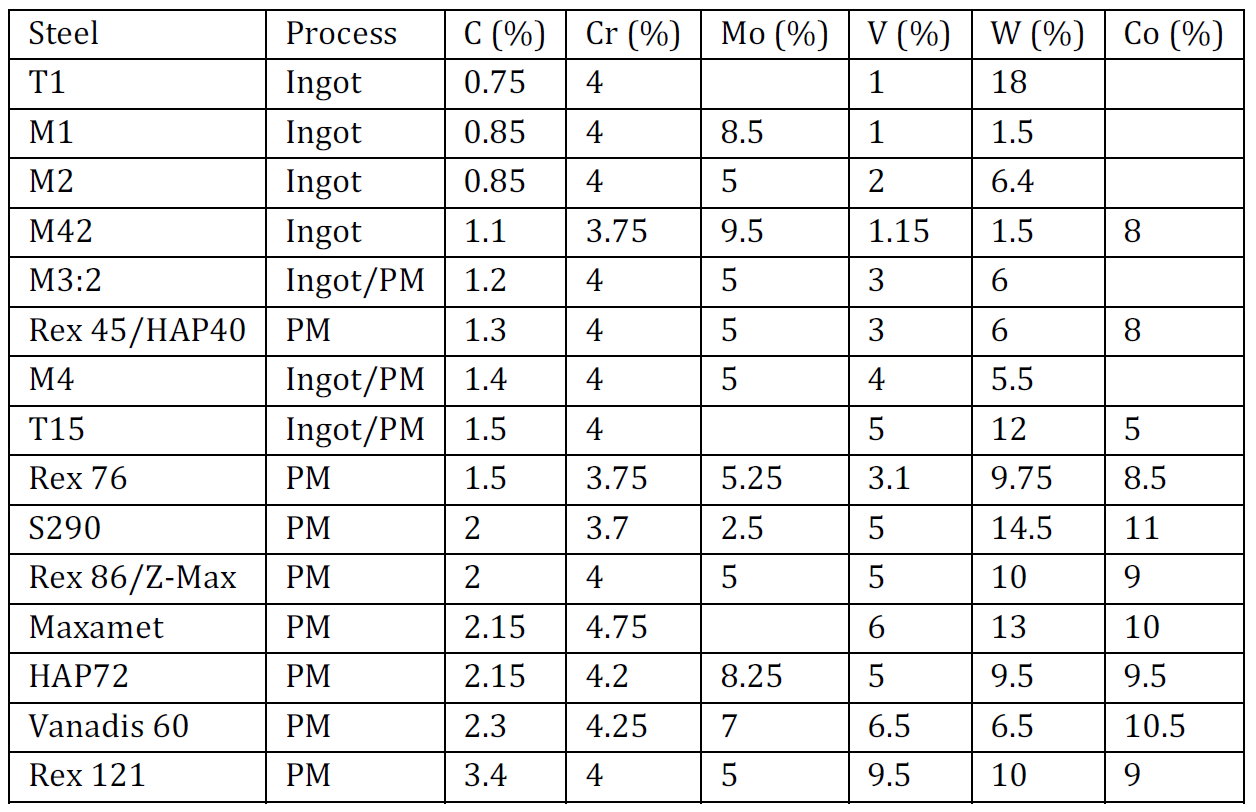
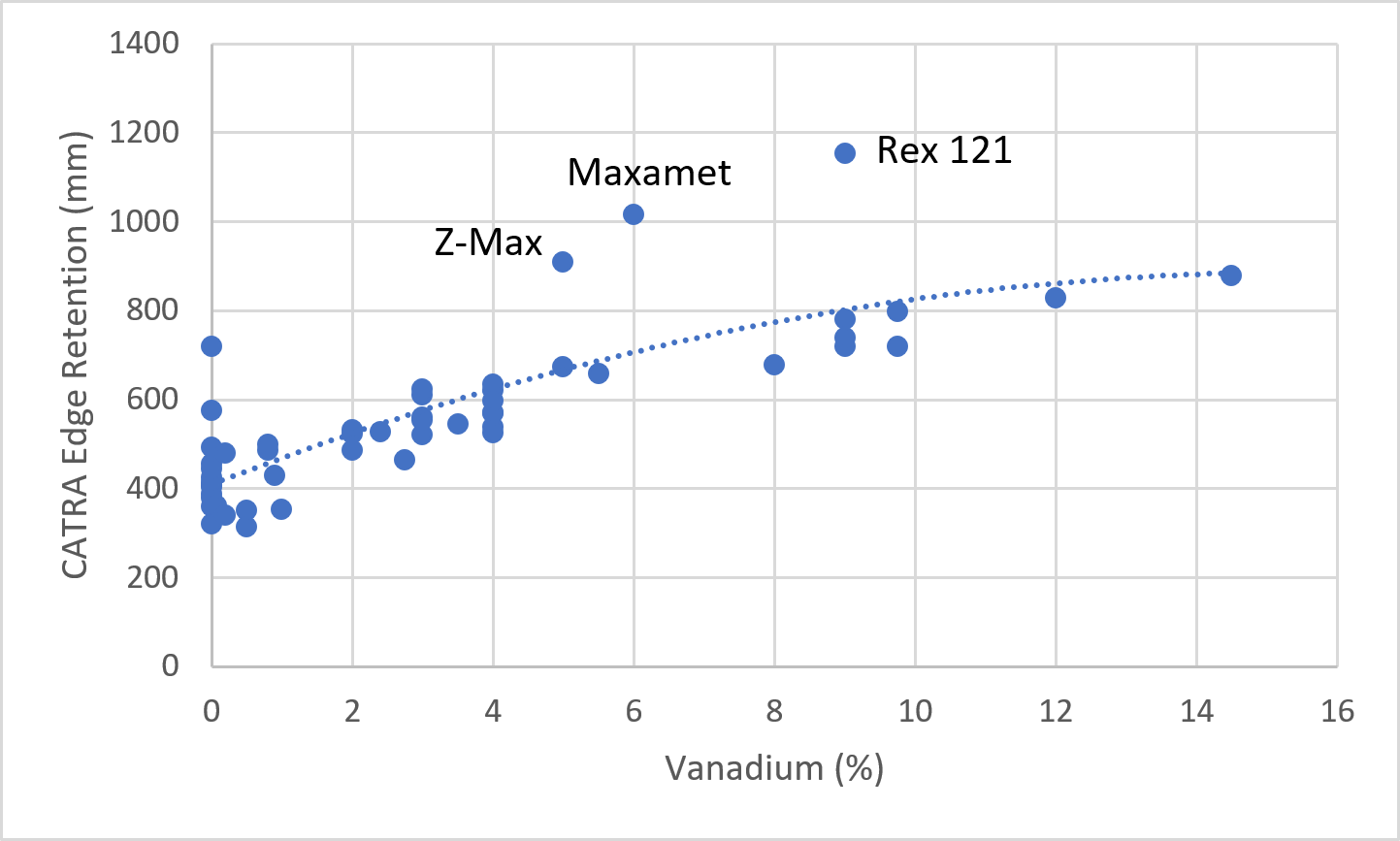
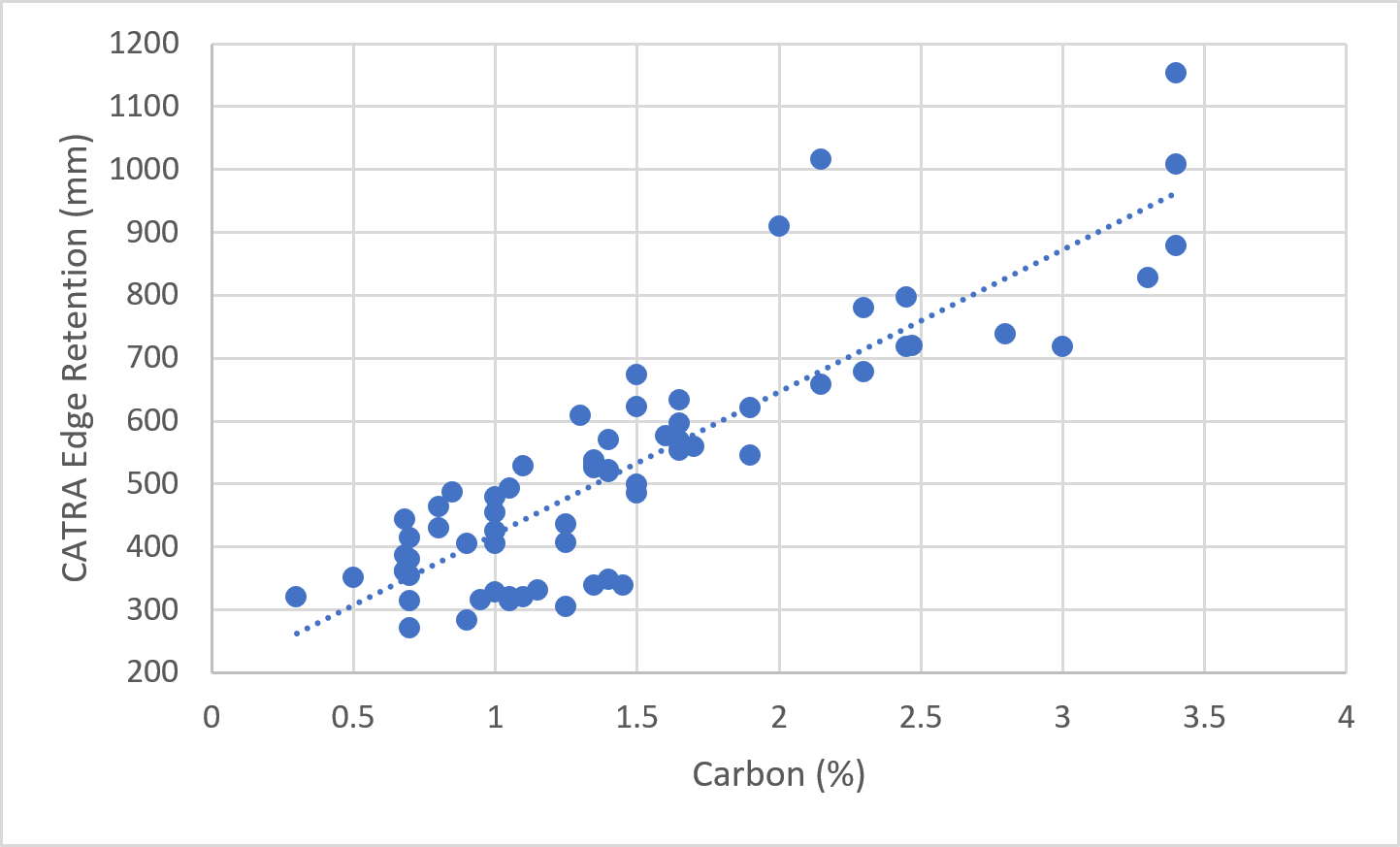
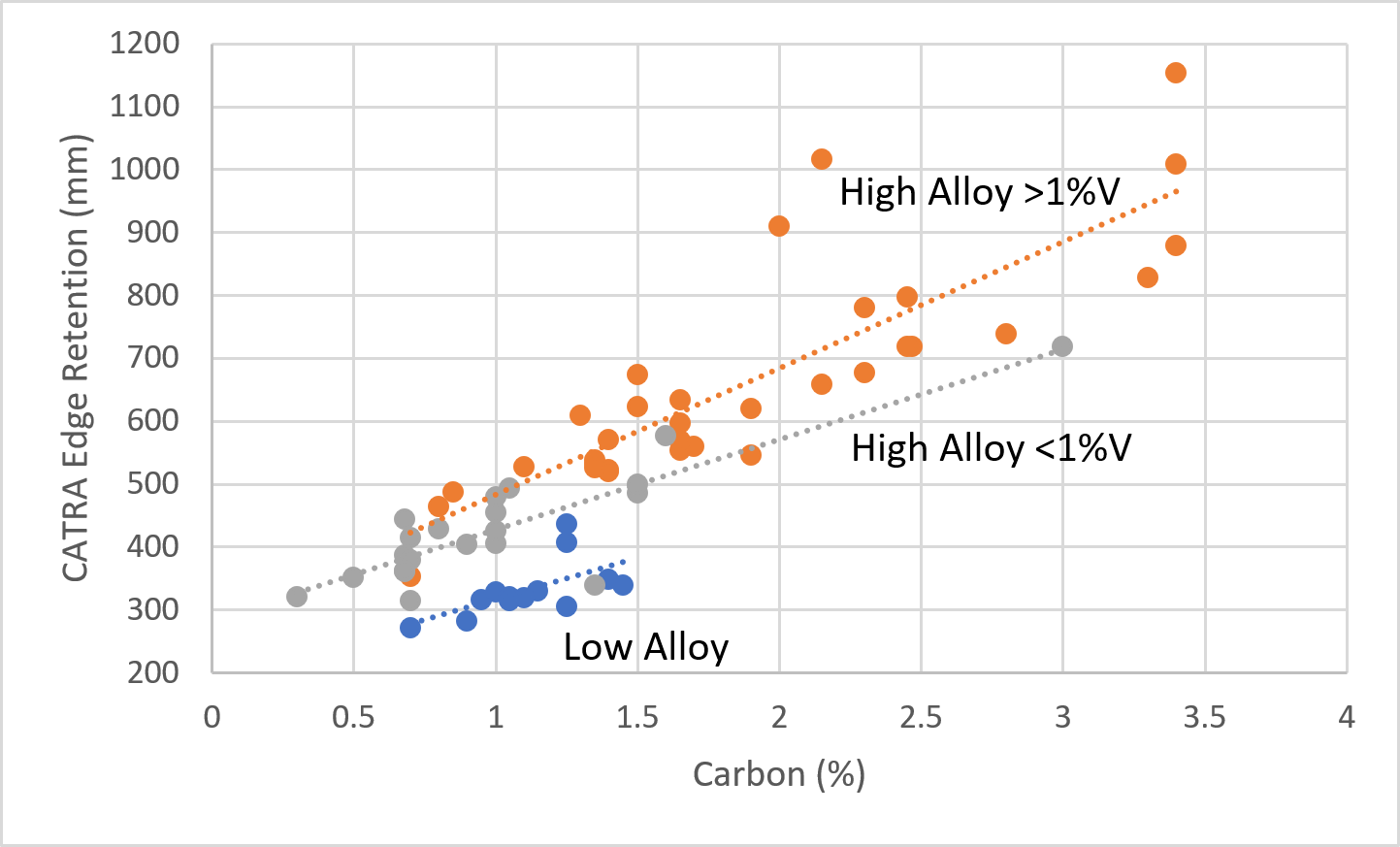
Research indicates that carbon content is the single most effective predictor of edge retention when steels are categorized by their alloy type. For low-alloy steels, where carbon primarily forms iron carbides (cementite), edge retention remains relatively low even as carbon increases. However, in high-alloy and stainless steels, the addition of vanadium creates vanadium carbides, which are significantly harder than chromium or iron carbides.
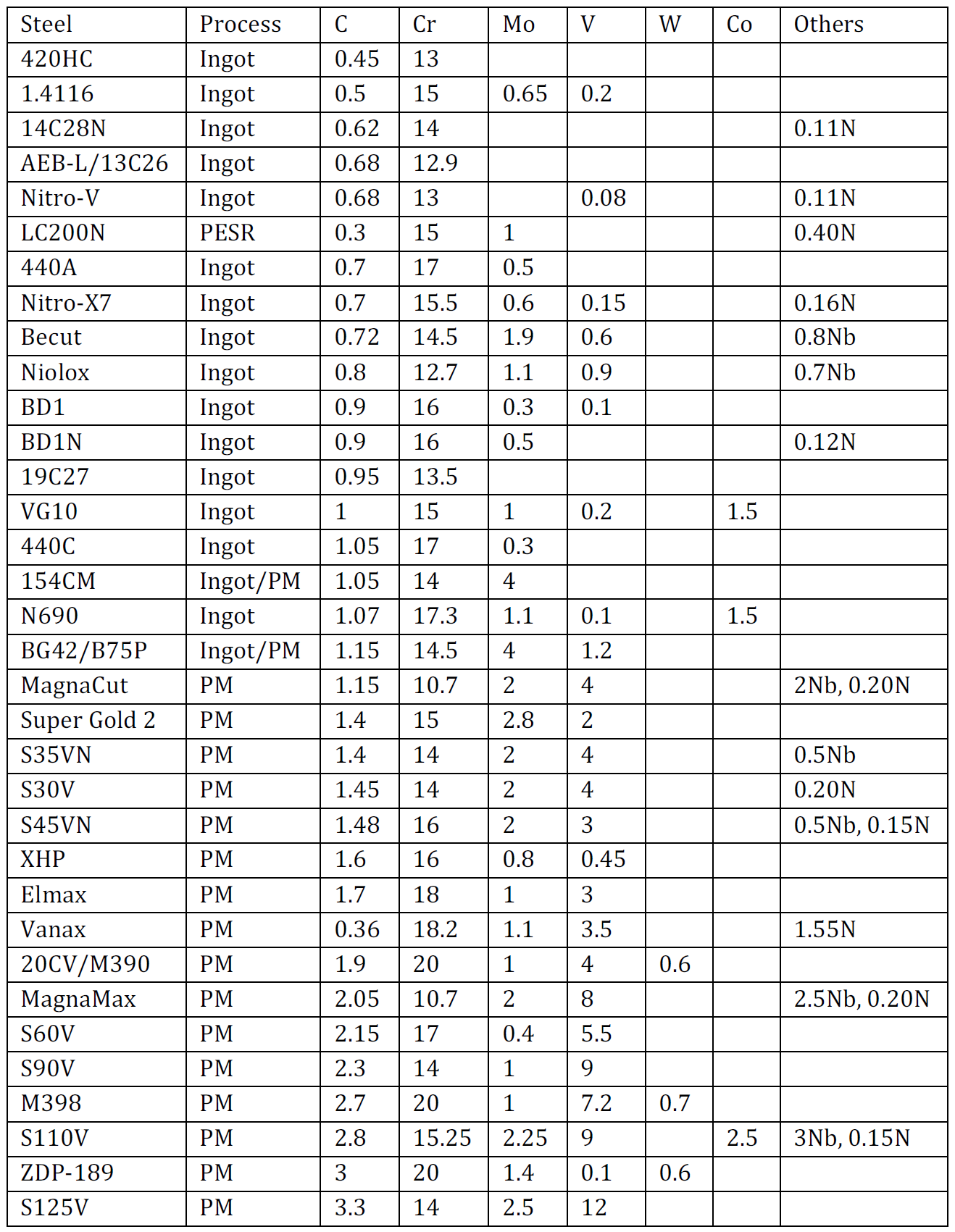
The data suggests a tiered approach to estimating edge retention:
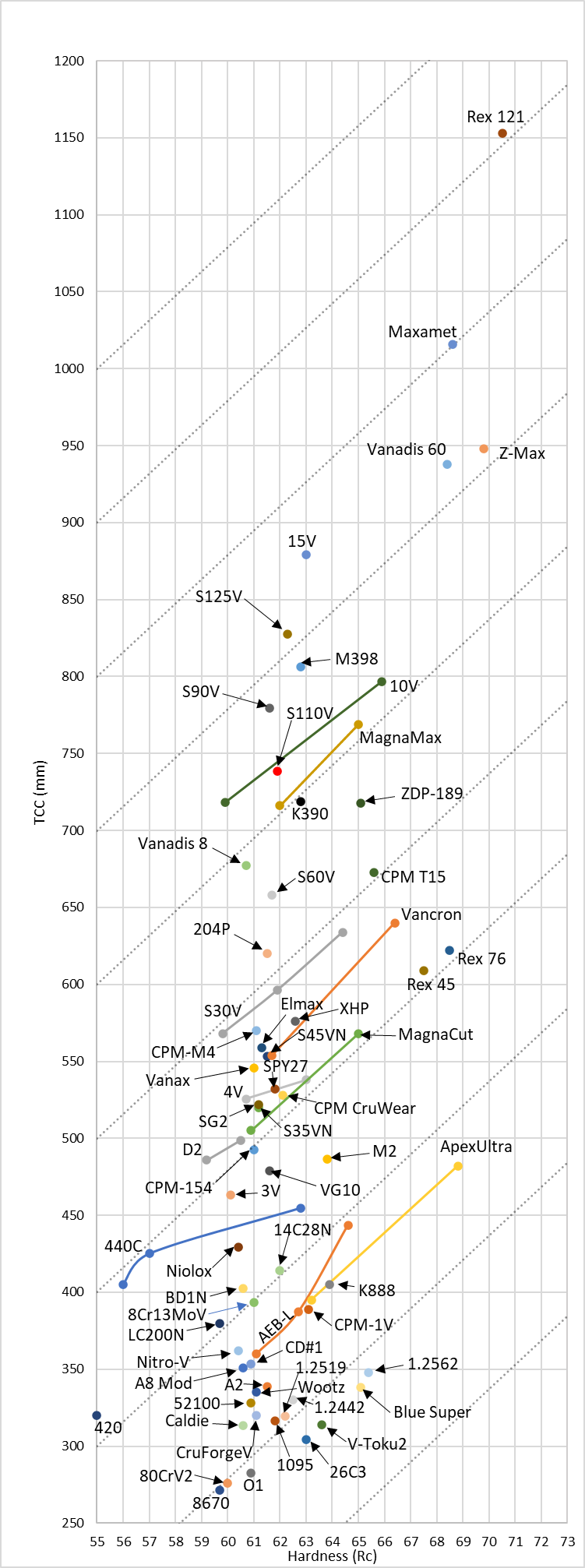
- Low-Alloy Steels: These steels typically show a baseline edge retention. Even at 1% carbon, a low-alloy steel might only achieve 300mm to 400mm on a CATRA test.
- High-Alloy Steels: As carbon increases toward 2% and beyond, edge retention climbs sharply, often exceeding 600mm to 800mm.
- Vanadium-Rich Steels: Steels with high vanadium content (such as CPM-10V or CPM-15V) represent the upper echelon of performance. Because vanadium carbides are exceptionally hard, these steels can reach edge retention ratings of 1,000mm or more.
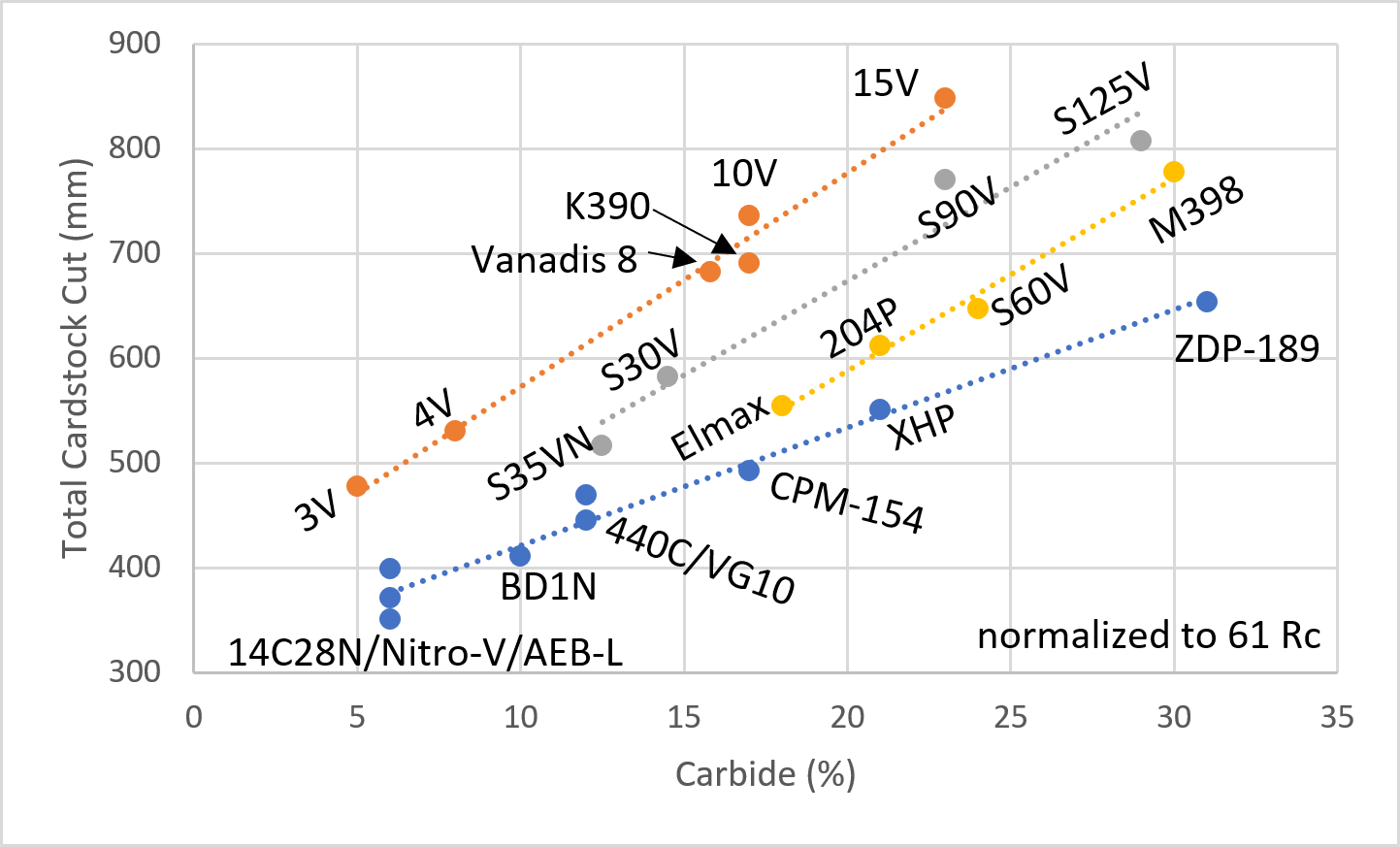
While hardness (measured on the Rockwell C scale or HRC) also plays a role, most modern high-performance steels are normalized to approximately 61 HRC for comparison. At this consistent hardness, the chemical composition—specifically the carbon-to-vanadium ratio—becomes the dominant variable.
The Microstructural Mechanics of Toughness
Unlike edge retention, which benefits from high volumes of hard particles, toughness is often compromised by them. In metallurgy, toughness is the ability of a material to absorb energy and resist fracturing. For a knife blade, this means resisting chips or total snaps during heavy use.
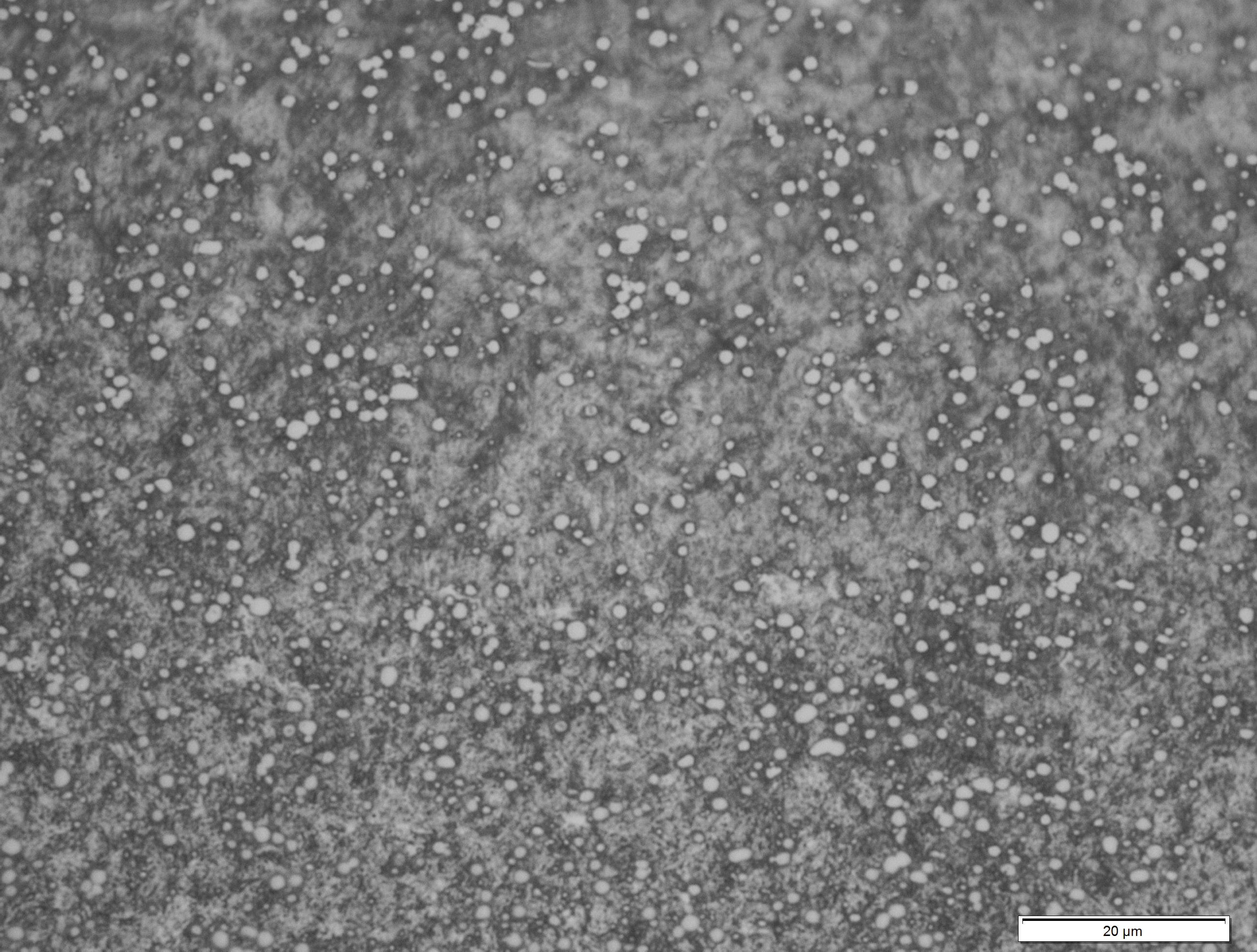
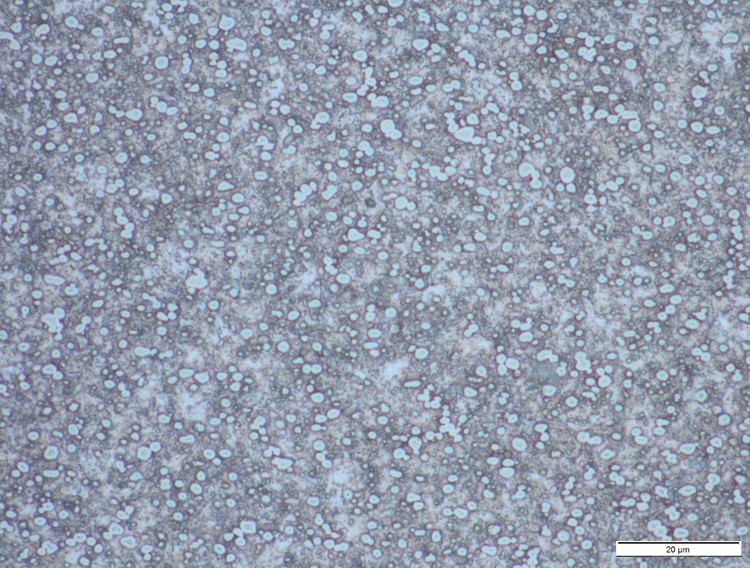
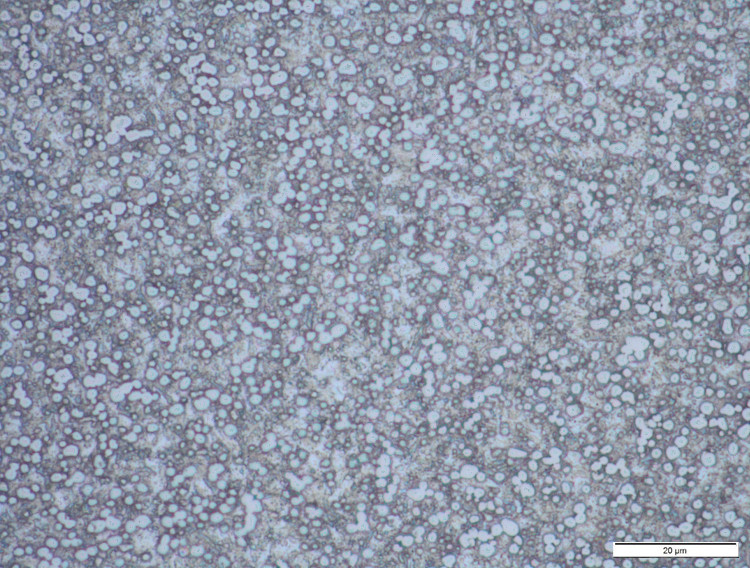
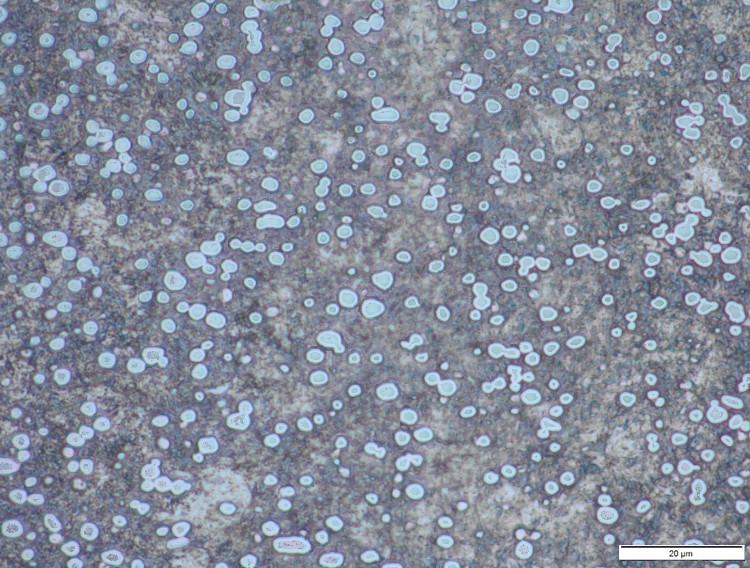
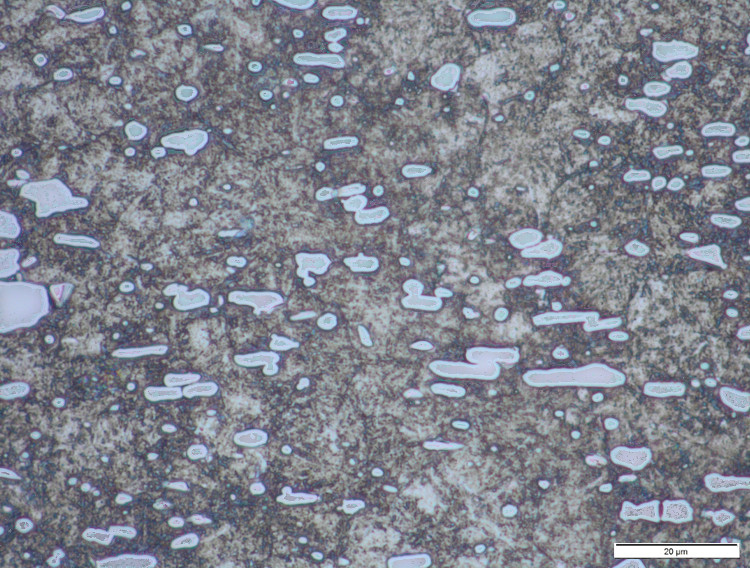
The relationship between composition and toughness is largely inverse to that of edge retention. Higher carbon content leads to higher carbide volume, which provides more sites for crack initiation. However, the manufacturing process is a critical "hidden" variable. Conventional "ingot" steelmaking results in large, unevenly distributed carbides that act as significant structural weak points. In contrast, Powder Metallurgy (PM) involves atomizing molten steel into a fine powder before pressing it into a solid billet, resulting in a much finer and more uniform carbide distribution.
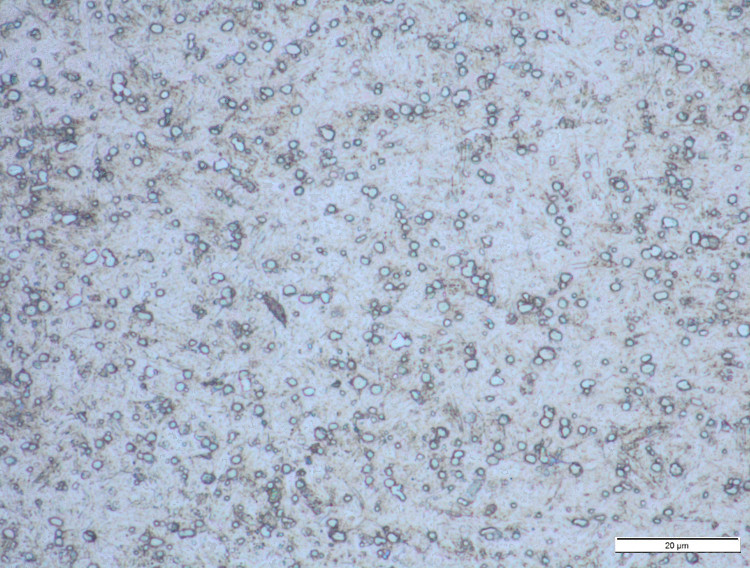
Experimental data shows that PM steels maintain significantly higher toughness than conventional steels at the same carbon levels. For example, CPM-D2 (the PM version of the classic D2 tool steel) exhibits a marked improvement in impact resistance over its conventional counterpart. Furthermore, specialized alloys like 52100 demonstrate that specific elements, such as chromium at approximately 1.5%, can refine the martensitic structure of the steel to boost toughness even at 1% carbon.
Corrosion Resistance and the Chromium-Carbon Balance
The definition of "stainless" steel is traditionally set at a minimum of 10.5% chromium. However, metallurgical analysis proves that bulk chromium content is often a misleading metric. The corrosion resistance of a steel is determined by "chromium in solution"—the amount of chromium available to form a protective chromium oxide layer on the surface of the blade.
When a steel has high carbon content, a significant portion of the chromium bonds with that carbon to form chromium carbides, leaving less chromium in the steel matrix to fight rust. This explains why D2 steel, which contains 12% chromium but high carbon, is often called "semi-stainless" and will rust under conditions where a lower-chromium, lower-carbon steel might remain pristine.
To better estimate corrosion resistance, experts suggest looking at the Chromium-to-Carbon (Cr/C) ratio. A ratio of 7 or higher generally indicates true stainless performance. Recent innovations in steel chemistry, such as the development of CPM-MagnaCut, have revolutionized this balance by using vanadium and niobium to "tie up" carbon, allowing all of the chromium to remain in solution. This results in a steel that has the corrosion resistance of a high-chromium marine alloy with the edge retention of a high-carbon tool steel.
Industry Implications and Expert Perspectives
The push toward empirical, composition-based prediction has significant implications for the cutlery industry. For custom knife makers, these insights allow for more precise material selection based on the intended use of the tool—whether it be a delicate fillet knife requiring high corrosion resistance or a heavy-duty competition chopper requiring extreme toughness.
Industrial manufacturers are also feeling the impact. As consumers become more educated on metallurgical properties, marketing buzzwords like "surgical steel" or "high-carbon" are being replaced by demands for specific alloy names and heat-treatment protocols. There is a growing consensus among materials scientists that the future of the industry lies in "balanced" alloys—steels that do not seek to maximize a single property at the expense of all others, but rather optimize the edge retention-toughness-corrosion triad.
Industry analysts observe that while these elemental correlations are powerful, they are not infallible. Factors such as "plate martensite" formation in high-carbon low-alloy steels or the presence of large carbides in poorly processed stainless steels (like 1.4116) can cause a steel to underperform relative to its chemical potential. This underscores the importance of the manufacturer’s heat-treatment process, which serves as the final "software" that runs on the steel’s "hardware."
Conclusion: The Future of Data-Driven Selection
The ability to estimate knife steel properties from elemental composition marks a shift toward greater transparency in the tool industry. By understanding that carbon drives edge retention, the manufacturing process (PM vs. Ingot) drives toughness, and the Cr/C ratio drives corrosion resistance, enthusiasts can cut through marketing hype with scientific rigor.
While anomalies will always exist due to the complexities of thermodynamics and crystalline structures, the empirical charts developed by modern metallurgists provide a robust framework for prediction. As the industry moves forward, the integration of nitrogen alloying and the refinement of powder metallurgy will likely continue to push the boundaries of what is possible, but the fundamental relationship between the elements and performance remains the cornerstone of cutlery science. This data-driven approach ensures that the next generation of knives will be not only sharper and stronger but also more predictable in their performance across the diverse environments in which they are used.