








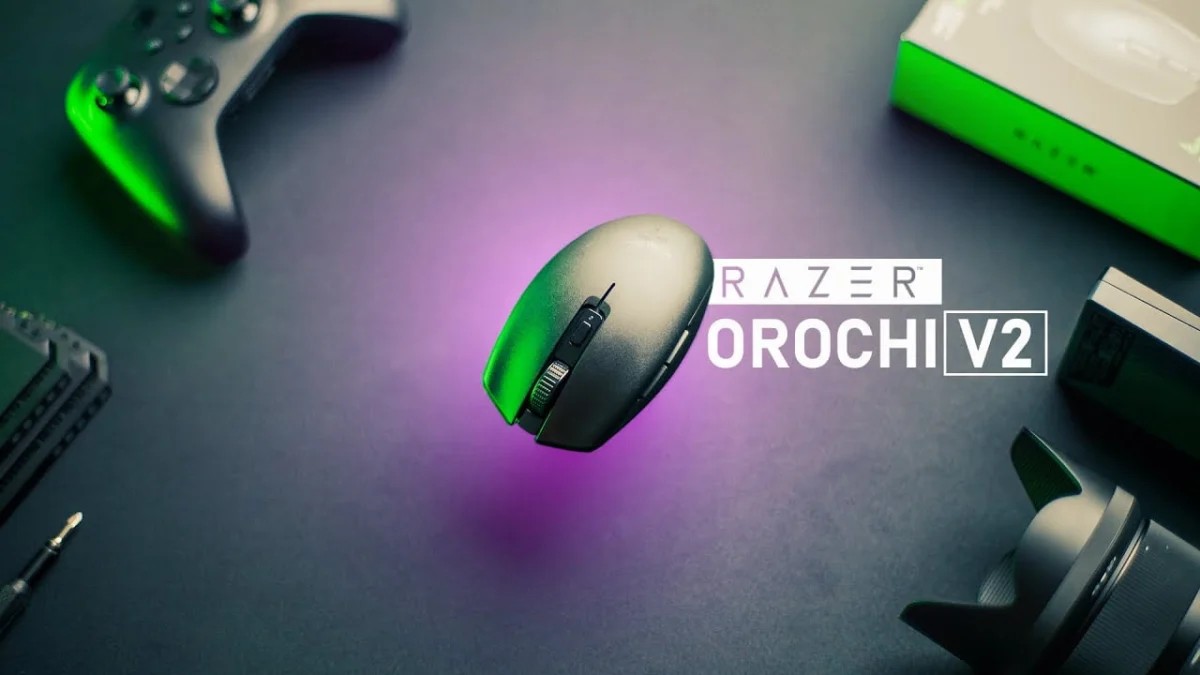
The peripheral market has long been dominated by a select few cost-effective wireless options, but Razer’s introduction of the Orochi V2 marks a significant shift in how manufacturers approach compact, high-performance input devices. Priced competitively at $69 USD, the Orochi V2 enters a crowded segment previously anchored by alternatives like the Logitech G305, SteelSeries Rival 3 Wireless, and Aerox 3 Wireless. Rather than relying on honeycomb perforations to reduce mass—a common industry trend that often compromises structural integrity—Razer has engineered a solid-shell chassis weighing just 58 grams without batteries. This design philosophy prioritizes both durability and nimbleness, offering dual-wireless connectivity via 2.4GHz HyperSpeed and Bluetooth, a customizable mechanical switch layout, and a modular battery compartment capable of housing either AA or AAA power cells.
Background and Market Positioning
Over the past several years, consumer demand has gravitated toward lightweight, untethered gaming mice that do not sacrifice battery longevity or build quality. Traditional budget-friendly wireless mice often forced users to choose between heavy weight profiles due to standard alkaline batteries or fragile, perforated outer shells designed to shed grams. Razer’s development team sought to bypass these compromises by targeting mobile professionals and competitive gamers alike.
The launch of the Orochi V2 reflects a broader industry movement toward mainstreaming advanced sensor technology and multi-device ecosystems into affordable hardware tiers. By incorporating the Razer 5G Advanced Optical Sensor—capable of up to 18,000 DPI—alongside mechanical switches rated for 60 million clicks, Razer positioned the mouse not merely as a budget alternative, but as a premier peripheral that challenges higher-priced flagship models. Furthermore, the inclusion of multi-device pairing on a single USB dongle represents a concerted effort to reduce desktop clutter and streamline peripheral management across compatible Razer hardware.
Design, Engineering, and Structural Integrity
A primary engineering triumph of the Orochi V2 is its commitment to a solid top shell. Avoiding the widespread trend of honeycomb weight-reduction slots, Razer constructed a chassis that successfully resists creaking, flexing, or structural degradation. The removable top plate not only secures tightly onto the black base but also serves a functional role in hardware maintenance and personalization.
Beneath the upper housing lies a dual-battery slot engineered to accept either a standard AA or a smaller AAA battery. This flexibility allows users to directly manipulate the mouse’s weight and balance point. Without batteries, the chassis weighs 58 grams; incorporating a standard AA lithium battery brings the total weight to 73 grams, while a AAA configuration reduces it to approximately 69 grams. Hardware analysts and reviewers have noted that the angled battery placement optimizes overall weight distribution, preventing the rear-heavy bias commonly found in similarly sized competitors like the Logitech G305, which sits at roughly 89 grams with an equivalent power source.
Customization and Aesthetic Options
In addition to the standard matte black and white colorways, Razer introduced a custom design platform available for an additional $20 premium, bringing the total to $89 USD. Through Razer Customs, users can select from a wide array of pre-built artistic top plates or configure unique color combinations directly through the manufacturer. This removes the necessity of turning to third-party skin manufacturers, offering a factory-backed aesthetic modification that maintains the structural tolerances of the original shell.
Complementing the chassis customization is the introduction of universal grip tapes. Priced independently at $10 USD, these reusable, multi-shaped adhesive strips can be applied not only to the Orochi V2’s side panels and trigger buttons, but also to keyboards and console controllers. The flexibility of the material allows users to reposition the grip tape across different devices without leaving excessive residue or losing adhesive strength.
Connectivity and Multi-Device Ecosystems
Wireless performance relies heavily on connectivity standards, and the Orochi V2 features dual-mode functionality supporting both Razer’s proprietary 2.4GHz HyperSpeed wireless and Bluetooth. The physical USB dongle stores securely within the mouse interior beneath the removable shell and features clear labeling to distinguish it within multi-peripheral setups.
Significantly, the included USB dongle supports multi-device pairing, enabling compatible keyboards and mice to communicate through a single receiver. This feature aims to conserve limited USB ports on modern laptops and compact desktop configurations. While Razer Synapse software manages the automatic pairing process, technical evaluations indicate that running multiple high-polling-rate devices through a single dongle can occasionally introduce localized signal interference or minor input stuttering. Consequently, competitive esports players may opt to maintain dedicated receivers for primary input devices, though the technology represents a vital step forward in ecosystem standardization.
Sensor Technology and Switch Mechanics
At the core of the Orochi V2 is the Razer 5G Advanced Optical Sensor, delivering up to 18,000 DPI with precise tracking capabilities. Software integration via Razer Synapse allows users to adjust the lift-off distance from the default 2mm down to 1mm, accommodating players who frequently lift and reposition their mice during rapid cursor adjustments.
For actuation, Razer opted against utilizing optical switches—which are standard in the brand’s higher-tier wired and wireless offerings—in favor of second-generation mechanical micro-switches, specifically the green Kailh GM 4.0 switches rated for 60 million clicks. Company engineers noted that optical switches consume substantially more electrical power; retaining mechanical switches was a deliberate design choice to maximize battery efficiency in a compact wireless form factor. The Kailh switches provide a tactile, crisp click profile, complemented by a precisely notched scroll wheel optimized for granular document navigation and timeline scrubbing in creative applications.
Power Efficiency and Battery Longevity
Battery performance serves as one of the Orochi V2’s most distinguishing specifications. Utilizing Bluetooth connectivity, the mouse can achieve up to 950 hours of continuous operation on a single standard battery. When toggled to the high-performance 2.4GHz HyperSpeed mode, that endurance is approximately halved to 425 hours, which remains exceptionally high relative to industry standards for low-latency gaming peripherals.
Razer Synapse provides a four-stage battery level indicator and allows users to customize low-battery notification thresholds. This ensures that users receive ample warning well before power depletion, minimizing unexpected interruptions during critical tasks or competitive gaming sessions.
Gaming Performance and Ergonomics
Ergonomically, the Orochi V2 departs from the ultra-low profile of models like the Razer Viper Mini, favoring a more pronounced rear hump and subtle thumb contours that accommodate fingertip and claw grip styles. Hand-size compatibility is broad, offering adequate support for the ring and pinky fingers without inducing hand fatigue during extended sessions.
In practical gaming evaluations, the mouse demonstrates balanced tracking across all four screen quadrants. The combination of its lightweight 60-to-73 gram footprint, large PTFE glide feet, and responsive sensor enables accurate target acquisition and rapid flick adjustments. Reviewers have highlighted its efficacy in target-tracking exercises, noting that the physical dimensions allow for micro-adjustments using the pinky finger to stabilize the cursor upon stopping.
Broader Industry Implications and Market Impact
The release of the Razer Orochi V2 illustrates a maturing consumer market where buyers increasingly demand flagship-level performance, modular flexibility, and extended battery life without premium pricing tiers. By undercutting heavier legacy models and offering genuine hardware customization directly from the factory, Razer has established a new benchmark for budget-to-midrange wireless peripherals.
As manufacturers continue to refine wireless protocols, sensor precision, and power management, devices like the Orochi V2 signal that consumers no longer need to sacrifice responsiveness or build quality to achieve a lightweight, untethered desktop experience. The mouse’s strong reception among both productivity users and competitive gamers suggests that modular, battery-interchangeable designs will likely influence future product roadmaps across the gaming hardware industry.