












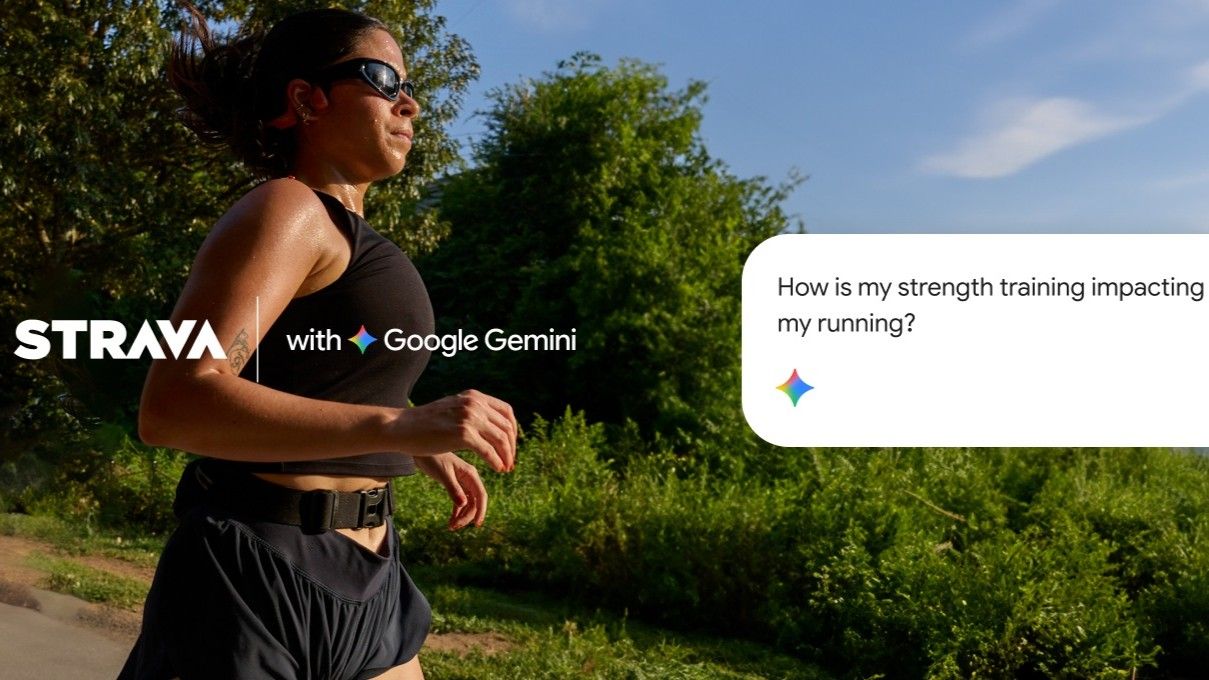
Strava, the world’s leading digital community for active people, has officially announced a major software integration with Google Gemini, marking a significant step forward in how athletes and fitness enthusiasts interact with their wellness data. Beginning this week, subscribers in the United States can seamlessly link their Strava profiles to Google’s advanced artificial intelligence platform. This new feature enables users to pose complex natural language queries regarding their training regimens, physical progress, and historical performance metrics, receiving tailored, data-driven insights directly through Gemini’s interface.
The collaboration represents a convergence of massive fitness data ecosystems and state-of-the-art generative artificial intelligence. By bridging Strava’s extensive logs—ranging from casual evening jogs to structured marathon training blocks—with Google Gemini’s contextual understanding, the integration aims to demystify complex performance trends. Rather than forcing athletes to manually parse through raw splits, heart rate graphs, and elevation profiles, the system allows for conversational analysis, transforming how everyday runners and cyclists understand their bodies.
Unlocking Deeper Training Intelligence Through Natural Language
The core functionality of the new integration revolves around conversational accessibility. Users no longer need to navigate through multiple submenus within the Strava mobile application to evaluate their physical progression over time. Instead, by accessing the Connected Apps section under Personal Intelligence in Gemini, subscribers can sign in and immediately begin interrogating their training logs using everyday language.
According to release documentation provided by Strava, the AI-powered assistant is capable of processing intricate queries that combine multiple variables. For instance, athletes can ask if they are getting faster at a specific, maintained heart rate. In response, Gemini will look beyond a simple binary answer, analyzing variables such as overall weekly training volume, consistency over specific training blocks, and the cross-disciplinary mix of sports—such as balancing cycling with running—to deliver a comprehensive assessment.
Furthermore, the integration provides granular breakdowns of racing performances. Users can request mile-by-mile analyses of past races to identify precisely where pace dropped or where heart rate spiked. Additional updates to the integration allow athletes to address recovery and environmental factors directly. If an athlete feels unusually sluggish during a workout, they can ask Gemini to evaluate whether the drop in performance stems from environmental elements, such as unseasonably high temperatures and humidity, or if it indicates an underlying need for physical recovery and rest.
The Evolution of Artificial Intelligence Within Strava’s Ecosystem
This partnership with Google Gemini does not represent Strava’s first foray into artificial intelligence; rather, it serves as the latest milestone in a sustained corporate strategy to integrate machine learning into its platform architecture. Over the past several years, the company has systematically introduced algorithmic tools designed to add substantive value to its paid subscription tiers.
The foundation for these current AI capabilities was laid approximately a year and a half ago when Strava introduced its proprietary "Athlete Intelligence" feature. Initially deployed as a closed beta, the feature underwent roughly four and a half months of rigorous testing and refinement before rolling out to the broader user base. Athlete Intelligence was designed to automatically interpret activities, even those lacking traditional GPS tracking data, such as indoor treadmill runs or stationary cycling power outputs.
During its initial rollout, early adopters and tech reviewers noted minor calibration errors typical of early-stage machine learning models, but the overarching insights proved remarkably accurate. The system excelled at contextualizing current efforts against historical baselines, explicitly noting how a user’s instantaneous pace or speed compared to previous attempts along the exact same route or segment.
Building upon the success of Athlete Intelligence, Strava subsequently introduced AI Performance Predictions, offering subscribers a data-backed alternative to traditional race prediction calculators found on competing hardware ecosystems like Garmin. This feature utilizes an athlete’s historical logbook to estimate finish times for standard racing distances, including 5Ks, 10Ks, half marathons, and full marathons. However, to ensure algorithmic accuracy, Strava instituted a data threshold, requiring users to log a robust history of approximately 20 distinct activities before the performance prediction models initialize reliable forecasts.
Technical Integration and Regional Rollout Strategy
From a technical standpoint, the integration is designed for user accessibility across multiple tiers of Google’s AI ecosystem. Strava has confirmed that the Connected Apps functionality is available for all Gemini plans, provided the user holds an active Strava subscription.
To activate the feature, users must navigate through a straightforward setup procedure:
- Open the Google Gemini application or web interface.
- Access the Personal Intelligence settings menu.
- Locate Strava within the Connected Apps directory.
- Select Sign In and authorize the secure data handshake between the two platforms.
At launch, the feature is rolling out exclusively to subscribers within the United States. While international availability dates have not yet been formally announced by corporate representatives, past software rollouts suggest that successful domestic deployment will likely precede a phased global expansion throughout the remainder of the year. Privacy advocates and tech analysts alike have noted that the integration relies on robust authorization protocols, ensuring that users retain control over which workout datasets are shared with Google’s large language models.
Industry Implications and the Competitive Landscape
The integration of Strava into Google Gemini arrives at a critical juncture for the fitness technology and wearable sectors. For years, major hardware manufacturers such as Garmin, Apple, and Polar have maintained proprietary ecosystems that lock workout analytics inside their respective proprietary apps. By partnering with Google—one of the world’s leading technology conglomerates—Strava is positioning itself as a platform-agnostic hub for athletic data.

This strategy decouples advanced analytics from specific hardware brands. Whether an athlete records their activities using an Apple Watch, a specialized Garmin running watch, a Wahoo cycling computer, or simply a smartphone running the Strava app, that data ultimately funnels into Strava’s centralized database. By plugging Gemini directly into this database, Strava is effectively offering its subscribers a powerful, cross-device AI coach that transcends the limitations of individual hardware ecosystems.
Competitively, this move applies pressure to other fitness platforms to enhance their natural language and generative AI capabilities. While companies like Garmin offer robust physiological metrics such as Training Readiness and VO2 max estimations, interpreting these metrics often requires a steep learning curve for the average consumer. By leveraging Gemini’s natural language interface, Strava lowers the barrier to entry for complex data analysis, making elite-level training insights accessible to recreational athletes who may not employ a human running coach.
Broader Market Trends in Health and Fitness AI
The partnership also highlights a broader, industry-wide race to embed generative artificial intelligence into everyday health and wellness applications. As consumers increasingly generate vast quantities of biometric data—ranging from sleep scores and heart rate variability to continuous power output and GPS tracks—the primary bottleneck has shifted from data collection to data comprehension.
Users are no longer starved for data; rather, they experience data fatigue. The sheer volume of metrics produced by modern smartwatches and fitness apps can overwhelm casual users, leading to disengagement or misinterpretation of physical signals. Generative AI tools like Google Gemini serve as a bridge, translating complex statistical anomalies into actionable, human-readable advice.
However, industry experts emphasize that the success of such integrations will ultimately depend on accuracy, data privacy, and clinical validation. While asking Gemini whether a sluggish run was caused by the weather or physiological fatigue is an engaging consumer use case, ensuring that AI models accurately interpret injury risks, overtraining syndromes, and cardiovascular stress remains a paramount responsibility for software developers.
As Strava continues to expand its technological footprint, the integration with Google Gemini signals a fundamental shift in how digital fitness communities operate. By blending community-driven social networking with cutting-edge artificial intelligence, Strava is reinforcing its market dominance, transforming from a simple route-tracking app into an intelligent, interactive training companion for millions of athletes worldwide.