Artificial intelligence has fundamentally altered the landscape of digital photography over the last five years, moving from experimental algorithms to essential industry-standard tools. While early applications focused on basic noise reduction and color balancing, the current generation of software leverages sophisticated machine learning models to perform complex aesthetic tasks. These include high-fidelity skin retouching, structural facial reshaping, and simulated studio-grade re-lighting. As professional studios face increasing pressure to balance high-volume output with premium image quality, the adoption of AI-retouching platforms has transitioned from a competitive advantage to a operational necessity.

The Chronology of Digital Retouching
The trajectory of photo editing began in the late 1980s with the debut of Adobe Photoshop, which required significant manual dexterity and hours of labor per image to achieve professional results. By the mid-2010s, "frequency separation" and "dodge and burn" techniques became the gold standard for portraiture, typically requiring 30 to 60 minutes of post-production per subject.
The turning point occurred between 2020 and 2023, as neural networks—specifically Generative Adversarial Networks (GANs)—enabled software to recognize facial features such as eyes, lips, and skin texture with anatomical accuracy. This allowed for the automation of tasks that previously required human intuition. Today, the industry is witnessing a shift toward "intelligent batch processing," where entire wedding or corporate event portfolios can be retouched in minutes rather than days.

Leading Platforms and Technical Capabilities
Several software developers have emerged as leaders in this space, each offering distinct approaches to the automated workflow.
Evoto: The Volume-Centric Solution
Evoto has gained significant traction among high-volume wedding and portrait photographers due to its comprehensive, end-to-end interface. The platform utilizes a credit-based business model, which aligns costs with specific output requirements. Technical benchmarks indicate that Evoto excels in body sculpting and high-precision glare removal, tasks that were historically prone to digital artifacts when performed by earlier automation tools. Its ability to maintain skin texture while removing blemishes represents a significant advancement in computational photography.

Aperty: Workflow Automation
Aperty, developed by the engineering team behind Luminar Neo, positions itself as a streamlined workflow assistant. Unlike standalone retouching apps, Aperty functions as both a dedicated retouching engine and a Lightroom-integrated plugin. Its architecture allows for non-destructive editing, which is critical for professionals who require metadata management, culling, and star-rating capabilities within a single environment. Its standout feature—a highly refined eyebag reduction algorithm—has been noted by industry testers for its realistic blending, which avoids the "plastic" look common in less sophisticated software.
PortraitPro: The Precision Standard
PortraitPro remains one of the longest-standing entities in the AI retouching market. The software’s strength lies in its granular control. While many modern AI tools prioritize "one-click" automation, PortraitPro provides extensive sliders that allow photographers to dictate the intensity of features like skin smoothing, lighting depth, and structural adjustment. This makes it a preferred choice for high-end fashion and editorial photographers who require the speed of AI but demand the final oversight of a human editor.

Retouch4me: The Photoshop Integration
Retouch4me operates differently, existing primarily as a suite of specialized Photoshop plugins. This model is particularly effective for studios that rely on complex composites or multi-layered editing processes. Because these tools function within the Photoshop environment, they allow for a non-linear workflow where AI can handle specific tasks—such as skin healing or background isolation—while the photographer continues to use industry-standard masking and adjustment layers for the remainder of the project.
Industry Implications and Economic Analysis
The rapid proliferation of these tools has significant economic implications for the photography industry. A recent survey of professional studios suggests that the integration of AI-retouching can reduce post-production time by approximately 70% to 80%. In a market where time-to-delivery is a key metric for client satisfaction, this efficiency allows smaller studios to compete with larger agencies without increasing headcount.

However, this transition also presents challenges. The standardization of facial aesthetics via AI-trained models risks creating a homogenized "look," where natural facial characteristics—such as pores, fine lines, or unique skin textures—may be inadvertently erased by overly aggressive algorithms. Consequently, software developers are increasingly introducing "texture preservation" toggles, acknowledging the professional demand for authenticity over clinical perfection.
The Role of Generative Media: The Case of Artlist
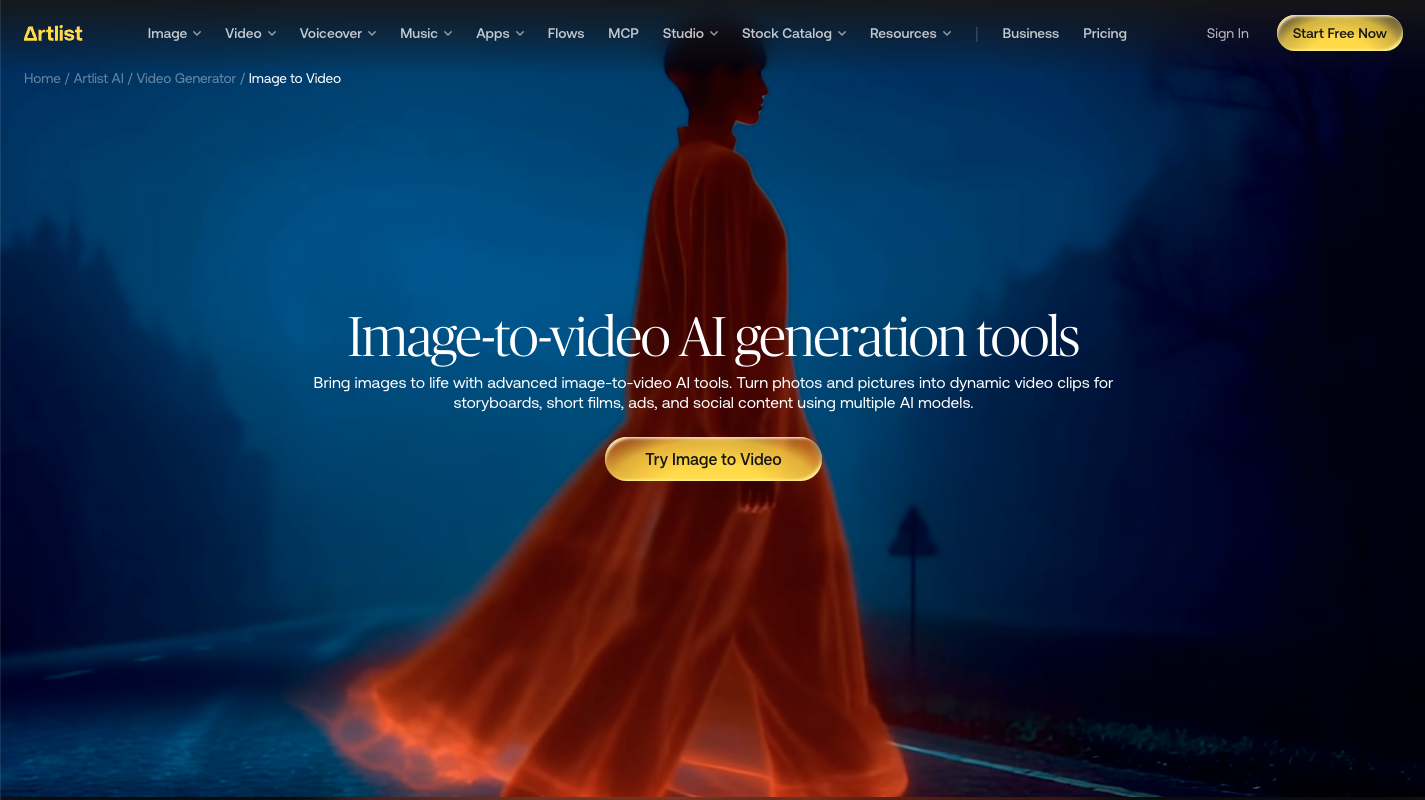
The market is also expanding beyond static retouching. Platforms like Artlist are incorporating generative AI to bridge the gap between photography and motion media. By utilizing image-to-image synthesis, photographers can now generate short-form video clips from a single still portrait. This capability addresses the growing demand for social media content, allowing photographers to deliver "moving" assets as part of a standard portrait package. While these tools do not replace traditional skin-retouching software, they serve as a critical secondary layer for content creators looking to maximize the value of their deliverables.
Future Outlook and Ethical Considerations
As the technology matures, the industry must navigate the ethical complexities of AI-generated content. The capability to alter facial structure and lighting with such ease raises questions regarding authenticity, particularly in fields like journalism and commercial portraiture. Industry leaders are currently debating the necessity of "AI-labeling" for images, ensuring that clients and the public remain aware of the extent to which a digital portrait has been computationally altered.
Looking forward, the integration of local AI—where the heavy computation is handled on the user’s hardware rather than the cloud—is expected to increase. This shift will address data privacy concerns for photographers handling sensitive client information, as images will no longer need to be uploaded to external servers for processing.
Conclusion
The landscape of AI-driven photo retouching is no longer defined by a single "best" option, but rather by the specific needs of the professional workflow. Whether the priority is the massive batch-processing capabilities of Evoto, the workflow integration of Aperty, the granular control of PortraitPro, or the specialized plugin architecture of Retouch4me, the technology has reached a point of high reliability. For the modern photographer, the challenge has transitioned from "how to retouch" to "how to choose the most efficient tool" for their unique creative process. As these platforms continue to integrate generative AI and machine learning, the gap between manual retouching and automated processing will likely continue to close, setting a new benchmark for speed and quality in the digital era.