The discovery of an unmanned Boston Whaler circling aggressively off the coast of San Mateo County triggered a high-priority maritime emergency response on a rapidly deteriorating afternoon. Palmer, a veteran lifeguard and coastal rescue specialist, was en route to a routine surf check at Pomponio State Beach when the initial emergency dispatch redirected him to the Tunitas Creek area. What followed was a tense operational mobilization characteristic of the increasingly hazardous conditions faced by first responders along the rugged Central and Northern California coastline during unexpected weather shifts.
The incident underscores the persistent dangers associated with recreational boating in Northern California waters, where sudden meteorological changes can transform benign sea states into life-threatening environments within minutes. As maritime authorities and local rescue units worked to secure the vessel and investigate the fate of its operator, the event highlighted the critical intersection between coastal surveillance, rapid emergency dispatch, and the immense physical risks absorbed by community lifeguards acting as impromptu marine search-and-rescue personnel.
Main Facts and Incident Overview
The event began unfolding in the early afternoon as a fast-moving, high-intensity windstorm slammed into the Pacific coastline south of San Francisco. According to incident reports, the vessel in question—a standard fiberglass Boston Whaler—was first spotted executing a tight, unbroken clockwise spin approximately a quarter-mile beyond the active surf zone.
At the time of the sighting, Palmer was crossing the Tunitas Creek Bridge on the Coast Highway (State Route 1), intending to take advantage of a newly formed sandbar at Pomponio. The distinctive banking angle and widening spiral wake of the boat immediately signaled a mechanical or human crisis; a locked steering helm, combined with an absent operator, meant the vessel was operating under its own power in an endless, destructive loop.
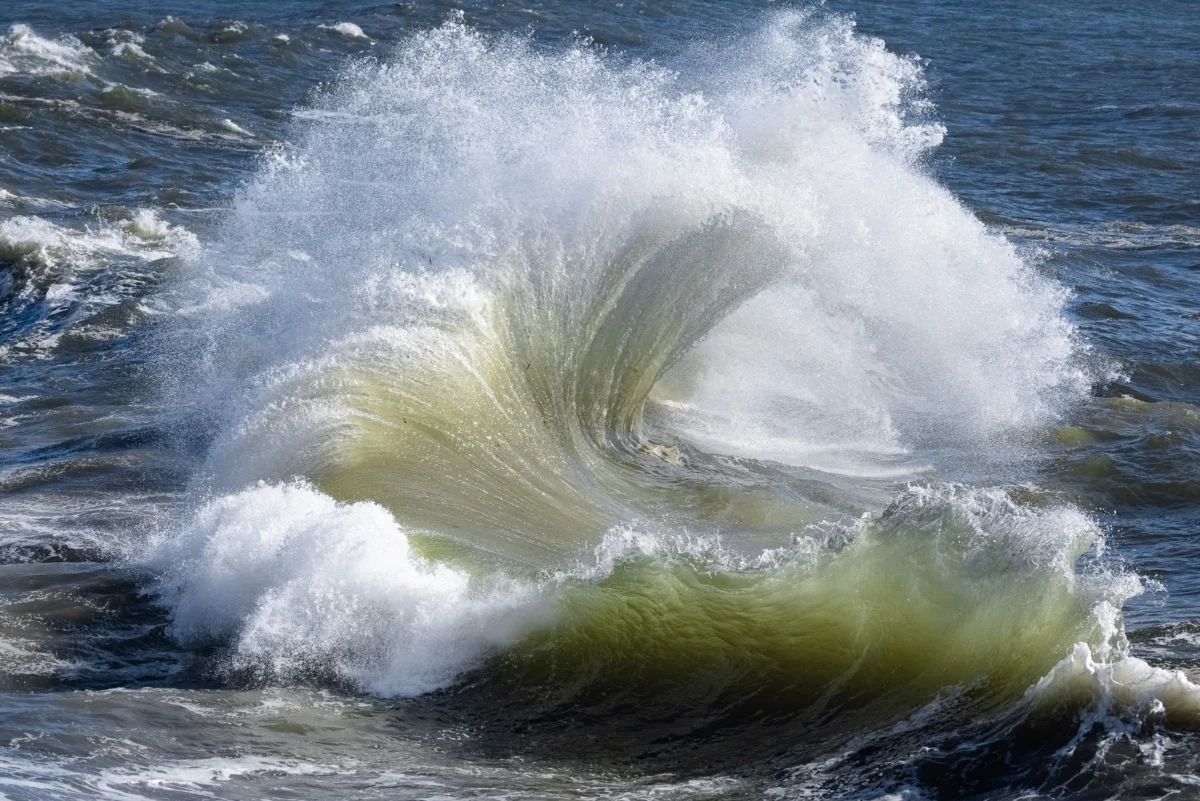
Using high-powered Bushnell binoculars from the elevated overlook above the highway, emergency personnel confirmed that the center-console boat was completely devoid of passengers. The centrifugal force of the continuous turn was churning the grey, white-capped water into a localized vortex, presenting an immediate collision and entanglement hazard for any other marine traffic or rescue craft attempting to approach.
Chronology of the Response
The sequence of events on the afternoon of the emergency reflects the compressed timeline within which coastal rescue operations must unfold:
- 12:15 PM: A favorable offshore wind forecast encourages local surfers and recreationists to head toward San Mateo County beaches, including Pomponio and Tunitas Creek.
- 12:45 PM: Meteorological sensors note a sudden, unpredicted barometric drop, signaling the rapid approach of a localized gale-force windstorm packing gusts exceeding 45 knots.
- 1:10 PM: Dispatch receives the initial report of an erratic, unmanned motorboat spinning offshore between Tunitas Creek and El Granada.
- 1:14 PM: Palmer abandons his scheduled personal break, crosses the Tunitas Creek Bridge southbound, and ascends to the coastal overlook to establish visual confirmation of the vessel.
- 1:22 PM: Local harbor patrols and county sheriff’s marine units are notified, establishing an incident command perimeter while coordinating with the United States Coast Guard (USCG) Sector San Francisco.
- 1:50 PM: Gale-force winds officially make landfall, severely complicating visual tracking and making surface-water deployment from small Zodiac rafts exceptionally perilous.
Supporting Data and Regional Maritime Hazards
The waters off the San Mateo County coast are recognized by maritime safety experts as some of the most unforgiving in the United States. The convergence of deep-water swells, unpredictable underwater topography, and sharp headlands creates localized rip currents and sudden wind shears.
According to data compiled by the National Oceanic and Atmospheric Administration (NOAA) and the California Department of Parks and Recreation, the coastline between Half Moon Bay and Santa Cruz records dozens of marine rescues annually.
- Weather Volatility: Northern California experiences some of the most rapid marine weather transitions globally, with clear skies frequently giving way to zero-visibility fog and gale-force squalls in less than an hour.
- Vessel Dynamics: An unmanned powerboat operating at planing speed in a locked turn consumes fuel rapidly, but can maintain its circular trajectory for hours until fuel exhaustion or catastrophic mechanical failure occurs, acting as a persistent kinetic hazard.
- Emergency Response Times: Due to the sparse population density along certain stretches of Highway 1, primary response times for specialized marine units can range from 20 to 45 minutes, placing an immediate burden on land-based lifeguards and state beach peace officers to initiate shoreline tracking and shore-to-sea coordination.
Official Responses and Inter-Agency Coordination
In the wake of the initial sighting, emergency management protocols were immediately scaled up to account for the possibility of a person overboard (MOB). The incident response involved a multi-agency framework typical of California coastal emergencies:
United States Coast Guard Sector San Francisco dispatched an MH-65 Dolphin helicopter from Air Station San Francisco to provide an aerial search grid around the churning vessel. Simultaneously, the San Mateo County Sheriff’s Office Marine Patrol launched a fast-response interceptor boat from Pillar Point Harbor to execute a dynamic boarding maneuver and cut the engine of the runaway Whaler.
“When you have an autonomous vessel under power in heavy wind conditions, the priority is twofold: secure the platform to prevent property damage or injury to other mariners, and immediately treat the surrounding ocean as an active search-and-rescue zone for a missing skipper,” stated a spokesperson for the local emergency command network.
Search teams utilized drift-prediction models based on current surface winds and tidal vectors to project where a swimmer or kayaker might have fallen overboard prior to the vessel entering its terminal spin. Shoreline search units, including state park rangers and lifeguard personnel on ATVs, scoured the rocky intertidal zones and pocket beaches adjacent to Tunitas Creek for personal effects, abandoned vehicles, or stranded victims.
Broader Impact and Safety Implications
Incidents of this nature prompt renewed calls from maritime safety advocates regarding the mandatory use of engine cut-off switches (ECOS) in recreational motorboats. Federal regulations enacted by the U.S. Coast Guard mandate that operators of vessels under 26 feet use an engine cut-off lanyard attached to their person whenever the boat is operating on plane or above displacement speed.
When a driver is ejected from a vessel—whether due to a sudden wave impact, striking a submerged object, or losing footing during a sharp turn—the lanyard pulls free from the switch, immediately killing the engine. Without this simple mechanical safeguard, boats frequently enter the "circle of death" phenomenon observed off Tunitas Creek, where an untethered vessel turns back toward the fallen operator, drastically increasing the risk of severe propeller trauma before the engine ultimately runs out of fuel.
Furthermore, the event highlights the physical and psychological toll placed on veteran first responders. Lifeguards trained primarily in surf rescue and public safety find themselves routinely drawn into complex maritime aviation and vessel-recovery operations as recreational use of the Pacific coastline increases year-over-year.
As investigations into the ownership and ultimate disposition of the ghost Whaler continue, maritime authorities urge all private boaters to strictly adhere to personal flotation device (PFD) mandates, file float plans with family members or harbor masters before heading out, and ensure their emergency kill-switches are properly maintained and worn at all times. The rapid escalation of the Tunitas Creek storm serves as a stark reminder that the Pacific Ocean commands absolute respect, and that the margin between a routine day on the water and a critical marine emergency can be measured in mere seconds.