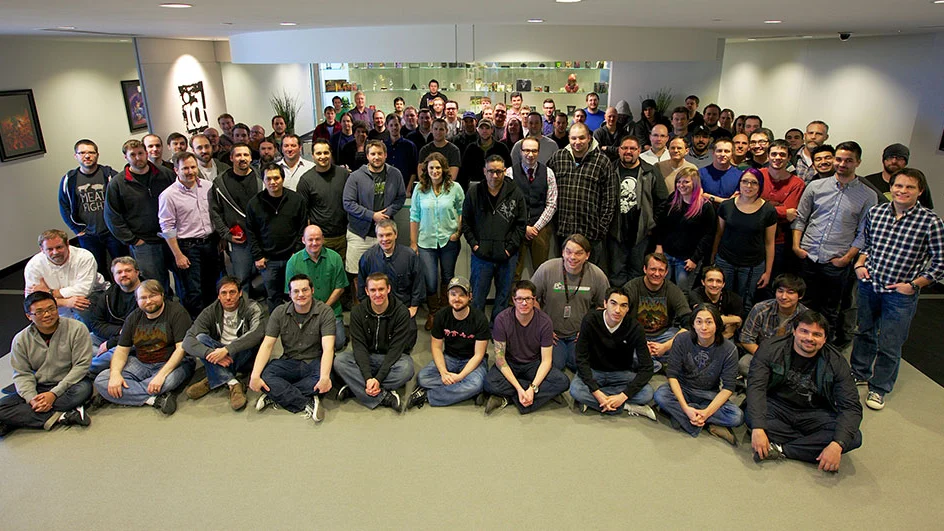
In a period marked by unprecedented instability within the video game industry, Microsoft’s gaming division, Xbox, has once again been at the epicenter of a significant workforce reduction, sparking widespread concern and contradictory narratives. This recent wave of layoffs, which saw an additional 1,600 roles impacted across Microsoft’s gaming portfolio, brought one decision into sharp focus: the drastic cuts at id Software, the legendary studio behind iconic franchises like Doom and Quake. Reports indicated that 136 employees, representing more than half of id Software’s workforce, were let go, prompting immediate fears about the studio’s future and its acclaimed proprietary engine, id Tech.
A Broader Context of Industry Turmoil
The layoffs at id Software are not an isolated incident but rather a stark reflection of a tumultuous period gripping the global video game industry. Following a boom during the COVID-19 pandemic, the sector has faced a significant correction, characterized by widespread job losses that have impacted thousands of developers. Industry analysts point to several contributing factors: over-hiring during the pandemic-driven surge, rising development costs for AAA titles, increased competition, shifts in consumer spending habits, and the ongoing integration challenges following a wave of major acquisitions.
Throughout 2023 and extending into 2024, the gaming industry has witnessed an alarming number of layoffs. Estimates suggest over 10,000 jobs were cut in 2023, a figure that has already been surpassed in the first half of 2024. Major publishers and developers, including Epic Games, Unity, Embracer Group, and Sony PlayStation, have all announced significant workforce reductions. Microsoft, having completed its monumental acquisition of Activision Blizzard for nearly $69 billion in October 2023, has been particularly active in this downsizing trend, striving to streamline its vast gaming operations. This acquisition, following its earlier purchase of ZeniMax Media (parent company of Bethesda Softworks and id Software) for $7.5 billion in 2021, expanded Microsoft’s gaming empire considerably, but also brought with it the imperative to consolidate and optimize, often at the expense of human capital.
Chronology of Microsoft’s Gaming Restructuring
Microsoft’s journey through this period of expansion and contraction has been closely watched.
- March 2021: Microsoft completes the acquisition of ZeniMax Media, bringing esteemed studios like Bethesda Game Studios, Arkane Studios, Tango Gameworks, and id Software under the Xbox banner. This move was celebrated as a strategic push to bolster Xbox Game Pass and proprietary content.
- January 2023: Microsoft initiates a company-wide layoff of 10,000 employees, with an unspecified number impacting its Xbox and ZeniMax divisions. This was presented as a response to global economic uncertainties and a need for greater efficiency.
- October 2023: Microsoft successfully closes its acquisition of Activision Blizzard King, making it one of the largest video game companies globally.
- January 2024: Just months after the Activision Blizzard acquisition, Microsoft announces another substantial round of layoffs, impacting approximately 1,900 employees across its Xbox, Activision Blizzard, and ZeniMax divisions. This wave notably led to the closure of Arkane Austin (developer of Redfall) and Tango Gameworks (developer of Hi-Fi Rush), two studios whose recent releases had garnered significant attention.
- May/June 2024: The latest round of cuts, reported in various outlets, saw an additional 1,600 employees impacted, with id Software bearing a disproportionately heavy burden, losing 136 staff members. These cuts occurred shortly after the acclaimed launch of Doom: The Dark Ages Revelations DLC, adding a layer of bitter irony to the situation.
The id Software Conundrum: Fears and Reassurances
The immediate aftermath of the id Software layoffs was characterized by a torrent of alarming reports and speculation. Concerns quickly surfaced that id Tech, the studio’s legendary in-house engine responsible for the visual and performance fidelity of games like Doom Eternal and Quake Champions, might be sidelined or even abandoned in favor of more widely used engines such as Unreal Engine. Such a move would be a seismic shift, given id Tech’s historical significance in game development and its status as a cornerstone of id Software’s identity and technical prowess. Further fears suggested that id Software, once an industry titan, would be reduced to a "support studio," potentially integrated into the vast development ecosystem of the Call of Duty franchise, diluting its creative autonomy and unique output.
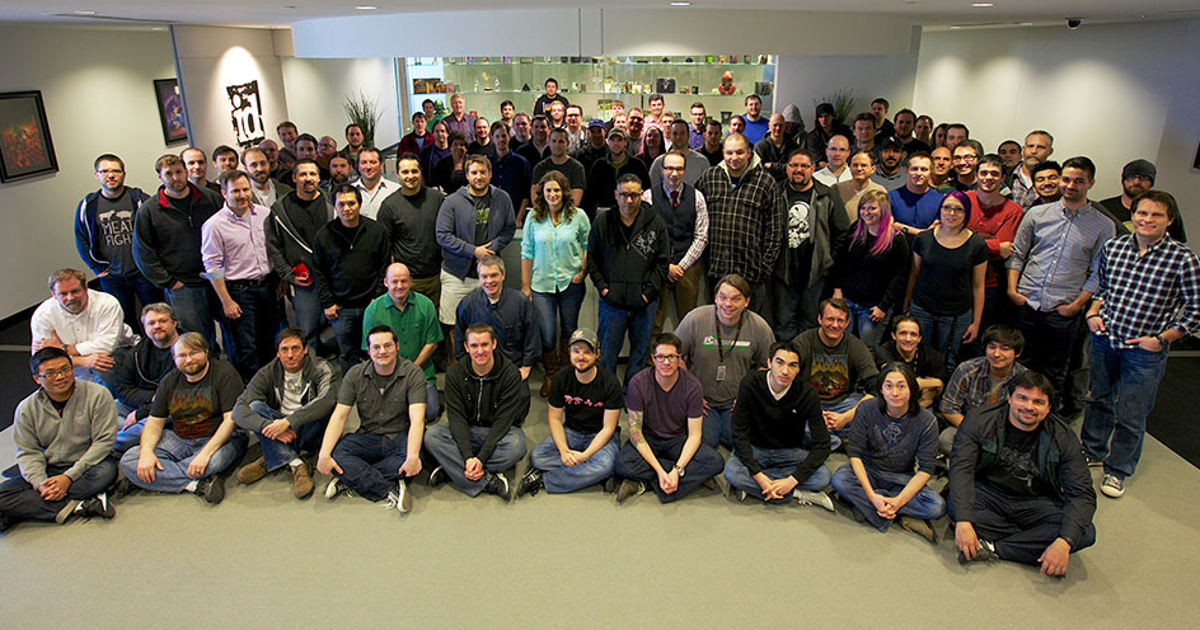
However, almost as quickly as these fears emerged, a counter-narrative began to take shape. id Software itself issued a carefully worded statement, acknowledging that "while our studio was impacted," the company still possessed "the crew we need to build the games and tech we’re known for." This statement, while vague, sought to project an image of resilience. More concrete reassurances followed from prominent figures. Tom Warren of The Verge, a reputable journalist known for his insights into Microsoft, reported that id Software was "now in the early stages of a new Doom game," suggesting a continued commitment to its flagship franchise.
Perhaps the most direct rebuttal came from id Software’s Game Director, Hugo Martin, a key creative force behind the modern Doom titles. Martin explicitly stated that the studio had not been "gutted," explaining, "We’re the size we were when we made Doom 2016, and id Tech is very much alive and well." This assertion aimed to directly address the most pressing concerns about the studio’s operational capacity and the future of its technology. Furthermore, reports indicated that Xbox’s broader strategy of "refocusing its core franchises" specifically included Doom and Quake, alongside the recently announced Fallout games, seemingly reinforcing id Software’s continued importance within Microsoft’s portfolio.
Reconciling the Contradictions: The "Phased Development" Logic
The conflicting information—severe layoffs juxtaposed with reassurances of continued vitality and ongoing major projects—presents a perplexing paradox. How can a studio lose over half its workforce and still claim to be operating effectively, particularly when its parent company has a documented history of making contradictory statements?
One plausible, albeit deeply cynical, explanation lies in the economics and phased nature of modern AAA game development. Developing a blockbuster title today is an incredibly complex and expensive undertaking, often spanning four to five years or even longer, with development teams swelling into the hundreds of employees and budgets frequently exceeding $100 million. However, a game’s development cycle is not a static process requiring a consistent maximum headcount throughout. It typically progresses through distinct phases:
- Pre-production: This initial phase involves conceptualization, design documentation, prototyping, and foundational technical work. It often requires a smaller, highly experienced core team of designers, engineers, and artists.
- Full Production: This is the most labor-intensive phase, where the bulk of assets are created, systems are implemented, and the game is built out. This phase demands the largest team size, with specialists across all disciplines working concurrently.
- Alpha/Beta Testing & Polish: As the game nears completion, focus shifts to extensive testing, bug fixing, optimization, and final artistic polish. The team size may slightly reduce, with a core group focusing on refinement.
- Post-Launch Support & DLC: After release, a smaller team typically handles patches, updates, and the development of downloadable content (DLC) or expansions.
The timing of the id Software layoffs is critical in this context. The studio had just released its Revelations expansion for Doom: The Dark Ages, marking the conclusion of that project’s full production and post-launch support cycle. According to reports, id Software is now transitioning into the early stages of pre-production for its next Doom game. It is in this pre-production phase that a significantly smaller core team can define the game’s vision, mechanics, and technical requirements.
From a purely financial perspective, a company like Microsoft might view this as an opportune moment to "right-size" the studio. If a programmer costs, for example, $150,000 annually, maintaining a large workforce during a leaner pre-production phase—which could last one to two years—represents a substantial ongoing expenditure. By reducing headcount after a project’s completion and before the next one enters full production, Microsoft could be optimizing its operational costs. This approach, while financially efficient in the short term, often overlooks the immense human cost and long-term strategic disadvantages.
The Hidden Costs and Broader Implications
While this "phased development" theory offers a logical framework for the layoffs, it is far from an optimal or ethically sound management practice. The decision to cut over half of id Software’s staff, irrespective of the development cycle, carries profound hidden costs and broader implications that could undermine the studio’s future success and Microsoft’s standing in the industry.

-
Morale and Trust Erosion: The most immediate and palpable consequence is the devastating impact on employee morale. Witnessing colleagues, some of whom have been with the studio for years or even decades, being laid off, especially after contributing to a highly acclaimed project, creates an atmosphere of fear and insecurity. Remaining employees may experience "survivor’s guilt," increased workload pressure, and a pervasive sense that their dedication and performance offer no guarantee of job security. This erosion of trust can lead to decreased productivity, a reluctance to innovate, and ultimately, a brain drain as top talent seeks more stable environments.
-
Loss of Institutional Knowledge and Talent Drain: id Software is not just any studio; it is a pioneer of the first-person shooter genre, boasting an unparalleled legacy of technical innovation, particularly with its id Tech engine. The reports indicating that the id Tech engine team was a major focus of the cuts are particularly concerning. id Tech is celebrated not only for its visual fidelity but also for its exceptional optimization—a critical advantage in an era of escalating hardware demands and development costs. Laying off experienced engineers and specialists responsible for building and maintaining such a complex and powerful proprietary engine is akin to self-sabotage. Replacing decades of accumulated institutional knowledge, specific engine expertise, and collective problem-solving capabilities is incredibly difficult and time-consuming. The departure of long-serving employees, such as the "employee number 13" mentioned in the original article who had been at id since the days of John Romero and John Carmack, represents an irreplaceable loss of historical context and deep understanding.
-
Impact on Creative Identity and Innovation: id Software has a unique track record of reinventing Doom from its fundamental principles, much like Nintendo consistently innovates with its 3D Mario series. This ability to extract the essence of a franchise and present it anew with each iteration requires a stable, experienced, and creatively aligned team. Historically, id Software, like Nintendo, benefited from remarkable staff stability, fostering a culture of mutual understanding and shared vision. Many credits from Doom 2016 reappear in Eternal and The Dark Ages, testifying to this continuity. Microsoft’s recent actions have shattered this stability. The long-term impact on id Software’s capacity for groundbreaking innovation and its ability to maintain its distinctive creative voice remains a significant unknown. Will the "next Doom game" be able to achieve the same level of polish, technical excellence, and revolutionary gameplay with a drastically reduced and potentially demoralized team?
-
Allegations of Union Busting: Reports have also surfaced suggesting that the layoffs in Texas, which encompassed id Software developers and broader ZeniMax Media employees, disproportionately targeted union members. Of the 158 Xbox workers laid off in Texas, 146 were reportedly members of the Communications Workers of America (CWA). If these allegations prove true, it introduces another layer of controversy, painting the layoffs as not just a cost-cutting measure but also a strategic move to undermine nascent unionization efforts within Microsoft’s gaming studios. This would align with broader tensions between organized labor and large tech corporations within the gaming sector.
-
Xbox’s Damaged Reputation: Microsoft’s gaming division has developed an unfortunate pattern of public statements that are swiftly contradicted by its actions. From Xbox EVP Asha Sharma proclaiming in 2022 that the company would "lean into" its "iconic teams" to cutting 20 percent of its workforce within two years, to the reported plan to sever ties with Ninja Theory shortly after showcasing their new Senua game, Xbox’s credibility has taken a severe hit. This inconsistency creates a climate of distrust among employees, potential hires, and the wider gaming community, making it harder for Microsoft to attract and retain top talent or garner goodwill for future endeavors.
The Uncertain Future
The situation at id Software is emblematic of the profound challenges facing the video game industry. While the studio’s official statements and those of its key personnel project an image of resilience and continued creative ambition, the reality on the ground is undoubtedly more complex. The loss of over half its workforce, particularly experienced veterans and specialists in its core technology, represents a seismic shift.
The future of id Software, its legendary id Tech engine, and the next iteration of Doom now hinge on several critical factors: the remaining team’s ability to shoulder increased responsibilities, Microsoft’s long-term commitment beyond short-term cost-cutting, and the capacity for innovation despite significant disruption. While Doom and Quake are reportedly central to Xbox’s strategy of focusing on core franchises, the path to achieving that focus appears paved with instability and uncertainty. Microsoft has fundamentally altered the foundation of one of gaming’s most storied studios. The full ramifications of blowing "that stability out of the water" remain to be seen, but the echoes of this decision will undoubtedly resonate throughout the industry for years to come.