







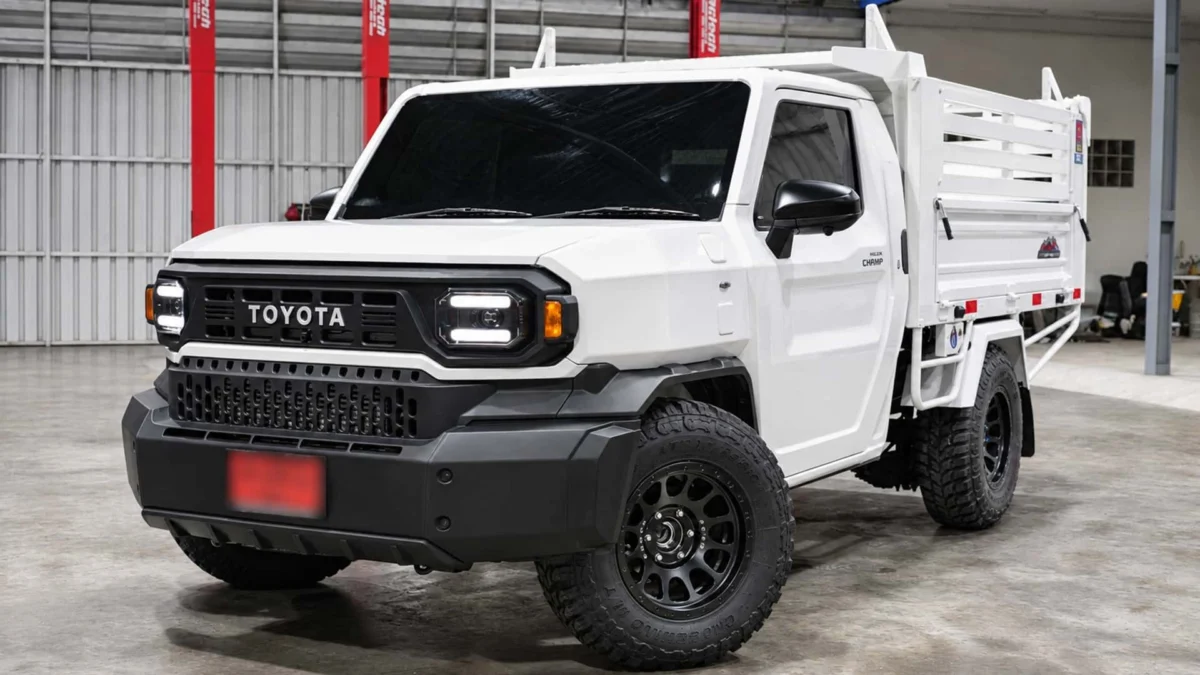
The automotive landscape in the United States is currently experiencing a significant shift in consumer interest, moving away from the increasingly massive footprint of modern full-size trucks toward more nimble, functional, and utilitarian alternatives. Capitalizing on this trend, a new entity known as Rok Trucks has officially announced its intention to import, modify, and federalize the Toyota Hilux Champ for the American market under its own brand identity. This development follows a surge in interest regarding the re-emergence of compact "kei-style" trucks, offering a more robust and versatile option for buyers who prioritize cargo capacity and modularity over luxury features.
A Modular Platform for Diverse Applications
The vehicle in question, marketed by the company as the "Base Rok," is derived directly from the Toyota Hilux Champ, a vehicle designed by Toyota to serve as a global, entry-level workhorse. Unlike the traditional Toyota Hilux, which has evolved into a mid-size pickup truck with creature comforts, the Champ is a minimalist, modular platform engineered for high-utility tasks in emerging markets.
Rok Trucks intends to offer the Base Rok in three distinct configurations, categorized by their wheelbase and bed length: the BRT-1800, BRT-2300, and BRT-2600. These designations correspond to bed lengths starting at 6 feet, 2 inches, and extending up to 8 feet, 8 inches. The design philosophy centers on a steel tray-back bed that features drop-down sides and a completely flat loading floor. By removing the protruding wheel wells typically found in passenger-oriented pickups, the Base Rok provides an unobstructed cargo area, allowing for a payload capacity of approximately 2,200 pounds. This architecture makes the truck highly adaptable for commercial use, ranging from construction and landscaping to urban delivery services.
Beyond the standard flatbed, the modularity of the platform allows for specialized variants. Rok Trucks has highlighted 10 custom configurations, including the "Rok Tipper," which utilizes a hydraulic system for simplified dumping, and the "Food Rok," designed to cater to the mobile vending industry. Furthermore, the "Rok Lift" variant incorporates a powered rear platform for heavy lifting, and there is even a dedicated camper configuration that includes integrated sanitation facilities.
Mechanical Specifications and Performance
The Base Rok adheres to a strictly functional mechanical layout. At its core is a four-cylinder gasoline engine paired with a five-speed manual transmission, sending power exclusively to the rear wheels. While the Toyota Hilux Champ platform supports a diesel powertrain in various international markets, Rok Trucks has indicated that, at present, American consumers should not anticipate a diesel option due to the complexity of local emissions compliance.
For buyers seeking increased performance and ease of use, the company offers an optional six-speed automatic transmission and a four-wheel-drive system. These upgrades are priced at $1,100 and $2,800, respectively. Despite its stripped-back nature, the vehicle does include essential modern conveniences, such as power windows, air conditioning, and USB-C connectivity. To align with global safety expectations, the truck is equipped with active and passive safety features, including forward collision warning, emergency braking, airbags, and reinforced side-impact protection beams.
The Challenge of Federalization
While the announcement of the Base Rok has generated considerable excitement, the path to the American showroom floor is fraught with significant regulatory hurdles. The Toyota Hilux Champ was not originally engineered to meet the stringent safety and emissions standards mandated by the United States government. As a result, Rok Trucks faces a massive, capital-intensive process to "federalize" the vehicle.
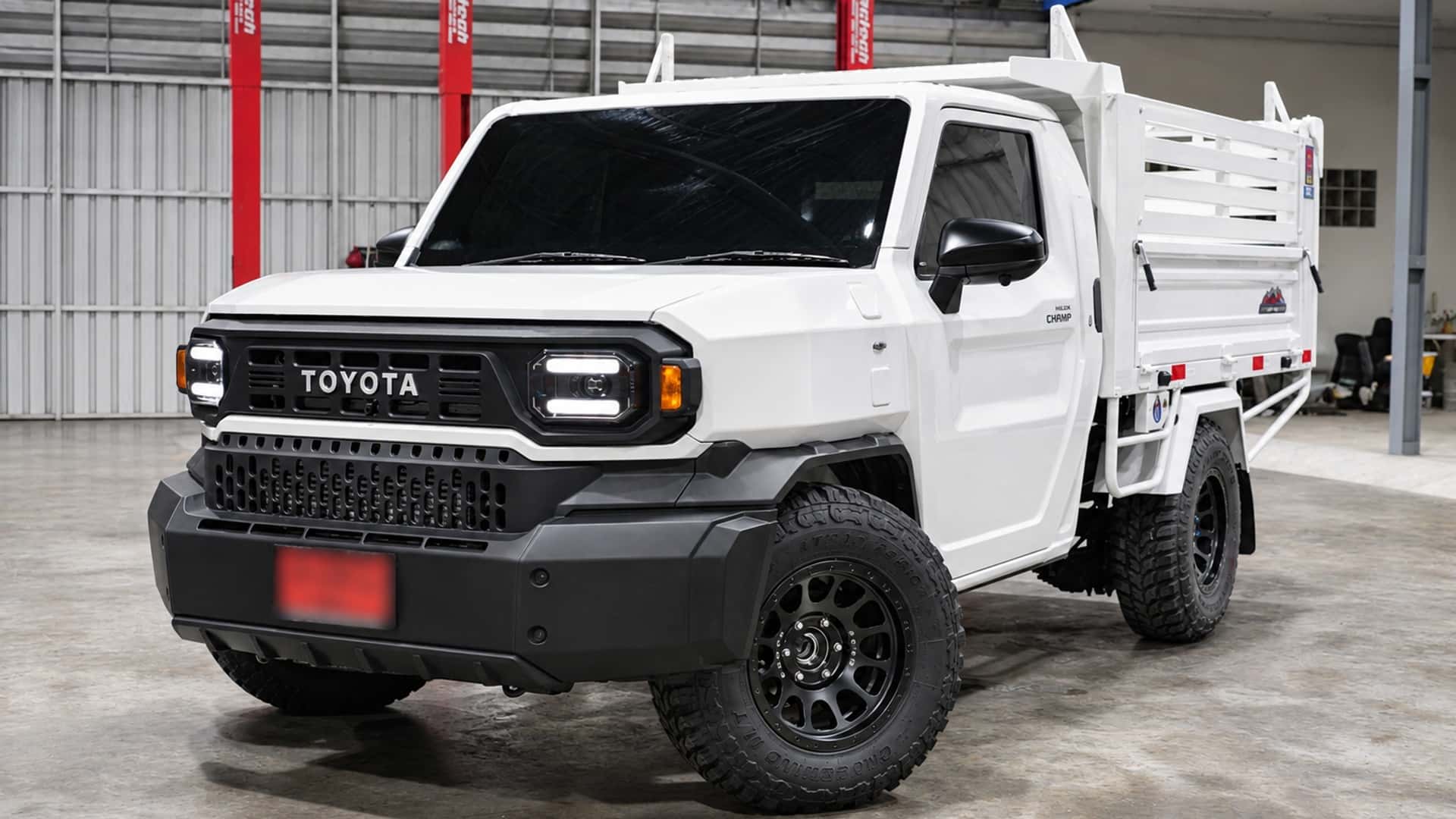
This process involves several critical steps. First, the powertrain must undergo rigorous certification by the U.S. Environmental Protection Agency (EPA) to ensure it meets federal emissions standards. Second, the vehicle must pass the Federal Motor Vehicle Safety Standards (FMVSS), which typically requires destructive crash testing to verify that the structure and restraint systems meet local criteria. These requirements are distinct from the standards in Thailand or the United Kingdom—where Rok has already gained approval for sales—and satisfying them represents a substantial investment of time and resources.
Rok Trucks has publicly acknowledged these challenges, noting that they are currently in the preparation phase for an American rollout. The company has set a target for further announcements in early 2027, signaling a multi-year timeline before these trucks could potentially reach U.S. customers.
Market Context and Strategic Outlook
The emergence of Rok Trucks arrives at a time when the "small truck" segment is undergoing a renaissance. For decades, American truck buyers were funneled toward larger, more expensive, and more complex vehicles. However, the recent introduction of the Ford Maverick and the Hyundai Santa Cruz has proven that there is a deep, untapped demand for smaller, more efficient pickups. The potential arrival of the Scion Kei-01 and the Rok Trucks Base Rok suggests that the market is beginning to segment further, with consumers increasingly looking for "right-sized" tools for specific jobs rather than general-purpose, oversized vehicles.
The pricing strategy for the Base Rok is aggressive, with the company announcing a base price of $24,950, regardless of the selected bed length. Reservations are currently open, requiring a modest $50 deposit. For early adopters, a "Founders Edition" is available for a $999 deposit, which includes a complimentary vehicle wrap and priority delivery status.
Implications for the Industry
The success of the Base Rok will likely serve as a litmus test for the viability of importing and federalizing global-market platforms for the U.S. consumer. If Rok Trucks succeeds in navigating the complex web of DOT and EPA regulations, it could pave the way for other boutique importers to bring specialized international vehicles to North America.
Conversely, the project highlights the immense difficulty of competing with established automakers in the U.S. market. Toyota, for its part, designed the Hilux Champ as a cost-effective, low-complexity tool for developing nations; it was never intended to compete with the high-tech, luxury-focused pickup trucks that dominate U.S. sales charts. By attempting to bridge this gap, Rok Trucks is essentially acting as a manufacturer rather than a traditional dealership.
Ultimately, the Base Rok represents a desire for simplicity in an era of increasing automotive complexity. Whether it will overcome the regulatory barriers to provide American drivers with a modern, no-nonsense utility vehicle remains to be seen. As the industry watches the 2027 timeline, the project remains one of the most ambitious aftermarket ventures in recent years, reflecting a broader trend of consumers questioning the status quo of vehicle size and utility.
Chronology of Development
- Global Debut: The Toyota Hilux Champ (the donor platform) is introduced in Thailand as a modular, low-cost utility vehicle.
- UK Approval: Rok Trucks secures the necessary regulatory approvals to begin sales in the United Kingdom, with first deliveries scheduled for early 2025.
- U.S. Announcement: Rok Trucks opens reservation books for the American market, announcing the Base Rok branding and a starting price of $24,950.
- Current Phase: The company is currently engaged in the preparation for federalization, including potential EPA and FMVSS certification efforts.
- Projected Milestone: Further announcements regarding the U.S. market rollout are scheduled for early 2027, marking the beginning of the anticipated formal introduction.
As the automotive market continues to evolve, the arrival of companies like Rok Trucks underscores a fundamental change in the relationship between drivers and their vehicles. By focusing on utility, accessibility, and a modular design, the Base Rok offers a glimpse into a potential future where the heavy-duty pickup is not the only option for those who need to get work done. Whether this vision can be sustained under the weight of U.S. regulatory standards is the primary question that will define the success of this venture in the coming years.