










The automotive industry is currently witnessing a massive pivot toward electrification, with legacy manufacturers scrambling to establish a foothold in a market dominated by battery-electric vehicles (BEVs). Among these global players, Kia Corporation has distinguished itself as a frontrunner, boasting a diverse and sophisticated lineup of EVs that cater to varying consumer needs. However, this transition to a leader in sustainable mobility was not an overnight occurrence. Instead, it is the result of four decades of deliberate research, iterative engineering, and experimental development. By examining the brand’s trajectory from the 1986 Asian Games to its current state-of-the-art modular platforms, one can see how Kia’s early, rudimentary experiments paved the way for its modern-day dominance.
The Genesis: The 1986 Besta Experiment
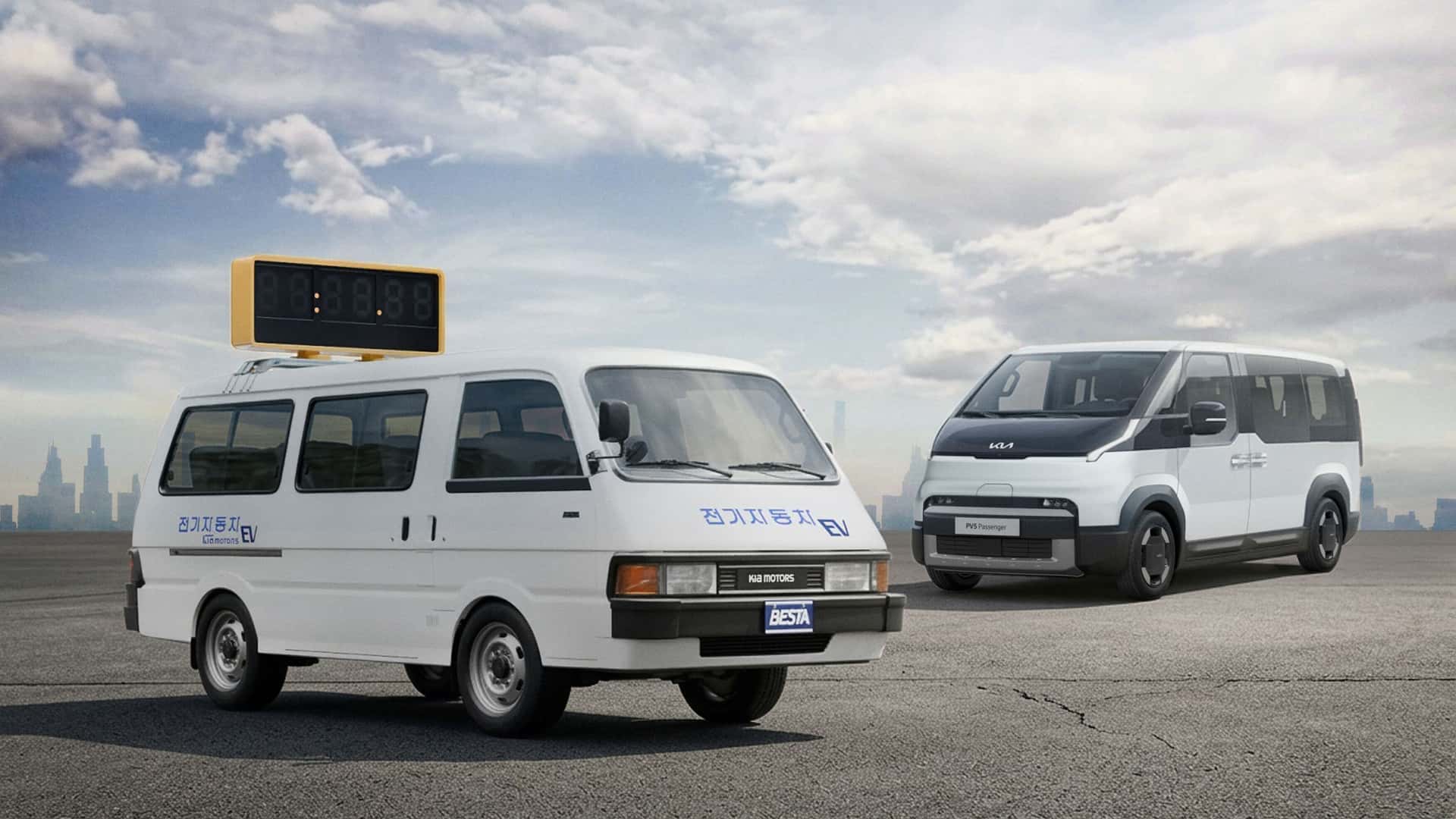
The story of Kia’s electric ambitions begins in the mid-1980s, long before EVs were a mainstream consideration for major automakers. In 1986, the South Korean government and local organizers were preparing for the Asian Games, a significant international multi-sport event. The organizers faced a unique logistical challenge: they required a specialized vehicle to act as a mobile timekeeping and camera platform for the marathon races. The vehicle needed to maintain a constant, steady pace alongside elite runners without subjecting them to the harsh exhaust emissions of a traditional internal combustion engine.
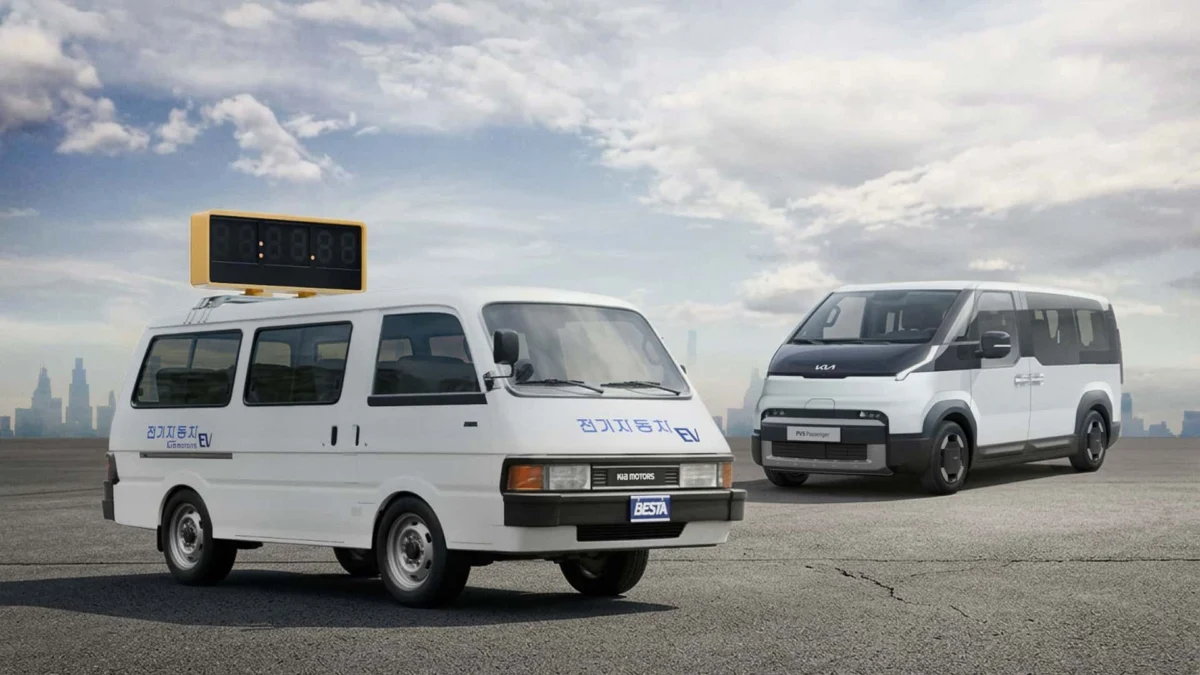
Kia, seizing the opportunity to demonstrate its domestic engineering capabilities, turned to the Besta. At the time, the Besta represented a milestone for the company as its first self-developed van, marking a strategic shift away from the Mazda-based Bongo platform it had previously utilized. Engineers undertook a radical conversion: the 2.0-liter diesel engine was removed and replaced with a pioneering electric powertrain. Equipped with a 35 kWh battery pack, the prototype was capable of completing the 26.1-mile marathon course on a single charge. While the range was limited by the battery technology of the era, the vehicle successfully served its purpose, earning the distinction of being South Korea’s first-ever electric vehicle.
Chronology of Innovation: From Prototypes to Production
Following the success of the Besta project, Kia did not abandon its interest in electric propulsion. The subsequent years saw a series of incremental developments that bridged the gap between academic research and commercial viability.
In 1993, Kia achieved another milestone with the Pride EV. Based on the hatchback model known internationally as the Ford Festiva, the Pride EV was certified for commercial sale in South Korea. While it did not enter mass production, it represented a significant leap forward in packaging. The vehicle featured a 17.4 kWh battery and was notably equipped with solar panels integrated into the bodywork, which the company claimed could provide nearly ten miles of additional range—a highly innovative concept for the early 1990s.
The next major shift occurred in 2011 with the launch of the Kia Ray EV. This was the brand’s first true series-production electric vehicle. Primarily available in the Korean domestic market, the Ray EV served as a testbed for lithium-ion battery integration in a small-car form factor. It was followed in 2014 by the Soul EV, which marked Kia’s entry into the North American market. The Soul EV was a watershed moment, offering a 93-mile range on a single charge, which was competitive for the segment at the time and proved that Kia could manufacture an EV that met the safety and reliability standards of international regulators.
The Accelerating Pace of Technological Advancement
The rate of improvement within the Kia EV portfolio is perhaps most clearly illustrated by the transition from the Soul EV to the Niro EV. In 2014, the Soul EV offered approximately 93 miles of range. Just four years later, in 2018, the Kia Niro EV arrived, pushing that range to 238 miles. This massive jump in efficiency and battery capacity represented more than just an engineering win; it changed the consumer proposition. Within the span of a single product cycle, Kia’s EVs evolved from being niche "second cars" relegated to short-distance urban commuting into primary vehicles capable of long-range travel.
This acceleration is tied directly to the modularity of modern EV platforms. Kia, alongside its parent company Hyundai, invested heavily in the Electric-Global Modular Platform (E-GMP). This platform allows for rapid charging, vehicle-to-load (V2L) capabilities, and high-performance output. It has facilitated the rollout of the dedicated EV series, including the EV6, EV9, and the upcoming smaller models like the EV2, EV4, and EV5.
Global Impact and Market Penetration
The current market reality reflects the success of this forty-year accumulation of knowledge. In markets such as the United Kingdom, EVs now account for roughly 37% of Kia’s total sales. This strong uptake indicates that the brand has successfully aligned its product strategy with the shifting demands of consumers who are increasingly prioritizing sustainability and lower operating costs.
However, the distribution of these models remains uneven. While the PV5—a commercial van that spiritually succeeds the 1986 Besta—is currently being deployed in various global regions to support logistics and business fleets, its availability in North America remains limited. The company is currently navigating the complexities of regional trade laws, charging infrastructure variations, and consumer preferences. Despite this, the intent to scale remains clear. Kia has explicitly stated its plans to target the entry-level EV market, with the EV3 intended to challenge both established competitors and emerging low-cost manufacturers from China.
Strategic Implications and Future Outlook
The transition of a legacy automaker into a software-defined, electric-first entity is fraught with risk, yet Kia’s history suggests a methodical approach to risk mitigation. By starting with "conversion" vehicles in the 1980s, the brand learned the fundamentals of thermal management, weight distribution, and energy density without the immediate pressure of mass-market commercial failure.
Analysts suggest that Kia’s current strength lies in its ability to offer a "full-spectrum" lineup. By producing everything from small city cars to three-row SUVs like the EV9, the brand is insulating itself against market volatility. Furthermore, the 800-volt charging architecture found in its newer models addresses the primary barrier to EV adoption: charging anxiety.
As the industry moves toward 2030, the implications of Kia’s early investment are profound. The brand has transitioned from a manufacturer that "ripped out engines" to one that designs vehicles around the battery pack itself. This shift, while seemingly technical, is the foundation of the company’s modern competitive advantage. Kia’s ability to pivot from the 1986 Asian Games marathon van to the high-tech, multi-purpose vehicles of today serves as a case study for long-term industrial planning. While the road ahead involves overcoming challenges in infrastructure and raw material supply chains, the foundation laid over the past four decades provides a robust framework for continued growth in the global electric vehicle market.