









The technology sector experienced a whirlwind of activity this week, headlined by a significant hardware expansion from Apple, a troubling quality control narrative surrounding the iPhone Duo, and a competitive push into the global mid-range smartphone market by Poco. From the integration of touchscreen technology in professional-grade laptops to controversial internal production allegations, the landscape of consumer electronics is shifting as companies prepare for the critical holiday retail window.
Apple’s Hardware Evolution: MacBook Pro and iPad Mini Updates
Apple has officially signaled a paradigm shift in its professional computing lineup by introducing the new MacBook Pro models featuring “PROLED XDR” technology. This marks the first time in the company’s history that the macOS ecosystem has embraced touchscreen functionality. By integrating tandem OLED panels, Apple is addressing long-standing professional demands for deeper blacks, infinite contrast ratios, and superior color accuracy.
The PROLED XDR displays are engineered to support variable refresh rates ranging from 10Hz to 120Hz, ensuring energy efficiency during static tasks and fluid motion during high-performance creative workflows. With a peak brightness capability of 2,000 nits, these displays are positioned to compete directly with high-end reference monitors used in color grading and film production. Retaining the M5 Pro and M5 Max chip architecture, the new machines have shed the physical notch in favor of the Dynamic Island—a design language previously reserved for the iPhone. Starting at $2,899 and hitting shelves on November 6, the MacBook Pro represents a calculated attempt to consolidate the creative workflow into a single, touch-enabled hardware unit.
Parallel to the laptop refresh, the iPad mini has received a significant internal upgrade, now featuring an 8.5-inch OLED display and the A20 Pro chipset. However, this launch has invited scrutiny regarding chip binning. The entry-level 128GB and 256GB models utilize a binned version of the A20 Pro, featuring one fewer CPU core and reduced NPU performance compared to the 512GB variant. Furthermore, the decision to retain a 60Hz refresh rate on the iPad mini has drawn criticism from industry analysts who argue that at this price point, 120Hz ProMotion technology should be standard across all professional-tier tablets.
Quality Control Concerns: The iPhone Duo Controversy
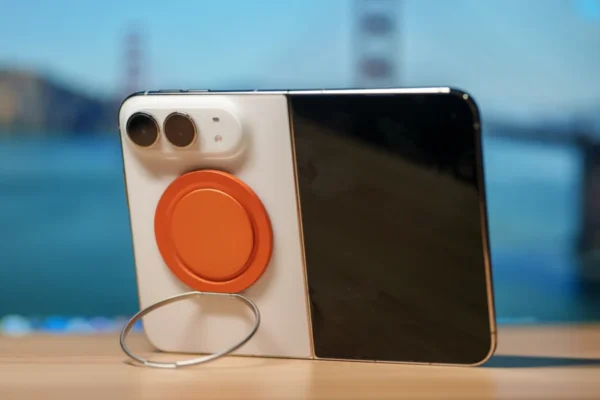
While new product announcements dominated the headlines, the iPhone Duo faced a period of reputational volatility. Reports of inner display damage on the foldable device have surfaced, prompting an official acknowledgment from Apple. The company has instructed affected users to utilize AppleCare for replacements, a standard procedure for early-stage hardware defects.
The situation was compounded by a report originating from an unnamed Foxconn employee, which alleged that Apple may have relaxed its quality inspection thresholds to expedite the manufacturing process ahead of the holiday shopping season. While the report suggested that specific component batches were replaced, it also maintained that official quality control standards remained ostensibly unchanged. This discrepancy highlights the perennial tension between high-volume manufacturing demands and the maintenance of “premium” product standards. Investors and consumers alike will be watching closely to see if the display damage reports remain isolated incidents or signal a systemic failure in the iPhone Duo’s hinge or display durability.
Poco X8s: Strengthening the Global Mid-Range
In the competitive global smartphone arena, Poco has unveiled the X8s, a device designed to disrupt the mid-range segment through aggressive hardware specifications. The device features a 6.35-inch 1.5K LTPO AMOLED display capable of hitting a staggering 3,500 nits of peak brightness, a figure that rivals many flagship devices.
Under the hood, the X8s is powered by the Snapdragon 7 Gen 4 chipset, paired with up to 12GB of RAM and 512GB of internal storage. The inclusion of a 6,330mAh battery combined with 100W fast charging suggests that Poco is targeting power users who prioritize longevity and convenience. With an IP68 dust and water resistance rating and a versatile triple-camera array—comprising a 50MP main sensor, a 50MP telephoto lens, and an 8MP ultrawide—the X8s is positioned to be a formidable competitor in markets where price-to-performance ratios are the primary drivers of consumer behavior.
Software Ecosystems and Creative Tooling
Apple’s software strategy is also evolving, with the rollout of iOS 27.2 serving as a critical infrastructure update. Beyond patching over 160 security vulnerabilities, this update expands the linguistic capabilities of Siri AI, now supporting French, Korean, Japanese, Spanish, and Portuguese. Additionally, the integration of Apple Pencil USB-C support for the iPhone Duo suggests a broader strategy to bridge the gap between phone and tablet utility.
On the creative software front, Apple has delivered the most substantial update to its subscription-based creative bundle since its inception. Final Cut Pro for Mac now includes a deep integration with MotionVFX, introducing professional-grade templates, rotoscoping tools, and advanced tracking. By integrating these features alongside a new Content Hub and Pixelmator Pro workflows, Apple is positioning its subscription service as a comprehensive “all-in-one” suite, potentially reducing the industry’s reliance on third-party plugin developers.
Industry Leaks and Emerging Competition
The hardware pipeline remains active, with new leaks surrounding the anticipated iPhone 18e. Early intelligence suggests the device will sport a 6.12-inch LTPS OLED display with a 60Hz refresh rate and the A20 chipset. Should the current development trajectory hold, a spring 2027 release date is plausible, mirroring the cadence of the existing “e” series of handsets.
Simultaneously, the high-end Android market is bracing for the arrival of the Motorola Signature 27. A recent listing from a Portuguese retailer pegged the device at approximately €1,594.90. While currently listed as out of stock, the specifications—which include the Snapdragon 8 Elite Extreme Gen 6 chipset and a 200MP periscope camera—suggest that Motorola is attempting a bold reentry into the ultra-premium tier. The mention of a "Razr Flex" in the same retailer listing has further fueled speculation regarding the company’s upcoming foldable strategy.
The Future of Social Consumption: Instagram’s Video Pivot
Social media platforms continue to adapt to changing user consumption habits, with Instagram testing a new format dubbed “Features.” This format allows select creators to upload horizontal, long-form videos of up to 90 minutes. By targeting podcasters and long-form content creators, Instagram is signaling an intent to compete more directly with YouTube’s long-form ecosystem.
Initially launching in the Explore feed with an option for users to transition to full-screen viewing, the format is expected to eventually migrate to the Instagram TV app. This shift underscores a broader trend in the tech industry: the convergence of short-form, rapid-consumption content with deep, long-form engagement. For creators, this provides a centralized hub for content, while for Instagram, it represents an opportunity to increase dwell time and ad inventory capacity.
Implications and Future Outlook
As the industry moves toward the end of the year, several key themes have emerged. First, the move toward OLED and high-brightness displays is no longer limited to flagship smartphones; it is rapidly becoming the industry standard for laptops, tablets, and mid-range devices alike. Second, the increasing complexity of hardware—particularly with foldables and multi-layered OLED screens—is putting unprecedented pressure on supply chains and quality control departments.
The coming months will likely see a battle of attrition as companies balance the need for innovation with the necessity of maintaining brand trust. For consumers, the current landscape offers more power and versatility than ever before, but it also demands a more discerning eye toward the hidden trade-offs involved in high-end product manufacturing. Whether through the professional-grade capabilities of the new MacBook Pro or the aggressive pricing of the Poco X8s, the tech sector remains in a state of rapid, high-stakes evolution. As we approach the holiday season, the performance of these new products in real-world conditions will ultimately determine the trajectory of the market for the coming year.