






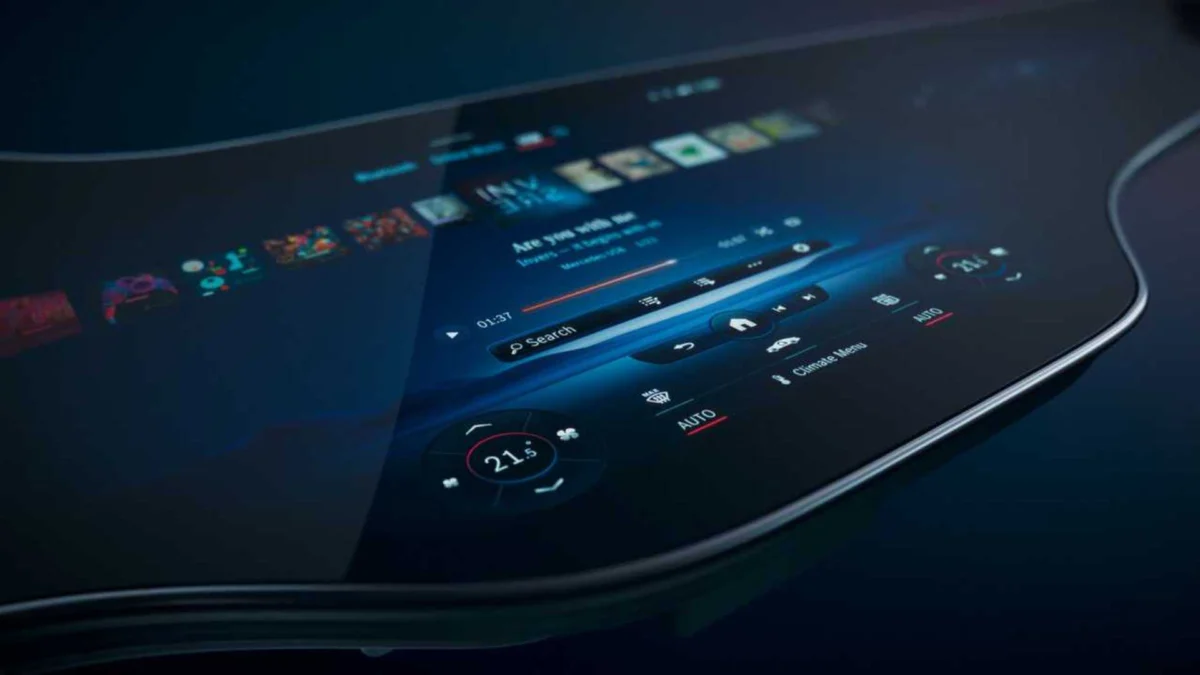
The automotive industry has spent the last decade engaged in a digital arms race, with major manufacturers competing to pack dashboards with increasingly expansive touchscreen interfaces. However, a significant pivot is currently underway at the highest levels of the luxury segment. Mercedes-Benz, once a pioneer in the transition toward the "all-digital" cockpit, has formally acknowledged that the trend of replacing physical switchgear with capacitive touch controls may have reached a point of diminishing returns. This strategic shift follows widespread feedback from consumers who have expressed frustration with the ergonomics of menu-driven climate controls and the lack of tactile feedback in modern vehicle cabins.
A Decade of Digital Transformation: The Chronology
The move toward digitizing the automobile interior began in earnest around 2010, gaining momentum with the introduction of high-resolution infotainment systems. For Mercedes-Benz, this culminated in the unveiling of the MBUX (Mercedes-Benz User Experience) Hyperscreen—a massive, pillar-to-pillar glass display that effectively eliminated traditional buttons in favor of digital icons and voice-activated commands.
During the mid-2010s, the industry rationale was clear: screens offered unparalleled flexibility. Software updates could introduce new features without requiring hardware changes, and a digital interface allowed for a minimalist, futuristic aesthetic that resonated with a younger, tech-savvy demographic. By 2020, this philosophy was the standard for luxury manufacturers. However, as these systems grew in complexity, the "user experience" began to suffer. Drivers were forced to navigate multiple sub-menus to perform basic tasks like adjusting fan speeds or heated seats—functions that previously required a single, intuitive flick of a physical dial.
The Turning Point: CEO Acknowledges Design Missteps
The shift in corporate strategy was confirmed during a recent Reddit-based question-and-answer session featuring Mercedes-Benz CEO Ola Källenius. In a rare moment of executive transparency, Källenius admitted that the industry-wide rush to digitize every aspect of the driving experience was not always the most effective path for the user.
"We basically just moved on with the times. It became a trend more and more for cars to become more digital, which played a part in us adding more functions to our models," Källenius noted. Crucially, the CEO acknowledged the physical limitations of these systems, expressing a personal preference for tactile input: "I do love a good rocker and roller on a steering wheel myself."
This statement signals a departure from the "screen-first" design philosophy that characterized the company’s recent flagship releases. The admission is not merely aesthetic; it is a recognition of human-machine interface (HMI) principles that prioritize safety and ease of use. When a driver is forced to divert their eyes from the road to tap a specific pixel on a screen, cognitive load increases significantly compared to operating a button that can be identified through muscle memory.
Data and Ergonomics: The Cost of Simplification
The pushback against touchscreens is backed by growing automotive research. Studies from organizations like the Swedish automotive magazine Vi Bilägare have conducted empirical tests comparing older vehicles with physical buttons against modern cars equipped with touch-only interfaces. The results consistently demonstrate that tasks such as adjusting temperature or seat heating take significantly longer on a touchscreen—often by a factor of four or more.
The implications for road safety are substantial. At highway speeds, a three-second distraction—the time required to navigate a menu and confirm an input—can result in a vehicle traveling over 250 feet without the driver’s full attention. While voice control systems have been marketed as a solution, they remain inconsistent, often failing to account for regional accents, road noise, or passengers speaking simultaneously. The return to "hard" buttons represents a pragmatic compromise between advanced connectivity and basic operational safety.

Implementing Change: The New Design Language
Mercedes-Benz has already begun integrating these lessons into its product pipeline. Recent updates to the GLS, GLE, and S-Class, as well as the transition toward the GLB EV and GLC EV lineups, feature a re-incorporation of physical switchgear. The company is actively moving away from the "all-screen" approach, opting instead for a "hybrid" model.
This hybrid approach acknowledges that while the digital dashboard is here to stay, it should not be the sole interface for the vehicle. Future cabin designs are expected to feature high-definition displays for navigation and media, while essential driving and climate functions return to physical toggles or haptic-feedback surfaces that mimic the sensation of a traditional button.
Broader Industry Implications
Mercedes-Benz is not an outlier in this transition; it is part of a broader industry correction. Other manufacturers, including Volkswagen and various Asian automakers, have faced intense criticism from the automotive press and consumer advocacy groups regarding the removal of physical controls. Volkswagen, for example, recently announced it would bring back buttons on steering wheels for future models following negative feedback from owners regarding their touch-sensitive haptic steering wheel controls.
The implications for the supply chain are also significant. Designing and manufacturing physical switches requires a more complex mechanical assembly than installing a flat-panel display. However, as brand loyalty becomes increasingly tied to the ease of the user experience, the cost of implementing these physical components is being viewed as a necessary investment in consumer satisfaction.
The Path Forward: Balancing Innovation and Intuition
Despite the reversal, Mercedes-Benz maintains that the digital revolution in the automotive sector was a necessary evolution. The company remains committed to high-tech features like augmented reality navigation, over-the-air updates, and advanced driver-assistance systems (ADAS). Källenius was clear that the company does not intend to abandon the digital cabin entirely, stating, "Simply turning back the clock is not the right approach."
The challenge for the next generation of Mercedes-Benz vehicles will be to synthesize these two worlds: the high-performance computing power of modern software with the proven reliability of mechanical tactile feedback.
As the industry moves toward 2030, the design of the car interior is likely to shift from "tech-centric" to "human-centric." This means that while screens will continue to provide rich, data-dense interfaces, the physical controls that govern the vehicle’s primary functions will return to their traditional, ergonomic roots. This recalibration is not a retreat from innovation, but a maturation of it—an understanding that the most "modern" car is not necessarily the one with the most screens, but the one that best understands the relationship between the driver, the machine, and the road.
The transition marks a pivotal moment for luxury automotive design. For a brand that has historically prided itself on engineering excellence, this move toward tactile simplicity is a return to form. By prioritizing the driver’s comfort and control, Mercedes-Benz is attempting to reconcile its legacy of mechanical precision with the demands of the digital age, setting a precedent that other luxury manufacturers are likely to follow in the coming years.