







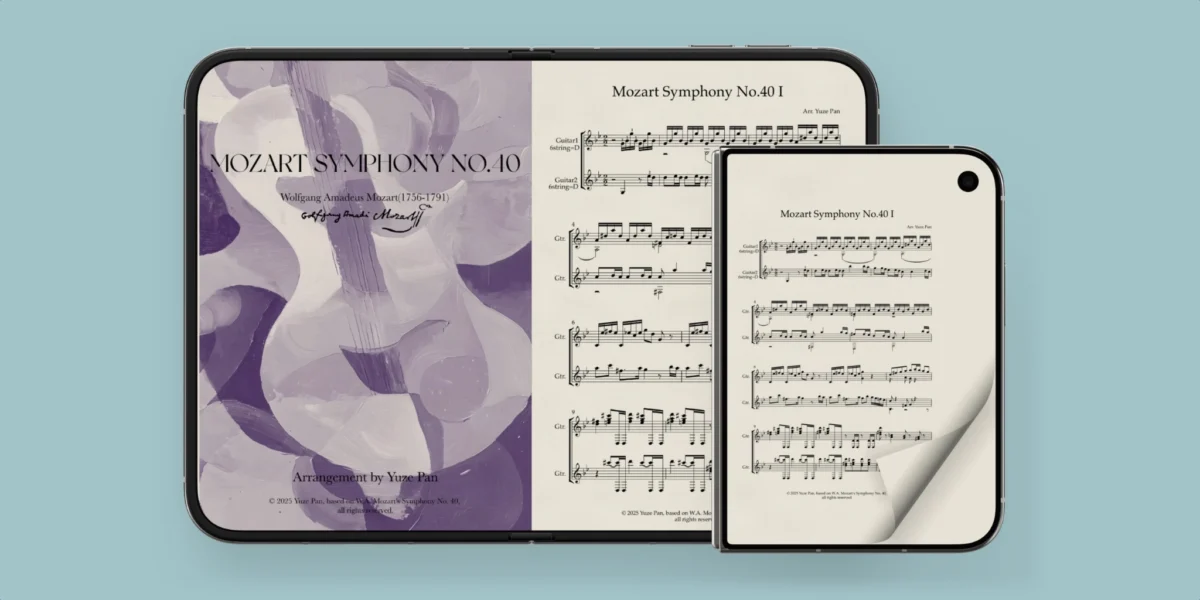
The intersection of classical musicianship and modern software engineering has yielded a novel solution to one of the most persistent frustrations faced by instrumentalists: the physical interruption of turning sheet music pages during a performance. CueFlip, a newly launched application developed by 15-year-old classical guitarist Yuze Pan, aims to eliminate this barrier through intelligent audio alignment, facial recognition, and a comprehensive built-in musical dictionary. Available on the App Store for iPhone and iPad, the application represents a significant leap forward in digital sheet music management, addressing the dynamic realities of live musical performance where rigid, timer-based page turners frequently fail.
For centuries, musicians have wrestled with the logistical challenge of navigating scores. Whether playing the piano, violin, or guitar, turning a physical page requires the instrumentalist to temporarily remove a hand from the instrument, disrupting the flow of the musical phrase. While digital tablets and Bluetooth foot pedals have mitigated some of these issues, they introduce their own set of complications. Foot pedals demand additional physical coordination, while automated timer-based apps are notoriously inflexible, struggling to adapt when a performer naturally accelerates or decelerates during an expressive passage. CueFlip addresses these core limitations by training itself on the specific cadence and interpretation of the individual performer.

The Genesis of CueFlip: A Musician’s Perspective
The development of CueFlip was born out of necessity rather than mere technological ambition. Yuze Pan, a resident of Beijing and a member of the Primal Guitar Quartet, encountered the problem daily during ensemble rehearsals. Traditional paper scores were causing frequent breakdowns in synchronization among the quartet members.
"Paper means taking a hand off the strings, a pedal or a wink is one more thing to remember in the middle of a phrase, and timed turns can’t follow a performer who speeds up and slows down," Pan explained regarding the limitations of existing solutions.
Pan’s journey into app development began in earnest in 2025 with an initial prototype that ultimately failed to meet the rigorous demands of ensemble performance. Undeterred, Pan returned to the drawing board in May 2026. Rather than relying on superficial solutions, the young developer dove deeply into academic research surrounding audio alignment algorithms. He brought successive builds of the software to the Primal Guitar Quartet’s daily rehearsals, testing, refining, and stress-testing the application in real-world musical environments until the software could reliably keep pace with live performance nuances.

Core Features and Technological Architecture
CueFlip distinguishes itself through a multi-layered approach to score navigation and performance support. Unlike conventional applications that attempt to guess when a page turn should occur based on rigid pacing, CueFlip requires the user to actively train the system. Performers can feed the application a live rehearsal or an existing audio recording of the piece, subsequently marking the exact moments where page turns are required. As the musician plays, the app listens in real-time, matching the incoming audio stream to the pre-mapped performance markers.
Beyond automated page-turning, CueFlip integrates several specialized tools tailored to the needs of serious musicians and students:
- Integrated Music Dictionary and Translation: Classical scores are frequently annotated with Italian, German, or French musical terms that dictate tempo, dynamics, and expression. CueFlip features a built-in dictionary encompassing over 20,000 musical terms. It is capable of extracting these terms even from scanned, non-searchable PDF scores and offers instant translations across up to 13 languages, ensuring performers can accurately interpret the composer’s original intentions without consulting external reference materials.
- Face ID-Powered Manual Controls: For scenarios where performers prefer manual control without physical accessories, CueFlip leverages Apple’s Face ID technology. A subtle wink of the right eye advances the score forward, while a wink of the left eye navigates backward.
- Peripheral Compatibility: Recognizing that different performance contexts require varied workflows, the application maintains full compatibility with traditional Bluetooth page-turning pedals as a fallback or secondary option.
Market Positioning and Pricing Model
CueFlip is currently available as a free download on the Apple App Store, compatible with iPhone and iPad devices running iOS and iPadOS 16.4 or later. The freemium model is structured to provide baseline functionality while reserving advanced features for subscribers.

The free tier allows users to manage PDF scores complete with personal annotations and provides automatic page-turning functionality for a single score. For professional musicians, heavy practitioners, and multi-instrumentalists, the Pro tier unlocks unlimited automatic page turning, unrestricted access to the music dictionary, facial-gesture navigation, and ongoing software updates. The Pro subscription is priced at $4.99 per month or $29.99 annually, positioning it competitively within the landscape of digital productivity and performance tools for musicians.
Broader Implications for Indie App Development and Music Technology
The launch of CueFlip highlights a broader trend within the modern software ecosystem: the democratization of high-level development tools enabling young, hyper-focused creators to solve niche, highly specific problems. While major technology conglomerates focus on broad, generalized artificial intelligence and productivity suites, independent developers—particularly those embedded in specialized communities like classical music—are uniquely positioned to build hyper-targeted applications that address granular user friction.
Furthermore, the application’s reliance on advanced audio alignment algorithms mirrors a growing shift in music technology toward responsive, context-aware software. As machine learning models become more accessible and localized processing power on mobile devices increases, tools that adapt to human variability rather than forcing humans to adapt to rigid computational timelines are likely to become the standard. For classical musicians navigating increasingly digital workflows, applications like CueFlip signal a transition away from clunky workarounds and toward seamless technological integration that respects the organic nature of live artistic performance.